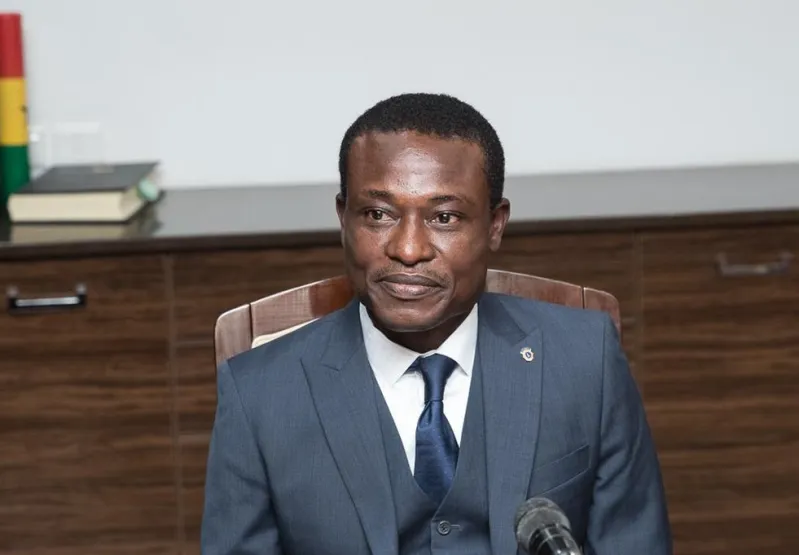
Economist Urges Debate on Commercializing Ghana Central Bank After Losses

0

Economist and legislator Dr. Gideon Boako has called for a national debate on potentially commercializing operations at Ghana’s central bank, the Bank of Ghana (BoG), to address its persistent financial losses.

This proposal follows the BoG reporting its third consecutive annual deficit, with a GHC 9.49 billion loss for 2024. Previous losses included an unprecedented GHC 60 billion in 2022, largely attributed to the Domestic Debt Exchange Programme (DDEP), and approximately GHC 13 billion in 2023.

Dr. Boako, who is the legislator for Tano North and a former technical advisor, emphasized that central banks globally are not inherently designed as profit-making entities.

He stated their core functions—currency issuance, maintaining price stability, and safeguarding financial stability—constitute essential “public goods” delivered without direct charges.

“It is not out of place for a Central Bank to record losses, especially when the losses are basically due to operational expenses by the bank,” Boako explained. “It is high time we distinguish central banks from typical profit-oriented corporations, such as commercial banks.

Unlike commercial banks and other profit-oriented corporations, central banks provide public goods, and their services are not charged for.” He noted currency is distributed freely and users do not pay for financial stability benefits.

However, acknowledging significant public concern and political scrutiny over the BoG’s sustained losses, Dr. Boako suggested Ghana reevaluate this traditional model.

He proposed exploring the possibility of the BoG operating on commercial lines, potentially charging for specific services. “Central banks in some countries have begun charging citizens for these services,”

Boako stated. “Perhaps we should engage in a debate in Ghana to consider this possibility.” He clarified that providing these public goods requires substantial resources, meaning central banks focus on minimizing losses rather than maximizing profits.

Some economists and analysts warn that ongoing losses could threaten the BoG’s capacity to effectively supervise Ghana’s financial system, posing long-term risks to the broader economy.

Dr. Boako framed his idea as an invitation for dialogue rather than a firm recommendation, urging policymakers, economists, and the public to discuss the BoG’s financial future. This debate centers on balancing a central bank’s public service mandate against the need for operational sustainability.

Robust US Jobs Data Dashes Summer Rate Cut Hopes

The stronger-than-expected US jobs report for May has effectively eliminated prospects of Federal Reserve interest rate cuts this summer, according to deVere Group CEO Nigel Green.

The economy added 139,000 jobs—surpassing the 125,000 consensus forecast—prompting stock futures to rise and Treasury yields to climb as markets adjusted expectations.

Green stated the data leaves the Fed in a “difficult spot,” noting persistent inflation pressures and a labor market showing “strength with staying power” rather than anticipated cooling.

“This report puts another nail in the coffin for any talk of rate cuts in the summer,” he told reporters, emphasizing the central bank requires clear labor weakness to justify easing.

The report arrives amid renewed trade policy uncertainty, with Trump-era tariffs expected to amplify inflationary pressures. While tariff impacts may take months to fully materialize in inflation metrics, Green warned core pricing is already showing “early signs of a rebound.”

Bond markets reacted decisively, with 10-year Treasury yields jumping sharply. Equities initially rallied on economic resilience but face underlying caution as elevated real rates and looming inflation threaten risk assets.

Green urged investors to reposition portfolios defensively, noting the Fed’s pivot toward “patience” disproportionately impacts rate-sensitive sectors like tech stocks and commercial real estate.

With September rate cuts now in doubt absent a hiring slowdown or inflation surprise, the delayed policy shift heightens risks for over-leveraged markets while supply-chain-dependent global firms brace for tariff-driven cost surges.

Bolgatanga Technical University Confronts Staff Office Shortage

0

Bolgatanga Technical University faces a critical shortage of dedicated office space for academic staff due to persistent funding constraints and inconsistent government support, Vice-Chancellor Professor Samuel Erasmus Alnaa confirmed to Asaase News.

Long-term financial limitations have hampered infrastructure expansion essential for teaching effectiveness and staff productivity, with Alnaa attributing the crisis partly to irregular Ghana Education Trust Fund (GETFund) allocations.

“Technical universities like ours were stifled in terms of infrastructure development,” he stated, noting GETFund resources were diverted elsewhere.

While the institution previously received US$3.3 million for technical workshops and laboratories, capital development support has declined significantly in recent years. Internally generated funds proved insufficient due to historically low enrolment, though the 2024/2025 academic year marked a breakthrough with over 1,000 new students admitted, bringing total enrolment to 2,894.

Despite this growth, the university prioritizes daily operational costs over new construction. “If we put the little money we have into constructing office spaces, we could cripple daily operations,” Alnaa explained.

Plans for dedicated academic offices are suspended, but BTU will construct a combined 24-unit classroom block and 12-unit shared office space this academic year using internal funds. Land constraints necessitate a multi-storey design for efficiency.

The university continues prioritizing practical learning resources, with Alnaa emphasizing tool and consumable access as non-negotiable for technical training. Management remains committed to sustainable development amid these challenges, navigating infrastructure deficits while technical education demand grows across Ghana’s northern regions.

Davido Headlines Toronto Concert on North American Tour This July

Award-winning Nigerian Afrobeats artist Davido will perform at Toronto’s Scotiabank Arena on Saturday, July 26, 2025, as part of his ongoing 5IVE Alive Tour.

The concert, scheduled for 8:00 PM, is a key stop on his North American tour promoting his fifth studio album, “5IVE.” The tour begins in Los Angeles on July 11 and includes multiple major US cities before reaching Canada.

Ticketmaster and Live Nation report strong demand for the Toronto event, with tickets currently available through their platforms. Promoters describe the Toronto date as a significant event on the summer music calendar. Davido is expected to perform songs from the “5IVE” album, which features collaborations with international artists and has garnered millions of streams since its release earlier this year.

Davido continues to be recognized as one of Africa’s most prominent musical exports. The 5IVE Alive Tour aims to connect him with his global fan base while celebrating the success of the new album, further solidifying his position within the international music industry. The growth of Afrobeats as a global genre has significantly increased the demand for major international tours by leading African artists like Davido in markets such as North America.

Agribusiness Expert Urges Circular Shift for Ghana’s 24-Hour Economy

0

Agribusiness leader Senyo Kpelly advocates redefining Ghana’s proposed 24-hour economy into a “24-hour circular economy” to ensure sustainability.

The Savannah & Sahel Commodities CEO warned that merely extending operating hours without systemic reforms would exacerbate existing waste and inefficiencies.

“If we just start running a 24-hour economy, we’re doubling the problems we already have,” Kpelly stated. “A circular model prioritizing zero waste, resource reuse, and environmental sustainability is essential.” He highlighted that over 50% of Ghana’s fresh produce spoils before reaching consumers, while $155 million in synthetic fertilizer imports contrasts with exported organic waste like poultry manure – a practice he called “economically backwards.”

Kpelly proposed integrating waste management, bioenergy, and modern transport into the initiative. “Connect regional capitals by rail to ease road pressure,” he urged, suggesting night-time recycling operations and solar-powered processing to optimize resources. “Process during day, recycle and transport at night.”

The expert recommended framing the circular economy as a 10-year national strategy with measurable targets like recycling 70% of plastic waste by 2035. “Waste from one sector must become raw material for another,” he emphasized, noting this could reduce farm input costs and boost global competitiveness.

Kpelly stressed soil health’s role in youth agricultural engagement: “Destroy soil with synthetics and you kill farming. A smart farmer is a soil expert.” He called for national consultations involving government, academia, and industry.

This approach reflects growing recognition that economic expansion in developing nations must reconcile productivity with ecological constraints through closed-loop systems.

Ghana’s Special Prosecutor Rejects Public Asset Declarations as Risky

0

Special Prosecutor Kissi Agyebeng opposes calls for public asset disclosures by officials, arguing such measures would be counterproductive and endanger public servants.

Speaking at the African Union Anti-Corruption Conference, Agyebeng stated: “I do not and will not add my voice to calls for publication of assets for public scrutiny.

In our experience, it would subject officers to inordinate public curiosity and real likelihood of asset reprisals.”

Instead, Agyebeng advocated strengthening verification systems. “Publication of who declared assets within a workable verification model would sufficiently assure system integrity,” he told attendees. His position emerges amid Ghana’s transparency debates regarding politically exposed persons’ wealth.

While supporting accountability measures like lifestyle audits and non-conviction asset recovery, Agyebeng warned public declarations create unnecessary risks without significantly curbing corruption. He emphasized that “corruption begins where values collapse,” urging integrity education from early schooling.

The stance reflects balancing transparency demands against protection mechanisms in anti-corruption frameworks across developing governance systems.

Federal Judge Halts Trump’s Harvard Student Ban Amid Legal Challenge

0

A U.S. federal judge temporarily blocked former President Donald Trump’s policy prohibiting international students from attending Harvard University.

Judge Allison Burroughs issued the injunction Wednesday following Harvard’s emergency lawsuit challenging the directive as unconstitutional.

Court documents show Harvard argued the policy would cause “immediate and irreparable harm” to thousands of foreign students, jeopardizing academic progress and immigration status. International students comprise 27% of Harvard’s enrollment. The university contended the measure lacked consistent national security justification since affected students could attend other U.S. institutions.

The Trump administration maintained the ban addressed security concerns. Harvard’s legal team asserted the policy appeared retaliatory, citing previous federal actions including revoked research funding and compliance investigations.

Harvard officials announced contingency plans supporting international students, including hybrid instruction models and legal protections should the policy revive. U.S. immigration agencies have paused student visa interviews pending review of enhanced vetting protocols.

Academic institutions and civil liberties groups warn such targeted policies threaten academic freedom and U.S. higher education competitiveness. The ruling establishes temporary precedent against politicized student visa regulations during ongoing litigation.

This case underscores persistent tensions between federal immigration authority and institutional autonomy in American higher education.

Ghana Court Orders Nurses to Halt Strike Immediately

0

The Accra High Court issued an interlocutory injunction on 5 June compelling Ghana Registered Nurses and Midwives Association (GRNMA) members to end their nationwide strike.

Justice Priscilla Dikro Ofori granted the order following an ex-parte application by the National Labour Commission (NLC), which argued the industrial action endangered public health.

The ruling requires GRNMA leadership and all members to suspend strike activities immediately. The injunction remains effective for ten days, during which the NLC may seek extension through further application. The strike had disrupted outpatient and emergency services nationwide since its commencement earlier this week.

GRNMA launched the action to protest the government’s failure to implement the 2024 Collective Agreement, which addresses unpaid allowances, delayed postings, and welfare provisions. Health facilities reported critical staff shortages prior to the court’s intervention.

While the order mandates nurses’ return to work, the underlying labor dispute remains unresolved. The court did not specify next steps for negotiations between GRNMA and government authorities.

This judicial intervention underscores the fragile balance between labor rights and essential healthcare continuity in Ghana’s public health system.

White House Dismisses Musk’s Trump-Epstein Claim as Political Retaliation

0

The White House rejected Elon Musk’s allegation that Donald Trump suppressed Jeffrey Epstein-related investigation files, framing it as retaliation for policy disagreements.

Press Secretary Karoline Leavitt stated to CNN: “This is an unfortunate episode from Elon, who is unhappy with the ‘One Big Beautiful Bill’ because it does not include the policies he wanted. The President is focused on passing this historic legislation.”

Musk claimed on his platform X: “TIME TO DROP THE REALLY BIG BOMB: @REALDONALDTRUMP IS IN THE EPSTEIN FILES. THAT IS THE REAL REASON THEY HAVE NOT BEEN MADE PUBLIC.” He later added: “MARK THIS POST FOR THE FUTURE. THE TRUTH WILL COME OUT.” The accusation references Trump’s past association with Epstein, whom Trump called “a terrific guy” in a 2002 New York Magazine interview. Trump previously stated he severed ties with Epstein in the mid-2000s.

The clash stems from Musk’s opposition to Trump’s proposed legislation, which extends tax cuts, funds border security, and alters social programs. Musk earlier criticized the bill on X: “THIS MASSIVE, OUTRAGEOUS, PORK-FILLED CONGRESSIONAL SPENDING BILL IS A DISGUSTING ABOMINATION.” As head of the Department of Government Efficiency, Musk contends the bill undermines his agency’s cost-cutting reforms.

Trump has not publicly addressed the Epstein allegation. No evidence links Trump to Epstein’s criminal activities.

The dispute marks a fracture between two previously aligned conservative figures, highlighting how policy conflicts among influential elites can escalate into personal allegations.

Ghana Endorses Morocco’s Western Sahara Autonomy Plan

0

Ghana declared Morocco’s autonomy proposal the sole basis for resolving the Western Sahara conflict under UN auspices, aligning with growing international support for Rabat’s position.

The announcement followed Thursday’s talks in Rabat between Ghanaian Foreign Minister Samuel Okudzeto Ablakwa and Moroccan counterpart Nasser Bourita.

A joint statement affirmed Ghana considers the plan “the only realistic and sustainable basis for a mutually agreed solution.” The decades-long dispute involves Morocco, which claims the territory, and the Algeria-backed Polisario Front seeking independence. The statement emphasized the UN must remain the exclusive framework for resolution.

The endorsement follows similar positions recently adopted by Kenya and the United Kingdom, signaling diplomatic momentum for Morocco’s approach. Since the U.S. recognized Moroccan sovereignty in 2020 and France in 2023, over two dozen nations have backed the autonomy initiative.

The ministers agreed to enhance defense cooperation and negotiate a visa waiver agreement. With Morocco’s OCP Group being a global fertilizer leader, both nations will collaborate on food security. “Moroccan fertilizers will boost Ghana’s cocoa farming and reduce $3 billion annual food imports,” Okudzeto Ablakwa told reporters.

Ghana also supports Morocco’s Atlantic access initiative for Sahel states and participates in the Morocco-Nigeria gas pipeline project. Bourita stated Ghana’s stance “creates conducive conditions for bilateral cooperation.”

The alignment reflects West Africa’s strategic recalibration amid shifting geopolitical alliances and economic priorities.