

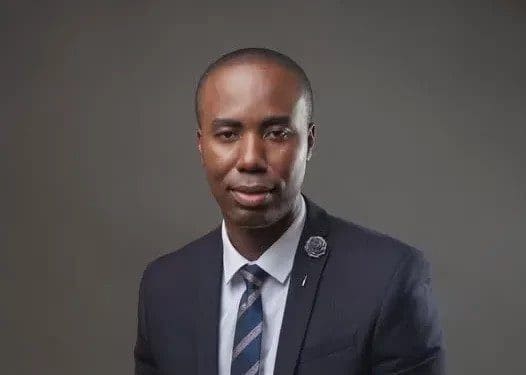
Lawyers for former National Signals Bureau chief Kwabena Adu-Boahene have asked the High Court to acquit the accused without calling a defence, arguing the State’s GH¢49.1 million case falls short.
Lead counsel Samuel Atta Akyea filed the submission of no case to answer on Friday, September 25, on behalf of Adu-Boahene, his wife Angela Adjei-Boateng and Advantage Solutions Limited. The filing moves the high-profile trial to a decisive stage: if Justice Francis Achibonga upholds it, the accused walk free without testifying; if he rejects it, they must open their defence. The court has fixed November 5 for its ruling.
The Attorney-General’s office, whose prosecution was led by Deputy Attorney-General Justice Srem-Sai, closed its case earlier this month after calling four witnesses. It now has 14 days to respond, and the defence has seven days to reply.
The prosecution alleges that GH¢49.1 million meant to buy a cybersecurity system from Israeli firm ISC Holdings was moved by three cheques from a National Security-linked account into BNC Communications Bureau Limited, a company linked to Adu-Boahene and his wife. It says GH¢9.54 million went to ISC Holdings and the rest was withdrawn or transferred for purposes unrelated to the procurement. The accused have pleaded not guilty to charges including conspiracy, stealing, causing financial loss to the State, using public office for profit and money laundering.
The defence case turns first on control of the money. Akyea argues that the account carried a signing mandate involving both the National Security Coordinator and Adu-Boahene, and that all three cheques bore both men’s signatures, raising doubt over whether his client acted alone.
He also attacks the investigation. Under cross-examination, Frank Marshall Cromwell, an investigator with the Economic and Organised Crime Office, admitted the office did not independently contact ISC Holdings or the National Security Council to confirm whether the system was bought and delivered.
The defence further points to witnesses the State did not call, including former National Security Minister Albert Kan-Dapaah and the then National Security Coordinator, whom it says could have explained how the accounts were run. It adds that no bank officials were called to authenticate the banking documents tendered in court.
On the assets, Akyea argues the prosecution has not directly traced some houses, vehicles and investments to the disputed funds. According to the defence, the fourth prosecution witness acknowledged that no ownership documents were placed before the court and that investigations were continuing.
The prosecution’s final witness, for his part, told the court about findings on alleged private spending by the accused and challenged the authenticity of a letter that purportedly confirmed the purchase of the cybersecurity software.

