LATEST ARTICLES

MTN Reaffirms Commitment to Make Ghana Africa’s Premier 5G Gaming Hub

0

MTN Ghana has identified the gaming sector as Africa’s next major economic and cultural breakout, announcing strategic investments, a dedicated 5G gaming network, and new institutional partnerships to position Ghana as the continent’s premier game development hub.

Speaking at the MTN DigiFest Gaming Conference at the Labadi Beach Hotel in Accra, MTN Ghana CEO Stephen Blewett said Africa’s creative talent gives the continent a strong foundation for building a globally competitive digital entertainment industry.

“The future of the next big breakout in Africa will be gaming, and it already is gaming. I’ve said that to investors, I’ve said it publicly, I’ve said it in the USA, in London, I was in New York last week. I keep saying the same thing,” Blewett told attendees.

“Our people in Africa are creative, they have the strength and the abilities to develop our own games—games for Africa, built in Africa, and Ghana being the hub that actually creates that is very important to us.”

Gamers

Powering Innovation Through 5G

Mr. Blewett identified advanced telecommunications infrastructure, particularly the rollout of 5G, as a key component in developing the gaming ecosystem.

MTN Ghana has secured one of Ghana’s 5G licences, and Blewett said the company intends to use the technology to provide connectivity specifically suited to the demands of modern gaming and interactive digital services.

“One of the 5G licenses has been given to MTN. And I can tell you, we’ll make sure you have a gaming network on 5G. That’s one of the big reasons we wanted it,” he said.

The move reflects the growing importance of high-speed, low-latency connectivity to online gaming, cloud-based entertainment, and other interactive digital experiences.

He also pointed to the changing nature of the gaming market, noting that gaming is no longer confined primarily to expensive home consoles and dedicated gaming hardware. With increasingly capable smartphones and expanding mobile broadband access, games and other forms of digital entertainment can now reach consumers directly through devices they already use every day.

Gamers

MTN’s Scale Creates Market Access

Beyond connectivity, MTN Ghana intends to use its distribution and customer base to help local developers commercialize their creations.

The company has approximately 31 million subscribers in Ghana, while the wider MTN Group serves more than 300 million customers across 16 African markets.

Blewett said MTN Ghana currently leads the wider group in gaming adoption, creating an opportunity for developers to test, distribute, and scale locally developed products.

The company’s extensive customer and distribution network could therefore provide local creators with access to a significant potential market while also creating pathways into other African markets.

For Ghanaian developers and creative entrepreneurs, such access could help address one of the longstanding challenges facing emerging digital industries: moving from developing a product to finding customers and generating sustainable commercial returns.

Bridging the Gap Between Industry and Academia

The gaming conference formed part of MTN Ghana’s 30th-anniversary celebrations, held under the theme “30 Years of Progress Powered by You.”

The anniversary also provided a platform for the company to outline its broader ambitions for Ghana’s digital economy.

Mtn Ghana Chief Digital Officer Ibrahim Misto
MTN Ghana Chief Digital Officer Ibrahim Misto

MTN Ghana Chief Digital Officer Ibrahim Misto said the company wants to move beyond its traditional role as a telecommunications provider and play a more active role in developing the country’s technology and innovation ecosystem.

He said the conference was designed to encourage stronger collaboration among academia, the private sector, and policymakers, particularly in addressing the gap between university training and the practical skills demanded by industry.

As part of that effort, MTN announced two significant initiatives focused on education, talent development, and innovation.
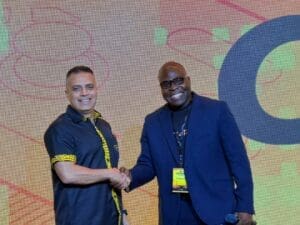
Partnership

The Gaming Academy

The first initiative is the Gaming Academy, a dedicated training programme intended to equip young developers and creative professionals with practical game-development skills.

The programme is expected to combine technical and creative training with access to MTN’s market and distribution infrastructure.

The objective is to give emerging developers not only the skills to create games but also a pathway to take their products to market.

By connecting training with commercial opportunities, MTN hopes the initiative will contribute to entrepreneurship, employment, and the development of a sustainable local gaming industry.

Mtn With Partners And Gamers

Partnership with Ashesi University

MTN is also partnering with Ashesi University to establish a new Gaming Lab and support targeted curriculum development.

The laboratory is expected to provide a practical environment where students and researchers can explore gaming technologies and apply gamification to challenges beyond entertainment.

Among the areas identified are agriculture and education, where interactive digital technologies could potentially be used to improve engagement, learning, and problem-solving. The partnership reflects a broader view of gaming as a technology platform rather than simply a form of entertainment.

Turning University Projects Into Businesses

Mr. Misto also highlighted MTN’s efforts to support university students in developing solutions to real-world problems.

The company has been funding final-year university projects, including recent artificial-intelligence-focused collaborations with the University of Ghana.

Under such initiatives, students are encouraged to develop technology-based solutions to challenges specific to Ghana and the wider African environment.

The approach is intended to create a stronger connection between academic research and commercial innovation, allowing promising student projects to evolve into viable businesses and products.

Ghana’s Emerging Digital Economy

MTN’s gaming strategy comes as Ghana seeks to strengthen its position within Africa’s growing digital and creative economy.

The gaming industry sits at the intersection of technology, entertainment, telecommunications, and creative production, creating opportunities for developers, artists, musicians, designers, writers, and entrepreneurs.

For Ghana, developing the sector could also provide opportunities to export locally created intellectual property to audiences across Africa and internationally.

MTN’s strategy combines three key components: connectivity through 5G, talent development through education and training, and market access through its extensive customer and distribution network.

The company believes the combination can provide the foundation for a commercially viable gaming ecosystem in Ghana. Africa possesses the creative talent needed to develop games that reflect its own experiences, cultures, and markets.

With increased investment in infrastructure, skills, and partnerships between industry and academia, Ghana is seeking to turn that creative potential into a growing technology and entertainment industry—one capable of serving African audiences while competing in the global digital market.

Adding that, the ambition extends beyond providing the network on which games are played. The company is positioning itself as a participant in the development, training, distribution, and commercialization of the ecosystem itself.

TENET Urges Youth To Embrace Savings And Investment

The Executive Officer of Tenet Partners Marketing Limited, Ghana, Mr. Joseph Agbodeka, has urged the youth to cultivate the habit of savings and channel part of those savings into small investments, stressing that such discipline could transform their future fortunes. He also cautioned against drug use and abuse, warning that it can derail young people from achieving their life goals.

Mr. Agbodeka made the call during the inauguration of a Tenet charity office at Sogakope in the South Tongu District of the Volta Region. The new office will serve as a hub to promote Tenet’s activities, including community development, youth empowerment, support for school projects, and job creation. It will also coordinate the distribution of charity items and act as a consulting office for Tenet services.

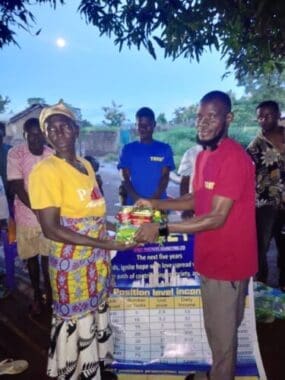
Food items including rice, vegetable oil, and tomato paste displayed at the inauguration of Tenet Partners Marketing Ltd’s Sogakope charity office to support vulnerable communities

The Executive Officer, who is also the Founder of the charity centre, lamented that many young people today pursue quick money rather than practicing diligent savings. He noted that this trend has led some into drug abuse, which negatively impacts their lives and mental health.

Mr. Agbodeka disclosed that Tenet Partners Marketing Limited is duly registered with the Registrar General’s Department and assured that the company will positively impact Ghanaians, particularly the youth, during its five‑year project period (2025–2030).

Hon. Joseph Agbodeka, Executive Officer of Tenet Partners Marketing Ltd, addresses participants during the ribbon‑cutting ceremony to inaugurate the Sogakope charity office

Since its inception in Ghana in 2025, Tenet has supported more than 300,000 individuals nationwide with clothing, food, and other essentials. Schools have also benefited from classroom blocks and teaching materials to improve learning environments and promote effective academic work.

Senior Executive Officer Mr. Isaiah Adjokatcher and Senior Manager Mr. Bismarck Ameho, both from the Kpassa charity home in the Oti Region, encouraged the youth to embrace Tenet’s vision and mission to transform their lives and communities.

Promotional banner of Tenet Partners Marketing Ltd unveiled at the Sogakope inauguration, highlighting the company’s vision to ignite hope, spread warmth, and contribute to society over the next five years

The Planning Committee Chairman and Coordinator of the Sogakope office, Mr. Emmanuel Avorkpo, described the inauguration as a “dream come true” and urged the youth to take advantage of the opportunities it presents.

An opinion leader of the Agorkpo Electoral Area, Mr. George Zigah, chaired the function and later joined Tenet leaders and dignitaries to cut the tape to officially open the centre.

Established in 2014 in the UK, Tenet has expanded to Ghana to support vulnerable groups including the aged, orphans, widows, and communities through charity and development initiatives such as building schools, clinics, and community centres.

Global doctors’ body presses Bangladesh over hospital violence

0

The World Medical Association (WMA) has urged Bangladesh to curb attacks on health workers, often by relatives after a patient’s death, a pattern that has repeatedly shut hospital emergency units.

The WMA, a global federation of national medical associations, has written to Prime Minister Tarique Rahman and the Minister of Health and Family Welfare. It said reports from Bangladesh showed a broad pattern of physical assaults, threats and vandalism against physicians, other health staff and facilities, not a series of isolated incidents.

The research supports that picture. A national study by the Centre for Injury Prevention and Research, Bangladesh, backed by the International Committee of the Red Cross and published in 2023, surveyed 1,703 health personnel at 61 public and private facilities in all eight divisions. More than 80 per cent had experienced or witnessed violence at work. Patients’ relatives or attendants carried out 71.9 per cent of the incidents, and patients themselves 16.8 per cent.

A separate peer-reviewed study, published in BMJ Open in 2024, found that 67.3 per cent of 441 physicians surveyed at Dhaka Medical College Hospital had faced workplace violence.

The attacks have continued this year. In June, relatives attacked an intern doctor at Rangpur Medical College Hospital after a patient died in the coronary care unit, and doctors shut emergency services in response, according to Bangladesh’s The Business Standard. In May, a doctor was beaten at Shariatpur Sadar Hospital after a heart patient died, and police later arrested several people over the assault. Intern doctors in Bogura who protested another attack that month said their 500-bed hospital was treating about 3,000 patients.

WMA President Dr Jacqueline Kitulu said violence against health care harms far more than the people attacked. It interrupts treatment, pushes away the staff a health system relies on and weakens public trust in medicine, she said. “No physician, nurse or another health worker should have to fear for their safety,” Kitulu said.

The WMA asked the government to:

  • adopt measures to protect health personnel and facilities
  • investigate every attack and prosecute those responsible
  • strengthen prevention, reporting and monitoring
  • tackle the causes of the violence within the health sector

Bangladesh drafted two laws on the issue in October 2025. The Health Service Workers and Institutions Protection Ordinance 2025 would make attacks on health workers punishable by up to five years in prison, rising to seven years for assaults causing grievous injury. A companion Patient Protection and Remedy Ordinance 2025 would make gross negligence that causes serious harm or death a criminal offence. It would also create special tribunals for patients’ complaints.

In June, health policy experts told The Business Standard that the country still lacked a dedicated law protecting health workers and facilities.

The 2023 national study found that only about a quarter of health workers who faced violence reported it, even though 89 per cent said a reporting system existed.

Nissan honours African dealers after South Africa plant exit

0

Nissan has named Algoa Nissan its South African dealer of the year, honouring the network behind its import-led business after the sale of its Pretoria plant to Chery.

The awards were presented at a gala during the carmaker’s first Festival of Nissan, a three-day event in Gauteng in September built around the South African launch of the Tekton sport utility vehicle (SUV). Ghana’s Japan Motors Trading Company took the award for the most consistent market share performance among Nissan Independent Markets Africa (NIMA), the distributors that handle the brand in other countries on the continent.

The ceremony came at a sensitive time for Nissan in South Africa. The Japanese automaker stopped building vehicles in the country this year after selling its Pretoria factory to China’s Chery, and now imports its models. Reuters reported that Nissan is relying on a run of new models to revive growth and reassure customers and dealers. The Tekton, the first of those models, is built in India.

That shift puts more weight on the showroom floor. Jordi Vila, president of Nissan Africa and Europe, told the dealers that products alone would not shape the brand’s future on the continent. “Products open the door. Dealers build the relationship,” he said.

Nissan South Africa managing director Juan Wheeler said the country was one of the company’s most important African markets, with a 65-year history there. Ramy Mohareb, head of brand and communications at Nissan Africa, said no Nissan customer in South Africa was more than 25 minutes from an authorised dealership.

Algoa Nissan dominated the small-dealership categories. Besides the overall title, it won dealer of the year, aftersales department, new vehicle sales department and customer quality in its size band.

NTT Nissan Bloemfontein won dealer of the year and best new vehicle sales department among large dealerships, while NTT Nissan Secunda took the medium dealer title. The NTT Group was named dealer group of the year. Mark White Nissan won two large-dealership awards, for customer quality and for finance. NTT Nissan Gaborone took the large aftersales prize.

Among the NIMA distributors, ATC Comafrique of Côte d’Ivoire was named best overall national sales company in the large category and best aftersales company in the same band. Sun Motors of Seychelles won the medium category, and Anciens Comptoirs Ries of Djibouti took the small category. Zimbabwe’s Croco Motors won best national sales company among large markets. Motus Africa in Malawi and Old East in Burundi won aftersales awards, and Motorcare Mozambique took the overall prize for customer satisfaction, sales and service.

Nissan plans to launch an upgraded Navara pick-up and the eighth-generation Patrol SUV in South Africa during the current financial year, Reuters reported.

2032 DDEP bond leads GH¢546m fixed income session

0

A single 2032 bond from Ghana’s 2023 debt exchange accounted for nearly a quarter of the GH¢545.83 million traded on the Ghana Fixed Income Market (GFIM) on 1 October.

The 9.10 per cent bond, which matures on 10 February 2032, changed hands twice for a combined GH¢131.94 million. Its yield fell 33 basis points to 14.31 per cent, and it closed at a price of 80.88. The government issued the bond under the Domestic Debt Exchange Programme (DDEP), which swapped old domestic bonds for new ones on longer terms.

The session drew 252 trades. Treasury bills made up the largest share, at GH¢306.35 million across 217 trades, or 56 per cent of the day’s volume. DDEP bonds followed with GH¢228.74 million in 22 trades.

Prices on the secondary market stayed close to the government’s latest borrowing costs. The bill maturing on 27 September 2027 closed at a yield of 9.73 per cent. At the most recent primary auction, the 364-day rate fell to 9.83 per cent from 9.98 per cent, and the 91-day rate held at 4.69 per cent. Bills maturing between late December and February closed at yields below 5.7 per cent.

The most active bill, maturing on 21 June 2027, traded GH¢52.83 million at 8.48 per cent. The bill due on 31 May 2027 drew GH¢42.26 million at 7.92 per cent, and the 24 May 2027 paper took GH¢34 million at 7.73 per cent.

Yields across the rest of the exchange bonds moved in both directions. The February 2028 bond was the busiest by trade count, with eight deals worth GH¢40.23 million, and its yield edged up to 12.44 per cent from 12.39 per cent. The 2031 bond eased to 14.40 per cent on GH¢30.59 million, and the 2030 paper dropped 27 basis points to 14.23 per cent. The 2029 bond went the other way, rising to 13.79 per cent from 13.52 per cent.

The near-dated exchange bonds carry extra weight this year. In its July 2026 Monetary Policy Report, the Bank of Ghana said the government was building buffers to repay DDEP bonds maturing in 2027 and 2028. Domestic debt reached GH¢391.1 billion by June.

That buffer-building drove last month’s four-year bond sale, when the government raised GH¢3.15 billion at a 12 per cent clearing yield. The new bond, maturing in 2030, recorded one trade of GH¢78,178 on Thursday at a closing yield of 11.50 per cent and a price of 101.53, above its issue value.

Sell and buy-back deals on government bonds totalled GH¢8.28 million in seven trades. Half of that went through the February 2029 exchange bond at 12.49 per cent.

All corporate bond trading came from the Ghana Cocoa Board. Its 13 per cent bond maturing in August 2028 traded GH¢1.70 million in four deals, slipping to a price of 102.96 from 103.27. Its August 2027 bond recorded one trade of GH¢677,200 at 102.25.

None of the old government bonds that predate the debt exchange traded during the session.

GSE loses GH¢3.7bn in value as SIC falls 9.8%

0

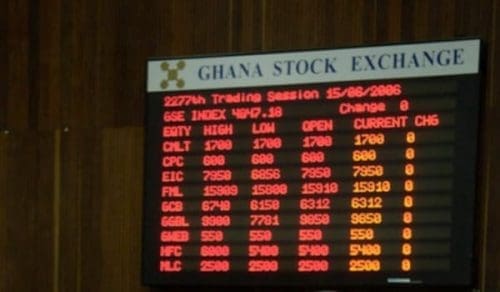
Companies listed on the Ghana Stock Exchange (GSE) lost GH¢3.70 billion in market value on 1 October as SIC Insurance shares fell 9.8 per cent.

The GSE Composite Index (GSE-CI) dropped 90.35 points, or 0.64 per cent, to 14,051.20 at the close of the 7,308th trading session. Financial stocks took a heavier hit. The GSE Financial Stocks Index (GSE-FSI) shed 111.47 points, or 1.48 per cent, to 7,443.09, dragged by an insurer, a local bank and a pan-African lender. Market capitalisation closed at GH¢266.64 billion, down from GH¢270.34 billion on Wednesday.

The session adds to a retreat that has eaten into one of the strongest years on record for Ghanaian equities. The composite index now shows a year-to-date return of 60.21 per cent, against 71.90 per cent at the end of August. The financial index has slipped to a 60.16 per cent gain from 70.09 per cent over the same period. Market capitalisation stood at GH¢285.58 billion at the end of August, about GH¢18.9 billion more than Thursday’s close.

SIC Insurance Company PLC (SIC) led the decliners, falling GH¢0.47 to GH¢4.33 on 18,516 shares worth GH¢87,971.48. The stock has traded as high as GH¢6.09 this year.

Ecobank Transnational Inc. (ETI) lost GH¢0.12, or 6.9 per cent, to GH¢1.61 on 95,539 shares. Societe Generale Ghana PLC fell GH¢0.18 to GH¢5.00, while Dannex Ayrton Starwin PLC eased GH¢0.03 to GH¢1.12. Ecobank Ghana PLC and Scancom PLC, which trades as MTN Ghana, each slipped by one pesewa, to GH¢39.00 and GH¢6.49.

Only two counters gained. AngloGold Ashanti Depositary Shares rose GH¢0.04 to GH¢0.46 on 2,987 shares, and CAL Bank PLC added one pesewa to GH¢0.71 on 90,283 shares.

MTN Ghana again carried the market’s liquidity. Its 2,665,458 shares, worth GH¢17.30 million, made up 92 per cent of the day’s value and 88 per cent of its volume. The telecoms stock closed at GH¢7.14 at the end of July and is now about 9 per cent lower.

In total, 3,034,021 shares worth GH¢18.81 million changed hands, down from 5,122,887 shares worth GH¢25.33 million on Wednesday. GCB Bank PLC ranked second by value, with 15,754 shares worth GH¢630,160 trading at an unchanged GH¢40.00. Kasapreko PLC drew 91,287 shares at GH¢1.84, and the NewGold exchange-traded fund recorded GH¢125,767.06 in trades.

On the Ghana Alternative Market, Intravenous Infusions PLC, Digicut Production & Advertising PLC and Hords PLC all traded without a price change.

At the close, the best bid for SIC shares stood at GH¢4.33, with the lowest offer at GH¢5.00.

Queiroz leaves Black Stars after AFCON qualifying defeats

0

Ghana sit bottom of their Africa Cup of Nations (AFCON) qualifying group without a head coach after Carlos Queiroz left by mutual agreement on 1 October.

The Ghana Football Association (GFA) announced the decision on Thursday, two days after the Black Stars lost a two-goal lead and went down 4-2 to The Gambia at the Accra Sports Stadium. Ghana had opened the campaign with a 2-0 defeat to Côte d’Ivoire in Bouaké on 24 September.

The losses leave Ghana without a point after two of six Group C matches. Côte d’Ivoire, The Gambia and Somalia make up the rest of the group, and only the top two will reach the finals in Kenya, Tanzania and Uganda, which run from 19 June to 17 July 2027. Qualifying resumes in the 9 to 17 November international window, giving the GFA about six weeks to find a replacement. Ghana missed the 2025 finals in Morocco after going through their qualifying campaign without a win.

In his own statement, issued through the GFA, the 73-year-old Portuguese said the decision had not been easy and that recent results contributed to it. He also said “the necessary conditions were not fully established” during his time in charge. The GFA thanked him for his professionalism and said it would announce the team’s technical direction in due course. It did not say whether it would name an interim coach.

The exit closes a second spell that lasted one month. Queiroz first took the job in April, about 10 weeks before the World Cup, after the GFA parted company with Otto Addo following friendly defeats to Austria and Germany in March. He took Ghana out of Group L, which also included England, Croatia and Panama, as one of the eight best third-placed teams. Colombia then beat them 1-0 in the round of 32.

He left after the tournament, only for the GFA to bring him back on an interim basis on 2 September.

Scoring was a problem throughout. Before the Gambia match, Ghana had managed eight shots on target in five competitive games under Queiroz, according to Flashscore data. In Bouaké, Malick Yalcouyé scored before half-time and captain Franck Kessié converted a second-half penalty, handing Hervé Renard a winning return as Côte d’Ivoire coach.

Queiroz, a former Real Madrid coach and Manchester United assistant, has also managed Portugal, Iran, Colombia, Egypt and Oman. His departure from Ghana is his second exit by mutual consent this year, after the Oman Football Association ended his contract in March.

Ghana had been scheduled to close the current international window with a friendly against Morocco in Tangier on 4 October.

Western North Minister Inspects Wiawso Projects

0

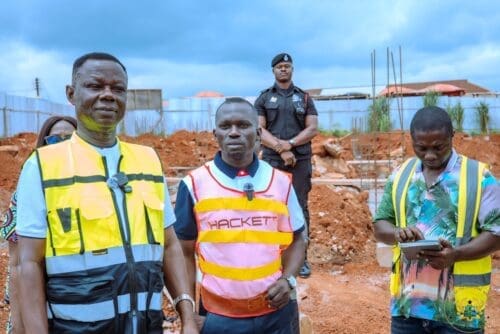
The Western North Regional Minister, Hon. Wilbert Petty Brentum, has inspected progress on the construction of the 24‑hour economy market at Sefwi Asawinso and other ongoing projects within the Wiawso Municipality.

The Minister explained that the visit formed part of his routine oversight to monitor development projects and ensure they are executed according to proper specifications.

The inspection covered the 24‑hour economy market at Asawinso, a maternity block at Wiawso, the Essakrom/Kojina CHPS compound, a KG block at Kwasi Addaekrom, the Keteboy CHPS compound, a six‑unit classroom block at Nyamenakrom, and a three‑unit classroom block at Pewodea.

Western North Regional Minister, Hon. Wilbert Petty Brentum, engages contractors during inspection of ongoing projects in Wiawso Municipality

Speaking to the media, Hon. Brentum commended the contractors and the Wiawso Municipal Assembly for their dedication. He encouraged other assemblies in the region to emulate Wiawso under the leadership of Hon. Dominic Gyasi, stressing the importance of ensuring value for money in government projects.

Western North Regional Minister, Hon. Wilbert Petty Brentum, engages contractors during inspection of ongoing projects in Wiawso Municipality

He further emphasized that teachers’ accommodation is central to the government’s agenda and urged Municipal and District Chief Executives to incorporate it into their development plans. Hon. Brentum also announced that the government, through the District Assembly Common Fund, will soon roll out the Teacher Dabre programme to support teachers.

“The President is poised in his resetting agenda and will ensure development at all levels,” he stated.

Hon. Dominic Gyasi, Wiawso MCE, expressed delight at the progress of work and assured that the Assembly is in constant engagement with the Electricity Company of Ghana to extend power to all facilities before they are handed over to communities.

RANA Raises Human Rights Concerns Over Detention of Salomey Awiti Bafoh

The Rights Accountability Network Africa (RANA) has raised concerns about the arrest, detention and prosecution of Salomey Awiti Bafoh, warning that the handling of the case could have implications for freedom of expression in Ghana.

In a statement issued on September 30, 2026, the organisation said freedom of expression did not exempt anyone from criminal liability, but stressed that any allegations against the accused must be determined through due process.

Salomey Awiti Bafoh has pleaded not guilty to the charges against her and remains entitled to the presumption of innocence until a competent court determines the case.

RANA said its concerns extended beyond the eventual outcome of the trial to the broader implications of how speech-related offences are investigated and prosecuted.

The organisation cited Article 21(1)(a) of the 1992 Constitution, which guarantees freedom of speech and expression, and argued that citizens should be able to participate in public debate and criticise authorities without facing disproportionate criminal processes.

Concerns Over Arrest and Pretrial Detention

RANA said lawyers for Salomey had alleged that she was arrested late at night at her home in Techiman and transported to Accra, with her family initially experiencing difficulty determining where she had been taken.

The organisation also noted that she had remained in pretrial detention while investigations continued.

However, RANA acknowledged the prosecution’s position that Salomey allegedly assisted in disseminating material considered false and inflammatory, and that concerns had been raised over witnesses and digital evidence.

It said the competing claims should be resolved through the judicial process.

According to RANA, the use of arrest, detention and prolonged criminal proceedings in cases involving political or public expression could have consequences beyond the individual accused.

It warned that citizens who observe such cases may become reluctant to share political material, participate in online discussions or openly criticise public officials for fear of attracting criminal proceedings.

Calls for Review of Speech Laws

RANA said Ghana should maintain a clear distinction between legitimate political criticism and conduct involving genuine threats, incitement to violence or other established criminal offences.

The organisation called for any restrictions on expression to be clearly defined and for coercive measures to be necessary and proportionate to the harm authorities seek to prevent.

It also referenced standards of the African Commission on Human and Peoples’ Rights concerning restrictions on freedom of expression, including its call for African states to review criminal restrictions on expression.

RANA urged authorities to respect Salomey’s constitutional rights, including access to legal representation, personal liberty, the presumption of innocence and a fair hearing within a reasonable time.

It further called for the investigation into the case to be completed expeditiously, consistent with the direction it said had already been given by the High Court.

The organisation also urged continued judicial consideration of whether the objectives cited to justify detention could be achieved through bail conditions or other less restrictive measures as investigations progress.

RANA called for transparency regarding the circumstances of Salomey’s arrest and transfer, including where and when she was arrested, the agencies involved, where she was held and when her family and lawyers were informed of her whereabouts.

It also proposed clearer guidance for law-enforcement and prosecutorial authorities on when activities such as sharing, redistributing or facilitating online content could result in criminal liability.

Beyond the individual case, RANA called for a broader review of Ghana’s criminal speech laws, particularly Section 208 of the Criminal Offences Act, against the constitutional guarantee of freedom of expression and Ghana’s obligations under international human rights instruments.

The organisation stressed that its position was not that authorities should overlook genuine criminal conduct.

Rather, it said Ghana’s constitutional system should be able to investigate alleged offences while protecting lawful political expression.

RANA said the strength of freedom of expression should ultimately be reflected not only in its constitutional protection but also in whether citizens feel able to exercise that freedom in their everyday lives.

ADB Ghana Medical Systems Supports Otumfuor’s $100m Cancer Centre Project

0

Ghanaian healthcare solutions provider ADB Ghana Medical Systems Group Limited is helping shape the future of specialised healthcare infrastructure, leading the hospital engineering and infrastructure component of the $100 million Otumfuo Osei Tutu II Comprehensive Cancer Centre of Excellence at Kwaso in the Ashanti Region.

The project marks a significant step in the company’s evolution from a medical equipment supplier into a broader healthcare solutions provider, with expertise spanning hospital engineering, construction, maintenance and project management.

Established in 2006 by Adann Benjamin Diaz, the company has steadily expanded its operations to serve hospitals, government agencies, non-governmental organisations and other institutions within the health sector.

According to Mr Diaz, the expansion reflects a deliberate commitment to contributing to Ghana’s healthcare development by addressing not only the need for medical technology but also the infrastructure required to deliver quality care.

“Our ambition is not simply to supply medical equipment. We want to build a company that provides solutions, develops expertise and contributes meaningfully to the infrastructure required for quality healthcare delivery in Ghana and across Africa,” he said.

This vision has informed the company’s expansion into the planning, development, management and maintenance of hospital environments, technical systems and turnkey healthcare facilities.

The integrated model enables the company to consider the full operational requirements of a healthcare facility, from the equipment clinicians need to diagnose and treat patients to the electrical systems, utilities and specialised infrastructure that keep hospitals functioning.

It is this combination of technical capabilities that has positioned ADB Ghana Medical Systems to participate in complex healthcare projects requiring close coordination between medical technology, building design and engineering systems.

A landmark investment in cancer care

The Otumfuo Osei Tutu II Comprehensive Cancer Centre of Excellence is being developed on 52 acres of land at Kwaso in the Ejisu Municipality.

Named in honour of the Asantehene, Otumfuo Osei Tutu II, the five-year initiative is being funded by Breast Care International (BCI), Peace and Love Hospitals, Global Health Catalyst and the University of Pennsylvania.

The overall project is estimated to cost $100 million, with approximately $10 million allocated to the first phase.

Phase One is expected to include a radiotherapy suite, research wing, artificial intelligence hub, education centre and community outreach facilities. Together, these components are intended to support cancer treatment while strengthening research, professional education and public awareness.

Dr Beatrice Wiafe Addai, President of Breast Care International and Founding Director of the Centre, said the facility is intended to improve access to advanced cancer care in Ghana and position the country as a destination for medical treatment.

“The Centre will also be the hub for medical tourism and stop the movement of cancer patients from Africa to other continents for treatments,” she said.

When completed, the centre is expected to employ more than 250 people and provide a range of specialised services and facilities, including chemotherapy and brachytherapy suites, CT scan simulators, admission wards, laboratories, surgical theatres and recovery wards.

The development is envisioned as an integrated centre for treatment, research, training and community outreach, with the potential to expand access to specialised cancer services for patients in Ghana and beyond.

Expanding access to specialist cardiac care

Beyond cancer care, ADB Ghana Medical Systems is also involved in the development of a specialist cardiology facility at Komfo Anokye Teaching Hospital (KATH) in Kumasi.

For decades, the hospital operated without a catheterisation laboratory, requiring some patients in need of specialised cardiac interventions to travel to Accra for treatment.

The new facility is intended to bring advanced cardiac services closer to patients in the Ashanti Region and neighbouring areas, reducing the need for long-distance travel to access certain specialist procedures.

A recent technical working visit to the project site brought together representatives of the Ghana Medical Trust Fund, KATH and the Ministry of Health to assess key elements of the development. Discussions covered power capacity, utilities integration and structural planning.

The engagement underscored the technical complexity of developing modern specialist healthcare facilities, where medical equipment must be supported by appropriately designed buildings, reliable power systems and carefully integrated utilities.

For ADB Ghana Medical Systems, the project represents another opportunity to apply its expanding engineering and project management expertise to infrastructure intended to support specialised medical services.

Building Ghanaian expertise for Africa’s healthcare needs

The company’s involvement in the cancer centre and the KATH cardiology project reflects a broader ambition to establish a Ghanaian healthcare solutions brand with the technical capacity to compete beyond the domestic market.

Mr Diaz said the company intends to expand into other West African markets while strengthening the expertise, systems and partnerships required to deliver healthcare infrastructure to international standards.

“We believe indigenous companies have an important role to play in solving Africa’s healthcare challenges. Our responsibility is to build the expertise, systems and partnerships that allow us to deliver at the highest possible standard,” he said.

He added that the company ultimately measures its success by the contribution its work makes to patients and the delivery of healthcare services.

“Healthcare is ultimately about people. Every piece of equipment we supply, every facility we help develop and every technical solution we provide should ultimately contribute to better care for someone who needs it.”

As Ghana continues to pursue improvements in specialised healthcare, the need for infrastructure that combines medical technology, engineering and effective project management remains central to the development of modern health facilities.

For ADB Ghana Medical Systems, its growing involvement in major healthcare developments signals a long-term commitment to supporting that progress, while building the capabilities of an indigenous company with ambitions across West Africa and the wider African market.