Labadi–La Palm Beachfront: Turning a Coastal Challenge into Economic Opportunity

0

Story By: Felix Ernest Odamtten / Muhammad Faisal Mustapha….

The clearance of unauthorised structures from the beachfront adjoining the Labadi Beach Hotel and La Palm Royal Beach Hotel has opened a new chapter in the long running effort to reclaim, restore and redevelop one of Accra’s most strategically located coastal tourism enclaves.

At the heart of the exercise is a proposition that extends beyond the removal of structures: the beachfront can become a properly planned tourism and hospitality destination capable of attracting visitors, creating jobs and generating sustainable economic opportunities for communities around Labadi.

Management of the two hotels say, the objective is not simply to take away livelihoods that have developed around the beachfront over the years, but to create a better organised environment in which economic activity can flourish on a more sustainable basis.

The challenge, therefore, is how to transform a contested and increasingly congested coastal space into an attractive destination without losing sight of the people whose livelihoods have been built around it.

For years, informal businesses and other activities have emerged around the beachfront, reflecting the economic importance of the area to residents and visitors.

Indeed, the continued unauthorised occupation has created serious safety, sanitation, environmental and operational concerns for the hotels and the wider beachfront.

Management’s position is that the assets being protected are not ordinary commercial properties. They form part of investments made with the contributions of Ghanaian workers and are ultimately intended to generate sustainable returns for members.

“These assets belong to the workers and pensioners of Ghana.”

The Trust’s intervention followed what it described as persistent unlawful occupation, encroachment and unauthorised activities on the beachfront adjoining and directly in front of the two hotels. The Social Security and National Insurance Trust (SSNIT) sought the intervention of the National Security Council Secretariat to help protect the properties and restore proper control of the area.

The Trust has identified several risks associated with the encroachment, including threats to the safety and security of hotel guests, employees, service providers and visitors, as well as unauthorised access to sensitive guest and operational areas.

There were also concerns over fire, sanitation, environmental and public health hazards, alongside the deterioration of the beachfront and the potential damage to the standards expected of internationally recognised hospitality facilities.

The environmental dimension is particularly important. Construction and other activities on the beachfront can place pressure on the coastal ecosystem, while poor sanitation and uncontrolled activity can undermine the quality of the beach and the experience of residents and visitors.

Yet the future of the enclave cannot be measured solely by the number of structures removed. Its success will ultimately depend on what replaces them and whether the redevelopment produces tangible benefits for the communities that have historically depended on the area.

SSNIT says young people from Labadi and surrounding communities will be considered for employment opportunities created by the redevelopment and subsequent operations, subject to the relevant recruitment requirements. The potential areas of employment are wide ranging.

Construction alone could generate opportunities for skilled and unskilled workers, while the completed destination could support jobs in hospitality, food services, tourism, entertainment, security, cleaning, maintenance, transportation and other related businesses.


“The objective is to create a better organised tourism environment capable of generating more sustainable and wider economic opportunities.”

This approach could provide an opportunity to move from fragmented informal economic activity towards a more structured local economy in which residents participate in the value chain created by tourism rather than remaining on its margins.

For that transition to succeed, however, community participation will be critical.

Management of the hotels recognises that the people of Labadi and surrounding communities have a legitimate interest in what happens to a major public facing asset located within their traditional and residential environment.

It has therefore indicated they will continue to engage chiefs, traditional authorities, community leaders and residents throughout the various stages of the redevelopment. Such engagements can help communicate the plans, address concerns and identify practical opportunities for local participation.

Meaningful consultation will also be important in managing expectations. A redevelopment of this scale will inevitably change the character of the area, and communities need clarity about employment opportunities, access, environmental safeguards and the future use of the beachfront.

Importantly, SSNIT says the beachfront will remain a public beach. The redevelopment is expected to commence soon after engagement with stakeholders, with an emphasis on cleaning and restoring the area to a safer, more attractive and properly managed environment while retaining public access.

That commitment could become one of the defining features of the project. A successful tourism destination does not necessarily have to mean exclusion; it can combine investment, hospitality, environmental responsibility and public enjoyment when properly planned and managed.

The redevelopment also comes at a time when Ghana is seeking to strengthen tourism as a source of foreign exchange, employment and local economic development. A well-managed beachfront destination in the heart of Accra could add another dimension to the city’s tourism offering and strengthen the country’s appeal to domestic and international visitors.

The proximity of the Labadi Beach Hotel and La Palm Royal Beach Hotel gives the enclave an existing hospitality foundation on which a broader destination could be developed. With appropriate planning, the surrounding beachfront could complement the hotels rather than remain a source of operational, environmental and security challenges.

For SSNIT, the economic argument is equally significant. Protecting and enhancing the value of its investment assets is part of its fiduciary responsibility, particularly because the ultimate beneficiaries are contributors and pensioners whose financial security depends on the effective management of the Scheme’s investments.

The real measure of the redevelopment, therefore, will not simply be the physical transformation of the beachfront. It will be whether the project succeeds in creating a cleaner and safer public beach, strengthening Ghana’s tourism proposition, opening legitimate economic opportunities for local people, protecting the coastal environment and improving the long term value of an important national investment.

Labadi and La Palm beachfront now stand at a crossroads: it can remain a contested coastal space characterised by unplanned activity, or it can evolve into a properly managed tourism and economic hub that works for visitors, residents, the hospitality industry and the workers and pensioners whose contributions underpin SSNIT. The way forward, ultimately, is redevelopment that protects the asset while ensuring that the benefits of its renewal extend beyond its boundaries.

Pursuing the Promise of AI: A Guide for African Nonprofits to Advance Their Missions

0

Insights from more than 40 nonprofit, funders, and other experts highlight practical lessons for deciding whether and how to use AI responsibly and equitably.

Artificial intelligence (AI) is creating new possibilities for nonprofits across Africa to expand access to services, strengthen programme delivery, and address challenges in areas ranging from health and education to livelihoods and agriculture. A new report from The Bridgespan Group examines how African nonprofits are beginning to use artificial intelligence to advance their missions—and offers a practical roadmap for organisations considering whether, where, and how AI could help.

“The question for nonprofits isn’t ‘how do we use more AI?’ but ‘what problem are we solving, and is AI the right way to solve it?’ This involves looking beyond the technology to the organisation’s data, people, governance, as well as the communities at the centre,” said Madhuri Mukherjee, Bridgespan partner and co-author of the research. “That’s how adoption becomes responsible, helping nonprofits reach more people and deepen impact.”

Pursuing the Promise: A Guide for African Nonprofits to Advance Their Missions with AI draws on interviews and discussions with more than 40 nonprofits and social enterprises, funders, experts, and intermediaries across Africa working on issues such as education, health, and livelihoods. The research examines how organisations have approached AI—from identifying a problem and testing a use case to embedding it in programmes and, in some cases, beginning to consider scale. It also explores the strategic and organisational choices nonprofits encounter along the way.

Although nearly all interviewees recognised AI’s potential, relatively few nonprofits reported using it directly in programmes or services. Many were already using AI for day-to-day productivity, an important starting point. The report focuses instead on “mission-driven AI”: applications that directly strengthen, scale, or create programmes and services.

While adoption paths vary, the research identifies four stages in the journey towards mission-driven AI:

  • Stage 1: Explore & prepare

Organisations move from general interest in AI to considering whether and how to use it to advance their missions. Key questions surround the problem being solved, whether AI is the right tool to address it, and assessing if the necessary data, language layer, and organisational readiness are in place

  • Stage 2: Prove & learn

Organisations pilot a specific use case to understand whether it works in real-world conditions and merits further investment. This also includes decisions to build, buy, adapt, or partner—and defining what success looks like

  • Stage 3: Embed & operate

If a pilot shows promise, organisations begin integrating it into regular programme delivery. At this stage, organisations consider shifts in internal structure—governance, talent, operating models, and long-term costs—to ensure it can be effectively sustained

  • Stage 4: Sustain or scale

Organisations consider whether and how the use case should continue or expand—to more users or geographies, through public systems, or through other ecosystem actors—and what it will take to sustain it over time. The report also emphasises maintaining the status quo or reassessing a use case as appropriate outcomes

Across the interviews, nonprofits also emphasised that mission-driven AI does not happen in a vacuum. Access to digital infrastructure, local and context-specific data, policy and regulation, and existing channels for reaching communities can all shape whether AI is effective and sustainable. The report highlights a role for funders and other ecosystem actors in addressing these gaps through flexible, stage-appropriate funding; shared infrastructure; technical and strategic support; and broader capacity building.

“The aim of our research is not to advocate for mission-driven AI adoption as an end goal for African nonprofits,” said Bridgespan principal and report co-author Aditi Sharma. “It is to help organisations make informed choices about where AI can genuinely advance their missions. The next few years present an important opportunity to shape how AI is used across the continent—and to ensure it is grounded in real needs, local contexts, and meaningful impact.”

Read the full report: https://www.bridgespan.org/insights/choosing-your-ai-path-a-framework-for-nonprofit-leaders-to-make-strategic-choices

PawaPay becomes one of the first licensed PSPs in Mozambique

0

New Bank of Mozambique licence enables direct merchant onboarding across one of Africa’s fastest-growing mobile money markets

PawaPay, a leading pan-African payments aggregator, has been granted a Payment Service Provider (PSP) licence by the Bank of Mozambique through its local subsidiary, Quidexplus Mozambique.

The authorisation makes PawaPay one of the first companies to be licensed to operate as a PSP in Mozambique, giving merchants a regulated route into one of Africa’s most active mobile money markets.
The licence allows PawaPay to onboard merchants directly in Mozambique and provide regulated payment services across the country.

Mozambique’s mobile money market now exceeds 12 million active accounts across three operators: M-Pesa (Vodacom), E-Mola (Movitel) and mKesh (Tmcel).

Until now, limited licensed payment infrastructure has restricted how merchants operate at scale in the market.

“Mozambique has been one of the most active mobile money markets on the continent for years, but merchants have had no reliable way to operate here at scale,” said Ilídio Matchebe, Mozambique Country Director at PawaPay. “Becoming one of the first PSPs licensed by the Bank of Mozambique changes that. We can now onboard merchants directly and connect them to the operators their customers already use day to day.”

The Mozambique licence sits alongside PawaPay’s existing regulated presence across 23 African markets, where the company processes around 7 million transactions a day for customers operating in sectors including ride-hailing, remittance, retail and NGOs.

The licence enables PawaPay to begin commercial operations immediately, with merchant onboarding expected to begin in the coming days.

The company is also in advanced discussions with M-Pesa, E-Mola and international remittance providers around expanding inbound payment flows into Mozambique.

Thales selected by Royal Air Maroc to digitalise flight operations with AvioBook Flight

0
  • Thales is proud to support Royal Air Maroc’s ambitious growth strategy with scalable, future-ready digital solutions that enhance operational excellence and long-term sustainability.
  • Under this 5-year agreement, pilots across Royal Air Maroc aircraft will be equipped with AvioBook Flight, the cutting-edge Electronic Flight Bag (EFB) solution, developed by AvioBook, a Thales Group company.
  • With AvioBook Flight, the airline will enhance operational efficiency, support fuel optimisation, and streamline pilot and ground staff workflows.

Through this new contract, Thales will provide Royal Air Maroc with the most innovative Electronic Flight Bag technology platform in the industry. AvioBook Flight is the only fully-integrated Electronic Flight Bag solution on the market that streamlines and enhances efficiency across every phase of flight operations – before, during, and after each flight.

AvioBook Flight’s comprehensive software is designed to mitigate safety risks, enhance compliance, add technology redundancy and resiliency, and increase environmental sustainability, while enabling shorter turnaround times. Drawing on more than a decade of experience, AvioBook Flight is a proven solution that sets itself apart through seamless integration with back-office systems and functionalities tailored to meet users’ real-world needs. AvioBook has extensive experience in the development of adaptable and flexible solutions, with previous implementations on 70 airlines around the world.

This contract marks a new milestone in the long-standing partnership between Thales and Royal Air Maroc, notably in In-flight Entertainment, maintenance and cybersecurity.

The announcement comes as Thales takes part in the Marrakech Airshow 2026, held from 7 to 10 October at the Royal Moroccan Air Force Base in Marrakech. At this 8th edition of the show, Thales is presenting its latest solutions for civil aviation, defence and cyber & digital, and meeting with its Moroccan customers and partners, reaffirming its commitment to the development of the Kingdom’s aerospace ecosystem.

“We are proud to provide Royal Air Maroc with our market-leading software solutions that align with the airline’s ambitious digitalisation and expansion plans as they grow their fleet to 200 aircraft by 2037. We look forward to contributing to the airline’s evolution, positioning high technology at the heart of its development.” Frédéric Dru, CEO AvioBook, a Thales Group Company.

“This agreement reflects Thales’ long-standing commitment to Morocco and to supporting the Kingdom’s ambitions. As Royal Air Maroc pursues its fleet expansion and strengthens its role as a leading carrier, we are proud to contribute with scalable digital solutions that enhance competitiveness, operational excellence and sustainability. Through innovation and local engagement, Thales remains fully aligned with Morocco’s vision for a modern, resilient and globally connected aviation sector.” Yan Levy, CEO of Thales in Morocco

Agana wants binding national plan from constitutional review

0

Roger Agambire Agana, President of the Institute of Financial and Economic Journalists (IFEJ), wants Ghana’s constitutional review to produce a long-term development plan, backed by law, that no incoming government can set aside.

He also wants the rules on public appointments rewritten so that fewer posts go to people who already hold office, while large numbers of graduates and young Ghanaians cannot find work.

His call comes as the reform process moves from consultation to drafting. On 28 August 2026, Attorney-General Dr Dominic Akuritinga Ayine inaugurated an 11-member Constitution Review Implementation Committee, chaired by Presidential Legal Counsel Marietta Brew Appiah-Oppong, to turn accepted proposals into a working framework. Agana, who founded NewsGhana and serves as its Managing Editor, said that stage will decide whether the exercise changes anything.

“If we are always having constitutional review committees, they sit in one government and the other government comes and their report is useless, what are we achieving?” he asked in an interview.

A record of unfinished reviews

The history supports his concern. President John Dramani Mahama set up the committee chaired by Professor H. Kwasi Prempeh in January 2025, partly to find out why earlier efforts had stalled. Those efforts included the 2010 Constitution Review Commission and a 2023 consultative committee. The Prempeh committee handed its final report to the President on 22 December 2025.

Agana said every accepted recommendation should come with a timeline and a named institution responsible for moving it into law and practice. In his view, Ghana already understands most of its problems. What it lacks is a set of rules that binds every government that follows.

“Our politicians know what we need to do to develop,” he said. “We need to change our laws and our Constitution to meet what we want in Ghana.”

Plans that outlast elections

Planning sits at the centre of his case. Parties should still campaign on their own ideas, he said, but those ideas should fit inside a national plan that runs beyond the four-year electoral cycle. A party that wins power should not have to restart the country’s development from zero.

“If it is 20 years, 20 years, we should be achieving it,” he said. “You can do one or two programmes of your own, but the rest should be what the country needs.”

That continuity, he argued, would let the state plan roads, schools, industry and jobs over several years. It would also end the cycle in which one government launches a programme and the next abandons or rebrands it.

He drew a clear line between the Constitution and ordinary legislation. The Constitution should set the broad rules. Acts of Parliament should supply the targets, reporting duties and penalties for institutions that miss agreed standards. Loading administrative detail into the Constitution itself, he warned, would be a mistake.

Appointments and a narrow circle

Agana’s second target is the way public posts are filled. He pointed to MPs who double as ministers and to officials who move from one political appointment to the next while qualified Ghanaians stay outside government.

He said his objection is to the structure that allows that concentration, not to any individual appointee. He also rejected the argument that the same experienced hands must stay because they know the system.

“This is not about experience. What are you talking about?” he said. Officials retire, fall ill or die, he noted, and the state carries on, so it should be training successors all the time.

“If government is giving employment, it should be able to absorb as many Ghanaians as possible, not just a few people for political appointments,” he said.

He wants wider recruitment tied to clear rules on merit and performance, with every office holder given defined targets and assessed against them. State-owned enterprises, he said, need the same discipline to limit political discretion over how they are run.

The Prempeh committee reached similar ground. It recommended separating the executive from Parliament, and it proposed constitutional oversight of state-owned enterprises to protect them from over-politicisation.

Agana framed the Parliament question in terms of scrutiny. When legislators join the executive, he said, the country should ask whether the House can still hold that government to account. A reformed system would let the President recruit from a wide pool while MPs concentrate on law-making, representation and oversight.

Results over announcements

He wants the review to examine how much economic activity and decision-making is concentrated in Accra, and how stronger local government could give people elsewhere a greater stake in development. The Prempeh report also proposed changes to local governance as Ghana considers electing its district chief executives.

Governments and public bodies, Agana said, should have to show how they spend money, what they deliver and who answers for missed targets. He said a country with limited resources should judge its system by what reaches ordinary citizens, not by the number of ministries or announcements.

“We have unemployed graduates, a lot of unemployment,” he said. “These jobs could have also gone to other people who are equally Ghanaian, who can equally work for Ghana’s progress.”

He insisted that reform must belong to no single party. Ghana has lived under several constitutional arrangements since independence, ending with the 1992 Constitution, and he sees the present review as the next stage of that adaptation.

The implementation committee must now weigh the government’s position paper against the Prempeh report and decide which proposals go forward.

Ghana records 450 cases of suspected yellow fever in four months

0

Ghana’s Health Minister Kwabena Mintah Akandoh disclosed during the health sector’s media engagement in Accra, the capital, on Wednesday that the country had recorded at least 450 cases of suspected yellow fever over the past four months.

“The suspected yellow fever cases were around 450 from June to September. Of these suspected cases, 74 were from the Upper West (Region), and three were confirmed,” Akandoh said.

According to the minister, the Ministry of Health has intensified surveillance and response measures, particularly in northern Ghana, with the National Rapid Response Team deployed to the Upper West Region, where confirmed cases have been recorded.

Moreover, the minister said laboratories have been equipped with the necessary reagents to support the detection and confirmation of suspected cases, and designated areas in district hospitals have been isolated to support the management of suspected and confirmed cases.

Akandoh urged the public to remain calm and support the response efforts by the health ministry, as adequate measures are in place to contain any emergency. There was no indication from the minister of any deaths from the confirmed cases yet.

According to the World Health Organization, Ghana recorded 202 suspected yellow fever cases in 2021, including 70 confirmed cases and 35 deaths.

Apple Music Announces tg.blk as October’s Featured Artist for Rap Life Africa

0

Apple Music’s Rap Life Africa playlist will feature tg.blk this month, following the release of her long-awaited new EP, Besides You. The six-part project is a dive into sensuality, soaked in the sunshine of her coastal hometown of Mombasa, and marks an elevation of the sound she has been developing since her landmark 2024 EP IT’S NOT THAT DEEP, which earned streams in the tens of millions.

Besides You is the first in a trilogy of EPs that will dissect the arc of a relationship, from the moments we obsessively replay in our minds to those we would rather forget. This first chapter captures the flush of new love, the head-over-heels obsession where all the red flags look green. The EP arrives alongside the single “Squeeze Me?”, which captures the thrill and fear of a new crush.

The project includes the dreamy, jazz-inflected “Clutch My Bag”, which conjures the pastel hues of Tyler, The Creator and Flower in Bloom, while “Stop It” is a confident declaration aimed at keyboard warriors. “So Bad”, meanwhile, is the track that kicked off the project, setting the tone with its swooning, sexy, and playful energy.

This month, Rap Life Africa will also spotlight Sammie Heavens and Nasty C’s “TELL DAT TO DA OPS”, a playful collaboration that blends modern trap elements with playful harmonies and lyrics. The track embraces a tone of self-belief and confidence, touching on the inner swagger that comes with understanding yourself and moving through the world with conviction.

Also featured is Loatinover Pounds’ “My Life”, from his latest project Ground 2 Glory. The track forms part of a new chapter for the Pretoria hip-hop heavyweight following the impact of his acclaimed album Pray 4 Pitori. With Ground 2 Glory, Loatinover Pounds turns his attention to what comes after the struggle, exploring ambition, success, responsibility and moving from survival to achievement.

Spotlight On

For tg.blk, music has always been rooted in community, from making songs with friends in high school to seeking out like-minded collaborators online. Her influences have expanded from the 80s R&B and Funk she was raised on to the beat-making alchemy of Timbaland and boom-bap. Working independently with little more than Logic and a microphone in her bedroom, she has developed a distinctive sound and built a growing cult following.

First To Know

At the centre of Besides you is tg.blk’s fascination with love in its most intoxicating early stages. “I’m always putting a bunch of pressure on myself to be something bigger than I am. I love love, and it’s all I want to talk about at the moment,” she says. “The EP to me feels like the beginning of most of my relationships. It’s exciting, sexy, fun and obsessive. All I want to be is besides you.” Speaking on being selected for Rap Life Africa, tg.blk tells Apple Music, “It feels great to be chosen and I’m so proud of myself. I do sing a lot now but rap is where I started so it’s really nice to stay connected to that part of myself.”

Press Play

Rap Life Africa serves as a companion to Apple Music’s flagship Hip-Hop playlist, Rap Life.

Entertainment Week Ghana sets November summit, plans creative economy report

0

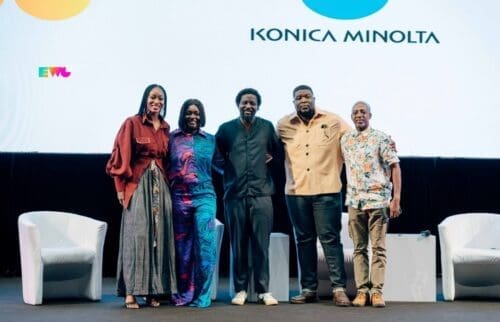
Entertainment Week Ghana will hold its 2026 summit at Bloombar on 28 November. The organisers also plan to publish their first report on the country’s creative economy, as they try to turn the festival into a source of industry data.

They said the summit will gather creatives, founders, investors, brands and executives for discussions on artificial intelligence (AI), technology, finance and the creative economy. Businesses chosen from the event’s Creative Economy Incubator will be put in front of investors there.

An art exhibition with Sankofa Gallery follows on 29 November. In December, the programme returns with the second Atalé fashion party and the Airwaves music festival, timed for Ghana’s year-end festive season.

The planned report is the main departure from last year. The organisers have given no date or detail yet. They said the report will cover jobs, investment, consumer behaviour and business activity across Ghana’s creative industries. Creators, investors and policymakers often cite the lack of reliable data on those industries as a barrier to funding.

Incubator’s second round

The Creative Economy Incubator and Deal Room is running for a second year. According to the organisers, the first round drew more than 50 applications. The winner, Seudio, received GH¢50,000 to develop its business.

This year’s round will focus on AI, technology and capital. It is open to start-ups working on media, fashion technology and e-commerce, creator tools, streaming and distribution, fan engagement, music, gaming, sport, film and event technology. Selected founders will get mentorship and advice on legal matters, monetisation and fundraising. Paystack, WeWire and Google are listed as partners.

The organisers have not said when applications close or how much prize money is on offer this year.

After a December debut

Entertainment Week Ghana launched in December 2025. Joseph Adjei, Chief Executive of the media firm BlacVolta, said at the time that the idea grew out of his team’s three and a half years documenting festive-season events.

The organisers said the first edition was backed by the Ghana Tourism Authority, the National Film Authority, the Black Star Experience and the Ministry of Youth Development and Empowerment. It also included a film programme with Idris Elba’s Akuna Pod, and the Airwaves Beach Festival with Lynx Entertainment.

BlacVolta, PartyXtra and Q Africa are behind the 2026 edition.

ADEMAN out with debut Gospel single ‘Turn Up For Me’

0

Ghanaian gospel artist ADEMAN has released a powerful new single titled ‘Turn Up For Me,’ a faith-filled song that speaks to the assurance that God will fight for His children in moments when they feel overwhelmed, challenged, or unable to fight their battles alone.

Produced by Ivan, ‘Turn Up For Me’ draws its message from a deeply personal place of surrender and dependence on God. The song presents a believer’s cry for divine intervention, trusting that God will step into the battle, wrestle for his soul, and provide the strength needed to overcome life’s struggles.

Rather than focusing solely on the difficulties believers face, ADEMAN shifts the attention toward God’s power and faithfulness. ‘Turn Up For Me’ captures the moment when a person recognizes that some battles are beyond human strength and chooses to place complete trust in God.

The song’s gospel message centers on the conviction that God does not abandon His people in their most difficult moments. Through its heartfelt delivery and spiritually charged lyrics, ADEMAN encourages listeners to surrender their fears, struggles, and battles to God.

Play

With Ivan’s production providing the musical foundation, ADEMAN delivers ‘Turn Up For Me’ as both a personal declaration of faith and an encouragement to anyone going through a difficult season. The song ultimately carries a simple but powerful message: when the battle becomes too much to handle, God can step in and fight for you.

Elite PR shortlisted for agency award at WAFRIC Awards

0

Accra-based public relations firm Elite PR has been shortlisted for PR Agency of the Year at the 2026 West African Citizens Awards (WAFRIC Awards), the agency said on Friday, 9 October 2026.

The agency said it was named on the organisers’ newly released shortlist for the category. It did not say how many other agencies are in contention or when the winners will be announced.

Elite PR was founded in October 2020 by Francis Amissah, who uses the nickname “Banks”. It grew out of TalkMediaGhana, an entertainment media platform he set up earlier. Most of its clients are musicians, entertainers and public figures in Ghana and the diaspora.

In a statement, Amissah said the nomination reflected the agency’s work for its clients. “We’re grateful to be recognised alongside some of the industry’s finest,” he said.

According to the agency, the WAFRIC Awards have recognised individuals and organisations across West Africa for the past five years. This year’s edition runs under the theme “Recognizing the Unseen. Celebrating the Exceptional.”