LATEST ARTICLES

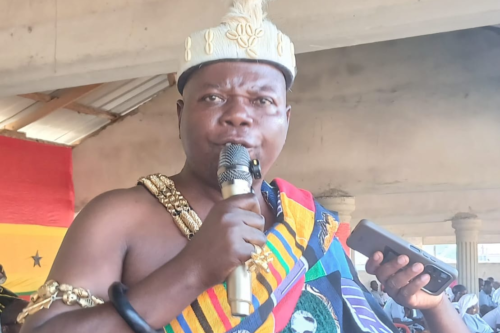
Chief says politics luring farmers’ children away from farming

0

A Central Region chief says young people from farming homes are abandoning agriculture because classmates who entered politics now drive luxury vehicles, leaving farming looking like punishment.

Osadeayo Ayeboafo Etuaful, the Sanahene of the Enyan Denkyira Traditional Council, spoke at the inauguration of the Central Regional Fruits Producers Union at Ekumfi Abor. He said the children of farmers now refuse to work alongside their parents and set their sights on politics instead.

“Farmers’ children see their classmates who are into politics driving V8,” he said. He blamed the shift on the way farmers are treated. He urged the government, through the Ministry of Food and Agriculture, to overhaul the sector quickly so that young people can take a full part in it.

Land as the missing link

Patrick Ayuba Quansah, president of the new union, put the burden partly on traditional authorities. He asked chiefs to release suitable land to young people who want to farm. With land, he said, members could set up more fruit farms, create jobs and make farming pay.

Quansah argued that giving young people land and support would keep them in productive work. Otherwise, he said, they might turn to activities that damage land and the environment.

He said the region has strong potential in fruit production. But he said growers cannot realise it without backing from banks, government, development partners and buyers.

The union was launched under the theme “Empowering Youth and Women for Sustainable Fruit Production and Economic Growth”.

A factory on the doorstep

Ekumfi Abor is home to Ekumfi Fruits and Juices Limited, a pineapple processing plant set up in 2019 under the One District, One Factory programme. It was built to process 10 tonnes of fruit an hour. The company planned to grow more than 4,000 acres of pineapple across Ekumfi and neighbouring districts to supply it.

Is the farmer getting older?

Concern over the age of Ghana’s farmers is not new. In August 2026, the Ghana National Cocoa Farmers Association said the average cocoa farmer is 63. The figure came as the association criticised a new Ghana Cocoa Board law for lacking a plan to bring in young people.

Some researchers dispute that picture for agriculture as a whole. A study using national survey data from six African countries, including Ghana, put the average age of the farm workforce at between about 32 and 39.
Adams says GFA will no longer control international earnings

0

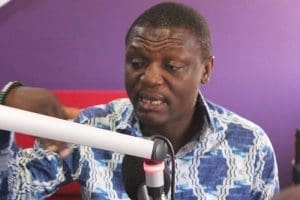
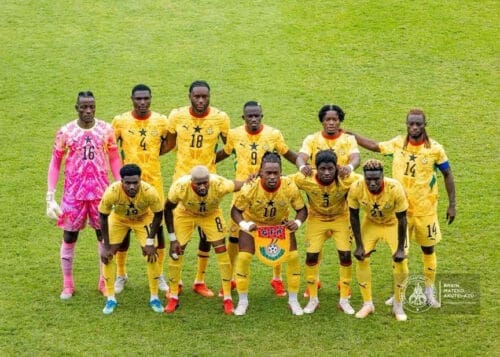
Sports and Recreation Minister Kofi Adams says all earnings from Ghana’s participation in international competitions must go into the Ghana Sports Fund, ending federations’ control over the money.

Adams told TV3’s Hot Issues that the rule applies to every federation, including the Ghana Football Association (GFA). The GFA handles Ghana’s biggest single source of such income, World Cup money paid by FIFA.

The stakes became clear this year. Ghana went out of the 2026 World Cup in the round of 32, a stage at which FIFA paid each national association between $11 million and $12 million in prize money, according to published breakdowns. That is roughly GH¢129 million to GH¢141 million at the Bank of Ghana’s early-October interbank rate. FIFA pays the money to national associations, not to governments or players.

‘Every pesewa’

Adams said the change answers a long-running public complaint that Ghanaians see little benefit from the country’s World Cup appearances and other international outings.

He said the law behind the Sports Fund requires that “every dollar, every cent, every pesewa” earned from international competition is paid into it. Federations will no longer decide on their own how to spend such proceeds, he said.

He presented the fund as part of a wider push for financial accountability in sport. That push also includes publishing budget estimates and cutting spending on Black Stars matches.

What the law says

Parliament passed the Ghana Sports Fund Bill on 18 December 2025, and it became the Ghana Sports Fund Act, 2025 (Act 1159). Adams inaugurated an 11-member governing board in January 2026. President John Mahama named banker Dr David Kofi Mawuvi Wuaku as the fund’s administrator.

Reports on the bill when it passed listed parliamentary allocations, special sports lotteries and 10 percent of fees the Gaming Commission of Ghana collects from sports betting among the fund’s revenue sources. Those reports did not single out competition earnings. The fund is meant to pay for athlete welfare, infrastructure, grassroots programmes and the training of sports administrators.

The GFA has not publicly responded to the minister’s remarks.

Kofi Adams says Black Stars double-header costs cut to US$1.3m

0

Sports and Recreation Minister Kofi Adams says the government has cut the cost of each Black Stars two-match qualifying window from nearly $2 million to $1.3 million, speaking on TV3.

At the Bank of Ghana’s interbank rate of about GH¢11.72 to the dollar in early October 2026, the new spending level comes to roughly GH¢15.2 million per double-header. The old level was more than GH¢23 million. The gap is about GH¢8.2 million each time the team plays two qualifiers.

Adams said on TV3’s Hot Issues programme that the $1.3 million figure applies to the current campaign. He described it as part of a wider review of sports spending aimed at removing costs he regarded as unnecessary.

Bonuses and allowances trimmed

Some of the savings came from people around the team rather than the players, the minister said. Members of the Black Stars management committee no longer receive a winning bonus when the team wins. Adams said the ministry saw no reason for committee members to share in match bonuses.

He added that the ministry had also reduced payments to some categories of officials, whose earnings it judged to be too high.

Adams first put a figure on the savings in January 2026. At the time, he said that reworking budgeting and release procedures with the Ghana Football Association (GFA) had saved close to $700,000 over two Black Stars matches.

Criticism over transparency

The minister also defended the government’s practice of publishing budget estimates for sports activities. He argued that openness about spending does not hurt the team’s performance.

“I got insulted for putting out those information,” he said. He added that he had also faced abuse for cutting some cost centres.

His stance marks a shift from early 2025. Ahead of World Cup qualifiers against Chad and Madagascar in March that year, Adams declined to publish the team’s budget, saying it could distract the players. Critics said this contradicted President John Mahama’s call for transparency in Black Stars finances. Adams later disclosed an $860,000 budget for the away qualifier against Chad. He said the original estimate submitted for that match had exceeded $1 million.

The cost debate now plays out over the 2027 Africa Cup of Nations (AFCON) qualifiers. Ghana are in Group C with Côte d’Ivoire, The Gambia and Somalia, after failing to reach the 2025 finals in Morocco. The Black Stars return to qualifying action in the 9 to 17 November 2026 international window.

University of Ghana postpones reopening as administrators’ strike drags on

0

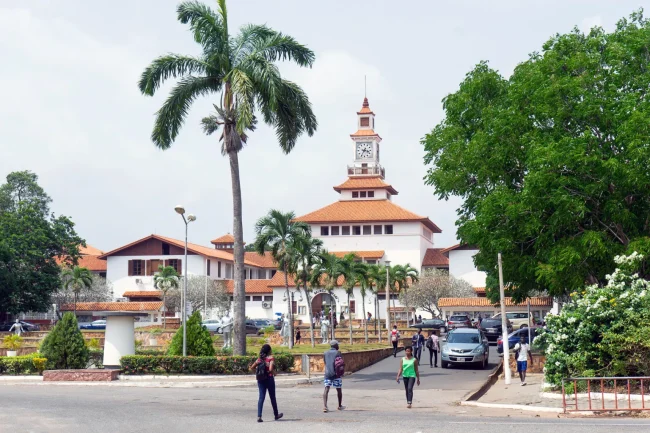
The University of Ghana on 10 October postponed reopening for the 2026/27 academic year, two days before freshers were due, as a strike by university administrators enters its third month.

In its statement, the university said it would announce a new reopening date later. It asked students to complete their registration online in the meantime.

The decision leaves new and returning students without a start date just as many were preparing to travel to campus. Under the original calendar, Level 100 students were to report on 12 and 13 October, continuing students from 15 to 18 October, and teaching was to begin on 19 October.

Strike freezes administration

The postponement comes as the Ghana Association of University Administrators (GAUA) continues a strike it declared in August. The strike followed the collapse of talks with the government over paying negotiated and approved allowances. The association is also demanding action on what it calls unequal allowances and conditions of service for administrators.

At the University of Ghana, the walkout has disrupted student, legal, financial and library services. Before the postponement, a notice signed by Pro-Vice-Chancellor Professor Gordon Awandare had put first-semester registration on hold. Awandare had also warned that the academic calendar would face severe disruption if the strike ran into the coming week.

The Kwame Nkrumah University of Science and Technology (KNUST) took the same step on 9 October. It suspended its 13 October reopening indefinitely.

No end in sight

GAUA says none of its six or seven grievances has been resolved after about two months of talks. It says it remains committed to negotiation.

Vice-Chancellors Ghana, the body of public university heads, urged the administrators on 9 October to return to work while talks continue. Teachers in basic and secondary schools suspended a separate strike after reaching an agreement with the government. The university administrators have not done the same.

This is the second time in three years that strike action has pushed back the start of the University of Ghana’s academic year. In September 2024, the university postponed its 2024/2025 opening indefinitely while senior staff and other unions were on strike.

Odakky Andy says he introduced ‘Ah Bwoy’ before Stonebwoy

0

Musician Odakky Andy says he introduced the “Ah Bwoy” tag Stonebwoy later used, suggesting the dancehall star picked it up when both were in High Grade Family.

Odakky Andy made the claim in an interview on Kumasi-based Angel FM, as reported by MyNewsGh.com. He said the two were close at the time and moved in the same musical circle under Samini, the dancehall artist who runs the label.

“I’m sure he took the inspiration,” he said of Stonebwoy.

The claim is the latest attempt by someone from Stonebwoy’s early years to stake a share in the making of one of Ghana’s most decorated acts. Music producer Kwik Action said in a separate interview with Citi TV that he was the person who recommended the young Stonebwoy to Samini.

No rift, he says

Odakky Andy did not present the matter as a grievance. He described Stonebwoy as a brother and said the two remained on good terms, though they speak less often than they once did.

Stonebwoy has not responded publicly to the claim.

Years under Samini

Stonebwoy, whose real name is Livingstone Etse Satekla, joined Samini’s High Grade Family after starting out at S24 Studios in 2008. His breakthrough came in 2012 with “Climax,” a collaboration with Samini. He left the label that year to set up his own, Burniton Music Group.

His best-known catchphrase is “BHIM,” short for Bless His Imperial Majesty, which also gives his fan base its name.

Shaffy Bello rules out leaving Nigeria for United States

0

Nollywood actress Shaffy Bello says she has no wish to return to the United States, where she grew up, telling a media panel Nigeria is home despite its failings.

Her position runs against a strong current in Nigeria, where many young professionals have left or are planning to leave for jobs abroad, a trend widely known as “japa.”

Bello spoke during a discussion at 20+ Years in the Media: Real Talk with Kike @7. She described her time in the United States as preparation and gave Nigeria the credit for what she has become.

“America trained me, but Nigeria made me,” she said.

She told the audience she hoped she would never get the chance to move back. In her view, the openings she has found in Nigeria, and still finds, outweigh what relocation could offer.

Advice for young Nigerians

Bello did not play down the country’s problems. She named power supply, education and healthcare as areas where Nigerians continue to struggle.

Her advice to young people was to start with what they already have. She urged them to take stock of their own strengths, build skills that are in demand and go after the opportunities around them.

She credited her long career to being authentic and honest, and told young people to stay true to themselves and keep their faith.

From backing vocals to Nollywood

Bello first reached Nigerian audiences as a singer. She provided the vocals on “Love Me Jeje,” Seyi Sodimu’s 1997 hit, a song that later inspired the title of a 2024 track by Tems.

She completed her education in the United States before building an acting career at home. Her credits include Battleground, Chief Daddy, in which she played Nike Williams, and Elesin Oba, The King’s Horseman, which premiered at the Toronto International Film Festival in 2022.

World Bank’s 2.2% deficit forecast matches Ghana’s own 2026 target

0

The World Bank’s forecast that Ghana’s fiscal deficit will widen to 2.2 percent of gross domestic product (GDP) this year is the same figure the government set itself in its 2026 budget.

That makes a challenge laid down by data and policy analyst Alfred Appiah less of a stretch than it sounds. Appiah has said he expects Finance Minister Dr Cassiel Ato Forson to beat the bank’s projections, which, according to the World Bank’s October 2026 Africa Economic Update, have the deficit at 2.2 percent in 2026 and 2.9 percent in 2027. “We would expect Ato to beat those projections,” Appiah wrote.

On the half-year numbers, Ghana is well ahead. The question is whether it can hold that lead through the second half, when spending traditionally catches up.

A sharp turnaround

The bank’s forecast follows one of the steepest fiscal corrections in the region. The report puts Ghana’s deficit at 1.2 percent of GDP in 2025, down from 8.1 percent in 2024, the largest improvement in Sub-Saharan Africa, Appiah said.

Debt has fallen with it. The World Bank’s Ghana country team said public debt dropped from 70.3 percent of GDP in 2024 to 49 percent at the end of 2025, three years ahead of the IMF programme timeline. The government’s own figures, which use a different measure, show a fall from 61.8 percent to 44.7 percent. Ghana also ran a primary surplus, which excludes interest payments, of 2.5 percent of GDP in 2025, beating its 1.5 percent target.

Ahead at half-time

The first six months of 2026 suggest the government has room to spare. The overall deficit on a commitment basis was 0.4 percent of GDP by June, against a half-year target of 2.0 percent. On a cash basis it was 0.8 percent, against a target of 2.9 percent. Interest costs came in at 1.3 percent of GDP, below the 1.8 percent target, helped by falling interest rates.

Much of that came from holding back spending rather than raising more money. Primary spending was 6.6 percent of GDP at mid-year against a target of 8.1 percent, while revenue and grants, at 7.8 percent, fell just short of their 7.9 percent target.

That is the weak point. Spending that is delayed is not always spending avoided. Analysts at IC Securities expect payments to contractors to push the deficit wider in the second half, though they still expect the government to hit its full-year cash deficit target of 4.0 percent.

The real test

Ghana has a record of slippage. In 2024, an election year, unbudgeted spending of $4.8 billion pushed the deficit to 7.9 percent of GDP against a target of 4.2 percent, the World Bank has said. The bank has also warned that the recovery remains structurally incomplete and that keeping the gains will depend on raising more revenue at home.

The government faces a large bill early next year. It is building a GH¢30 billion sinking fund to repay domestic debt from its 2023 exchange programme that falls due in February 2027.

Ato Forson will set out his deficit target for 2027 in the coming budget, giving the first official answer to the World Bank’s 2.9 percent forecast.

Labour Minister Agyekum, ILO push practical skills to tackle unemployment

0

Labour Minister Emmanuel Kwadwo Agyekum has urged the International Labour Organisation (ILO) to back hands-on technical training, as official data show 13 percent of Ghana’s labour force unemployed.

Agyekum, who heads the Ministry of Labour, Jobs and Employment, made the case when the ILO’s Country Director for Ghana, Nigeria, Sierra Leone and Liberia, Dr Vanessa Phala, led a delegation to his office to set out areas of cooperation.

The problem he faces is not only the number of jobs but their quality. The Ghana Statistical Service put unemployment at 13 percent in the third quarter of 2025, the latest official figure. A World Bank study of the economy, Ghana Rising, found the country had a “missing middle” of jobs in mid-productivity sectors, with too few workers moving out of low-earning work into better-paid industries.

Agyekum said skills were central to solving that, and called for more practical training linked to growing sectors such as renewable energy, agriculture and fabrication. He also stressed the need to measure productivity.

A five-year framework

The talks centred on Ghana’s third Decent Work Country Programme, which runs from 2026 to 2030. The plan, agreed between the government, employers and trade unions with ILO support, rests on three pillars: creating more decent jobs, widening and digitising social protection, and strengthening rights at work.

Phala pointed to several ILO-backed projects already running, including the EU-Ghana Pact for Skills, the Productivity Ecosystems for Decent Work programme, a jobs and agriculture initiative, and ACCEL Africa, which works to remove child labour from selected supply chains.

The productivity programme targets the barriers that stop small businesses from growing, on the logic that firms that work more efficiently can afford to hire more people and pay them better.

Protecting workers abroad and at home

Agyekum also called for closer cooperation on labour migration, saying Ghanaians recruited for work overseas must be protected from exploitation and treated with dignity, and that recruitment practices must be fair.

He reaffirmed the government’s commitment to ending child labour and keeping children out of hazardous work, and called for stronger workplace safety, including basic life-support training.

Official jobs data has become contested. The Ghana Statistical Service has not published any figure supporting a recent claim by an official of the 24-Hour Economy Secretariat that unemployment had fallen to about 6.4 percent. The 2026 Mid-Year Budget Review put the average rate for the first three quarters of 2025 at 12.8 percent.

Ghana AgriTech challenge backs apps linking farmers to buyers

0

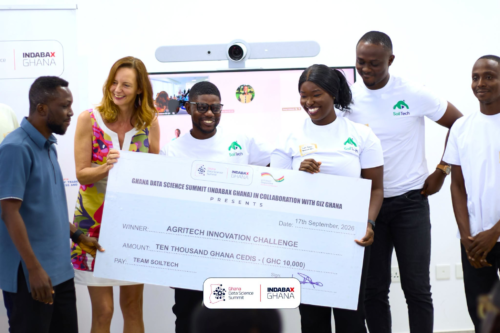
Eight teams of young Ghanaian innovators have built prototype apps that connect farmers directly with buyers, in a German-backed challenge aimed at cutting the country’s heavy post-harvest losses.

The teams pitched their prototypes to a panel of judges in late September in the AgriTech Innovation Challenge, run by the Ghana Data Science Network and the Private Sector and Innovation Promotion in Ghana (PSInno) programme. Three were selected as finalists.

The stakes are measurable. The African Postharvest Losses Information System estimates that Ghana lost 18 percent of its maize after harvest in 2021, about 276,568 tonnes worth more than $134 million. The government has committed to halving post-harvest losses by 2030, bringing food losses down from a baseline of 20 percent to 10 percent.

Launched at the 2026 Ghana Data Science Summit, also known as IndabaX Ghana, the challenge opened in June and drew 72 applications. It asked entrants to design digital marketplaces that move produce from farms to buyers more efficiently, using data science and artificial intelligence.

The prototypes went beyond simple buying and selling. Teams built in links to storage and warehousing, and added field agents and SMS alerts so that farmers without smartphones or reliable internet could still use the services.

Atsu Daniel Agbenyega, a co-chair of the summit’s steering committee, said the aim was to get young people applying data science and AI to real problems in agriculture. Arlett Stojanovic, who heads the PSInno programme at the Deutsche Gesellschaft für Internationale Zusammenarbeit (GIZ) in Ghana, said German development cooperation was committed to backing young entrepreneurs working on food security.

A member of the winning team, Team SoilTech, announced the first-place finish on LinkedIn.

No figures have been published on how much the platforms could reduce losses or raise farmers’ incomes, and the prototypes have yet to be tested at scale. Losses are highest at the very start of the chain: for maize, rice and other cereals, most are recorded at harvesting and field drying, before produce ever reaches a market.

PSInno is commissioned by Germany’s Federal Ministry for Economic Cooperation and Development and implemented by GIZ, which said it would continue supporting the teams after the competition.

Ghana heads to Bangkok meetings with lower rates, rising inflation

0

Ghana enters this week’s IMF and World Bank Annual Meetings in Bangkok no longer needing a bailout, but with inflation edging up for a second straight month.

The meetings run from 12 to 18 October at the Queen Sirikit National Convention Center, the first time Thailand has hosted them since 1991. Finance ministers and central bank governors from across the IMF’s 191 member countries are expected, with the plenary session on 16 October.

For Ghana, the gathering is a test of whether a recovery that has impressed the lenders can now win over private investors. Finance Minister Dr Cassiel Ato Forson has told Parliament the country has moved from IMF “supplicant” to “partner” after leaving its bailout programme, and has said the economy has passed $100 billion in size for the first time.

A strong hand on borrowing costs

The clearest sign of the turnaround is the price of credit. The Ghana Reference Rate, the benchmark banks use to price loans, fell to 10.04 percent in October from 15.68 percent in January, according to Bank of Ghana data. A year earlier, in September 2025, it stood at 19.86 percent.

The central bank’s own policy rate has held at 14 percent since March, with the Monetary Policy Committee leaving it unchanged on 24 September for the third meeting in a row. Governor Dr Johnson Asiama said at the time that inflation expectations and underlying price measures pointed to moderation.

The soft spot

Inflation is the number investors will watch. Annual inflation rose to 5.2 percent in September from 5.0 percent in August, the Ghana Statistical Service said on 7 October, the second monthly increase in a row. Food inflation climbed to 4.0 percent from 3.0 percent, and prices rose 0.8 percent in the month alone.

The rate remains far below the 9.4 percent of a year earlier, and well short of the double-digit levels of 2022 and 2023. But it has moved up from a low of 3.2 percent in March, which limits how much further the central bank can cut and how far borrowing costs can fall.

The continental backdrop

Ghana will be pitching its story in a crowded field. The World Bank on 6 October raised its 2026 growth forecast for Sub-Saharan Africa to 4.3 percent, with upgrades for nearly three-quarters of the region’s countries. Investors therefore have more improving African economies to choose from.

Debt remains the common weakness. The World Bank’s chief economist for Africa, Andrew Dabalen, said in April that debt service had risen to about 18 percent of government revenue across the region in 2025, double the 2017 level, with about half of African countries at high risk of or already in debt distress. That leaves governments little room to fund roads, power and schools themselves, and makes private capital more important.

The World Bank has also warned that faster growth is barely lifting incomes. Income per person in the region is expected to rise just 1.8 percent this year.

Ghana’s challenge in Bangkok is to show that its lower rates and stable macroeconomic numbers can translate into the factory, power and farm investment that create jobs. Ato Forson is also preparing the 2027 budget, which he is due to present to Parliament later this year.

World Bank sees green shift as upside for African growth

0

The World Bank says the clean-energy shift could push Sub-Saharan Africa’s growth past its raised 4.3 percent forecast for 2026, if power, transport and skills gaps close.

The lender’s October 2026 Africa Economic Update, released in Washington on 6 October, lifted its 2026 forecast for the region by 0.3 percentage points from April. Growth was 4.1 percent in 2025, and nearly three-quarters of the region’s countries, including Angola, Ethiopia, Nigeria and Zambia, had their outlooks upgraded.

The report treats the global move to green technology as an upside risk, meaning a factor that could lift growth above the central forecast. It points to the region’s strong sunshine, its renewable energy potential and its deposits of minerals used in batteries and other clean-energy equipment.

The scale of demand is large. The World Bank has previously estimated that production of minerals such as graphite, lithium and cobalt could need to rise by nearly 500 percent by 2050 to meet clean-energy needs. Its separate Mineral Resources of Africa report identified 26 key minerals across the continent and said Africa’s edge lay in high geological potential and relatively low discovery costs.

Agriculture is the second opportunity the report identifies. The region has large tracts of underused farmland, and higher yields could both feed a fast-growing population and expand food exports.

The catch: processing at home

The report’s warning is that resources alone will not deliver. Countries need reliable electricity, roads and ports, skilled workers and sound policy to attract investors, process minerals locally and create jobs. Without them, the region risks staying a supplier of raw materials while the factories, jobs and income from the green economy go elsewhere.

That risk is already visible. Very little of Africa’s critical mineral output is processed on the continent, according to the South African Institute of International Affairs, while China produces more than 80 percent of the world’s solar panels.

The rest of the report explains why the upside matters. Faster growth is barely reaching households: income per person is expected to grow only 1.8 percent this year, up from 1.6 percent in 2025. Regional inflation is projected to rise to 5.5 percent in 2026. The bank also cited heavy debt service, limited fiscal space and higher energy and transport costs as continuing drags.

Debt is the tightest constraint. Andrew Dabalen, the World Bank’s chief economist for Africa, said in April that debt service had doubled from 9 percent of government revenue in 2017 to about 18 percent in 2025, with about half of African countries at high risk of, or already in, debt distress.

“The next challenge is turning growth into more jobs and better opportunities,” Dabalen said on 6 October.

The update’s main theme is artificial intelligence. It argues that AI could raise productivity and create jobs but warns that adoption remains uneven, with weak connectivity limiting the gains for workers.

Bono police arrest eight over alleged fraud initiation beating

0

Bono Regional Police have arrested eight men accused of beating a 21-year-old at Kotokrom, near Sunyani, in what police say the suspects called an initiation into internet fraud.

Officers from the Regional Operations Unit made the arrests on 4 October after a distress call at about 4.30pm reported that a group was attacking a man in the Sunyani West Municipality suburb, according to a police statement issued on 9 October.

The patrol team found the young man with several injuries from the assault and arrested the eight at the scene.

Police named them as Peter Mbam, 24; Godwin Moses, 26; Humble Oweifah, 18; Osas Ogbemudia, 30; Samuel Aisosa, 22; Ashile Godbess, 24; Alexander Uyuo, 30; and Patrick Romans, 25.

The suspects told investigators that the beating was part of an initiation they had themselves gone through before joining the fraud business, the police said.

The case points to a romance-style scam. Preliminary investigations suggest the group was brought to Ghana by a man they described as their “chairman”, according to the police. Members allegedly used photographs of foreign soldiers downloaded from the internet to pose as troops serving in Yemen, struck up online conversations with victims and then collected money from them. The money was paid into the account of the man described as their boss, the police said.

The police did not say how many people may have been defrauded, how much money was involved, or whether the alleged leader is in custody. They also did not say whether the eight have been charged or put before a court.

Online fraud, including romance scams, is the most common cybercrime reported in Ghana. The Cyber Security Authority has said online fraud caused GH¢12.87 million in losses between January and September 2025, accounting for 47 percent of the complaints it received. Total cybercrime losses in that period exceeded GH¢19 million, up about 17 percent on the same months of 2024.

The Bono Regional Police Command praised residents for acting quickly and said it would keep working with the public to fight crime in the region. The Cyber Security Authority takes fraud reports on its toll-free line, 292.

Pope Leo XIV to have surgery after lung nodule found

0

Pope Leo XIV will undergo surgery in Rome early next week after doctors found a nodule on his lung, he told pilgrims in St Peter’s Square on 11 October.

The announcement, made at the end of his Sunday Angelus prayer, is the first public health scare of a pontificate that began in May 2025. “The doctors found an early, well-localised nodule on my lung,” the 71-year-old said.

He said the growth had been picked up during a medical check-up, was contained and had been caught early. His doctors had advised that it was right to operate, and he had agreed. He thanked the faithful for their spiritual closeness and asked for their prayers.

The Pope did not say whether the nodule was cancerous, and the Vatican has not said so. A lung nodule is a small growth of tissue, usually found on a chest X-ray or CT scan, and most cause no symptoms.

Holy See Press Office spokesman Matteo Bruni said the operation was scheduled for the first days of next week and that recovery was expected to take about a week. Vatican News said it would take place at Rome’s Gemelli Hospital.

Gemelli has treated popes for decades. John Paul II had a benign intestinal tumour removed there in 1992, and Francis had colon surgery there in 2021 and hernia surgery in 2023. Francis, who had part of a lung removed at 21, also spent weeks at the hospital with double pneumonia in early 2025, shortly before his death that April.

Leo said his planned November visit to Uruguay, Argentina and Peru would go ahead. The Archbishop of Montevideo, Daniel Sturla, said preparations would continue with even greater enthusiasm and asked for prayers for the Pope’s recovery.

Messages of support came quickly. Italian Prime Minister Giorgia Meloni offered her personal solidarity, President Sergio Mattarella wished him a calm recovery and a full return to health, and Israeli President Isaac Herzog wished him a full and speedy recovery.

Born Robert Francis Prevost in Chicago, Leo is the 267th pope and the first from the United States. He was ordained in 1982 and spent years as a missionary in Peru, the country he is due to visit after his surgery.

Minority questions GH¢16.4m in South Africa evacuation records, seeks audit

0

The Minority in Parliament says Foreign Affairs Ministry records do not support GH¢16.4 million of the GH¢49.7 million spent evacuating Ghanaians from South Africa, and wants an independent audit.

The figure comes from Nana Asafo-Adjei Ayeh, the Member of Parliament for Bosome-Freho and Deputy Ranking Member of Parliament’s Foreign Affairs Committee. He based it on a review of a report of more than 200 pages that the ministry supplied in response to his Right to Information request.

The Minority does not allege that money was stolen. Its case is that the ministry’s payment registers and flight records, as supplied, cannot be reconciled with the official count of 1,964 evacuees, and that the gap needs explaining.

The stakes go beyond one operation. The evacuation was unbudgeted, and the ministry has already asked the Auditor-General to examine every evacuation it has run since 2017. The Minority says an audit by a private firm would carry more weight.

How the money was spent

Foreign Affairs Minister Samuel Okudzeto Ablakwa announced the total of GH¢49,721,786 on 7 September, after an operation that ran from 27 May to 4 September and followed xenophobic attacks on foreign nationals in South Africa. The government paid GH¢33,721,786 and Engineers and Planners, a company owned by businessman Ibrahim Mahama, contributed GH¢16 million.

According to the ministry’s report, chartered flights cost GH¢27,183,700 and commercial tickets and layovers GH¢9,420,463.68. A further GH¢10.802 million covered a GH¢5,000 reintegration grant and a GH¢500 transport allowance for each of the 1,964 returnees.

What the Minority says it found

Ayeh said only 824 names appeared in the signed registers for both the reintegration grant and the transport allowance. Set against the official 1,964, that leaves 1,140 people whose combined GH¢5,500 payments, worth GH¢6.27 million, the Minority says the registers do not establish.

On flights, the Minority counted 926 passengers on chartered flights, which would leave 1,038 on commercial flights. It says the records it received evidence only 247 commercial passengers. Using an average ticket cost of about GH¢9,076, it values the travel of the remaining 791 people at about GH¢7.18 million.

Together, those two gaps come to GH¢13,449,116, about 27 percent of the total.

Duplicates and minors

The Minority also cited duplicate names in the reintegration register, the transport register and at least one flight manifest, along with blank and unsigned entries. Duplicate entries do not on their own show that anyone was paid twice, and the Minority is asking the ministry to establish whether they affected payments or the headcount.

It separately counted 442 minors among the 1,708 people listed in the reintegration register and asked how payments meant for children were made and recorded. If each child received the full package, that would come to GH¢2.431 million. Payments to minors are not in themselves improper, and the Minority has not said they were.

Adding its estimates for minors and duplicates, the Minority puts the total requiring explanation at GH¢16,423,470, about 33 percent of the bill.

The statement leaves some questions about its own method. It does not say whether any of the 442 minors are also among the 1,140 unmatched evacuees, which would mean some amounts are counted twice. Its closing demand also cites a different total, GH¢16,302,586, a difference of GH¢120,884 that it does not explain.

The ministry’s position

The ministry had not publicly responded to the latest findings by the time of publication. Ablakwa said when he announced the cost that the bill had been paid in full with no outstanding liabilities, and that the evacuation had not been budgeted for because it could not have been anticipated.

The Minority first demanded supporting records at a press conference on 10 September. “If the books are closed, then let’s open the books,” Ayeh said then. The caucus later boycotted a closed-door committee briefing by the minister. The committee’s chairman, Dr Alfred Okoe Vanderpuije, said at the time that Ablakwa was committed to giving the Minority whatever information it needed.

The Minority wants the audit carried out by Deloitte, KPMG, PricewaterhouseCoopers or Ernst & Young, or a firm of similar standing independent of the ministry and its contractors, with the results published. The ministry asked the Auditor-General on 17 September to conduct a special audit of all its evacuation exercises since 2017.

Stephanie Benson says only Majid Michel unsettled her husband

0

Singer Stephanie Benson says Majid Michel is the only man her husband, Jonathan, has been uneasy about, despite her sitting on the laps of other prominent men.

Benson made the remark on Okay FM’s drive-time show Ekwanso Dwoodwoo, where she appeared alongside the actor’s elder sister, Juliette Mills-Lutterodt.

It was Mills-Lutterodt who raised it, teasing Benson that Majid was the one man her husband did not want her sitting on.

Asked by host Nana Romeo to explain, Benson laughed and said only her husband could answer that. She said she had sat on the laps of other men, including billionaires, without any objection from him. “Majid was the only one that my husband said he felt some way about,” she said.

The exchange drew laughter in the studio and pointed to a long friendship between Benson and the Michel family.

Benson, a UK-based singer often described in Ghana as the queen of jazz, married Jonathan Benson, an Englishman, on 17 June 1989. The couple have five children, and she has said publicly that he is the only man she has ever been with.

Majid Michel, a winner of Best Actor at the 2012 Africa Movie Academy Awards, built his career on romantic leading roles in Ghanaian and Nigerian films before turning much of his attention to Christian ministry.

On the same programme, Mills-Lutterodt said her brother, the last of 11 children, had become the most successful of all the siblings.

Don Little says dwarves took him away as a child

0

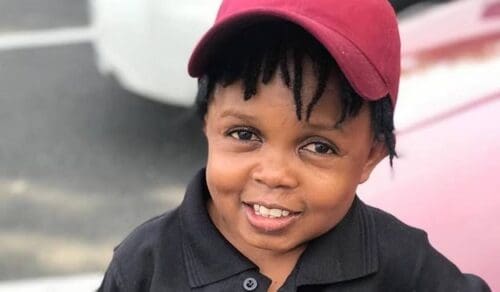
Kumawood actor Don Little says he was repeatedly taken away by dwarves as a small child in his father’s hometown, and believes the episodes affected his growth.

The actor, whose real name is Stephen Atanga, told the story on The Atuu Show, the celebrity chat programme hosted by Abeiku Santana on United Television (UTV).

He said his parents had been told to bring him to his father’s hometown for family customs. One day, he said, his mother put him to bed and stepped out briefly, only to return and find him gone. When she raised the alarm, people in the town told her dwarves had taken him and would bring him back, and they did, according to his account.

It did not stop there. “The dwarves would always come for me,” he said, adding that they took him to their land, played with him, fed him and returned him. The visits ended, he said, only after the family completed its customary rites and his mother moved him out of the town.

He said he was too young to understand what was happening. His parents later noticed he was not growing normally, and he said the time spent with the dwarves might explain it. As an older child, he added, he had episodes similar to sleepwalking in which he wandered unaware towards the edge of nearby forests.

Stories of forest dwarves carrying off children run deep in Ghanaian folklore. In Akan tradition they are known as mmoatia, short beings said to live in thick forest and to snatch people, especially children, using a whirlwind.

Short stature in people is generally linked by medicine to genetic or hormonal conditions. Don Little did not mention any medical diagnosis in the interview.

He has said he started acting in 2007, and his first television appearance was in comedian Funny Face’s series Cow and Chicken. He has since become one of the best-known faces in Kumawood films.

Majid Michel’s sister says youngest sibling became family’s biggest star

0

Actor-turned-evangelist Majid Michel was the youngest of 11 children and had the least of their father, yet outgrew all his siblings, his elder sister Juliette Mills-Lutterodt has said.

Speaking on Accra radio station Okay FM, Mills-Lutterodt said the small share Majid received as the last born had turned into the greatest return of any child in the family. “He became the biggest of all of us,” she said.

She said the public knew him mainly through his films, but that off screen he was grounded, spiritual, devoted to his family and an exceptional man.

Born on 22 September 1980 in Cantonments, Accra, to a Lebanese father and a Ghanaian mother, Majid did not have an easy start in acting either. He told Starr FM in 2017 that he failed his first audition because he spoke too fast, and enrolled in acting school before trying again.

His break came with the television series Things We Do for Love, where he played a young Lebanese hotel worker and earned the nickname “Shaker”. The lead role in the 2004 film Divine Love followed, and the 2009 Nigerian film Silent Scandals made him a star across the border.

He won Best Actor in a Leading Role at the 2012 Africa Movie Academy Awards, one of six nominations in that category between 2009 and 2017.

In recent years he has devoted much of his time to Christian ministry, preaching in churches across Ghana alongside his film work.

Ghana secure but not an island, says counter-terror chief Ba-Taa-Banah

0

Ghana’s counter-terrorism chief, Major General Timothy Ba-Taa-Banah, has warned that the country’s record of escaping jihadist attacks could be lost if citizens and security agencies grow complacent.

Ba-Taa-Banah, Director of the National Counter-Terrorism Fusion Centre, said the country was safe for now but exposed to the violence spreading south from the Sahel. “We are secure, but we are not an island,” he said.

The threat sits close to Ghana’s northern and eastern borders. Jama’at Nusrat al-Islam wal-Muslimin (JNIM), al-Qaeda’s Sahel affiliate, has staged attacks in Côte d’Ivoire, Benin and Togo since 2019. In March, its fighters killed 15 soldiers at a base in Kofouno in northern Benin, after an April 2025 attack in which 54 Beninese soldiers died. Nigerian think tank Nextier has put deaths linked to jihadist attacks in Benin at 58 in 2023 and at least 575 in 2025.

Ghana has so far avoided a major attack of that kind.

Ba-Taa-Banah said keeping it that way would take more than guarding the borders. He called for steady intelligence gathering, an alert public and close coordination among the state’s security agencies, so that threats are stopped before they take shape.

He said the agencies were watching for danger every day and working to give citizens the best protection possible within the resources allocated to them, an acknowledgement that funding limits what they can do.

He urged communities to report suspicious movements to the authorities, describing public cooperation as the country’s strongest defence.

His emphasis on intelligence over troops echoes advice from the International Crisis Group. In a February 2026 report on JNIM’s push towards the coast, the think tank urged coastal states to invest more in intelligence to understand local threats, and advised those not yet under attack to rely on police rather than soldiers at their borders.

Ba-Taa-Banah has previously said terrorist attacks across Africa rose by 14 percent in the first half of 2026.

Abdallah urges tighter borders, protection for Sahel refugees in Ghana

0

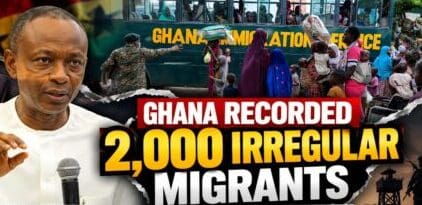
Dr Mustapha Abdallah of the Kofi Annan International Peacekeeping Training Centre has urged tighter border controls but warned against treating people fleeing Sahel violence as extremists.

Abdallah, a Senior Research Fellow at the centre, said Ghana’s first task was to staff its borders properly so that only people legally entitled to enter the country do so.

His call comes as the number of people seeking refuge in Ghana climbs sharply. The UN refugee agency, UNHCR, said Ghana hosted 32,500 refugees and asylum seekers in June 2026, about three-quarters of them from Burkina Faso. In December 2024 the figure was about 17,300, meaning the population has nearly doubled in 18 months.

Abdallah drew a firm line between those arrivals and security threats. “They are not extremists and terrorists,” he said of people escaping danger in Sahelian countries, adding that Ghanaian and international law require the state to protect them.

He said the country should give such people shelter and keep them safe. Most new arrivals from Burkina Faso are received in the north, where UNHCR supports government-run reception and settlement centres at Tarikom in the Upper East Region and Zini in the Upper West Region. World Vision Ghana said in June that it was supplying more than 500 cubic metres of safe water a day to over 5,000 people in those two camps.

Abdallah said protection should not mean lowering guard. Residents who suspect someone of criminal activity should report them to the security agencies, he said, and called for closer cooperation between communities, the police, the Ghana Immigration Service and other agencies.

The aim, he said, was to keep citizens safe from crime while ensuring that people living in Ghana legally are treated humanely.

Burkina Faso has faced a long armed insurgency, and World Vision Ghana has said conflict, extremist violence and climate shocks are driving families across Ghana’s northern border. Asylum seekers are also hosted in border communities including Fielmo, Bansi and Issakatinga, as well as in the two reception centres.

NPP orders parliamentary hopefuls to halt campaigns ahead of 2028

0

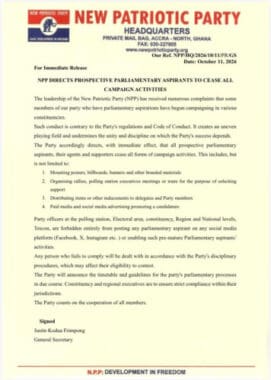
The New Patriotic Party (NPP) on 11 October ordered would-be parliamentary candidates to stop campaigning immediately, warning that breaches could cost them the right to contest its primaries.

General Secretary Justin Kodua Frimpong said in a statement that some aspirants had already started campaigning in constituencies, in breach of the party’s regulations and Code of Conduct. Early campaigns, the party said, tilt the contest in favour of those who start first and damage unity and discipline.

The order lands eight days after delegates in Kumasi elected a new national executive, and as the opposition party begins mapping out its route to the 2028 general election. It also cuts across a contest the new leadership wants to manage closely. Nana Akomea, newly elected Third Vice Chairman, has said the party plans to profile possible candidates early in constituencies where it has no sitting MP, partly to stop aspirants spending heavily on campaigns that fail. The NPP has more of these seats after losing power to the National Democratic Congress in 2024.

The directive bans posters, billboards, banners and other campaign materials, along with rallies, meetings with polling station executives and tours aimed at drumming up support. Aspirants and their backers must also stop handing out gifts or other inducements to delegates and members, and end paid adverts in traditional and social media.

Party officers at every level, from polling station to national office, are barred from promoting any aspirant online or helping early campaigns. The ban extends to the party’s tertiary students’ wing.

Anyone who ignores the order faces the party’s disciplinary process, which the statement said “may affect their eligibility to contest”. Constituency and regional executives are responsible for enforcing it in their areas.

The party has used such bans before, and has acted on them. In May 2025, Kodua ordered members to stop campaigning for internal party posts until nominations opened. Two months later, the Agona West constituency executive suspended Christopher Arthur, the NPP’s 2024 parliamentary candidate there, accusing him of holding an electoral area meeting in breach of that directive.

The NPP said the timetable and guidelines for its parliamentary primaries would be announced later. In the last cycle, it held primaries in seats without an NPP MP on 2 December 2023 and in seats it held on 27 January 2024.

IPMP-Ghana honours Elsie Effah Kaufmann with lifetime achievement award

0

The Institute of Project Management Professionals (IPMP-Ghana) has given Ing. Prof. Elsie Effah Kaufmann, the National Science and Maths Quiz host, its Lifetime Achievement Award at its 10th anniversary.

The institute also named her Outstanding Member of the Decade and Outstanding Member, making her one of the most decorated figures at the anniversary celebrations.

The honours come from a field most Ghanaians would not link to her. Effah Kaufmann is best known as the face of the quiz, but she holds a Project Management Professional certification and is a Fellow of IPMP-Ghana, which trains and certifies project managers. The institute has previously named her its Outstanding Member of the Year, and its website lists her as president of Women in Projects.

Her main career is in engineering. She joined the University of Ghana in 2001 as a physics lecturer and went on to found its Department of Biomedical Engineering. In August 2022 she became the first woman to lead the university’s School of Engineering Sciences as dean, a post she still holds.

International recognition followed. The Royal Academy of Engineering in the United Kingdom elected her a Fellow in September 2025, one of only two Africa-based academics chosen that year. She was formally admitted in London in November 2025, becoming the first Ghanaian to receive the honour.

Away from the university, she set up the Elsie Effah Kaufmann Foundation to support hands-on science and technology research by students across Ghana.

The quiz remains her public stage. She has hosted the televised contest for senior high schools since 2006, which makes 2026 her 20th year in the role.

Afenyo-Markin urges journalists to investigate Ghana cocaine trafficking links

0

Minority Leader Alexander Afenyo-Markin on 7 October urged journalists to investigate cocaine shipments traced to Ghana, warning that the fallout could hurt legitimate exporters of cocoa, timber and cashew.

He made the call at the launch of the 30th Ghana Journalists Association (GJA) Media Awards at the Kempinski Hotel Gold Coast City in Accra, in a room that included Chief of Staff Julius Debrah and government spokesperson Felix Kwakye Ofosu.

The appeal comes as the opposition presses for answers on a run of seizures linked to Ghana. The largest came in September, when French customs officers at Dunkirk found nearly 3.9 tonnes of cocaine in a container of plastic waste that had left the country. The Minority in Parliament has since demanded an independent parliamentary inquiry.

Afenyo-Markin, who leads the New Patriotic Party’s Minority caucus, cast the media as the fallback when Parliament cannot get answers. “When the legislature is prevented from asking questions, the media must find the answers,” he said.

He cited Article 162(5) of the 1992 Constitution, which charges the media with holding the government accountable to the people, and told reporters their job went beyond relaying official statements.

Drawing on research by JoyNews, he said foreign scrutiny of Ghana-linked cocaine could lead to longer cargo holds, more inspections and higher costs for the country’s exporters.

That research counts 11 cocaine cases among 28 drug busts linked to Ghana between March 2025 and 22 September 2026, with the seized cocaine valued at $1.3 billion to $1.7 billion on the street. It puts the Ghana-linked total at about 16 tonnes, close to twice the official figure of 8.5 tonnes, largely because seizures made in Europe do not appear in Ghana’s own statistics. Belgian figures released in January ranked Ghana fifth among source countries for cocaine seized at Antwerp in 2025.

Afenyo-Markin also accused the government of using political rows and high-profile arrests to draw attention away from the trafficking problem. He offered no evidence for the claim at the event, and urged journalists to test it themselves.

The government rejects that picture. Kwakye Ofosu has said seizures and arrests show security agencies are disrupting trafficking networks, and that it is misleading to treat every drug case as proof that Ghana is a cocaine hub. President John Dramani Mahama has ordered an inter-agency task force to draw up a plan to stop trafficking through the country’s borders.

The Narcotics Control Commission (NACOC) said in September that it had arrested three suspects accused of acting for a wanted Dutch drug-trafficking network, following the Dunkirk seizure. The commission said the suspects had been under surveillance for one to two years before their arrest.

Afenyo-Markin also urged politicians to cool partisan tensions and called for a media that holds any ruling party to account.

Debrah, the guest of honour, urged the nine-member awards committee to judge entries with fairness and independence. The GJA has received 327 entries from 206 journalists, and the ceremony will take place on 7 November, with Mahama as special guest of honour.

Kofi Bentil says Kojo Bamba could lift NPP voter confidence

0

Kofi Bentil of policy think tank IMANI Africa says Kojo Bamba’s election as First Vice Chairman of the New Patriotic Party (NPP) could reassure supporters it is safe to vote.

Bentil, IMANI’s vice-president, made the case on TV3’s KeyPoints after the opposition party’s national delegates conference in Kumasi on 3 October 2026, where Bamba was the surprise winner of a 13-candidate race.

His argument cuts against a concern raised by the party’s opponents. Bamba, whose real name is Kojo Fosu Boadu, campaigned on a promise to protect party members, and critics have questioned what his rise says about the NPP’s position on political vigilantism.

Bentil said security on polling day shapes whether people turn out at all. “People will not even go to the polling station to vote,” he said, if they do not feel safe.

Parties, he argued, should be able to show they can protect their supporters and their ballots rather than rely only on assurances from state security agencies. A senior figure who projects that capacity would give voters more confidence in the process, he said, whether or not that capacity is ever used.

He stressed that he was not urging anyone to break the law. Showing strength, in his view, deters interference and keeps the peace, and he cited former United States President Ronald Reagan’s argument that weakness is a threat to peace. He called Bamba’s win a masterstroke and said the National Democratic Congress (NDC) should take note of the message delegates had sent.

That reading is disputed. Mustapha Gbande, the NDC’s Deputy General Secretary in charge of Operations, told JoyNews’ The Pulse that Bamba’s reported association with the NPP’s Delta Force group raised questions about the party’s stance on vigilantism.

Bamba topped the vice-chairmanship contest with 3,116 votes, ahead of former National Organiser Henry Nana Boakye on 3,061 and former Director of Communications Nana Akomea on 2,987. Delegates picked three names without ranking them, and the vote totals decided who became first, second and third vice chairman. Akomea later credited Bamba’s security message and that voting system for the result, saying delegates told him Bamba was the constant name on their lists.

Former minister Mustapha Abdul-Hamid, Bentil’s own preferred candidate, finished fourth with 2,956 votes, 31 short of a place. Bentil said the party must still find a role for him.

The delegates also elected former General Secretary John Boadu as National Chairman with 2,888 votes, ahead of former Energy Minister Boakye Agyarko.

Bentil said the NPP’s presidential candidate, Dr Mahamudu Bawumia, must now work with the executives the delegates chose rather than expect a team of his own making. Drawing on a military saying, he argued that a leader who does not choose the battle fights with the army he has. He said he had seen no sign of Bawumia interfering in the contest, and that Bamba’s background in protection work could help him build a working relationship with colleagues based on mutual respect.

The party should now stop relitigating the outcome and work together, Bentil said. The new executives hold a four-year mandate to lead the NPP’s reorganisation as the main opposition party ahead of the 2028 general election.

Ghana envoy Kojo Choi shifts focus to Korea jobs, investment

0

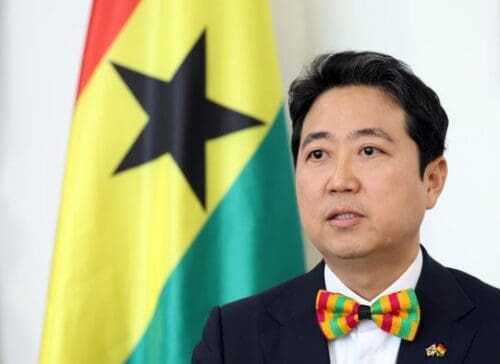
Ghana’s ambassador to South Korea, Kojo Choi, said on 11 October 2026 that his second year in Seoul would target jobs, investment and easier travel for ordinary Ghanaians.

Reviewing his first year in a Facebook post, Choi listed a visa-waiver deal for official travellers and a bilateral climate agreement as early gains. He said both grew out of President John Dramani Mahama’s visit to South Korea in March, which he credited with moving issues that had been stuck for more than a decade.

The gains so far benefit a narrow group. The visa waiver, signed in June by Foreign Affairs Minister Samuel Okudzeto Ablakwa and his South Korean counterpart, Cho Hyun, covers only diplomatic and service passport holders. Ablakwa described it at the time as the first visa-waiver agreement in almost 50 years of formal relations between the two countries, and said talks would continue to extend it to ordinary passport holders. Choi said that work was still under way.

The same applies to work permits. Choi said the embassy was in talks with South Korea’s labour, justice and immigration authorities on routes for Ghanaian workers into the Korean job market. He gave no timeline.

“The second year must be about walking through those doors,” he wrote.

On climate, Choi said the Ghana-Korea Climate Change Agreement had been concluded but must still be ratified before projects, technology transfer and investment can follow. The two governments signed a memorandum on climate cooperation during the March visit, alongside others on maritime security and digital technology. South Korea’s ambassador in Accra, Park Kyongsig, said in 2025 that a framework agreement on climate cooperation would open the way for Korean companies to run climate projects in Ghana.

Choi also pointed to Ghana’s presence at the Korea-Africa Foreign Ministers’ Meeting and the Korea-Africa Finance Ministers’ Conference in Seoul, and said South Korea had backed Ghana’s resolution at the United Nations on slavery and the transatlantic slave trade as a historical injustice.

He said the embassy was pursuing cooperation in agriculture, education, health, infrastructure, digital services, artificial intelligence, trade and tourism, and that more Korean companies and institutions were studying the Ghanaian market.

Much of his year was spent on the Ghanaian community in Korea. The embassy restored Ghana’s National Day celebration after an absence of almost eight years, held its first joint worship and thanksgiving service, and revived the ambassador’s town hall meetings, Choi said. He also attended GHANASKO’s 30th anniversary celebration in Paju, which he said drew more than 400 Ghanaians.

Choi, a Korean-born naturalised Ghanaian, first came to Ghana in 1992 with his parents, who were Presbyterian missionaries. He presented his credentials to President Lee Jae-myung on 11 December 2025. His nomination drew public debate in Ghana over his citizenship, though legal commentators concluded he met the requirements for the post.

He thanked Mahama, Ablakwa, embassy staff, Ghanaians in Korea and Korean partners, and said he would travel more often between Seoul and Accra to link openings in Korea with Ghanaian businesses and institutions.

Ntiamoah Foundation turns 20 with plan for permanent scholarship scheme

0

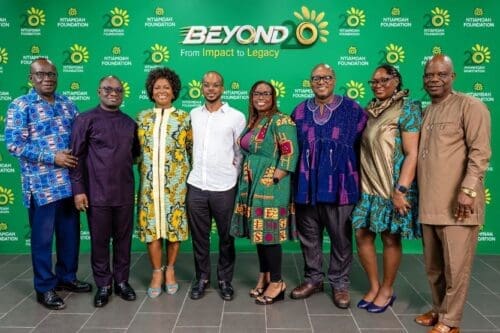
Ntiamoah Foundation, a charity working in Birim North and Birim South, has marked its 20th anniversary by pledging a permanent scholarship scheme honouring its late founder and three community centres.

The plans sit at the centre of BEYOND 20: From Impact to Legacy, a year-long campaign the Eastern Region non-profit announced in a statement. They mark a change of emphasis. For two decades, much of the foundation’s work in the area has meant equipping libraries, clinics and classrooms. It now wants to build institutions designed to outlast any single donation.

Executive Director Mercy Quansah-Ansah said the anniversary was a chance to set up programmes that would still be running in 20 years, calling the aim “the shift from impact to legacy”.

The foundation says it has spent more than GH¢23 million, in today’s value, since businessman Robert Kwaku Appiah Asante, known as R.K.A. Asante, set it up in 2006. By its own count, that money has supported 34 schools and nearly 6,500 young readers, equipped 14 Community-based Health Planning and Services compounds, paid for 436 surgeries and reached more than 8,000 girls through menstrual health programmes.

The new R.K.A. Asante Scholarship Scheme will pair funding with mentoring, leadership and professional training, and community service. The first 20 scholars will be picked through what the foundation calls the 20 for 20 Awards. Scholarships are not new to the organisation: Quansah-Ansah told the Daily Graphic in an earlier interview that it had already awarded 259 of them to students at institutions across the country.

A second initiative, Program B.E.A.M., will fold the foundation’s reading clubs, libraries and computer training into a single education model covering literacy, life skills, creativity, digital learning and leadership.

The third, the Legacy Project, is a longer-term commitment to community buildings, including spaces for local history and heritage, learning and skills training. It starts with three multipurpose community centres aimed at youth development and recreation. The statement did not give locations, costs or a timetable for the centres.

Board Chair Dr Kojo Pumpuni Asante said the next phase would need a wider circle of partners, and invited individuals and institutions to join.

Mining money has long been part of that circle. Zijin Golden Ridge Limited, which operates the Akyem gold mine in Birim North, is among the foundation’s long-standing partners. Derek Boateng, its Senior Manager for Sustainability and External Relations, congratulated the charity on the milestone. China’s Zijin Mining agreed in October 2024 to buy Akyem from Newmont in a deal valued at about $1 billion. Reports on the mine at the time put the end of its open-pit operations at 2027, with underground potential that could extend production beyond 2040.

The foundation has also worked with the United States-based Ghana Hope Foundation on free surgical outreach in the district.

The campaign will close in December with a fundraising gala dinner and a thanksgiving service in support of the foundation’s future programmes.

Canadian with 40 layers of tattoos earns Guinness record

0

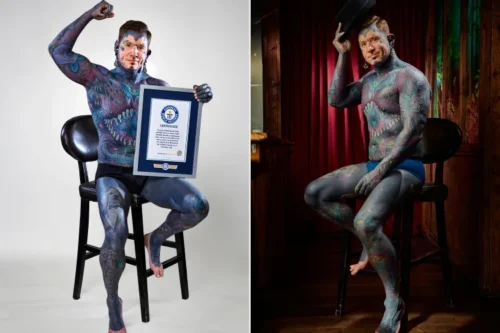
Canadian Jeremy “Remy” Schofield has been named the world’s most tattooed living man for layered ink, with about 40 layers covering at least 90 per cent of his body.

Guinness World Records announced the title, most tattooed person living (multiple layers) (male), on 14 September 2026, and Schofield, known online as Ephemeral Remy, features in its 2027 edition. Some parts of his body have been tattooed more than 100 times.

The record exists because the man who held the main title for two decades stepped aside. Lucky Diamond Rich, a New Zealand-born Australian long recognised as the world’s most tattooed man, approached Guinness World Records and suggested Schofield should take his crown. After a video call with both men, Editor-in-Chief Craig Glenday concluded there were two distinct achievements and split the title.

Rich now holds the record for total coverage, with 100 per cent of his skin inked, including his eyelids, gums, the inside of his ears and the skin between his toes. Schofield holds the record for layering. Glenday said Schofield would hold both if he ever covered his face, palms and soles, which he has so far refused to do.

Schofield’s first tattoo was his son’s name on his left inner forearm, and he has been inked since 2005. A former cook who now manages tattoo shops and social media companies, he had more than 100 piercings before tattoos took over, and said he never set out to cover his whole body or chase a record. He has spent well over 1,000 hours in the chair, worked with more than 40 artists and still gets tattooed two or three times a week, with appointments booked three to six months ahead.

Many of his designs, including an eye centrepiece on his torso, are drawings he made as a child. Others include roses, sea creatures, demons, the vampire Nosferatu and a dog in a tuxedo.

He said strangers in person are almost always positive, but that online he receives insults and even death threats.

His advice to first-timers is to resist rushing into full coverage. “Good things take time, this is a marathon not a sprint,” he told Guinness World Records.

The 2027 edition contains more than 3,000 records, with over 80 per cent updated since the previous book.

Ghanaian researcher takes neurodivergent users’ case to app design

0

Most social media research counts clicks and conversions. Kofi Ofori-Mensah, a Ghanaian researcher in the UK, asks autistic and other neurodivergent adults what those platforms feel like to use, and is trying to turn their answers into a product.

Ofori-Mensah studied for an MSc in Digital Marketing at the University of Roehampton in London, where his dissertation examined how neurodivergent adults in the UK experience social media marketing. He now leads NeuroDigital Support, an early-stage UK venture building a digital wellbeing tool called NuroTok. The project arrives during ADHD Awareness Month, observed every October.

His argument is that digital exclusion is not only about who lacks a phone or data. It is also about whether a platform’s design lets people take part on their own terms, a question that grows more pressing as feeds, alerts and targeted advertising shape how people learn, work and socialise.

From care work to research

Ofori-Mensah came to the subject through frontline work supporting autistic and neurodivergent adults in the UK, according to NeuroDigital Support. That work led him to look at how algorithm-curated feeds, notifications and online adverts affect people’s daily lives.

His dissertation used thematic analysis, a qualitative method that draws patterns from participants’ own accounts, so that users rather than platform metrics defined what engagement and harm meant. He has also written a paper, titled Algorithmic Exclusion and Neurodivergent Users: How Platform Design Shapes Belonging and Mental Health Online, which sets out a conceptual framework for how recommendation systems, engagement-driven design and content moderation may clash with neurodivergent users’ needs.

He received a Roehampton Futures Award this year and works as a research assistant at the university, Adom Online reported. He has also written two books on the theme, The Invisible Users and The Invisible Struggle.

His questions sit within a growing field. A scoping review by researchers at Heriot-Watt University of studies on artificial intelligence designed for neurodivergent users found that most did not involve neurodivergent people in their design and paid too little attention to sensory and cognitive differences.

From paper to product

NuroTok is meant to apply the research. The company says it will offer a personal sensory profile and tools to help users recognise what is overloading them, such as autoplay, constant notifications or endless scrolling. It describes the platform as a wellbeing tool, not a treatment for autism or Attention-Deficit/Hyperactivity Disorder (ADHD).

The company is candid that this remains unproven. NuroTok is still in development and has not been released, and no independent testing has been published. The research, NeuroDigital Support says, raises questions to investigate rather than proving the tools work.

Ofori-Mensah wants neurodivergent people involved in the design through research partnerships and user feedback, so that developers stop building around a single presumed standard user.

The Ghana angle

Although the venture is based in the UK, Ofori-Mensah argues that Ghana and other African countries need their own research into neurodiversity and digital life, since culture, language, infrastructure and access to support all shape how people use technology. UK findings cannot simply be assumed to apply.

That research base is thin. The few Ghanaian studies of ADHD come mainly from primary schools and reach widely different results, from 5 per cent of pupils screened in Oforikrom, Kumasi, to 19.1 per cent in a cluster of schools in Accra’s Ayawaso sub-metro.

Ghanaian founder pitches ADHD-aware design for digital platforms

0

As ADHD Awareness Month runs through October, a Ghanaian start-up is arguing that digital inclusion should cover how apps feel to use, not only whether people can get online.

Kofi Ofori-Mensah, founder of NeuroDigital Support, is developing a platform called NuroTok aimed at autistic and other neurodivergent users, including people with Attention-Deficit/Hyperactivity Disorder (ADHD). The company says the tool will let users build a personal sensory profile and use a toolkit to spot what in their digital routine may be overwhelming them, from constant notifications to endless scrolling.

The pitch touches a gap in Ghana’s conversation about disability. Smartphones and social media are now part of daily life, yet there is little local research on how people with ADHD experience them, and scarce national data on the condition itself.

What the numbers show

The Ghanaian studies that do exist come mostly from primary schools and vary widely with method and location. A survey of 1,540 pupils in Oforikrom, Kumasi, found 5 per cent showed ADHD symptoms on a standard rating scale. A study of 400 pupils in Hohoe in the Volta Region put the figure at 12.8 per cent. Research in a cluster of primary schools in Accra’s Ayawaso sub-metro reported 19.1 per cent. The authors of the Hohoe study noted that few studies on ADHD prevalence and its effects on schooling had been done in Ghana.

ADHD is a neurodevelopmental condition affecting attention, activity and impulse control, not a matter of discipline, and people experience it differently. Some find a stream of alerts and competing information hard to manage. Others rely on online tools to learn, communicate and stay organised.

Design from the start

Ofori-Mensah’s case is that developers should plan for a range of minds from the outset, rather than expecting everyone to adapt to one design. According to NeuroDigital Support, his interest draws on a background in social care and academic research on social media marketing and the experiences of neurodivergent users.

The company describes NuroTok as a digital wellbeing concept, not a substitute for professional ADHD assessment, treatment or support. It also says neurodivergent people should help decide which design choices help, which create barriers and where more research is needed.

Still a concept

NuroTok is still in development. It has not been released publicly, and no independent testing or published evidence of its effect on users is available. The company itself says the platform’s value will depend on turning its ideas into practical tools, gathering user feedback, showing real-world benefit and putting privacy safeguards in place.

Privacy will be a live question. A tool that records how users respond to sensory input would collect personal information, and Ghana’s Data Protection Commission has declared 2026 a year of enforcement for organisations that process personal data.

Banky W becomes pastor and teacher after 2023 election loss

0

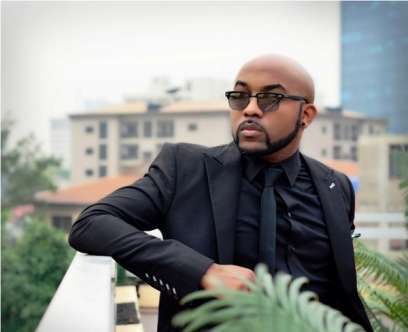
Nigerian singer Banky W said on 8 October 2026 that he now serves as an associate pastor at a Maryland church, a path he traced to his 2023 election defeat.

The musician, filmmaker and entrepreneur, whose real name is Olubankole Wellington, said in a social media post marking his first year at Union Church that he is also its global ambassador and works as a teacher and leader at Union College. He said he would keep making music and films and running his businesses alongside the new roles.

The post offers a rare personal account from a Nigerian entertainer who tried to move into elected office twice. Banky W contested the Eti-Osa Federal Constituency seat in Lagos for the House of Representatives in 2019 on the Modern Democratic Party ticket, losing to Babajide Obanikoro of the All Progressives Congress (APC). He ran again in February 2023 for the Peoples Democratic Party (PDP), finishing second with 18,666 votes behind Thaddeus Attah of the Labour Party, who polled 24,075. Obanikoro came third with 16,901.

Banky W and Obanikoro challenged the result. An election tribunal ordered a supplementary poll in 32 polling units in September 2023, but the Court of Appeal in Lagos overturned that ruling in November 2023 and affirmed Attah’s victory.

The singer wrote that the 2023 loss left him heartbroken and that he turned to God for direction, unsure whether his future lay in leadership, ministry, entertainment or business. He said he came to see that he did not need to pick one. “It wasn’t either/or. It was all of the above,” he wrote, describing the change as an expansion of his calling rather than a narrowing of it.

He said commuting between Lagos and the Washington, D.C., Maryland and Virginia area was not always easy but had been worth it. He thanked Union Church’s senior pastor, Stephen Chandler, and his wife, Zai Chandler, for their influence on his faith.

Union Church, based in Columbia, Maryland, was founded in 2011 and has grown from about 50 members to thousands of weekly worshippers, according to Chandler’s published author profile. Outreach magazine has named it the fastest-growing church in the United States.

Banky W, who rose to fame in the 2000s and founded the record label Empire Mates Entertainment (EME), said more entertainment projects were on the way.

Dzata Cement targets top spot after five years

0

Five years after Ibrahim Mahama watched his trucks load at a rival’s plant and decided he could build one himself, his Dzata Cement is days from filling its 30 millionth bag and says it wants to be Ghana’s biggest cement maker by 2030.

The Tema-based company marked its fifth anniversary on Tuesday 6 October 2026 with plans to lift annual capacity to about three million tonnes, add new cement grades and build an automated packing plant. It describes itself as Ghana’s only wholly Ghanaian-owned cement manufacturer.

The ambition lands in a crowded market. Ghana has 15 major cement producers and installed capacity of more than 10 million tonnes a year, Trade Minister Elizabeth Ofosu-Adjare said this year, and the industry depends heavily on imported clinker, the main ingredient in cement. Reaching three million tonnes would give Dzata a large share of national capacity.

From haulier to manufacturer

Mahama, founder, sole shareholder and Group Chief Executive Officer of DZATA Holdings, built his early business transporting cement and doing mining contract work. He told guests at the anniversary that following his trucks into the Ghacem plant in Takoradi showed him how cement was made, and convinced him the job was within reach.

“I looked at the structure and said, look, I could build one,” he said.

He travelled to Germany to engage equipment makers and assemble financing. Construction and installation ran into serious money and operational problems, he said, and outside help was needed to finish putting in the equipment. He recalled that a senior figure in the industry had told him a Ghanaian could not build such a plant, a remark he said hardened his resolve.

Mahama, a younger brother of President John Dramani Mahama, said he wanted to show that Ghanaians could own large industrial businesses rather than only work for foreign ones. “We can’t always be beggars and we can’t only just be employees to foreign companies. We can build it ourselves,” he said.

Distributors to the rescue

The launch nearly stalled when the company struggled to raise money to clear imported cement at the port. Mahama said distributors pooled resources to get the consignment released. “They all joined hands together, the cement came, we allocated it to them, and then Dzata Cement started,” he said.

He also thanked former Trade Minister Alan Kyerematen, who served under former President Nana Addo Dankwa Akufo-Addo, for backing the project.

Inside the plant

The plant sits on 10 acres near Tema Port and represents an investment of more than $100 million, the company says. It makes Ordinary Portland Cement using equipment from Germany’s Haver & Boecker, with bagging lines averaging 120 bags a minute and output of about 80,000 bags a day. The company puts its annual capacity at about two million tonnes.

A family handover

Mahama said he had stepped back from daily management so younger leaders could learn by taking risks. His daughter, Nafisa Mahama, is Managing Director.

He joked that when he once ordered cement from the company, she refused to release it until he paid, and said he had not visited the plant for about three years since.

“We won’t live forever. So sometimes we should give the children the opportunity to be able to take that risk of managing,” he said.

Nafisa Mahama thanked customers, distributors who stayed loyal through hard times, and staff, whom she called the heart of the company, and promised that employee welfare would stay a priority. She also thanked suppliers, GCB Bank, government agencies and the Chamber of Cement Producers, and said management would invest more in training its people.

The next phase

Plant Director Abderrahim Ouahab set out the near-term plan. Dzata will add cement grades, consider a 25kg bag alongside its 50kg pack, upgrade its laboratory and safety training, and seek ISO 9001, 14001 and 45001 certification for quality, environmental and workplace safety management. It also plans to use artificial intelligence and digital tools in some operations.

The largest capital item is a 300-tonne-an-hour receiver for jumbo cement bags, designed to improve handling, screening and dust collection. The company will also expand storage to 40,000 tonnes and build an automated packing facility of about 6,000 tonnes a day.

Finance Director Godfred Barnes said the company had absorbed supply-chain disruption, freight costs, inflation and currency swings in its first five years. He said the next five would require disciplined investment, stronger distribution, reliable production and tighter cost control to meet the 2030 goal.

Dzata ultimately plans to move into ready-mixed concrete and other cement-related products.