Ghana set to revise mining bill with 20-year lease cap

0

Ghana is expected to replace a mining bill capping new leases at 15 years with a version setting a 20-year limit, Reuters reported on 9 October 2026, citing three sources.

Two senior government officials and a mining executive told the news agency that the revised Minerals and Mining Bill, 2026, would raise the cap to 20 years. A mines ministry official told Reuters the shorter term had been a mistake in the document sent to Parliament. None of the sources said when the new version would go before lawmakers.

Lease length goes to the heart of mining investment. A shorter term gives companies less time to recover the cost of building a mine before they must seek renewal. Current law allows leases of up to 30 years. The draft laid in Parliament would have capped new leases at 15 years or the projected life of the mine, whichever is shorter.

The 20-year figure is not new. Lands and Natural Resources Minister Emmanuel Armah-Kofi Buah set it as government policy in a statement on 15 July 2026. That reversed a 15-year cap officials had floated during consultations in July 2025. The bill was laid and gazetted on 26 May, before his statement, and it carried the shorter term.

The Ghana Chamber of Mines has pushed back on how the bill has been reported. In a rejoinder on 7 October, it challenged a 30 September Reuters report that said the bill would give the state special share rights in mining companies. The chamber said the mines minister already holds that power under Section 60 of the Minerals and Mining Act, 2006 (Act 703). It said the new bill largely carries the power over, but with tougher penalties for companies that fail to comply.

Ken Ashigbey, the chamber’s chief executive, said talks with the authorities had produced “good compromise positions”, including the 20-year term. He said the industry would take its remaining concerns to Parliament.

The mines ministry and the Minerals Commission did not immediately respond to Reuters’ requests for comment.

South Africa’s Navi Pillay wins Nobel as US sanctions ICC

0

South African jurist Navi Pillay won the 2026 Nobel Peace Prize on 9 October, becoming her country’s fifth laureate, hours before Washington sanctioned the International Criminal Court she once served.

The Norwegian Nobel Committee honoured Pillay, 85, for her efforts to promote peace and international law. Committee chair Jørgen Watne Frydnes announced the award in Oslo. The committee said she had been instrumental in ensuring that war crimes, crimes against humanity and genocide are prosecuted.

The timing turned the prize into a test of how far the world’s major powers still back international justice. Later the same day, US Secretary of State Marco Rubio announced sanctions on the International Criminal Court (ICC) as an institution, not just its officials. The measure bars US companies and financial services from dealing with the court. The Treasury gave firms six months to wind down their business with it.

The ICC called the sanctions an attack on the rule of law and said its work would continue. Canada, Denmark, France, Germany, Italy, Japan, the Netherlands and the United Kingdom said in a joint statement that they strongly disagreed with Washington’s move.

Pillay joins Albert Luthuli, Desmond Tutu, Nelson Mandela and FW de Klerk as South African Peace Prize winners. She learned of the award at a conference in the Nuremberg courtroom where Nazi leaders were tried after the Second World War. Reacting there, she joked about President Donald Trump’s public campaign for the prize: “If you clap a little bit more, I may share this prize with Trump.” She dedicated the award to survivors of international crimes and to those defending international criminal justice.

Born in Durban in 1941 to a family of Indian Tamil descent, Pillay worked as a lawyer under apartheid. She defended political prisoners and won them access to lawyers. In 1995 she became the first non-white woman to sit on South Africa’s High Court. She then served as a judge on the International Criminal Tribunal for Rwanda, which established that rape and sexual violence could amount to genocide. She later served as an ICC judge and as UN High Commissioner for Human Rights. She now sits at the International Court of Justice in the genocide case against Myanmar.

The award drew a sharp response from Israel. Pillay chaired the UN commission that concluded in 2025 that Israel had committed genocide in Gaza, a finding Israel rejects. Prime Minister Benjamin Netanyahu said the Nobel Committee had lost its moral compass and accused Pillay of lies. The Geneva-based monitoring group UN Watch also condemned the choice, accusing Pillay of long-standing bias against Israel.

UN Secretary-General António Guterres called her a steadfast and independent voice of justice. South African President Cyril Ramaphosa also congratulated her on the award.

Washington’s campaign against the court has escalated through 2026. Rubio said in July that the United States would dismantle the ICC “brick by brick” if necessary. In September, at the UN General Assembly, Trump urged all member states to quit the court. Neither the United States nor Israel is a party to the ICC.

The prize will be presented in Oslo on 10 December 2026.

NPP elections: the big names delegates turned away in Kumasi

0

The New Patriotic Party’s (NPP) national executive elections on 3 October 2026 ended several leadership ambitions. They also exposed how far pre-election polls had misread the mood of more than 7,000 delegates at the Baba Yara Sports Stadium in Kumasi.

The sharpest case was the general secretary race. A University of Ghana research poll published in September found that 74.2 per cent of surveyed delegates expected former Subin MP Eugene Boakye Antwi to win. He finished third with 162 votes.

The results matter beyond the individuals involved. The executives elected in Kumasi will rebuild the opposition party after its 2024 defeat and run its organisation into the 2028 general election. Here is how the most prominent losers fared.

Boakye Agyarko

Former Energy Minister Boakye Agyarko lost the national chairmanship to former General Secretary John Boadu by 840 votes. Boadu polled 2,888 votes to Agyarko’s 2,048, while former National Chairman Paul Afoko took 490.

Boadu’s win completes a comeback. He lost the general secretary post to Justin Frimpong Kodua in 2022 and now returns as chairman, working alongside the man who unseated him.

Agyarko accepted the result in a statement on 4 October. “I stand fully and resolutely ready to support Chairman John Boadu,” he said, and he also pledged support for flagbearer Dr Mahamudu Bawumia.

Eugene Boakye Antwi

No candidate fell further short of expectations. Boakye Antwi had campaigned on the argument that no NPP general secretary who lost a general election had ever been retained. He pointed to the party’s loss of about 50 parliamentary seats in 2024, which handed the National Democratic Congress a two-thirds majority.

Delegates disagreed. Kodua kept his job with 4,486 votes. Former Ngleshie Amanfro MP Sylvester Tetteh came second with 1,340, ahead of Boakye Antwi’s 162 and Dr Charles Dwamena’s 126.

The University of Ghana poll had also found 76.6 per cent of respondents naming Boakye Antwi as their preferred candidate. A separate Global InfoAnalytics survey had pointed the other way. It put Kodua on 36 per cent and Boakye Antwi on 10 per cent, with 46 per cent undecided.

Dr Mustapha Abdul-Hamid

Former Information Minister and ex-National Petroleum Authority chief executive Dr Mustapha Abdul-Hamid missed out on a vice-chairmanship by 31 votes. He polled 2,956 votes and finished fourth in a 13-candidate race for three seats.

The winner of that race was Kojo Fosu Boadu, known as Kojo Bamba, a former leader of the pro-NPP Delta Force group. He topped the field with 3,116 votes. Henry Nana Boakye, known as Nana B, came second with 3,061. Global InfoAnalytics had put Bamba on just 17 per cent before the vote.

Nana Akomea

Nana Akomea, a former Information Minister and close ally of Dr Bawumia, did win a vice-chairmanship. His 2,987 votes left him third, however, 129 behind Bamba, the former Delta Force leader whom many in the party had not expected to top the poll. The ranking matters: the first vice chairman runs the party’s affairs whenever the national chairman is absent.

Chris Lloyd Nii Kwei Asamoah

As outgoing Deputy National Youth Organiser, Chris Lloyd Nii Kwei Asamoah went into the race to succeed Salam Mustapha with an inside track. He left with 46 votes, fifth of six candidates.

Abanga Fuseini Yakubu won the post with 1,550 votes, a margin of 919 over runner-up Clement Opoku Gyamfi, who polled 631. Michael Osei Boateng took 78 votes and Vera Oye Bram-Larbi 44.

Alfred Ababio Kumi

Alfred Ababio Kumi, popularly known as Adenta Kumi, finished last in the same youth organiser contest with 25 votes. That is less than two per cent of the winner’s total.

Voting took place at 31 polling stations at the stadium under the supervision of the Electoral Commission, which declared the results in the early hours of 4 October.

Musk’s ex-wife says he cut trans daughter’s health insurance

0

Elon Musk’s former wife Justine Wilson alleges in a new documentary that he cut off their transgender daughter’s health insurance a day after sending her a message of love.

Wilson makes the claim in Musk, a near four-hour film by Oscar-winning director Alex Gibney about the Tesla and SpaceX chief’s life and career. Musk did not take part in the film and has dismissed it as a “hit piece”.

According to Wilson, after their daughter Vivian came out as transgender, Musk asked her to tell Vivian he would always love her. She alleges that he ended Vivian’s health insurance the following day.

The allegation adds a specific new accusation to a family rift that has played out in public for years. Vivian Jenna Wilson, now 22, petitioned a court in 2022 to change her name and gender. In the petition, she said she no longer wished to be related to her father in any way. Musk has since said on X, the platform he owns, that he “lost” her to the “woke mind virus”. In the film, Wilson says those posts hurt Vivian deeply and that Musk never tried to mend the relationship.

Wilson says the tension began when Vivian was a child. She describes her as the most openly defiant of the five children she raised with Musk. She recalls an incident when Vivian was about six, in which Musk allegedly asked the child whether she wanted to be a winner or a loser.

Wilson also says Musk treated Vivian’s transition as though a child had died. She says she rejected that comparison, reminding him that they had lost a real child: their first son, Nevada, died at 10 weeks old in 2002. The couple married in 2000 and divorced in 2008.

Musk has attacked the film repeatedly on X since its premiere at the Venice Film Festival. His lawyer, Alex Spiro, has threatened a defamation suit, but over a separate segment. That segment features his former partner Ashley St. Clair and, Spiro argues, implies Musk used Starlink to sway the 2024 US presidential election.

Gibney has said he invited Musk to be interviewed and that Musk declined. Gibney’s production company, Jigsaw Productions, has defended the documentary as fact-based.

Distributor Bleecker Street opened the film in New York and Los Angeles on 9 October. A wider US theatrical release begins on 16 October.

Gbande says Mahama appointees feuding, renews call for reshuffle

0

Ghana’s ruling National Democratic Congress (NDC) official Mustapha Gbande has accused some of President John Mahama’s ministers of feuding with their deputies, in an interview reported on 10 October 2026.

Gbande is an NDC deputy general secretary and a Deputy Director of Operations at the Office of the President. Speaking on Asempa FM, he said the rivalries go beyond ministries. He said some chief executives of state agencies were not on working terms with their own deputies.

“There are ministers who don’t talk to their deputies,” he said.

He also alleged that some appointees were paying journalists to attack one another. He named no one and gave no evidence.

The remarks matter because they come from a party official who works inside the Presidency. They are also a public admission of strain within a government less than two years into its term. Gbande warned that the infighting could undermine Mahama’s performance and frustrate NDC supporters, who expect appointees to focus on delivering the government’s promises.

He said some of those now in office had contributed little when the party was campaigning to win power. Now that they hold positions, he said, they were using them to fight internal battles. He criticised the idea that party leaders should keep quiet about this out of loyalty.

Gbande said he had raised the matter with the President directly. He said he had repeatedly pressed for a reshuffle, and that some in the party had responded by suggesting he should be removed as well. He said his job at Jubilee House, the seat of the Presidency, was the reason he had held back from speaking more forcefully.

Mahama has already made changes this year. On 8 June, the Secretary to the President, Callistus Mahama, said the President would review all ministers and heads of state institutions to decide whether they would be kept, moved or removed.

The first reshuffle followed on 7 August. Mahama nominated Dr Zanetor Agyeman-Rawlings as Environment Minister and Majority Leader Mahama Ayariga as Local Government Minister, and moved Kenneth Gilbert Adjei to Defence. On 26 August, he swapped the labour and special initiatives portfolios and moved Deputy Defence Minister Ernest Brogya Genfi to a presidential adviser role.

Naturopath Nyarkotey Obu now called to Bar in two countries

0

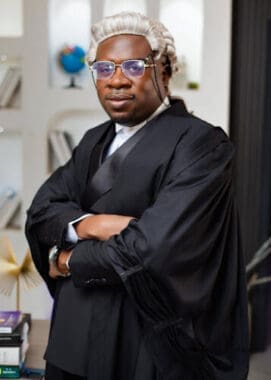
Ghanaian naturopath Raphael Nyarkotey Obu, called to the Gambian Bar in 2024, joined the Ghana Bar on 9 October 2026, according to a statement from the African Naturopath Report.

The statement said his name appeared on the published list for Ghana’s 63rd Call to the Bar, at which the General Legal Council admitted 1,568 new lawyers at a ceremony in Teshie, Accra.

Nyarkotey Obu qualified through the Gambia Law School in Banjul and was called to the Bar in The Gambia in November 2024. In a 2025 newspaper feature, he wrote that his Gambian legal education cost him about $30,000, and that he had to resit Legislative Drafting three times before passing.

Being called in both countries does not mean he can practise in both. Foreign graduates called to the Gambian Bar are barred by statute from practising law in The Gambia, a Daily Graphic feature on Ghanaian students at the Gambia Law School has noted.

Nyarkotey Obu leads a naturopathic training college in Ghana and is founding president of the African Naturopathic Federation. He has long campaigned for laws to regulate traditional and alternative medicine. In 2023 he lectured in The Gambia on legislation to regulate the country’s traditional healers.

The statement said he would use his legal training to work on practitioner regulation, training standards, professional accountability and patients’ rights in complementary and alternative medicine.

World doctors’ body asks UN to name attackers of healthcare

0

The World Medical Association has urged the United Nations to name states and armed groups that attack healthcare, under a declaration announced in Rotterdam on 10 October 2026.

The Declaration of Rotterdam on the Protection of Medical Neutrality was adopted at the global physicians’ body’s General Assembly in the Dutch port city, held from 7 to 10 October. Beyond naming attackers in UN reporting, the World Medical Association (WMA) wants the UN to appoint a Special Rapporteur on protecting health in armed conflict and other violence.

The declaration comes as accountability for attacks on medical care remains close to non-existent. In August, the World Health Organization (WHO) said it had verified more than 10,400 attacks on healthcare across 29 countries and territories since 2018. Those attacks killed about 5,700 people and injured over 8,500. Altaf Musani, a WHO emergencies director, said not one of them had yet entered an accountability process.

The pace has not slowed. WHO recorded 914 attacks in 2026 up to mid-August, with 911 deaths. Ukraine, Lebanon and the Palestinian territories accounted for most incidents. Attacks were also recorded in Sudan, Myanmar, Syria, Iran, Nigeria and the Democratic Republic of Congo.

Under the declaration, medical neutrality rests on two duties. Doctors and other health workers must treat patients impartially and keep out of military operations. States, de facto authorities and warring parties must in turn protect health workers and facilities. The text states that medical ethics in war are the same as in peace. It also says international humanitarian law protects healthcare whether or not it displays the red cross or other protective emblems.

The WMA widened its definition of an attack to include cyberattacks, the use of artificial intelligence, and the arbitrary arrest, detention, torture or ill-treatment of health workers. It said doctors keep the right, and in some cases the duty, to document and report suspected violations of international humanitarian law.

“The principles of medical ethics do not change in times of war,” WMA President Dr Jung Yul Park said.

The association called on warring parties to guarantee patients safe access to care. It also asked them to free, without conditions, all health workers held solely for treating patients. It urged governments to train their armed forces on the protections owed to medical care. It also asked them to ensure violations are independently investigated or referred to bodies such as the International Criminal Court.

The declaration also commits the WMA’s member national medical associations to speak out publicly against breaches of medical neutrality, including those committed by their own governments. They are to support colleagues who face reprisals for providing impartial care.

NNPC’s petrol discount is subsidy by another name

The announcement of cheaper petrol often arrives before anyone explains how it will be paid for. A commuter who hears that pump prices will fall for 30 days thinks of tomorrow’s journey and the fare home. He is not at the filling station to study fiscal arrangements. He wants to know what a litre costs today, and what it will cost when the 30 days end.

That is where the national conversation must begin. A discount does not come from thin air. Petrol must still be refined, bought, transported, stored and sold. If the retail price falls, someone absorbs the difference. The pump attendant can announce the new price, but the pump cannot tell us whose ledger is carrying the burden.

Who pays for “at cost”

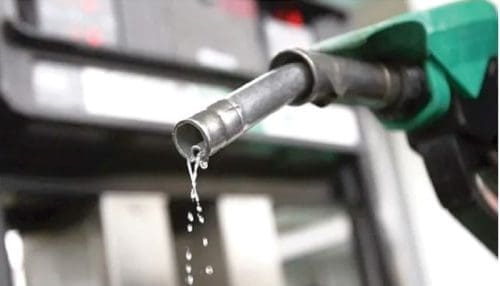
On 8 October, Finance Minister Taiwo Oyedele announced that NNPC Limited would sell petrol at cost for 30 days in the first instance, with priority for public transport operators. The Presidency says NNPC Retail will give up its retail margin. The government has not said where the fuel will come from, what NNPC will pay for it, how big the discount per litre will be, or whether any supplier has agreed to sell below commercial value.

If NNPC buys petrol from the Dangote Refinery at the full market rate, Dangote receives its agreed price. The discount must then be carried by NNPC, reimbursed by the government or financed some other way. If Dangote or any other supplier is being asked to give up part of its price, that concession should be declared openly.

Selling at cost does not settle the question. If NNPC forgoes a margin it would normally earn, the consumer gains and the company loses income. In economic terms that is a subsidy, even if the Treasury writes no cheque. Because NNPC is publicly owned, the lost margin reduces its profit, retained earnings and future dividends. The cost is less visible than a budget allocation, but citizens still bear it.

How other countries handled temporary relief

Nigeria is not the first country to try short-term relief at the pump. Several Global North economies have used temporary fuel discounts or tax cuts. Their experience shows that such measures work best when they are open about cost, limited in time and properly monitored.

Germany cut its fuel tax for three months from 1 June 2022, through a measure known as the Tankrabatt, and let it lapse at the end of August. Independent studies later found the cut was almost fully passed on to petrol buyers but only partly to diesel buyers, which shows why monitoring matters.

France introduced a state-funded pump discount of 18 euro cents a litre in April 2022. It raised the discount to 30 cents from September, cut it to 10 cents from mid-November and ended it on 31 December 2022. In 2023 it was replaced by a targeted 100-euro allowance for lower-income workers who drive to work.

The United Kingdom cut fuel duty by 5p a litre in March 2022, initially for 12 months. The Treasury estimated its cost at about £2.4 billion. The cut has since been extended several times and is now due to run until the end of 2026.

In Canada, Alberta stopped collecting its 13-cent-per-litre provincial fuel tax from 1 April 2022. It linked the relief to world oil prices and reviewed it every quarter. The provincial government put the full-year cost at about 1.3 billion Canadian dollars.

These examples show that temporary fuel relief can be delivered without weakening national institutions, provided the rules are clear and the financial consequences are public.

Why the initiative can be supported

There is a defensible case for short-term relief, particularly if public transport operators receive the benefit and pass it on through lower fares. Nigeria’s economy is heavily dependent on transport, and commuters bear the brunt of rising energy costs. A targeted discount can ease inflationary pressure, support small businesses and steady household spending.

But the scheme needs clear operating rules. The government should explain how transport operators will be identified, how discounted fuel will reach them and how it will check that passengers actually benefit. Without such safeguards, the discount may reach the vehicle’s tank while the fare stays where it is.

Nigeria can borrow from practice elsewhere. That means naming the funding source, fixing the duration and publishing the cost to NNPC. It also means monitoring and evaluating the relief before any extension is considered.

The constitutional question

NNPC’s shares are held on behalf of the Federation. The Petroleum Industry Act requires the company to operate commercially and profitably. The Constitution counts dividends from the Federal Government’s shareholdings among the revenue payable into the Federation Account, the common purse of the federal, state and local governments.

If a policy predictably reduces NNPC’s earnings, all three tiers of government have legitimate grounds to ask what income has been surrendered, who authorised the concession and what it will cost. Transparent accounting is a constitutional necessity.

Timing and public trust

The presidential election is scheduled for 16 January 2027. That date does not prove an electoral motive. But the government should expect citizens to ask whether relief at the pump is also politics at the pump. Clear rules, fixed timelines and published accounts would answer that question more credibly than any verbal denial.

Beyond the politics lies an economic point that cannot be ignored: in substance, this arrangement brings subsidy back through the back door. The government may call it a discount, a margin waiver or a temporary price adjustment, but the mechanism is the same. If petrol is sold below its true commercial cost, someone absorbs the difference, whether NNPC, a supplier or the Treasury. That is what a subsidy is. It may not appear as a line in the national budget or be debated in the National Assembly, but a subsidy routed through a state-owned company is still a subsidy.

That is why citizens will question both the timing and the structure of the scheme. Relief introduced three months before a national election will attract scrutiny, especially when its financial design resembles the subsidy regime the government removed in 2023 as unsustainable. If NNPC’s margins are being squeezed to make petrol cheaper, the Federation is indirectly funding the discount through lower dividends and weaker future earnings.

Nigerians deserve to know whether this is a strategic intervention or a disguised subsidy. They deserve to know who is paying the difference, how long the arrangement will last and what will stop it from quietly becoming permanent. Without that disclosure, the scheme risks looking like a return to subsidy without parliamentary debate, budget visibility or public accountability.

What must be disclosed

The government should publish:

  • the price NNPC pays for the fuel;
  • the exact discount per litre;
  • who is absorbing the difference;
  • the projected effect on NNPC’s earnings;
  • the criteria for identifying public transport operators.

It must also say plainly what happens after 30 days.

Until then, Nigerians have been told only that petrol will be cheaper. They have not been told who is underwriting the reduction, how long it will last or what institutional sacrifice sustains it. The government may call it a discount, a margin waiver or a price adjustment. The name does not matter. The bill will still arrive, and the nation deserves to know whose name is written on it.

Professor Ojo Emmanuel Ademola is a professor of cybersecurity and information technology management, a chartered manager and General Evangelist of Christ Apostolic Church Nigeria and Overseas.

US freezes green card sponsorship at Microsoft, Indian IT firms

0

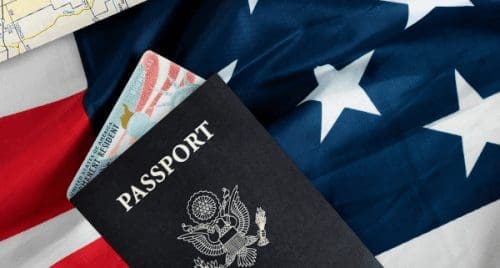
On 8 October 2026, the US Labor Department stopped processing green card sponsorships from Microsoft, Adobe and six IT outsourcers, including four Indian giants, citing alleged visa abuse.

The suspension covers the Permanent Labor Certification programme, known as PERM, which is the first step for most employer-sponsored green cards. Besides Microsoft and Adobe, it applies to Cognizant, Infosys, Tata Consultancy Services, Wipro, HCL Technologies and Capgemini. The Labor Department will not accept new applications from these companies and has stopped work on pending ones.

The move affects foreign professionals already working in the United States who were counting on these employers to sponsor them for permanent residency. Their H-1B work visas remain valid. However, their green card cases have stalled, and H-1B extensions that depend on a pending PERM case could be delayed.

Labor Secretary Keith Sonderling said the six IT services firms were suspended because of concerns about systemic abuse, while Microsoft and Adobe are subject to multiple active federal investigations. No charges have been announced against any of the companies.

Vice President JD Vance focused on Microsoft at the announcement. He said the company cut 6,000 American jobs in 2025 while receiving 6,300 H-1B visa approvals and almost 3,000 green cards. He also said Microsoft filed 3,682 PERM applications, about 1,000 of which appeared to overlap with roles held by laid-off staff. Vance said each worker Microsoft let go had been replaced by one and a half foreign workers, whom he likened to indentured servants.

Microsoft rejected the picture in a statement, saying “the vast majority of Microsoft employees in the United States are Americans.” The company said it filed petitions only for workers who met the visa category’s standards and that its H-1B wages are among the highest of all filings. It also said most of its applications were for people already on its payroll.

Asked why President Donald Trump honoured Microsoft chief executive Satya Nadella on the same day, Vance said Washington would keep its good relationship with the company. He said the government would still block its permanent residency applications until it showed it was serious about putting American workers first.

The suspension has no fixed end date. Sonderling said it would last as long as needed and that the administration wanted the companies to change their behaviour. The announcement came less than four weeks before the 3 November midterm elections, as the administration steps up action on immigration and foreign hiring.

For India’s outsourcing industry, the blow was not the first. On 8 September, Labor Department Inspector General Anthony D’Esposito suspended Cognizant’s PERM filings. The next day, Indian IT stocks lost about 550 billion rupees in market value, with Infosys falling about six per cent.

The suspensions stem from an investigation into fraud in the H-1B and PERM programmes that the inspector general opened in July. Officials said in July that dozens of subpoenas had been issued and that whistleblowers had flagged some of the largest sponsoring companies.

US consumer sentiment slides as current conditions hit record low

US consumer sentiment on current economic conditions sank to a record low in October as high prices and borrowing costs squeezed households, University of Michigan data showed on 9 October 2026.

The Current Economic Conditions index dropped to 44.7 from 50.9 in September, a fall of 12.2 per cent in one month. Bloomberg reported that the measure had reached an all-time low. The headline Index of Consumer Sentiment slipped to 46.3, its weakest reading since May and below the 47.6 median forecast in a Bloomberg survey of economists. May’s reading was a record low for the index.

The figures land 25 days before the US midterm elections, and they show rising prices hurting poorer households most while expectations of future inflation keep climbing.

Joanne Hsu, director of the university’s Surveys of Consumers, said buying conditions for durable goods fell sharply because of high prices and borrowing costs. Sentiment dropped steeply among lower-income consumers and those with smaller stock portfolios, which she described as “groups that have fewer resources to weather increases in prices.”

Gains among Democrats and Republicans were cancelled out by a decline among independents, Hsu said. She added that consumers of every political leaning agree the economic outlook has softened since the start of the year, before the Iran conflict.

Households now expect prices to rise 4.7 per cent over the next year, up from 4.6 per cent in September and well above the 3.4 per cent recorded in February, before the conflict began. Five-year expectations rose to 3.5 per cent from 3.4 per cent, against a 2024 range of 2.8 to 3.2 per cent. Both measures rose for a second straight month to their highest levels since May.

Fuel is a large part of the strain. Petrol prices have climbed by more than $1.50 a gallon on average since the war began and have stayed above $4 a gallon since midsummer, according to motoring group AAA. A US gallon is about 3.8 litres.

The survey did carry one brighter signal. The Index of Consumer Expectations rose to 47.3 from 46.3, its first increase since July, as respondents grew slightly more hopeful about their personal finances and business conditions over the coming year. Overall sentiment remains 13.6 per cent lower than a year ago.

Gloomy surveys have not yet translated into weaker spending. Retail sales rebounded sharply in August, helped by purchases of a range of goods and spending at bars and restaurants.

The university will publish final October figures on Friday, 23 October 2026, at 10am Eastern Time, which is 2pm in Accra.