

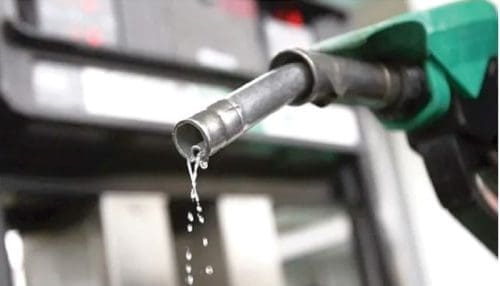
The announcement of cheaper petrol often arrives before anyone explains how it will be paid for. A commuter who hears that pump prices will fall for 30 days thinks of tomorrow’s journey and the fare home. He is not at the filling station to study fiscal arrangements. He wants to know what a litre costs today, and what it will cost when the 30 days end.
That is where the national conversation must begin. A discount does not come from thin air. Petrol must still be refined, bought, transported, stored and sold. If the retail price falls, someone absorbs the difference. The pump attendant can announce the new price, but the pump cannot tell us whose ledger is carrying the burden.
Who pays for “at cost”
On 8 October, Finance Minister Taiwo Oyedele announced that NNPC Limited would sell petrol at cost for 30 days in the first instance, with priority for public transport operators. The Presidency says NNPC Retail will give up its retail margin. The government has not said where the fuel will come from, what NNPC will pay for it, how big the discount per litre will be, or whether any supplier has agreed to sell below commercial value.
If NNPC buys petrol from the Dangote Refinery at the full market rate, Dangote receives its agreed price. The discount must then be carried by NNPC, reimbursed by the government or financed some other way. If Dangote or any other supplier is being asked to give up part of its price, that concession should be declared openly.
Selling at cost does not settle the question. If NNPC forgoes a margin it would normally earn, the consumer gains and the company loses income. In economic terms that is a subsidy, even if the Treasury writes no cheque. Because NNPC is publicly owned, the lost margin reduces its profit, retained earnings and future dividends. The cost is less visible than a budget allocation, but citizens still bear it.
How other countries handled temporary relief
Nigeria is not the first country to try short-term relief at the pump. Several Global North economies have used temporary fuel discounts or tax cuts. Their experience shows that such measures work best when they are open about cost, limited in time and properly monitored.
Germany cut its fuel tax for three months from 1 June 2022, through a measure known as the Tankrabatt, and let it lapse at the end of August. Independent studies later found the cut was almost fully passed on to petrol buyers but only partly to diesel buyers, which shows why monitoring matters.
France introduced a state-funded pump discount of 18 euro cents a litre in April 2022. It raised the discount to 30 cents from September, cut it to 10 cents from mid-November and ended it on 31 December 2022. In 2023 it was replaced by a targeted 100-euro allowance for lower-income workers who drive to work.
The United Kingdom cut fuel duty by 5p a litre in March 2022, initially for 12 months. The Treasury estimated its cost at about £2.4 billion. The cut has since been extended several times and is now due to run until the end of 2026.
In Canada, Alberta stopped collecting its 13-cent-per-litre provincial fuel tax from 1 April 2022. It linked the relief to world oil prices and reviewed it every quarter. The provincial government put the full-year cost at about 1.3 billion Canadian dollars.
These examples show that temporary fuel relief can be delivered without weakening national institutions, provided the rules are clear and the financial consequences are public.
Why the initiative can be supported
There is a defensible case for short-term relief, particularly if public transport operators receive the benefit and pass it on through lower fares. Nigeria’s economy is heavily dependent on transport, and commuters bear the brunt of rising energy costs. A targeted discount can ease inflationary pressure, support small businesses and steady household spending.
But the scheme needs clear operating rules. The government should explain how transport operators will be identified, how discounted fuel will reach them and how it will check that passengers actually benefit. Without such safeguards, the discount may reach the vehicle’s tank while the fare stays where it is.
Nigeria can borrow from practice elsewhere. That means naming the funding source, fixing the duration and publishing the cost to NNPC. It also means monitoring and evaluating the relief before any extension is considered.
The constitutional question
NNPC’s shares are held on behalf of the Federation. The Petroleum Industry Act requires the company to operate commercially and profitably. The Constitution counts dividends from the Federal Government’s shareholdings among the revenue payable into the Federation Account, the common purse of the federal, state and local governments.
If a policy predictably reduces NNPC’s earnings, all three tiers of government have legitimate grounds to ask what income has been surrendered, who authorised the concession and what it will cost. Transparent accounting is a constitutional necessity.
Timing and public trust
The presidential election is scheduled for 16 January 2027. That date does not prove an electoral motive. But the government should expect citizens to ask whether relief at the pump is also politics at the pump. Clear rules, fixed timelines and published accounts would answer that question more credibly than any verbal denial.
Beyond the politics lies an economic point that cannot be ignored: in substance, this arrangement brings subsidy back through the back door. The government may call it a discount, a margin waiver or a temporary price adjustment, but the mechanism is the same. If petrol is sold below its true commercial cost, someone absorbs the difference, whether NNPC, a supplier or the Treasury. That is what a subsidy is. It may not appear as a line in the national budget or be debated in the National Assembly, but a subsidy routed through a state-owned company is still a subsidy.
That is why citizens will question both the timing and the structure of the scheme. Relief introduced three months before a national election will attract scrutiny, especially when its financial design resembles the subsidy regime the government removed in 2023 as unsustainable. If NNPC’s margins are being squeezed to make petrol cheaper, the Federation is indirectly funding the discount through lower dividends and weaker future earnings.
Nigerians deserve to know whether this is a strategic intervention or a disguised subsidy. They deserve to know who is paying the difference, how long the arrangement will last and what will stop it from quietly becoming permanent. Without that disclosure, the scheme risks looking like a return to subsidy without parliamentary debate, budget visibility or public accountability.
What must be disclosed
The government should publish:
- the price NNPC pays for the fuel;
- the exact discount per litre;
- who is absorbing the difference;
- the projected effect on NNPC’s earnings;
- the criteria for identifying public transport operators.
It must also say plainly what happens after 30 days.
Until then, Nigerians have been told only that petrol will be cheaper. They have not been told who is underwriting the reduction, how long it will last or what institutional sacrifice sustains it. The government may call it a discount, a margin waiver or a price adjustment. The name does not matter. The bill will still arrive, and the nation deserves to know whose name is written on it.
Professor Ojo Emmanuel Ademola is a professor of cybersecurity and information technology management, a chartered manager and General Evangelist of Christ Apostolic Church Nigeria and Overseas.

