

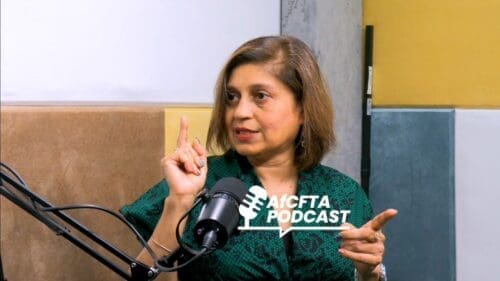
A trader whose goods are held up at an African border by a demand for an unexpected certificate, or by an extra fee, has somewhere to complain. The African Continental Free Trade Area (AfCFTA) Secretariat says too few businesses are using it.
Speaking on the AfCFTA Podcast, Poonam Mohun, head of the Secretariat’s Non-Tariff Measures Division, urged businesses, particularly small and medium-sized enterprises, to report such obstacles formally. Without a formal complaint, she said, the Secretariat has neither the mandate nor the information to step in. “Please tell us your problem so that we can address it,” she said.
The appeal matters because cutting tariffs alone will not open Africa’s markets. The United Nations Conference on Trade and Development (UNCTAD) estimates that non-tariff barriers restrict trade at least three times as much as ordinary customs duties. It also estimates that tackling them at continental level could add US$20 billion to African economies’ gross domestic product.
When rules become barriers
Non-tariff measures are official requirements designed to make sure imports meet health, safety, quality and labelling standards. Food imports may face sanitary and phytosanitary checks, while textiles, cosmetics and manufactured goods may need testing or certification. Mohun said these rules become barriers when they are applied inconsistently, cause unnecessary delays or impose excessive costs.
Repeated testing is a particular burden for small firms. In some cases, she said, an enterprise may have to pay hundreds of dollars to certify each consignment, which erodes its competitiveness in regional markets. The Secretariat is working with State Parties and continental bodies to harmonise standards so that a certificate issued in one AfCFTA country is accepted in another. Mohun described progress towards a continental Mutual Recognition Agreement, which would let countries accept testing and certification done by competent institutions elsewhere in Africa, as a significant achievement.
How the mechanism works
The online reporting mechanism has been open since 13 January 2020 at tradebarriers.africa. It was developed by the African Union with UNCTAD, and it is open to companies of any size, including informal traders.
A trader registers, then records:
- the product involved;
- its customs classification;
- the countries concerned;
- the specific obstacle.
National focal points receive complaints in real time and must resolve them within set deadlines. The Secretariat brings together the trader and the government authorities concerned. Harder cases can go to the AfCFTA Sub-committee on Non-Tariff Barriers.
Mohun said about 900 people joined a Secretariat webinar on using the mechanism. About 500 of them passed an assessment and were certified as champions of the initiative.
Documents still trip traders up
She also warned that some businesses expect to receive AfCFTA tariff preferences without the paperwork to back their claim. To qualify, traders must obtain certificates of origin showing that their goods meet the agreement’s rules of origin.
State Parties are also expected to set up national monitoring committees. These would bring together customs, trade and finance ministries, standards bodies, food and drugs regulators, chambers of commerce and private firms.
Mohun acknowledged that aligning national systems would take time, but said the political will was increasingly evident. “We must implement what we have signed,” she said.
She urged African firms to look beyond traditional overseas markets. She argued that the AfCFTA, as a legally binding agreement, offers a steadier foundation than one-sided trade preferences that another country can withdraw.

