

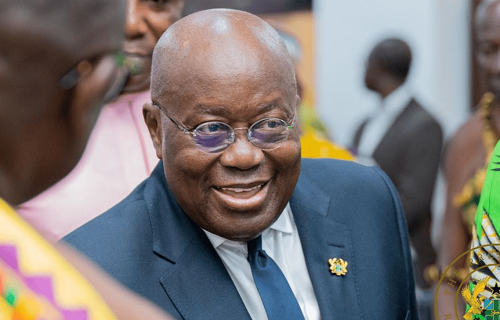
Former President Nana Akufo-Addo has described Ghana’s debt restructuring under the G20 Common Framework as one of the darkest and most painful episodes of his presidency, using his Brussels speech last week to advocate for sweeping debt relief across Africa. His October 1 address at an AU-EU High-Level Seminar leveraged Ghana’s painful experience to pressure European nations toward supporting continental debt forgiveness programs.
Akufo-Addo called for European support for a new global debt relief initiative that’s ambitious, equitable and tailored to African realities, proposing what he termed “Debt Relief for Green Investment and Resilience” that would link debt cancellation directly to investments in climate adaptation and sustainable growth. Several EU countries including Italy and Spain have signaled support for debt swaps where obligations get written off in exchange for environmental protection investments.
The former president, who stood down last December after piloting Ghana through a $13 billion debt restructuring, secured $10.5 billion in external debt service relief through 2026. That deal reduced Ghana’s debt-to-GDP ratio from approximately 85 percent to 70.5 percent while securing an International Monetary Fund loan, yet Akufo-Addo emphasized the human cost behind those numbers.
Speaking in Brussels, he said the restructuring had shattered lives and livelihoods of millions of Ghanaians, particularly young people, pensioners and small investors. His characterization reflected the domestic political fallout from haircuts imposed on domestic bondholders that wiped out retirement savings and decimated individual investors’ portfolios, creating lasting resentment that contributed to his party’s electoral defeat.
“Every dollar diverted to creditors is a dollar taken from a hospital, from a child’s vaccination, from a community’s future. This is not economics, it is inequity,” Akufo-Addo stated, pointing out that more than 30 African countries currently spend more on debt interest than healthcare. The rhetoric positions debt servicing as moral issue rather than merely economic calculation, framing relief as justice rather than charity.
African leaders plan to prioritize debt relief at an EU-African Union summit scheduled for November in Angola, using Akufo-Addo’s Ghana experience as cautionary tale about restructuring’s social consequences. His willingness to publicly acknowledge the political and human costs of his administration’s debt management provides ammunition for continental advocacy that typically relies on abstract economic arguments.
The remarks reflect growing frustration among African leaders that credit rating agencies and bond markets treat them unfairly, making debt servicing costs far higher than wealthy states face despite lower debt-to-GDP ratios. African governments face borrowing costs two to three times higher than high-income countries, with recent sovereign loans for Kenya, Benin and Senegal secured at 10.4 percent, 8.4 percent and 7.8 percent respectively.
These rates contrast sharply with borrowing costs available to developed nations. Debt-to-GDP ratios across African countries average around 60 to 70 percent, significantly lower than the approximately 111 percent average among G7 wealthy countries. Japan’s debt-to-GDP ratio exceeded 254 percent in 2024, yet it borrows at rates African nations can only imagine.
The African Union, responding to continental leaders’ demands, hopes to establish an in-house credit rating agency partly to expose risk premiums offered by Standard & Poor’s, Moody’s and Fitch. African countries argue that biased credit ratings cost the continent billions, creating self-fulfilling prophecies where downgrades trigger economic consequences that validate initial pessimistic assessments.
Akufo-Addo’s advocacy for linking debt relief to green investment reflects recognition that climate financing provides political opening for debt forgiveness that pure economic arguments haven’t achieved. European nations increasingly emphasize environmental commitments, making climate-linked debt swaps more palatable domestically than unconditional forgiveness that taxpayers might resist.
Whether this strategy succeeds depends on European willingness to treat African debt differently than they’ve historically approached sovereign obligations. Precedents exist for debt-for-nature swaps, but scaling those mechanisms to continental levels requires political commitments that transcend technical financial engineering.
Ghana’s restructuring experience that Akufo-Addo referenced demonstrates both possibilities and limitations of current debt resolution frameworks. The G20 Common Framework theoretically provides mechanism for coordinated creditor negotiations, but Ghana’s process revealed challenges around timing, creditor coordination, and balancing immediate relief against long-term market access.
The former president’s characterization of restructuring as his darkest hour suggests recognition that technical success in reducing debt ratios doesn’t erase political costs from imposed hardships. Domestic bondholders who lost savings don’t celebrate improved sovereign debt metrics. Pensioners facing reduced incomes don’t appreciate macroeconomic stabilization that came at their expense.
This tension between necessary fiscal adjustments and their social consequences animates African leaders’ push for external debt relief rather than continued reliance on domestic restructuring that transfers pain to citizens. If wealthy creditor nations forgive external debts, African governments avoid politically toxic domestic haircuts while achieving similar debt reduction outcomes.
European nations face their own fiscal pressures, making large-scale debt forgiveness politically challenging even when linked to climate objectives. Taxpayers in creditor countries question why their governments should forgive debts when domestic needs compete for resources. Building political support for continental debt relief requires framing that transcends traditional debtor-creditor dynamics.
Akufo-Addo’s Brussels speech attempts that reframing by emphasizing shared interests in African stability, climate action, and development that benefits global prosperity. Whether European leaders find those arguments compelling enough to commit substantial debt relief at November’s Angola summit remains uncertain.
What’s clear is that African leaders increasingly view current debt architectures as fundamentally unfair, producing outcomes where poorer nations with lower debt ratios pay higher costs than wealthy countries with massive debts. Akufo-Addo’s willingness to publicly characterize his own restructuring experience as painful and dark provides powerful testimony supporting demands for systemic change rather than continued reliance on frameworks that impose disproportionate burdens on African nations.

