

Organizations working with more than 6,000,000 companies around the world want an ambitious climate deal at COP21 in Paris this December. More leading companies and investors are taking climate action more than ever before.

Decarbonizes the global economy over the course of this century; Regularly updates and improves government commitments ; Ensures accountability and transparency through clear rules; Sends clear policy signals, such as carbon pricing mechanisms and incentives to shift trillions of dollars towards low-carbon, climate-resilient investment .
Reduces the vulnerability and strengthens the resilience of economies and communities to climate impacts The transition to the low-carbon economy is inevitable, irreversible and irresistible. An ambitious global agreement at COP21 will catalyse business action to reduce emissions and build climate resilience.
Together, we can forge a clean, predictable and transformative path towards a safe and prosperous future.
The SDGs represent, without doubt, the most ambitious development agenda ever forged at the international level. They set out an essential road map to address some of the world?s most pressing and intractable problems, from extreme poverty through to climate change.
Simply put, we all ?as global citizens- have an interest in making the SDGs an unprecedented and unmitigated success
The international development agenda is sometimes narrowly construed as a matter for government alone, but it is clear that effective implementation of the SDGs will require widespread business support.
To take one angle: official estimates place the annual investment gap in sustainable development in developing markets at up to US$2.5trillion annually. It is anticipated that shortfall will need to be filled by private capital.
In other areas, business expertise and innovation will be key if we are to limit greenhouse gas emissions, create new jobs and promote sustainable consumption cycles.
That is why we are calling on our governments and leaders to commit to working actively and constructively with the private sector to deliver on the promise of the new ?Global Goals.?
Many businesses are already playing a leading role in promoting sustainable development, but with the right support and incentives from government we can do much more. A collaborative effort is also required to enable the transformation of business practices towards sustainability more broadly ? including within the small business sector.
With respect to the proposed set of indicators aimed at underpinning the UN SDG and their related Targets, ICC would like to underscore the following points:
? The UN SDGs are cross-cutting in nature and often interconnected, which means that measures on one goal will have impact on the outcome of another goal. This point should be carefully reflected in the choice and design of indicators.
? Indicators should be chosen and designed to monitor progress made in shaping and implementing policy measures aimed at achieving the UN SDGs, rather than only considering end- results in absolute terms.
? It should be noted that the SDGs are global in scope and apply to broad political and macro- economic situations which require the aggregation of a number of micro indicators at the company or organization level.
In addition, ICC would like to emphasize that the selection and design of indicators should:
? Take into account and reflect the cross- cutting nature of innovation and the potential role that inclusive/ social innovation and innovation for sustaining growth can play to help achieve the UN SDGs and Targets
? Consider and adequately reflect the importance of creating and maintaining policy environments to support entrepreneurship at all levels (including SMEs and start-up companies) to contribute to sustainable growth
? Adequately reflect that, through adequate policy measures, technology developments supporting sustainable production and efficiency improvements can scale up and allow for better lives for all
? Adopt a holistic approach in the choice of indicators to tackle the SDGs goals and avoid one ? size fits all approaches, to help ensure there are no unintended consequences of one set of indicators on other areas
? Facilitate easy, transparent and affordable reporting
? Enable coordinated and aligned monitoring of policy measures aimed at engaging all actors in the economy in actions tackling the challenges mirrored in the UN SDGs
? Reflect that UN SDGs relate to challenges that can only be met through the combined efforts of ALL the relevant actors in the economy
? Underscore the key role that public-private stakeholder co-operation can play in support of the SDGs, especially with respect to Goal 17 (and its Targets 17.16 and 17.17) and the importance of non-financial support mechanisms, both in intra-business and multi-stakeholder efforts.
While the SDGs address many complex issues, our message is simple: let us work together to seize this once in a generation opportunity to deliver a brighter and more prosperous future for all.
International Chamber of Commerce- ICC is the world business organization, whose mission is to promote open trade and investment and help business meet the challenges and opportunities of an increasingly integrated economy. With interest spanning every sector of private enterprise, ICC?s global network comprises over 6 million companies, business associations in more than 130 countries.
ICC members work through national committees in their countries such as ICC Ghana to address business concerns and convey ICC views to their respective governments.
ICC conveys international business views and priorities through active engagements with the United Nations, the World Trade Organisation, the G20 and other intergovernmental forums.
Close to 3,000 experts drawn from ICC member companies feed their knowledge and experience into crafting the ICC stance on specific business issues.
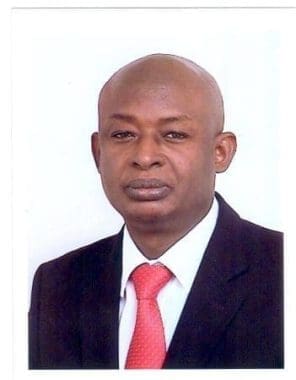
Emmanuel Doni-Kwame MD, WTC Accra & Secretary-General, ICC Ghana
[email protected]

