ADB Ghana Medical Systems Supports Otumfuor’s $100m Cancer Centre Project

0

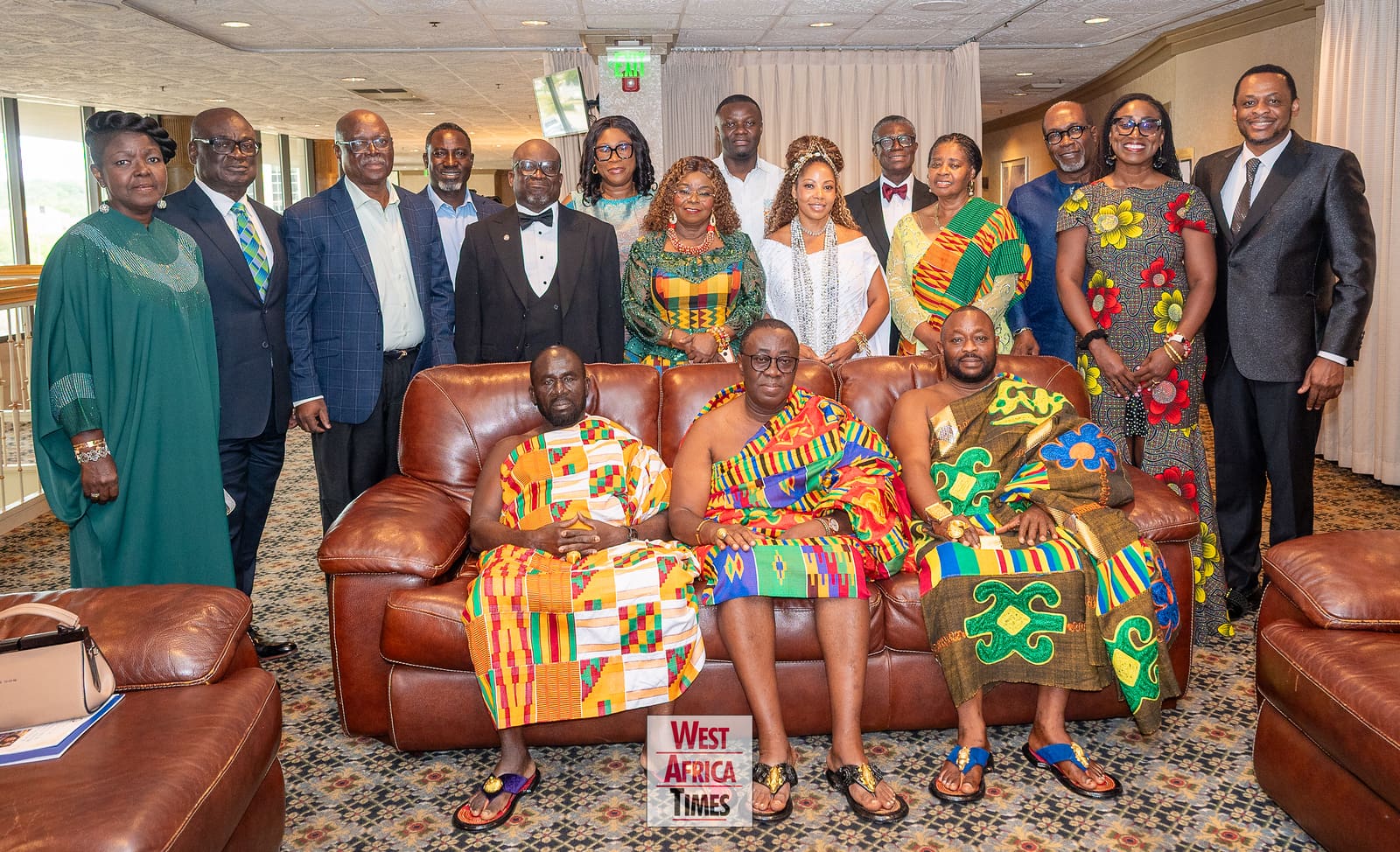
Ghanaian healthcare solutions provider ADB Ghana Medical Systems Group Limited is helping shape the future of specialised healthcare infrastructure, leading the hospital engineering and infrastructure component of the $100 million Otumfuo Osei Tutu II Comprehensive Cancer Centre of Excellence at Kwaso in the Ashanti Region.

The project marks a significant step in the company’s evolution from a medical equipment supplier into a broader healthcare solutions provider, with expertise spanning hospital engineering, construction, maintenance and project management.

Established in 2006 by Adann Benjamin Diaz, the company has steadily expanded its operations to serve hospitals, government agencies, non-governmental organisations and other institutions within the health sector.

According to Mr Diaz, the expansion reflects a deliberate commitment to contributing to Ghana’s healthcare development by addressing not only the need for medical technology but also the infrastructure required to deliver quality care.

“Our ambition is not simply to supply medical equipment. We want to build a company that provides solutions, develops expertise and contributes meaningfully to the infrastructure required for quality healthcare delivery in Ghana and across Africa,” he said.

This vision has informed the company’s expansion into the planning, development, management and maintenance of hospital environments, technical systems and turnkey healthcare facilities.

The integrated model enables the company to consider the full operational requirements of a healthcare facility, from the equipment clinicians need to diagnose and treat patients to the electrical systems, utilities and specialised infrastructure that keep hospitals functioning.

It is this combination of technical capabilities that has positioned ADB Ghana Medical Systems to participate in complex healthcare projects requiring close coordination between medical technology, building design and engineering systems.

A landmark investment in cancer care

The Otumfuo Osei Tutu II Comprehensive Cancer Centre of Excellence is being developed on 52 acres of land at Kwaso in the Ejisu Municipality.

Named in honour of the Asantehene, Otumfuo Osei Tutu II, the five-year initiative is being funded by Breast Care International (BCI), Peace and Love Hospitals, Global Health Catalyst and the University of Pennsylvania.

The overall project is estimated to cost $100 million, with approximately $10 million allocated to the first phase.

Phase One is expected to include a radiotherapy suite, research wing, artificial intelligence hub, education centre and community outreach facilities. Together, these components are intended to support cancer treatment while strengthening research, professional education and public awareness.

Dr Beatrice Wiafe Addai, President of Breast Care International and Founding Director of the Centre, said the facility is intended to improve access to advanced cancer care in Ghana and position the country as a destination for medical treatment.

“The Centre will also be the hub for medical tourism and stop the movement of cancer patients from Africa to other continents for treatments,” she said.

When completed, the centre is expected to employ more than 250 people and provide a range of specialised services and facilities, including chemotherapy and brachytherapy suites, CT scan simulators, admission wards, laboratories, surgical theatres and recovery wards.

The development is envisioned as an integrated centre for treatment, research, training and community outreach, with the potential to expand access to specialised cancer services for patients in Ghana and beyond.

Expanding access to specialist cardiac care

Beyond cancer care, ADB Ghana Medical Systems is also involved in the development of a specialist cardiology facility at Komfo Anokye Teaching Hospital (KATH) in Kumasi.

For decades, the hospital operated without a catheterisation laboratory, requiring some patients in need of specialised cardiac interventions to travel to Accra for treatment.

The new facility is intended to bring advanced cardiac services closer to patients in the Ashanti Region and neighbouring areas, reducing the need for long-distance travel to access certain specialist procedures.

A recent technical working visit to the project site brought together representatives of the Ghana Medical Trust Fund, KATH and the Ministry of Health to assess key elements of the development. Discussions covered power capacity, utilities integration and structural planning.

The engagement underscored the technical complexity of developing modern specialist healthcare facilities, where medical equipment must be supported by appropriately designed buildings, reliable power systems and carefully integrated utilities.

For ADB Ghana Medical Systems, the project represents another opportunity to apply its expanding engineering and project management expertise to infrastructure intended to support specialised medical services.

Building Ghanaian expertise for Africa’s healthcare needs

The company’s involvement in the cancer centre and the KATH cardiology project reflects a broader ambition to establish a Ghanaian healthcare solutions brand with the technical capacity to compete beyond the domestic market.

Mr Diaz said the company intends to expand into other West African markets while strengthening the expertise, systems and partnerships required to deliver healthcare infrastructure to international standards.

“We believe indigenous companies have an important role to play in solving Africa’s healthcare challenges. Our responsibility is to build the expertise, systems and partnerships that allow us to deliver at the highest possible standard,” he said.

He added that the company ultimately measures its success by the contribution its work makes to patients and the delivery of healthcare services.

“Healthcare is ultimately about people. Every piece of equipment we supply, every facility we help develop and every technical solution we provide should ultimately contribute to better care for someone who needs it.”

As Ghana continues to pursue improvements in specialised healthcare, the need for infrastructure that combines medical technology, engineering and effective project management remains central to the development of modern health facilities.

For ADB Ghana Medical Systems, its growing involvement in major healthcare developments signals a long-term commitment to supporting that progress, while building the capabilities of an indigenous company with ambitions across West Africa and the wider African market.

 

KRIF Ghana Procurement Master Class Draws Over 100 Professionals from Leading Institutions

0

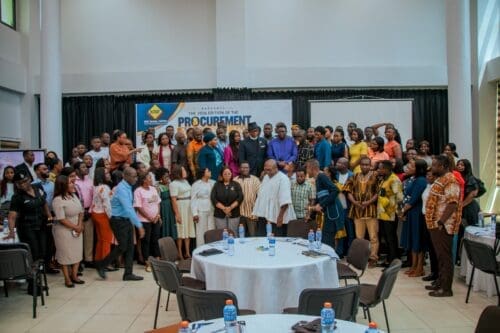
Over 100 procurement professionals and business practitioners from some of Ghana’s leading institutions have participated in the 2026 KRIF Ghana Procurement Master Class, in what organisers described as a highly practical and engaging professional development programme.

Held under the theme “Buying Better: Cost, Quality, Risk & Total Value in Workplace Procurement,” the Master Class brought together professionals from the public and private sectors for intensive learning, practical exercises, knowledge-sharing and networking.

Participants were drawn from prominent institutions including the Bank of Ghana, the Office of the President, the Ghana Police Service, Tobinco Media Group and the Ghana Health sector, among other leading organisations.

The strong institutional representation turned the programme into a major gathering of procurement professionals, creating an opportunity for participants to exchange experiences, examine real workplace challenges and explore practical approaches to improving procurement performance.

The programme featured a line-up of experienced facilitators and practitioners, including Management and Procurement Consultant Kobina Atta Bedu and International Development Consultant and former USAID Chief of Party in Zambia, Maggie Lada.

Executive Chairman of KRIF Ghana Limited, Rev. Kennedy Okosun, also addressed participants, challenging procurement professionals to look beyond traditional administrative functions and position themselves as strategic contributors to organisational growth and performance.

Beyond the Lowest Price

Mr. Kobina Atta Bedu cautioned procurement professionals against “maverick buying”, warning that unplanned purchasing outside established systems could undermine an organisation’s strategy, spending controls and financial performance.

He explained that maverick buying occurs when individuals or departments make purchases outside established procurement systems and procedures.

“Do you want to have an organisation where there’s maverick buying, where everybody buys what they want, or do we have a structured approach where spending is aggregated and consolidated?” he asked.

Mr. Bedu said organisations must determine procurement structures that best support their vision and objectives, including whether purchasing should be centralised or decentralised.

He challenged procurement professionals to understand their organisations beyond their departments by studying their corporate objectives, vision, values and business strategies.

“You have to understand the bigger picture,” he said, stressing the need for procurement professionals to translate corporate strategies into appropriate procurement strategies.

According to him, organisations pursuing cost leadership require procurement strategies capable of securing goods and services at competitive prices, while businesses pursuing differentiation may require procurement decisions that place greater emphasis on quality and other factors that give them a competitive advantage.

He urged professionals to understand how procurement decisions affect revenue, costs, profitability and overall organisational performance.

Emotional Intelligence Matters

Ms. Maggie Lada, meanwhile, identified emotional intelligence, curiosity and sound judgement as important qualities for procurement professionals seeking to advance into leadership positions.

She said procurement professionals must be able to build relationships across departments, manage disagreements professionally and remain collaborative while protecting procurement standards.

Speaking at the Master Class, Ms. Lada said while technical knowledge and attention to detail remained essential, emotional intelligence became increasingly important as professionals progressed into middle and senior management.

She encouraged procurement managers to approach superiors not merely with problems but also with possible solutions, adding that senior professionals must be able to interpret complex regulations and apply them appropriately to situations that may not fit neatly into established rules.

Ms. Lada also encouraged participants to cultivate curiosity and think creatively about how procurement regulations could support broader organisational objectives.

Procurement Professionals Challenged to Aim Higher

Rev. Kennedy Okosun challenged participants to continuously upgrade their knowledge and move beyond viewing procurement as merely an administrative function.

He said procurement professionals needed to understand finance, operations, technology, strategy and leadership if they were to become effective contributors to organisational decision-making.

He urged professionals to focus not only on price but also on quality, risk, efficiency and total value.

According to Rev. Okosun, KRIF Ghana’s four decades of experience working with institutions had reinforced its belief that effective procurement leadership could have a direct impact on organisational performance.

Hands-On Learning

Unlike conventional training programmes focused largely on classroom presentations, the KRIF Master Class incorporated practical learning through a Procurement Challenge Lab, where participants worked in teams to solve a realistic procurement scenario from the planning stage through to contract award.

The programme also featured sessions on professional development, procurement beyond the lowest price, the hidden costs of cheap purchases and practical approaches to supplier evaluation.

Participants engaged in an action-planning session and networking activities, allowing them to translate lessons from the programme into practical steps for their respective organisations.

Certificates of participation were also presented to participants at the end of the programme.

The organisers said the Master Class was designed to help procurement professionals strengthen their competence, broaden their strategic outlook and develop practical approaches capable of delivering greater value to their organisations.

With participation from institutions spanning financial services, government, security, media and healthcare, the event offered a rare platform for professionals from different sectors to learn from one another and build valuable industry connections.

For those who missed the 2026 edition, the depth of participation, calibre of facilitators and practical nature of the sessions underlined just how much professional knowledge and networking opportunities were packed into the programme.

KRIF Ghana said the initiative forms part of its broader commitment to developing procurement professionals who can move beyond routine purchasing and play a more strategic role in organisational growth and performance.

Samuel Clottey calls for permanent structure to rebuild Black Stars

0

Samuel Clottey, Founder and CEO of Sam Creatives, has called for a permanent football structure to be established around the Black Stars, saying Ghana must move beyond short-term solutions and build a national team capable of competing consistently.

His comments follow Ghana’s poor start to the 2027 Africa Cup of Nations qualifying campaign, with the Black Stars losing 2-0 to Côte d’Ivoire in Bouaké before suffering a 4-2 defeat to The Gambia in Accra.

Ghana had taken a 2-0 lead against The Gambia through Ernest Nuamah and Felix Afena-Gyan but surrendered the advantage, leaving the Black Stars without a point from their opening two Group C matches.

For Clottey, the results should prompt a wider discussion about the future of the national team rather than simply another change of coach.

He believes Ghana needs a long-term technical structure with a clear football philosophy, proper scouting and a pathway linking youth development to the senior team.

“We need to stop starting all over again whenever there is a change of coach. There must be a permanent structure for the Black Stars, with a clear football philosophy and a plan that can be followed over a number of years,” Clottey said.

He pointed to former Black Stars stars such as Michael Essien, Stephen Appiah, Asamoah Gyan and Tony Yeboah as examples of the quality Ghana has produced.

Clottey believes the challenge now is to create a system that can consistently identify and develop players of similar quality.

“We have produced players like Essien, Appiah, Gyan and Yeboah. The question now is how we create the environment to consistently produce players of that quality,” he said.

He wants Ghana to strengthen its scouting network, with players in the Ghana Premier League and those developing abroad monitored throughout the year.

Clottey also called for a stronger connection between the youth national teams and the Black Stars so that promising players can be tracked as they progress through the different levels.

He said investment in grassroots football, coaching education and player development must also form part of the long-term plan.

According to Clottey, the Black Stars’ latest results should be examined beyond the scoreline. The collapse against The Gambia, after taking a two-goal lead, highlighted concerns about the team’s ability to manage matches under pressure.

He believes responsibility should be shared across the football system, rather than placing the burden entirely on the head coach.

“The coach is important, but the coach alone cannot build the future of Ghana football. The structure around the team must also be strong,” he said.

Clottey believes the immediate priority is for Ghana to recover in the remaining AFCON qualifiers, but he also wants the country to use the current situation to establish a sustainable system for the future.

For him, the goal should not simply be to qualify for the next tournament but to build a Black Stars team that can compete consistently across generations.

“Ghana cannot continue rebuilding the Black Stars from scratch every few years. We need a permanent structure and a proper pathway to build a solid team for the future,” Clottey said.

An Urgent Call For Presidential Intervention: Dissolve The Ghana Football Association To Save Our National Soul

0

From: Emmanuel Osei
(Son of Rev. Osei Kofi, Black Stars Legend)

​To: His Excellency, the President of the Republic of Ghana.

​I speak today as Emmanuel Osei, son of the legendary Rev. Osei Kofi—a man whose legacy is etched into the golden eras of Ghanaian football. I write to you not merely as the son of an African champion, but as a concerned citizen who refuses to watch the heart and soul of our nation’s sport be dismantled by self-interest and administrative decay.

​Ghana football has been in a steep decline for far too long. For decades, we have rested on our past laurels, constantly rehearsing the historic feats of our four-time African Champions and celebrating the breakthrough World Cup generations of the 2000s. But true progress demands that a nation moves forward, not hide behind bygone glories while the present falls into ruin. The current leadership of the Ghana Football Association (GFA) has taken the Ghanaian people and our passion for granted.

​As my father always reminds us: a nation cannot thrive when conflict of interest becomes the business model of its sports administrators. We cannot have an FA leadership where officials own the very clubs they govern, sitting at the decision-making table prioritizing personal enterprise and private gain over the national interest. Football in Ghana has shifted from a matter of national pride to a commercial venture benefiting a select few.

​This systemic rot has destroyed the pride of wearing the national shirt:

​Erosion of National Honor: Playing for the Black Stars was once the ultimate privilege for any Ghanaian footballer. Today, administrative interference and persistent public disgrace have forced our top players to hesitate or decline calls to represent their country.

​Refusal of Accountability: In our political and administrative culture, officials in positions of power rarely resign honorably when they fail. Expecting internal reform or voluntary resignation from this current administration is a fantasy.
​A Wasted Future: Qualifying for tournaments under the current system yields nothing but repeated humiliation. Continuing on this path guarantees further disgrace on the international stage.
​Football is the beating heart of Ghana. When our national teams play, the entire country comes together regardless of political, ethnic, or socio-economic background. That heart is currently failing, and it requires drastic surgical action.

​We call on Your Excellency, as the Father of the Nation, to intervene directly and dissolve the current Ghana Football Association.

​We are fully aware of the potential consequences, including a possible FIFA suspension or a two-year ban from international competitions. This is a price worth paying. A two-year hiatus is a reasonable and necessary trade-off to do our domestic homework, clean house, dismantle the conflict-of-interest networks, rebuild our grassroots infrastructure, and restore integrity to Ghanaian sports.

​We must reset. We must revive our dying football culture so that the flag of Ghana can once again be lifted high with genuine honor, accountability, and pride.

​Mr. President, the nation is watching, and Ghana football needs your decisive action today.

Ghana Law Society Holds Successful Maiden Annual Conference

0

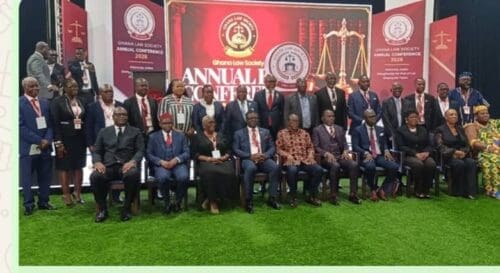
The Ghana Law Society (GLS) held its maiden Annual Conference and unveiled its official logo on Wednesday, 30th October 2026 at the La Palm Royal Beach Hotel in Accra.

The landmark event attracted a distinguished gathering of national leaders and members of the legal fraternity. The Attorney-General and Minister for Justice, Hon. Dr. Dominic Ayine, represented the President. Also in attendance were the Rt. Hon. Speaker of Parliament, Alban S. K. Bagbin, and the Chief of Staff, Hon. Julius Debrah, Hon. Betty Mould Iddrisu,
Hon Marrietta Brew, Hon Joyce Bawa Mogtari, alongside traditional leaders and eminent legal practitioners.

The scholarly presence was equally illustrious, with leading legal academics including Prof. Peter Atudiwe Atupare, Professor and Dean of the University of Ghana School of Law, and Prof. Ernest Kofi Abotsi, Dean of the UPSA Law School, in attendance.

The conference was elegantly organised and recorded impressive attendance, drawing lawyers from across the country and law students from faculties nationwide.

From its early beginnings as the Law Society of Ghana (LSG) circa 2022, the Ghana Law Society has grown in strength, credibility and membership confidence, emerging as a vibrant and viable professional body poised to champion the interests, professional development and welfare of lawyers within Ghana’s legal ecosystem.

The successful maiden conference marks a remarkable milestone in the evolution of Ghana’s legal profession and sets a powerful tone for the future.

The Ghana Law Society has come to stay.

By: Anatu Anne Seidu Bogobiri Esq.
Women Commissioner,
Ghana Law Society ( GLS)

Sahara’s Asharami opens Tema LPG terminal as new carrier delivers

0

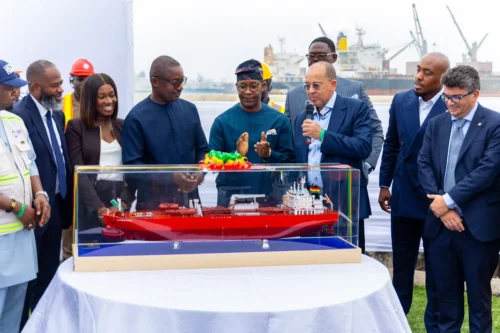
Asharami Ghana, part of Nigeria’s Sahara Group, commissioned a 6,000-tonne liquefied petroleum gas (LPG) storage terminal at Tema on 29 September 2026 as its new carrier landed a first cargo.

The 40,000-cubic-metre tanker MT Asharami Ghana arrived at the Tema Oil Jetty on its maiden voyage with about 5,000 tonnes of LPG. Sahara says the vessel was purpose-built to serve Ghana and neighbouring markets. The company’s strategy combines shipping, storage and onward distribution.

Why it matters

The government wants at least 50% of Ghanaians to have access to LPG by 2030 as it pushes households away from charcoal and firewood towards cleaner cooking fuel. Supply interruptions and limited storage have long been a weak point in the LPG chain.

Energy and Green Transition Minister Dr John Abdulai Jinapor, special guest of honour at the ceremony, said the target cannot be met without private investment in storage and supply. He said the project could also create work in trading, logistics, transport and distribution.

Phase one of a larger terminal

The Tema terminal is the first phase of a planned 12,000-tonne facility. Sahara Group Executive Director Wale Ajibade said the vessel’s maiden voyage was the first of many.

Ajibade also credited the National Petroleum Authority’s Chief Executive, Godwin Edudzi Tameklo, with support that helped bring the project to completion. Asharami Ghana Managing Director Yaa Serwaa Alifo described the vessel’s arrival as the culmination of the company’s plans for Ghana.

Find value in plastic waste, ex-Accra mayor Sowah urges

Former Accra Mayor Mohammed Nii Adjei Sowah says Ghana must make plastic waste worth collecting, as residents near the Adipa landfill push back against waste trucked from Accra.

Speaking on Channel One TV’s Face to Face programme, Sowah said the country’s waste problem is largely a plastics problem. “We failed to find an economic value for the plastic waste,” he said.

His comments come as waste from the Agbogbloshie enclave is being moved to the Adipa landfill in the Eastern Region. Residents of the Adipa/Asiaw Electoral Area have given the government a seven-day ultimatum to stop the transfers and engage them over their concerns about the site.

Backing residents, but warning against closure

Sowah said the residents’ concerns were legitimate, given the health and environmental risks of a poorly managed landfill. He warned, however, that closing Adipa outright would leave Accra with nowhere to send its waste. He added that the material now being moved there is not the city’s regular daily waste.

He also said authorities should be clear about what will happen to the cleared areas around the Korle Lagoon, where dredged silt and plastics have built up. In his view, removing the waste matters because it would otherwise return to the lagoon.

What he proposes

Sowah, who was mayor from 2017 to 2022, made four main proposals:

  • Price plastic like metal: Scrap metal rarely ends up in household rubbish because it has a market value, he said, and plastic needs the same incentive.
  • Sort waste before landfill: Large transfer stations should take waste from a whole cluster of neighbourhoods and separate plastics and paper first. He cited the Achimota Transfer Station, completed during his tenure, which he said handles about 800 tonnes.
  • Use organic waste: Food residues and cassava peels are already used as animal feed, and more organic material could become manure.
  • Capture landfill gas: Engineered sites should collect methane to generate electricity instead of letting it escape, as well as controlling leachate, flies and odour.

He acknowledged that even good recycling leaves residue, so properly engineered landfill capacity will still be needed.

Ghana’s activity gauge jumps 14.9%, outpacing 6% GDP growth

0

The Bank of Ghana’s main monthly gauge of the economy grew 14.9% in July 2026, more than double the pace of official growth figures for the second quarter.

The central bank’s real Composite Index of Economic Activity (CIEA) was up from 6.1% growth in July 2025. The bank credits the rise to private-sector credit, international trade and spending on goods and services. The measure has risen steadily through 2026, from 8.4% in January to 13.4% in May before reaching the July figure.

Official output data tell a calmer story. The Ghana Statistical Service (GSS) says real gross domestic product (GDP) grew 6.0% in the second quarter of 2026, bringing first-half growth to 6.2%. Second-quarter growth was slightly slower than a year earlier.

Why the two numbers differ

The CIEA combines high-frequency indicators, including:

  • Bank credit to the private sector.
  • Imports and exports.
  • Port activity.
  • Industrial electricity use.
  • Cement output.

Those are the parts of the economy that are moving fastest, as lower inflation and interest rates release demand. GDP covers the whole economy, including farming. In the second quarter, the GSS reported:

  • Services: up 8.0%, with information and communications technology up 30.9%.
  • Industry: up 4.3%, helped by oil and gas.
  • Agriculture: up 3.9%, against 7.1% a year earlier, pulled down by a 24.7% fall in fishing.
  • Demand: investment up 53.0% and domestic demand up 11.2%.

The gap between the two figures does not mean either is wrong. The CIEA is more sensitive to credit and trade. Neither measure, however, suggests the economy is growing at 15%.

Prices and policy

Inflation stood at 5.0% in August 2026, according to the World Bank. The Bank of Ghana kept its policy rate at 14.0% at its September meeting, and its August confidence surveys found positive consumer and business sentiment.

Forecasters differ on the full year. Databank Research expects growth above 6.5%, while the World Bank projects 4.8%.

GTEC’s unrecognised institutions list climbs to 110, 11 in Ghana

0

The Ghana Tertiary Education Commission (GTEC) has added 10 names to its list of unrecognised institutions, bringing it to 110 in a notice dated 30 September 2026.

The list has nearly doubled in about five months:

  • April 2026: 62 institutions.
  • 25 June 2026: 80.
  • 28 August 2026: 100.
  • 30 September 2026: 110.

GTEC says the institutions are not recognised because of various quality assurance concerns. It advises the public to exercise due diligence over any certificates they issue. For students, parents and employers, a qualification from a listed institution may not be accepted in Ghana.

Mostly abroad, 11 at home

Despite some reports describing more than 100 unrecognised institutions operating in Ghana, most on the list are based abroad, many in the United States, the United Kingdom, Switzerland, India and Nigeria. Eleven are in Ghana, up from seven in the June list:

  • Debest College of Science, Arts and Business
  • Faith University Seminary
  • Doxa Open University
  • Electrical and Mechanical Engineering Training School
  • Quest International University
  • Kingdom Living Bible Institute, Kumasi
  • Global Professional College, Effiduase
  • Volta University College (listed as Ghana and Nigeria)
  • OAA Consulting Limited, Kumasi
  • Competency School of Business Administration (COSBA), Kumasi
  • Global Executive College

The full GTEC list

  1. Universidad Azteca, Mexico
  2. Indian School of Management and Studies, India
  3. Breyer State Theology University, USA
  4. Debest College of Science, Arts and Business, Ghana
  5. Osiri University, USA
  6. Atlantic International University, USA
  7. Faith University Seminary (FUS), Ghana
  8. Christian University College Monrovia, Liberia
  9. Rhema Bible Training College (RBTC), USA
  10. Universidad Empresarial de Costa Rica, Costa Rica
  11. Selinus University of Sciences and Literature, Italy
  12. Crown University International Chartered, USA
  13. Monarch Business School, Switzerland
  14. City University, Cambodia
  15. Kesmond International University, USA
  16. Washington University of Barbados, Barbados
  17. London Academy of Technology and Management, UK
  18. IICSE University, USA
  19. Doxa Open University, Ghana
  20. Brainae University, USA
  21. University of Haana, Germany
  22. Christian Leadership University, USA
  23. International Institute of Church Management Inc, USA
  24. Electrical and Mechanical Engineering Training School, Ghana
  25. Louisiana Baptist University & Seminary, USA
  26. Tech Global University, Andorra
  27. International Christian University, Nigeria
  28. LIGS University, Hawaii, USA
  29. Swiss Management Centre University, Switzerland
  30. Quest International University, Ghana
  31. Isles International University, Ireland
  32. Kingsnow University, USA
  33. New Life Bible College and Seminary, USA
  34. East Bridge University, France
  35. Texila American University, Guyana
  36. Vision International University, USA
  37. Keisie International University, USA
  38. Dublin Metropolitan University, UK/Cyprus
  39. Logos University, USA
  40. University of America, USA
  41. Kazian School of Management, India
  42. University of Northwest, USA
  43. Akamai University, Hawaii, USA
  44. Trinity Graduate School of Apologetics and Theology (TGSAT), India
  45. American Bible University, USA
  46. California Creek University, USA
  47. Delta International University, USA
  48. National Institute of Business Management (NIBM), India
  49. Southern California International University, USA
  50. Quetzalcoatl University of Veracruz, Mexico
  51. Swiss International Management Academy, Switzerland
  52. IIBM Institute of Management, India
  53. Dunster Business School, Switzerland
  54. World Academy for Research and Development (WARD), UK
  55. American Management University, USA
  56. All Nations Church International University, Texas, USA
  57. Freedom University and Theological Seminary, USA
  58. Global Theological University, USA
  59. Jorasome International University, Zambia
  60. Kingdom Living Bible Institute, Kumasi, Ghana
  61. Global Professional College, Effiduase, Ghana
  62. London School of Management and Technology (LSMT), UK
  63. European Institute of Management and Technology, Switzerland
  64. Volta University College, Ghana and Nigeria
  65. United Nigeria University College, Nigeria
  66. Open International University, Nigeria
  67. Marquis Open University, Italy
  68. Alliance International University, Zambia
  69. All Saints American University, Liberia
  70. Colombia International University, USA
  71. American Management University, USA
  72. University of the Nations, Hawaii, USA
  73. Brookside University, Barbados
  74. Pacific International University, USA
  75. American University of Sovereign Nations, USA
  76. Brussels Capital University, Türkiye
  77. Richmond Open University, Nigeria
  78. Freie und Private Universität Herisa, Switzerland
  79. OAA Consulting Limited, Kumasi, Ghana
  80. Competency School of Business Administration (COSBA), Kumasi, Ghana
  81. Manchester Open University, UK
  82. Institute of Management and Engineering, India
  83. Vocational University, Delhi, India
  84. Indian Institute of Alternative Medicine, India
  85. Logos University Global, USA/France
  86. West African Christian University, Nigeria
  87. Coastal University, Nigeria
  88. ESM – École de Management et de Communication, Switzerland
  89. Swiss School of Business and Management (SSBM), Switzerland
  90. European Centre for Education in Business and Sciences (ECEBiS), Malta
  91. Reagan National University, USA
  92. Trinity International University of Ambassadors, USA
  93. Global Executive College, Ghana
  94. Christian Life School of Theology Global, USA
  95. Indian Management School and Research Centre, India
  96. Hillsville University, USA
  97. Northwestern Christian University, Kenya
  98. University of Muchinga, Zambia
  99. Yesbud University, Zambia
  100. College and University, Dominica/Belize/Liberia
  101. Adam Smith University, Liberia/Saipan
  102. Medical College of London, UK/Montserrat
  103. Rutherford University, USA/British Columbia, Canada/Eswatini
  104. University of Dorchester, UK
  105. Shaftesbury University, UK
  106. University of Dunham, UK
  107. Commonwealth Open University, British Virgin Islands
  108. African International Institute of Science and Technology, Liberia
  109. European Continental University, Belgium
  110. American University of London, UK

Second opposition MP drawn into EOCO’s SIC Life probe

0

Investigators told an Accra court on 30 September 2026 that a second opposition MP is under investigation alongside Manhyia South MP Nana Agyei Baffour Awuah, TV3 reported.

TV3 court correspondent Joseph Ackah-Blay said on the station’s Daily Brief that the MP’s identity was disclosed in court. He did not publish it. 3News separately reported that the second lawmaker is also from the minority side in Parliament.

What investigators allege

According to Ackah-Blay, investigators said the second MP, a lawyer, acted for a company that settled a debt with SIC Life Savings and Loans. Baffour Awuah’s former law firm represented SIC Life in the same matter.

The investigators allege:

  • Possible collusion: The arrangement may have involved Baffour Awuah, the second MP and a former managing director of SIC Life.
  • Shortfall: SIC Life recovered GH¢5 million instead of the GH¢14.8 million it was expected to recover.
  • Legal fees: Nearly half of the amount recovered went in legal fees, although the agreed fee was 15% of GH¢14.8 million.

None of these allegations has been tested in court, and no charge against either MP has been reported.

The MP’s position

Baffour Awuah denies being the target of the investigation and disputes EOCO’s account. His explanation of the transaction:

  • SIC Life invested about GH¢3.5 million with the now-defunct Equity Savings and Loans.
  • Equity defaulted, and the liability grew with interest to about GH¢14 million.
  • His firm was engaged to recover the money.

He has also publicly questioned whether it is EOCO’s role to decide what lawyers are paid.

The disclosure came the same day a High Court granted EOCO a warrant to arrest Baffour Awuah and to search for and seize documents. The second MP has not been publicly identified, and no response from him has been reported.