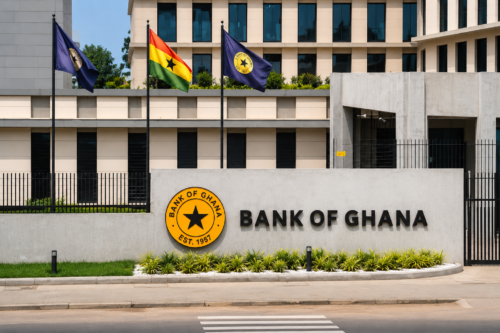
The Bank of Ghana’s main monthly gauge of the economy grew 14.9% in July 2026, more than double the pace of official growth figures for the second quarter.
The central bank’s real Composite Index of Economic Activity (CIEA) was up from 6.1% growth in July 2025. The bank credits the rise to private-sector credit, international trade and spending on goods and services. The measure has risen steadily through 2026, from 8.4% in January to 13.4% in May before reaching the July figure.
Official output data tell a calmer story. The Ghana Statistical Service (GSS) says real gross domestic product (GDP) grew 6.0% in the second quarter of 2026, bringing first-half growth to 6.2%. Second-quarter growth was slightly slower than a year earlier.
Why the two numbers differ
The CIEA combines high-frequency indicators, including:
- Bank credit to the private sector.
- Imports and exports.
- Port activity.
- Industrial electricity use.
- Cement output.
Those are the parts of the economy that are moving fastest, as lower inflation and interest rates release demand. GDP covers the whole economy, including farming. In the second quarter, the GSS reported:
- Services: up 8.0%, with information and communications technology up 30.9%.
- Industry: up 4.3%, helped by oil and gas.
- Agriculture: up 3.9%, against 7.1% a year earlier, pulled down by a 24.7% fall in fishing.
- Demand: investment up 53.0% and domestic demand up 11.2%.
The gap between the two figures does not mean either is wrong. The CIEA is more sensitive to credit and trade. Neither measure, however, suggests the economy is growing at 15%.
Prices and policy
Inflation stood at 5.0% in August 2026, according to the World Bank. The Bank of Ghana kept its policy rate at 14.0% at its September meeting, and its August confidence surveys found positive consumer and business sentiment.
Forecasters differ on the full year. Databank Research expects growth above 6.5%, while the World Bank projects 4.8%.