

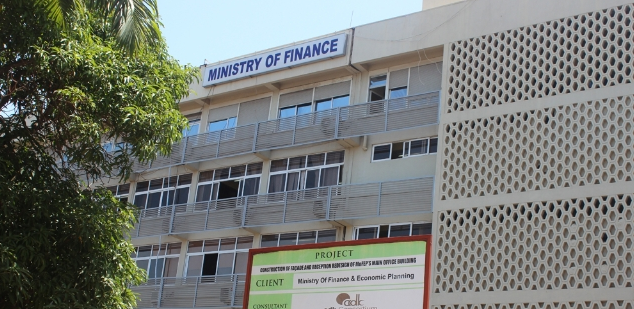
Ghana’s government has run up no new arrears since taking office in 2025 and has paid about GH¢36.5 billion of inherited debts, a Finance Ministry adviser said on 29 September.
Frederick Amissah, Technical Adviser to the Ministry of Finance, told the Chartered Institute of Bankers, Ghana (CIB Ghana) Post-MPC Policy Seminar in Accra that every expenditure the government incurred in 2025 was paid. He said the same holds for spending so far in 2026. His remarks were reported by The High Street Journal.
The claim matters for banks as much as for contractors. Firms that build government projects often borrow to do so. When the state pays late, those loans can turn bad, adding to a banking-sector non-performing loan ratio that the Bank of Ghana put at 15.7 per cent in August.
Amissah said the government inherited GH¢68.8 billion in arrears in 2025 and put the claims through validation before paying. By his account, GH¢10.4 billion was rejected, including claims for work not done or without supporting documents. About GH¢47 billion was validated and scheduled for payment over four years. He said about GH¢30 billion was paid in 2025 and another GH¢6.5 billion so far in 2026, which by his figures leaves roughly GH¢10 billion of the validated sum outstanding.
Official figures on the inherited debt have shifted as the audit progressed. In the 2026 Budget in November 2025, Finance Minister Cassiel Ato Forson reported GH¢47.8 billion validated, GH¢10.4 billion rejected and GH¢8.6 billion still under review. A Ghana Audit Service report laid before Parliament in March 2026, prepared with EY and PwC, put the total at GH¢68.7 billion. That report validated GH¢45.4 billion, rejected GH¢8.1 billion and left GH¢13.3 billion pending further documentation. Parliament referred the report to its Public Accounts Committee.
To stop new arrears building up, Amissah said, agencies must now obtain Commitment Authorisation from the Finance Ministry before signing contracts. The authorisation confirms that a project has an approved budget and that funds exist to pay for it.
He said the aim was a system in which public contracts are harder to win but payment is certain. Once a firm secures a contract, “you are assured that when you get a government project, you will be paid,” he said.

