

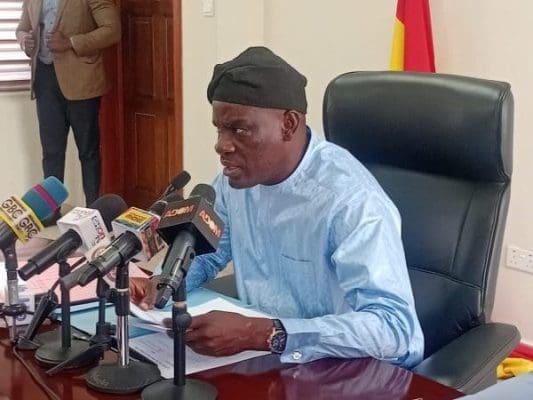
Ghana’s Education Minister Haruna Iddrisu announced plans to allocate GH¢1 billion from the Ghana Education Trust Fund in 2026 to address critical infrastructure deficits and eliminate the double-track system in senior high schools nationwide.
The intervention forms a central component of government efforts to end the controversial academic calendar system that has divided students into alternating groups due to accommodation shortages. The funding announcement came during Iddrisu’s working visit to the Upper East Region, where he assessed educational challenges amid ongoing security tensions.
During his visit to Zebilla Senior High Technical School, the minister interacted with West African Senior School Certificate Examination candidates and evaluated how the Bawku conflict affects academic activities. Students in the region face unique challenges as armed tensions disrupt normal learning environments.
Iddrisu encouraged students to maintain focus despite regional instability, emphasizing education’s role in combating poverty and ignorance. He declined wearing a bulletproof vest during the school visit, stating that such protective equipment contradicts academic atmospheres and undermines conducive learning environments.
The minister highlighted systemic inequalities in Ghana’s examination system, noting that national assessments fail to account for students studying under conflict conditions. He expressed concern that examination standards remain uniform despite varying learning environments across peaceful and troubled regions.
The GH¢1 billion allocation represents a significant investment in Ghana’s secondary education infrastructure, targeting new classrooms, dormitories, and essential facilities. The funding forms part of broader educational reforms aimed at improving access and quality in secondary education.
Ghana’s double-track system, implemented to accommodate increased enrollment following the introduction of free senior high school education, requires students to attend school in alternating periods. The system has faced criticism for reducing actual learning time and creating logistical challenges for educators and families.
The minister linked educational progress to peace and security, calling for calm restoration in Bawku to enable proper academic environments. He emphasized that lasting development requires both infrastructure investment and conflict resolution in affected communities.
Iddrisu’s appointment as Education Minister represents a significant policy shift under President John Mahama’s administration. The former Minority Leader and Tamale South MP brings parliamentary experience and legal background to educational governance.
The 2026 GETFund allocation signals government commitment to addressing infrastructure bottlenecks that have constrained educational expansion. Critics have previously highlighted inadequate facilities as barriers to effective learning outcomes in Ghana’s rapidly expanding secondary education sector.
Ghana’s education sector faces multiple challenges including teacher shortages, inadequate infrastructure, and regional disparities in educational quality. The northern regions, including areas affected by the Bawku conflict, typically lag behind southern counterparts in educational indicators.
The government’s infrastructure focus aligns with international development goals emphasizing quality education access. Ghana’s free senior high school policy has significantly increased enrollment but strained existing facilities, necessitating substantial capital investment.
Educational stakeholders have welcomed the funding announcement while emphasizing implementation transparency and effectiveness. The success of the infrastructure program will largely depend on efficient project management and equitable resource distribution across Ghana’s regions.
The minister’s visit to conflict-affected areas demonstrates government recognition of security impacts on education. Addressing both infrastructure deficits and regional stability emerges as crucial for achieving comprehensive educational development in Ghana’s northern territories.

