Simiw Honours NPA CEO For Development Contributions

0

The Chief of Simiw, Nana Kwamina Nguando IV, and the Simiw Youth Development Association have honoured the Chief Executive Officer of the National Petroleum Authority (NPA), Mr. Godwin Edudzi Tamakloe, for his contributions to the development of the community.

The recognition was conferred during a durbar held to climax this year’s Enyanko Festival at Simiw in the Central Region.

Presenting the award, Nana Nguando IV explained that the honour was in appreciation of the NPA CEO’s support towards developmental projects in the community since his installation as chief.

Simiw Honors Ceo Of Npa Through His Subordinate

According to the chief, although Mr. Tamakloe is a close friend, it is uncommon to find friendships that translate into tangible development for communities.

He noted that within two years of his coronation, Simiw had witnessed significant improvements, largely due to the support received from the NPA CEO.

Nana Nguando IV cited the construction of a new palace and a health centre as some of the major projects supported by Mr. Tamakloe.

He explained that before the establishment of the health facility, residents often had to travel long distances to access quality healthcare services in Ankaful, Cape Coast, and Elmina.

According to the chief, the health centre has significantly improved access to healthcare and enhanced the well-being of residents.

He further noted that the construction of the palace has not only beautified the town but has also strengthened community cohesion.

“The palace has become a focal point for discussions on the development of the community and has helped promote unity among the people,” he said.

As part of the ceremony, the traditional authorities and the Youth Development Association presented citations and other tokens of appreciation to Mr. Tamakloe and some officials of the National Petroleum Authority.

Receiving the honour on behalf of the NPA CEO, the Executive Assistant to the Chief Executive Officer, Mr. Aquinas Hanson Jnr, expressed gratitude to the chief and the youth association for the recognition.


He said the NPA was humbled by the honour and appreciated the community’s acknowledgment of its contributions.

Mr. Hanson reaffirmed the Authority’s commitment to supporting community development initiatives across the country.

“We are encouraged by this recognition and remain committed to supporting communities that require assistance to improve the lives of their people,” he said.

He assured the people of Simiw that the Authority would continue to support worthy development initiatives aimed at improving socio-economic conditions in communities.

Ghana Among 21 Markets as Milo Becomes Official NBA Partner

0

Nestlé has signed a deal making Milo, Nescau and Nesquik official partners of the National Basketball Association (NBA) from January 1, 2027, with Ghana among the markets.

Nestlé announced the agreement on October 7. It covers 20 markets at launch, and the Philippines joins in October 2027 to make 21. Ghana and Nigeria are the only African countries on the list. Nestlé calls it the largest international brand collaboration it has made, part of a plan to back fewer, larger global marketing platforms. The announcement gave no value for the deal and no end date beyond describing it as multiyear.

For Ghanaian families, the visible change will be on shop shelves and in youth sport. The agreement includes packs carrying NBA branding, plus chances for shoppers to win game tickets, merchandise and other prizes. It also reaches into NBA youth programmes: Jr. NBA/Jr. WNBA, NBA Basketball School, the Jr. NBA/Jr. WNBA Coaches Academies, Her Time To Play and NBA 3X. Selected NBA events, including NBA Global Games and NBA House, are part of the package. The announcement did not say which of these will run in Ghana.

Myron Otoo, category manager for beverages and dairy at Nestlé Ghana, said the deal builds on Milo’s grassroots record, including the Milo Under 13 Champions League. He described the partnership as “opening up a new world of possibilities for the Ghanaian child”.

Julie Morris, the NBA’s senior vice president of commercial development and media, said the league wants to use Nestlé’s reach and local presence to connect with fans and grow the game. Liberato Milo, who heads Nestlé’s confectionery and snacking business, said the company wants to use basketball to reach consumers at scale.

The link is not entirely new elsewhere. Nescau, Nestlé’s chocolate drink brand in Brazil, ran NBA themed promotions as early as 2018, including a prize trip to a game and collectible cups. Brazilian outlet Máquina do Esporte reported that the brand and the league did not treat those earlier actions as a sponsorship. The new agreement makes the relationship formal.

Chief Urges Revival Of Komenda Sugar, Elmina Fish Factories

0

The Chief of Simiw and Adontehene of the Edina Traditional Council, Nana Kwamina Nguando IV, has appealed to the government to urgently revive the abandoned Komenda Sugar Factory and Elmina Fish Processing Factory before the 2028 general elections.

Nana Nguando, who also serves as Chairman of the Development Committee of the Komenda-Edina-Eguafo-Abrem (KEEA) Municipality, made the appeal during a durbar held to climax this year’s Enyanko Festival at Simiw in the Central Region.

Addressing the gathering, the traditional leader expressed concern over the continued abandonment of the two factories, which were established nearly a decade ago to stimulate industrial development and create employment opportunities for residents of the municipality.

According to him, while the facilities continue to deteriorate, thousands of young people in the area remain unemployed.

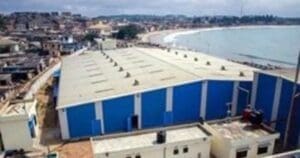
The Komenda Sugar Factory

Nana Nguando described the situation at the Komenda Sugar Factory as particularly worrying, noting that the facility, situated in the home district of former President Professor John Evans Atta Mills and Vice-President Professor Jane Naana Opoku-Agyemang, remains idle despite its enormous economic potential.

He said the factory has the capacity to create more than 7,000 direct and indirect jobs and contribute significantly to the local and national economy.

The chief explained that a fully operational sugar factory would reduce Ghana’s dependence on imported sugar and help conserve foreign exchange currently spent on sugar imports.

The Komenda Sugar Factory

“With the factory functioning at full capacity, Ghana would be able to reduce its reliance on imported sugar and create employment opportunities for thousands of people,” he stated.

Nana Nguando also expressed concern about reports that some of the factory’s equipment had begun to deteriorate due to prolonged inactivity.

He therefore called on the government to take immediate steps to restore operations at the facility to prevent the significant investment made in the project from going to waste.

The traditional ruler disclosed that the Komenda community had reserved an additional 2,000 hectares of land to support future expansion of the factory when it was commissioned.

However, he lamented that there appears to be little indication that the factory will resume operations anytime soon.

He urged the government to provide a clear roadmap and timeline for reopening the facility.

According to him, failure to address the issue could result in the factory continuing to be used as a political tool by successive governments.

The Elmina Fish Processing Factory

Nana Nguando further stated that if efforts to persuade the government to reactivate the factory prove unsuccessful, the traditional authorities would explore the possibility of attracting private investors to take over and operate the facility.

“We cannot allow taxpayers’ money invested in the factory to go to waste,” he stressed.

The chief also expressed concern over the continued inactivity of the Elmina Fish Processing Factory, describing it as another major investment that has failed to deliver the expected benefits to the people of the municipality.

He noted that the operationalisation of the factory could create employment opportunities for many young people, particularly those within the fisheries value chain.

Given the rising unemployment levels in the municipality, Nana Nguando appealed to the government to prioritise the revival of both factories as part of efforts to promote local industrialisation and economic development.

He said bringing the facilities back into operation would not only create jobs but also stimulate economic activity, improve household incomes, and support national development objectives.

Friends Of Bawumia 2008 Donates Food Items To Accra Rehabilitation Centre

0

Friends of Bawumia 2008 has donated food items and other essential supplies to the Accra Rehabilitation Centre on behalf of former Vice President Dr. Mahamudu Bawumia as he celebrates his 63rd birthday.

The donation, aimed at supporting the needs and welfare of persons at the centre, included 10 bags of rice, tubers of yam, bottled water, toilet rolls, baskets of tomatoes, garden eggs, crates of eggs and detergents, among other essential items.

Speaking at the donation, the Chief Operating Officer of Friends of Bawumia 2008, Barbara Makara-Maccugen, said the gesture formed part of activities to commemorate Dr. Mahamudu Bawumia’s 63rd birthday by extending support to persons who needed it the most.

She said the group considered it important to mark the occasion by reaching out to the Accra Rehabilitation Centre and supporting the institution with items that would contribute to the daily needs of its beneficiaries.

Barbara Makara-Maccugen called on the general public to support persons with disabilities and other vulnerable persons in society, stressing that their welfare should be a collective responsibility.

She urged individuals, organisations and institutions to contribute in diverse ways to improve the living conditions and well-being of persons at rehabilitation centres.

She further called for stronger enforcement of disability laws to ensure that public facilities are accessible and friendly to persons with disabilities.

According to her, although policies and laws exist to protect persons with disabilities, more needs to be done to ensure their effective implementation.

“The disability laws have been overlooked. Let’s strengthen the policies and enforce them to make access to facilities friendly for persons with disabilities,” she said.

Barbara Makara-Maccugen stressed that supporting persons with disabilities should go beyond occasional donations, urging the public to consistently demonstrate care and provide the necessary assistance to enable them to live with dignity.

Story By: Rebecca Lartey

Mobile Money Hits GH¢492.9bn, But Most Ghanaian Firms Lag

0

Ghanaians moved GH¢492.9 billion through mobile money in June 2026, yet a 2024 census found only 37 percent of businesses accept or use digital payments.

The monthly value is about 52.5 percent higher than the GH¢323.2 billion recorded in June 2025, according to the Bank of Ghana (BoG). The gap matters now because consumers are ready to pay digitally while most firms are not set up to receive it.

BoG data shows how far older tools have fallen behind. June saw 954 million mobile money transactions against 406,000 cheque transactions worth GH¢35.7 billion. Money sitting in wallets reached a record GH¢40 billion, up from GH¢28.9 billion a year earlier. Registered accounts rose to 84.6 million, of which 26.4 million were active, and 546,000 of the one million registered agents were active. Reports on BoG’s latest monthly release put July at GH¢509.4 billion and August at GH¢518.8 billion.

The business side looks different. The 2024 Integrated Business Establishment Survey, run by the Ghana Statistical Service with the ReFinD research initiative at the Institute of Statistical, Social and Economic Research, found 37.09 percent of firms accept or use a digital payment method. Adoption stood at 38.4 percent in services, 34.9 percent in industry and 22.4 percent in agriculture. Use is concentrated in Greater Accra and regional capitals.

The census counted personal mobile money accounts as digital payments, and researchers noted that most firms using digital tools rely on those personal accounts, which cost more and work less well for trade. The institute’s director, Peter Quartey, said about 95 percent of surveyed individuals had used digital payments as consumers, against roughly 37 percent of businesses. The report urged better fraud prevention, stronger digital literacy among owners and staff, and clearer proof of the benefits.

Mastercard, which says it opened its first Accra office in 2025, argues that acceptance tools with built in fraud protection can close the gap. It points to a collaboration with DPO Group that lets businesses take mobile money and wallet payments from local and foreign customers on one platform. Those claims come from the company and could not be independently verified.

GH¢800,000 Spiritual Fraud: Media Worker Bilyaminu Ibrahim Remanded; Journalist Mohammed Musah Also Detained

0

An Accra Circuit Court has remanded Bilyaminu Ibrahim, a media worker, and Mohammed Musah, a journalist, into police custody over an alleged GH¢800,000 fraud scheme involving a Ghanaian resident in the United States.

The prosecution alleges that Ibrahim posed as a spiritualist and, together with Katakaraou Jabiru, obtained money from Tourwana Katakarauo after claiming that she and her mother were facing spiritual attacks.

According to Chief Inspector Ramata Asumah, who is leading the prosecution, Jabiru allegedly learned in 2021 that Tourwana was experiencing difficulties in the United States and allegedly devised a plan with Ibrahim to obtain money from her.

Jabiru allegedly told Tourwana’s younger sister, Fawuziya Issaka, that he knew a spiritualist who could help the family.

Ibrahim allegedly assumed the role of the spiritualist.

The prosecution said Tourwana subsequently sent GH¢800,000 in instalments, allegedly for sacrifices and other spiritual activities intended to prevent attacks against her and her mother.

The alleged fraud reportedly continued with claims that Tourwana’s late father had an outstanding debt to an unknown person who intended to haunt her spiritually.

Further payments were allegedly requested for Quran recitals and other spiritual activities.

In 2023, after Tourwana’s mother reportedly suffered a stroke, Jabiru allegedly told Ibrahim that another person was attempting to cause a similar attack.

The prosecution said additional money was allegedly collected to provide spiritual protection and redirect the supposed attack to its “sender.”

The family reportedly attempted to settle the matter through family elders, but the issue was eventually reported to the police.

During investigations, Ibrahim allegedly admitted that he had posed as a spiritualist. Police reportedly recovered GH¢49,000 from him.

The prosecution also accused Musah of helping Jabiru avoid arrest.

Jabiru allegedly fled to Togo after learning of Ibrahim’s arrest but returned to Dodowa in September 2026 and stayed with Ibrahim and Musah.

When police visited Jabiru’s residence on October 1, Musah allegedly told officers that Jabiru had gone out. He later allegedly sent Jabiru a message stating, “Don’t come to the House.”

The prosecution said Musah admitted sending the message because he did not want Jabiru to be arrested.

Jabiru remains at large.

Ibrahim and Musah are scheduled to return to court on October 20, 2026, before Mr Joseph Kunsong.

Musah has denied the charge of harbouring a criminal.

Farmers Cry Out Over Destruction Of 250-Acre Farmland By Investor

0

Farmers at Kwesi Twi Krom (KTK), near Agona Asafo in the Agona East District of the Central Region, have appealed to the government and relevant authorities to intervene in what they describe as the destruction of their livelihoods following the bulldozing of more than 250 acres of farmland.

According to the affected farmers, an investor whose identity remains unknown allegedly cleared the land with heavy machinery after claiming to have acquired it for pineapple cultivation.

Briefing the media on their predicament, a former Assembly Member for the Fawomanye Electoral Area, Mr. Albert Quainoo, who spoke on behalf of the farmers, said the affected farmlands contained cocoa, yam, oil palm, cassava, plantain, vegetables, and several other food and cash crops.

He alleged that the farms were levelled with an excavator without prior consultation or engagement with the farmers who had cultivated the land for many years.

Mr. Quainoo further claimed that the incident had contributed to the death of one of the affected farmers, who reportedly died from shock after learning of the destruction.

According to him, about three years ago, two individuals identified as Yaw Nkum and Kwesi Agyei, members of the royal Yogo Clan of Agona Asafo, attempted to evict the farmers on the grounds that the land had been sold.

However, he said that when the matter was brought before the wider clan, members denied any knowledge of the purported sale and halted the eviction process.

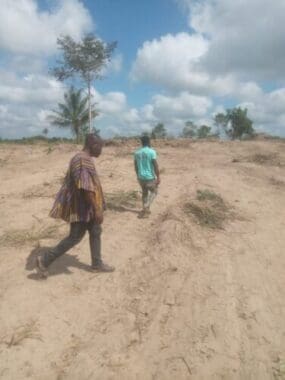
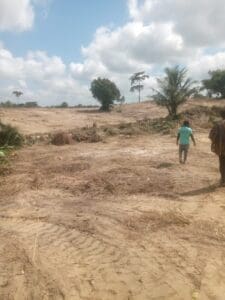
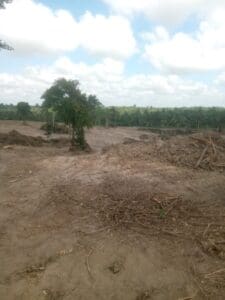
A section of the more than 250 acres of farmland at Kwesi Twi Krom in the Agona East District that farmers say was cleared by an investor, destroying food and cash crops.

Mr. Quainoo stated that the farmers were therefore shocked when they woke up last week to discover that their farms had been cleared.

“When we came here, we saw that our farms had been completely destroyed without any notice or consultation. This is our only source of livelihood,” he said.

A view of the devastated farmland at Kwesi Twi Krom after crops including cocoa, cassava, plantain and oil palm were allegedly destroyed
A view of the devastated farmland at Kwesi Twi Krom after crops, including cocoa, cassava, plantain, and oil palm, were allegedly destroyed

When journalists visited the community to assess the extent of the destruction, several farmers expressed disbelief and frustration over the development and appealed to the government and other relevant authorities to intervene urgently.

The farmers indicated that more than 150 people had their farms destroyed and warned that the situation could have serious social and economic consequences for families in the community if immediate action was not taken.

They explained that many households depended entirely on the affected farms for their income and daily sustenance.

Some of the farmers said they were now relying on support from relatives living elsewhere as they struggle to cope with the loss of their livelihoods.

The affected farmers are therefore calling on the government, traditional authorities, security agencies, and other stakeholders to investigate the circumstances surrounding the alleged destruction of the farmland and ensure that justice is served.

MTN, MobileMoney Fintech LTD Storm Ashaiman Markets to Reward Loyalty

0

MTN Ghana and MobileMoney Fintech LTD (MMFL) have intensified their nationwide customer engagement drive, storming the Ashaiman Timber Market and Kuffour Station to appreciate customers, address service concerns and deepen engagement with traders and business owners.

The outreach, held as part of MTN’s 30th anniversary and Customer Service Week celebrations, brought senior executives and staff directly to customers to gather firsthand feedback, provide support and educate the public on digital financial services, self-service options and fraud prevention.

Teams of MTN Ghana and MobileMoney Fintech LTD officials were deployed across Ashaiman, moving from shop to shop to engage traders, business owners and other customers on their experiences with the companies’ services.

The engagement provided customers with a direct platform to raise concerns, share feedback and seek clarification on various services, while the teams presented gifts to selected customers in recognition of their loyalty and continued patronage over the years.

Outreach Goes Beyond Anniversary Celebration — MoMo CEO

Speaking during the engagement, the Chief Executive Officer of MobileMoney Fintech LTD, Mr Shaibu Haruna, said the outreach reflected the company’s commitment to staying close to its customers and understanding their evolving needs.

He explained that officials had been divided into groups to enable them to reach more customers across the Ashaiman Timber Market, Kuffour Station and other parts of the township.

According to him, the exercise went beyond an anniversary celebration, serving as an important avenue for obtaining firsthand information about customers’ experiences and identifying areas where services could be improved.

Mr Haruna noted that while sales and customer-facing teams interacted with the public regularly, direct engagements involving senior executives provided deeper insight into some of the practical challenges customers encountered when using the companies’ services.

He said feedback gathered through such engagements was critical to developing products and services capable of delivering meaningful value to individuals, traders and businesses.

Mr Haruna described micro and small enterprises as a critical pillar of Ghana’s economy, stressing that digital financial services must respond effectively to the everyday needs of traders and entrepreneurs.

He identified payments, savings, investments and insurance as key areas where technology and digital financial solutions could help small businesses operate more efficiently and strengthen their financial resilience.

According to him, MobileMoney Fintech LTD would continue to develop innovative solutions aimed at making financial services more accessible, convenient and relevant to customers.

He cited the introduction of a self-service PIN reset feature on the company’s mobile application as one of the innovations designed to improve convenience for customers.

The feature, he explained, allows customers to reset their PINs without having to travel to a physical service centre, reducing inconvenience and giving users greater control over their accounts.

He stressed that customer satisfaction remained central to the company’s mission, pledging to continue engaging users and introducing targeted innovations that respond to their needs while delivering secure, accessible and convenient telecommunications and financial services.

MTN Dedicates Month to Customers

The Chief Customer Relations Officer of MTN Ghana, Mrs Jemima Kotei Walsh, said the company had dedicated the entire month to appreciating customers and listening directly to their concerns.

She said taking the engagement to markets and business centres was deliberate, as it enabled MTN executives to meet customers in their own environments and gain a better understanding of their expectations and experiences.

According to her, the response from traders and other customers in Ashaiman had been encouraging, with many taking advantage of the exercise to raise questions, seek clarification and provide feedback on MTN’s services.

Mrs Kotei Walsh said customer feedback remained an important component of MTN’s operations because it helped the company identify service gaps and determine areas requiring improvement.

She stressed that MTN’s relationship with its customers went beyond the provision of telecommunications services, adding that sustained engagement was essential to building trust and delivering services that responded to customers’ changing needs.

Fight Against MoMo and Cyber Fraud

Mrs Kotei Walsh stated that the company would continue to intensify public education to help customers recognise fraudulent schemes and take appropriate measures to protect their accounts, personal data and funds.

She urged subscribers to remain vigilant and strictly avoid sharing sensitive information, particularly their Mobile Money PINs, with third parties.

Additionally, outreach teams guided users relying on USSD channels through available self-service options, empowering them to execute key transactions and manage their accounts independently without visiting physical service centres.

According to her, the initiative forms part of MTN’s broader efforts to equip customers with the knowledge and tools needed to access and use digital financial and telecommunications services safely, securely and conveniently.

Nationwide Customer Engagement

Mrs Kotei Walsh disclosed that similar market engagements were being undertaken concurrently in Kumasi and Takoradi as part of MTN’s 30th anniversary and Customer Service Week activities.

She said additional engagements were planned in other regions to ensure that more customers across the country had the opportunity to interact directly with the company.

The Ashaiman outreach forms part of MTN Ghana’s activities marking three decades of operations and its broader customer appreciation campaign.

The company said feedback gathered from the market engagements would help shape efforts to improve products, customer experience and overall service delivery.

The exercise also provided an opportunity for MTN Ghana and MobileMoney Fintech LTD to reinforce their commitment to digital inclusion by ensuring that customers, particularly traders and small business operators, were equipped to benefit from emerging digital financial solutions.

Ghana FA Cup Final Moves To Two Legs

0

The Ghana FA Cup final will be played over two legs for the first time, the Ghana Football Association announced Tuesday, ending the single match decider.

The first leg is set for June 5 to 7, 2027, and the second for June 12 to 13. Finalists will now need two matches, about a week apart, to settle the trophy. The association called the move “a significant departure from the traditional single-match final.”

The format changes an earlier plan. A calendar the association published for the 2026/27 MTN FA Cup had the final on the weekend of June 5 to 6, 2027, with no mention of a second leg. This season’s competition opens with the preliminary round from October 23 to 26 and runs through June.

Last season’s final was a single match. Dreams FC met Nations FC at the University of Ghana Stadium on May 31, 2026, with the winner taking a place in the Confederation Cup.

The announcement did not say how the two legs will be hosted, or how a tie level on aggregate will be decided.

Ghana Bodies Plan Olympic Football Return As Qualifiers Begin

0

The Ghana Olympic Committee and Ghana Football Association met Tuesday to plan Los Angeles 2028 qualification, with the Black Queens due in action this week.

Committee President Richard Akpokavie said Ghana wants to be represented in Olympic football, which last included the country at Athens in 2004. He described the meeting as a search for “possible collaboration for our mutual benefits.” The committee will back both the men’s under 23 team and the senior women’s team through their qualifying campaigns, he said.

Football association General Secretary Prosper Harrison Addo said close cooperation with the committee, which oversees Ghana’s Olympic entries, would count in the push to qualify.

The women’s side has the nearer deadline. The Confederation of African Football gave the Black Queens a bye through the opening round. Their second round tie, against the winner of Mauritius and Djibouti, is scheduled for October 5 to 13. Three more knockout rounds follow. Thirty five teams entered the campaign, and Africa has two places in Los Angeles. When the draw was made in April, Ghana ranked third on the continent and 59th in the world.

The men have a longer road. The Black Meteors qualify through the Africa Cup of Nations for under 23 teams, with qualifiers scheduled to start in September 2026. Ghana missed both Tokyo 2020 and Paris 2024. The football association formed a management committee for the team in November 2025, and Desmond Ofei is head coach.

Reports of Tuesday’s meeting did not say what form the committee’s support would take.

Ghana Offshore Gas Export Capacity To Rise 60 Percent

0

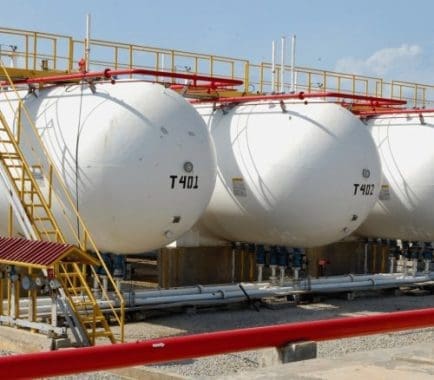
Yinson Production will add gas compression to the John Agyekum Kufuor vessel off Ghana’s coast under an Eni contract amendment, lifting gas export capacity by over 60 percent.

The vessel is a Floating Production Storage and Offloading (FPSO) unit. It processes oil and gas from the Offshore Cape Three Points block, about 60 kilometres out to sea. Its gas travels by pipeline to a plant at Sanzule, where it is compressed and fed into Ghana’s national grid.

That supply is the reason for the work. Yinson says reservoir pressure is expected to fall, and compression is the fix. Once the upgrade is finished, export capacity will go from between 210 and 220 million standard cubic feet per day to 355 million. The vessel’s original design ceiling was 210 million.

The amendment extends the lease by four years, to 2036. After the modifications are complete, Eni will pay an incremental day rate through that date. Yinson puts the effect on its firm contract backlog at about $600 million. The original 15 year charter was signed in January 2015, valued at $3.3 billion, and started oil production in May 2017.

Yinson will build and install two topside modules. The MG2 module carries two compressors powered by gas turbines. The MC4 module treats gas and will handle the higher volumes. Completion is due in the first quarter of 2028. Yinson says engineering, procurement and fabrication will follow offshore safety and quality standards.

Chief Executive Officer Flemming Guiducci Grønnegaard called the signing a milestone in the partnership with Eni and the joint venture partners. He said the project is “helping extend the field’s economic life.”

Yinson Production holds 74 percent of the vessel’s joint venture. A Japanese consortium owns the other 26 percent: Sumitomo Corporation, Kawasaki Kisen Kaisha, JGC Holdings Corporation and Development Bank of Japan Inc.

Yinson’s announcement did not give the cost of the modification works. Eni was not quoted in it.

Free PMI Course Targets Business Skills Gap Among African Creators

0

Six in 10 African creators earn under US$100 a month, and the Project Management Institute (PMI) has launched a free online course aimed at the business side.

The course is for founders, side hustle creators, solopreneurs and small teams, and PMI says no formal business or project management background is required. The timing matters for creators who have audiences but little income. The Africa Creator Economy Report 2.0, published by Communiqué and TM Global at the Africa Creators Summit in Lagos in January 2026, values the sector at about US$3 billion today and projects US$17.84 billion by 2030. Only 4.2 percent of the creators it surveyed have received institutional investment.

Brand sponsorships are the biggest earner, cited as the main income source by 28.3 percent of creators in the report. That arrangement carries a cash flow risk. A creator may have to pay an editor or hire equipment before a brand pays, and PMI says its modules on financial readiness and cash flow address that gap.

“These findings show why creators need support with the business behind their content,” said George Asamani, PMI’s regional managing director.

PMI says the course covers eight areas, including financial planning, organising and sequencing work, testing ideas with customers, measuring what sells and planning for growth. Learners get templates, reflection exercises, insights from experienced founders and AI prompts. The course takes about five hours and carries five professional development units, according to PMI’s course page.

PMI’s announcement also cites African Development Bank estimates that 10 to 12 million young Africans enter the labour market each year while only about three million formal jobs are created.

Entrepreneurs can enrol through PMI’s website.

BoG to tighten credit rules as bank lending jumps 35.5%

0

The Bank of Ghana (BoG) will issue a new credit risk directive, Governor Dr Johnson Pandit Asiama said on 6 October 2026, after private-sector lending grew 35.5 per cent.

He made the announcement at the central bank’s post-Monetary Policy Committee meeting with heads of banks at Bank Square in Accra. The directive will cover the whole lending cycle, from how loans are originated and administered to how they are monitored, measured and recovered. It will complement the non-performing loans notice the BoG issued last year.

The move strikes a balance the central bank has been signalling for weeks. It wants banks to lend more, but not to repeat the bad-loan build-up that has long weighed on the sector. At the MPC press conference in late September, Asiama said the current pace of credit growth was not inflationary because lending was expanding from a very low base, and that the BoG would like to see even more credit to the private sector. Speaking to the banks this time, he stressed that rapid growth must rest on sound underwriting and effective risk management.

The lending rebound has been sharp. Private-sector credit grew 35.5 per cent in the year to August 2026, against 13.3 per cent a year earlier. After adjusting for inflation, growth was 29.0 per cent, up from 1.7 per cent. The stock of private-sector credit rose to GH¢123.3 billion from GH¢91.0 billion.

Cheaper money is a major driver. The banking sector’s average lending rate fell to 15.9 per cent in August from 24.2 per cent a year earlier. Asiama attributed the rebound to that decline, an easing in banks’ credit stance and a recovery in borrowers’ demand.

The banks enter this phase in stronger shape than a few years ago. Industry assets rose 20.5 per cent to GH¢500.2 billion in August, and the capital adequacy ratio improved to 19.1 per cent from 18.3 per cent. But Asiama said that although the sector’s non-performing loan ratio has fallen significantly, it remains high relative to regulatory thresholds, and he told banks to comply fully with the NPL guidelines.

The BoG is also preparing a liquidity coverage ratio directive, which will require banks to hold enough high-quality liquid assets to withstand severe liquidity stress over 30 days. It is discussing the results of its macroprudential stress tests with each bank and has urged lenders to fix the weaknesses identified.

Beyond credit and liquidity, the central bank said it will require banks’ fraud officers to have direct access to their chief executives, merge its foreign exchange operational notices into a single framework, and tighten expectations on cybersecurity, safeguarding customer funds and third-party risks as digital finance grows. It is also developing guidance on the responsible use of artificial intelligence in financial services.

“Resilience, prudence and innovation must remain at the centre of our collective agenda,” Asiama told the bank chiefs.

The MPC held its policy rate at 14 per cent in September. The BoG has not said when the new credit and liquidity directives will take effect.

Ghana workplace injury claims hit GH¢34.25m in 2025

0

Finalised workplace injury compensation claims in Ghana totalled GH¢34.25 million in 2025, the Labour Department said, with a further GH¢28.56 million settled in the first half of 2026.

Francis Bibuksi, Assistant Chief Labour Officer at the Labour Department, disclosed the figures at the first Labour Regulators Dialogue, organised by the Ghana Employers’ Association (GEA) in Accra. He said 1,382 workplace accidents were reported in 2025, and 521 by June 2026.

The figures put a price on workplace safety failures that employers often treat as a compliance issue. Payouts settled in the first six months of this year already equal more than four-fifths of last year’s total.

Manufacturing recorded the most reported accidents in 2025, with 618 cases, almost 45 per cent of the total. Community, social and personal services followed with 236, and construction with 96.

The numbers count only accidents reported to the Labour Department, and they have moved sharply over the past decade. In 2017, the department said 2,697 workplace accidents had been reported in 2015 and 1,096 in 2016.

Bibuksi explained that the Workmen’s Compensation Act, 1987 (PNDCL 187) entitles workers to monetary compensation for injuries or occupational diseases suffered in the course of their employment. He said prompt reporting by employers was critical to ensuring that injured workers receive the protection the law provides. Beyond handling accident reports and compensation, he said, the department inspects workplaces and advises employers and workers on conditions of work, hours, wages and occupational safety and health.

GEA Chief Executive Alex Frimpong urged businesses to familiarise themselves with the laws on labour relations, occupational safety and health, working conditions and social security, warning that non-compliance could bring financial, operational and reputational consequences. He called for closer professional links between regulators and employers to share knowledge and improve workplace practice.

Under Section 120 of the Labour Act, 2003 (Act 651), employers must report a workplace accident to the nearest labour office within seven days.

MTN climbs to 133rd in Forbes World’s Best Employers ranking

MTN Group rose 33 places to 133rd in Forbes’ World’s Best Employers 2026 list, keeping its spot as the world’s third-ranked telecommunications employer, the company said on 6 October.

The Johannesburg-based operator has now appeared on the list for six consecutive years and has climbed steadily. It ranked 394th in 2023, 267th in 2024 and 166th in 2025.

The result puts MTN fifth among African companies and first outside financial services, in a list where South African banks dominate the continent’s entries. Nedbank was Africa’s highest-ranked employer at 26th, followed by Standard Bank Group at 54th, Absa Group at 98th and FirstRand at 104th. Nigeria’s Guaranty Trust Bank placed 277th. No Ghanaian company featured among the 900 employers ranked.

Forbes compiled the seventh edition of the list with market research firm Statista, surveying more than 300,000 employees in more than 50 countries at multinationals with over 1,000 staff. Respondents were asked how likely they were to recommend their employer to family or friends and rated companies on benefits, talent development, work environment and training. Recent responses carry more weight, and participants could also rate former employers and companies they know through their industry or personal networks.

MTN said its own data showed rising staff satisfaction. Its 2025 group culture audit, assessed by consultancy Willis Towers Watson, gave a score of +63 for employees recommending MTN as a place to work, up 16 points from 2023. Voluntary staff turnover fell from 5.7 per cent to 4.0 per cent over the same period, and participation in internal surveys has stayed between 95 and 97 per cent. These are the company’s figures and were not part of the Forbes assessment.

“Our ambition for Africa is ultimately powered by people,” said Ralph Mupita, MTN Group President and CEO. The group employs staff from more than 70 nationalities across its connectivity, fintech and digital infrastructure businesses, and is starting to roll out its Ambition 2030 strategy.

The ranking assesses corporate groups as a whole. It should not be read as a separate judgement of individual subsidiaries such as MTN Ghana.

Ghana halts offshore gold search after fisheries objections

0

Ghana has suspended all activities under offshore gold reconnaissance licences held by Gold Coast GRC Ghana Limited, after fisheries regulators and fishing groups warned of risks to marine livelihoods.

The Minerals Commission conveyed the directive from Lands and Natural Resources Minister Emmanuel Armah-Kofi Buah in a letter dated 5 October 2026 and signed by its Chief Executive, Isaac Tandoh. It said key stakeholders had raised concerns and objections about the grant of the mineral rights and the activities proposed under them, including whether affected communities and groups had been properly consulted.

The decision puts on hold what would be a new frontier for Ghana’s gold industry, the seabed, in waters that support one of West Africa’s most important coastal fisheries. Without resolving the objections, the Commission said, the operations could face regulatory challenges and “may not obtain the necessary social licence to operate”.

The scale of the licensed area helps explain the alarm. According to the National Fisheries Association of Ghana (NAFAG), the company holds 10 reconnaissance licences covering about 10,000 square kilometres of the shallow continental shelf, stretching along roughly 300 kilometres of coastline from Half Assini to Winneba and extending about 33 kilometres offshore.

Opposition came from inside government as well as from the industry. On 29 September, Professor Benjamin Betey Campion, Executive Director of the Fisheries Commission, wrote to the Minerals Commission saying the licence documents did not adequately account for the marine environment, fishing activity or the communities that depend on coastal waters. He asked the Commission to suspend or withhold authorisation for offshore fieldwork, and proposed a joint review involving the Environmental Protection Authority, the Ghana Maritime Authority, the Water Resources Commission and the Petroleum Commission.

NAFAG, which represents five major fisheries groups, petitioned the President on 6 October, the day the suspension became public, seeking clarity on the programme’s implications for fish stocks, marine habitats and coastal jobs. It called for the official coordinates of the licence areas to be published so that any overlap with fishing grounds could be established.

The Minerals Commission said the licences, granted on 9 February 2026 after the minister approved its recommendation, had never on their own authorised exploration. It said it had told the company from the outset that it needed all required permits from other state institutions before starting fieldwork.

Gold Coast GRC must cooperate with the Commission, state agencies and affected stakeholders during the suspension. Activities may resume only after the Commission completes consultations and the minister issues written authorisation.

Buffer Stock trial start delayed again to 20 October

0

An Accra High Court on 7 October 2026 again postponed the start of the trial of former Buffer Stock chief Hanan Abdul-Wahab Aludiba and his wife, adjourning to 20 October.

Justice Francis Apangabuno Achibonga granted the adjournment to give the defence time to examine the contents of mobile phones that the state returned to the accused only two days earlier.

The delay pushes back testimony in one of the highest-profile prosecutions of a former official of the previous government. Aludiba, former Chief Executive Officer of the National Food Buffer Stock Company Limited (NAFCO), and his wife, Faiza Seidu Wuni, face 20 charges, including stealing, defrauding by false pretences, wilfully causing financial loss to the state, using public office for profit and money laundering. The prosecution alleges losses of about GH¢62.6 million. Both have pleaded not guilty and are on bail.

At the hearing, the prosecution, led by a Deputy Attorney-General, told the court that the items at the centre of a pending defence application had been released to the accused on Monday, 5 October. It argued that this cleared the only issue that had held up the trial and asked to call its first witness.

The defence, led by former Attorney-General Godfred Yeboah Dame, withdrew its application for the release of the items. However, Augustine Obuor, counsel for Wuni, said the defence had not yet been able to access the phones because they had been received only on Monday and still needed to be charged and examined.

The prosecution asked the court to take its first witness’s evidence-in-chief regardless. Justice Achibonga declined, saying the defence needed adequate time to review the phones’ contents before the trial began.

The phones have been a sticking point for weeks. The judge had earlier said Aludiba might need them to prepare his defence, noting that an accused person has the right to object to evidence the prosecution offers. The defence has told the court that data on Aludiba’s phones was accessed without judicial authorisation in July while he was in state custody.

The case has already had a false start. In May, the Attorney-General withdrew an earlier 24-count charge sheet and filed fresh charges against Aludiba and Wuni alone. In July, the court dismissed a defence bid to strike out 16 of the counts but ordered amendments to two.

The trial is now scheduled to begin at 10:00 a.m. on 20 October 2026.

Cedi was Africa’s worst-performing currency in Q2, World Bank says

0

The cedi lost nearly 10 per cent against the US dollar from the end of February to June 2026, the steepest fall among African currencies tracked by the World Bank.

The finding appears in the Bank’s October 2026 Africa Economic Update, released ahead of its Annual Meetings in Bangkok. It measures how currencies moved after the Middle East conflict escalated, a shock that drove up oil prices and sent investors towards safer assets.

The ranking is an uncomfortable mark for a currency whose relative stability had been central to Ghana’s recovery story. A weaker cedi raises the cost of imported fuel and goods, and increases the burden of servicing foreign-currency debt at a time when the country is still emerging from restructuring.

The shock was broad. Of the 22 countries the Bank monitors outside the CFA franc zone, seven saw maximum depreciations of more than 5 per cent during the quarter, among them Ghana, the Democratic Republic of Congo, the Seychelles and South Africa. The South African rand and the currencies tied to it, the Lesotho loti, the Namibian dollar and Eswatini’s lilangeni, each fell by more than 6 per cent.

The Bank said the conflict disrupted supply chains and raised the prices of farm inputs such as fertiliser, adding imported inflation risks for vulnerable economies. For net energy importers, higher oil prices also lifted import bills and demand for dollars, draining reserves.

Little sign yet in import prices

So far, the depreciation has not fed strongly into Ghana’s consumer prices. Data released by the Ghana Statistical Service on 7 October showed inflation for imported items at just 2.4 per cent in September, against 6.4 per cent for locally produced items. Headline inflation rose to 5.2 per cent, still below the Bank of Ghana’s target band of 6 to 10 per cent. The central bank, which held its policy rate at 14 per cent in September, has said it expects inflation to return to that band over the next few quarters.

The World Bank kept its 2026 growth forecast for Ghana at 4.8 per cent, citing resilient activity, rapid disinflation and progress on debt restructuring. It said the economy grew 6.0 per cent year on year in the second quarter.

The Bank said much of the pressure on African currencies had eased by the end of August, when only 10 remained weaker than at the end of February. The cedi, however, has come under strain again. Interbank data cited in reports on 7 October showed it trading at about GH¢11.62 to the dollar after a weekly fall of nearly 1.4 per cent.

Discarded Kantamanto jeans become Eden in Accra art installation

0

In a pavilion at the Accra Art Centre, a dead tree hangs heavy with plastic fruit. Below it, mannequins worn down by two decades of use stand among old jeans, tyres and rubber gloves, in a Garden of Eden rebuilt from what the fashion industry throws away.

The installation, JEAN-ESIS: Chapter One, is the work of Ghanaian fashion curator Beatrice “Bee” Arthur. It turns denim bought at Kantamanto, Accra’s vast second-hand clothing market, into an argument about who pays for the world’s appetite for cheap clothes.

The piece is part of BEYOND CREATION: Humanity, Nature and Spirituality, a Universal Message, an exhibition organised with the Embassy of Italy that brings together 40 artists, about 90 per cent of them Ghanaian. It opened on 4 October and runs until 4 November 2026.

Its subject sits on Accra’s doorstep. Kantamanto is one of the world’s biggest markets for used clothing from Europe, North America and Asia, sold in bales Ghanaians call obroni wawu, or “dead white man’s clothes”. The Or Foundation, a non-profit that works in the market, estimates that about 15 million garments arrive there each week and that roughly 40 per cent leave as waste, much of it ending up in dumpsites, drains and on beaches.

Arthur’s plastic fruit is a direct reference to those bales. The rest of her material comes from the city’s margins. Branches and dead trees were gathered from a cemetery, used tyres came from vulcanisers in her neighbourhood, and textile offcuts and gloves fill the gaps. The work took four weeks to build.

The mannequins carry the human side of the story. Some are around 20 years old, and in the installation they stand in for garment workers in denim factories across Asia, exposed to the dyes, bleaches and other chemicals used to give jeans their colour and wash.

The most deliberate departure from the Genesis story is the serpent. Hand-stitched and hand-painted, it is not the tempter here. Arthur presents it as a symbol of wisdom, fertility, regeneration and hope, which shifts the question the work asks away from who caused the fall and towards what human choices about consumption do to the natural world.

That framing gives the piece an economic edge. Ghana’s second-hand trade supports thousands of traders and tailors who repair and resell clothes that would otherwise be discarded, but it also leaves the country absorbing waste generated elsewhere. Arthur uses the same discarded jeans as both her medium and her evidence.

The wider exhibition, curated by Nuna Adisenu-Doe and Andrea Walter Ghia, puts Ghanaian artists at the centre of an international exchange on humanity’s relationship with nature and spirituality. Its opening drew artists, heads of cultural institutions and diplomats, including Laura Ranalli, Italy’s Ambassador to Ghana and Togo, and Dr Fio Richardson Commey, Special Aide to the Minister for Tourism, Culture and Creative Arts. Arthur credited Wakefield Wisdom Ackuaku, Acting Executive Director of the National Commission on Culture, and Eric Ohene-Larbi, Greater Accra Regional Director of the Centre for National Culture, for supporting the collaboration with the Italian Embassy.

JEAN-ESIS: Chapter One is on display in Pavilion 2 of the Accra Art Centre until 4 November.

Ghana inflation rises to 5.2% as domestic costs bite

0

Ghana’s annual inflation rose to 5.2 per cent in September 2026 from 5.0 per cent in August, the second monthly increase, as home-grown and service costs kept pressure on households.

Data released by the Ghana Statistical Service (GSS) on 7 October show inflation has now risen from 4.6 per cent in July, after reaching a low of 3.2 per cent in March. The rate remains well below the 9.4 per cent recorded in September 2025. Prices rose 1.1 per cent between August and September, after a 1 per cent fall the month before.

The turn matters because it suggests the steep decline in inflation over the past year has stalled. The pressure is also coming mainly from inside the economy, through services and locally produced goods, rather than from the exchange rate or imported prices that drove past spikes. “Inflation is now a home-grown, services story,” the GSS said in its presentation.

Bills, not food, drive the rate

Food inflation rose to 4.0 per cent from 3.0 per cent, but non-food items still did most of the work. Non-food inflation eased to 6.2 per cent from 6.8 per cent, yet it accounted for 63.3 per cent of the September rate, against 36.7 per cent for food.

Household running costs were the biggest single factor. Inflation for housing, water, electricity, gas and other fuels stood at 10.3 per cent, down from 11.6 per cent in August, and made up about a quarter of overall inflation. Insurance and financial services recorded 9.4 per cent and restaurants and accommodation 9.2 per cent.

Services inflation, at 8.3 per cent, was nearly double the 4.2 per cent rate for goods. Locally produced items recorded 6.4 per cent inflation against 2.4 per cent for imports, and accounted for 85.7 per cent of the headline figure.

Inside the food basket, prices moved sharply in both directions over the year. Fresh tomatoes rose 153.4 per cent, ginger 100.4 per cent and shrimps 62.8 per cent, while lime fell 29.9 per cent and maize 26.4 per cent.

The national rate also hides wide regional gaps. Ashanti recorded the highest inflation at 9.8 per cent, followed by Eastern at 7.8 per cent, while prices in the Western Region were 0.5 per cent lower than a year earlier.

Why shoppers still feel squeezed

Slower inflation does not mean lower prices, only that they are rising less quickly, which helps explain why many consumers say goods remain expensive. Data analyst Alfred Appiah, quoted by The High Street Journal, illustrated the point with a food item that cost GH¢100 in 2021: after years of high inflation, it would have cost about GH¢298 by August 2026. Prices would fall back only with deflation, which economists warn can hit spending, investment and jobs. For most households, real relief depends on incomes catching up.

The Bank of Ghana held its policy rate at 14 per cent in September, its third straight hold, despite inflation sitting below its medium-term target of 8 per cent, plus or minus two percentage points. The central bank said it expected inflation to move back into that 6 to 10 per cent band over the next few quarters.

OPEC ties climate action to poverty fight in new report

The Organization of the Petroleum Exporting Countries (OPEC) says emissions cuts must be pursued alongside poverty eradication, arguing that climate rules should reflect national development needs.

The position is set out in OPEC’s Annual Report on Environment, Climate and Sustainable Development. In its foreword, Secretary General Haitham Al Ghais calls international cooperation essential to tackling climate change but argues that global policy must account for each country’s development priorities and circumstances.

The argument matters because it puts the world’s largest oil producers’ group on the side of developing countries in one of the deepest divides in climate diplomacy: how fast poorer nations should be expected to cut emissions while they still need more energy to grow. It also hands OPEC a development case for continued fossil fuel use.

The report rests heavily on the principle of common but differentiated responsibilities and respective capabilities, which is written into the UN Framework Convention on Climate Change, the Kyoto Protocol and the Paris Agreement. The principle holds that countries contributed unequally to the problem and have unequal means to respond. On that basis, OPEC rejects a uniform approach and says developed economies should give poorer countries finance and technology to close capacity gaps.

OPEC and the non-OPEC producers in its Charter of Cooperation favour what the report calls bottom-up approaches, under which each country sets its own energy pathway according to its economic and social conditions, provided it contributes fairly to global goals.

The group frames the challenge partly in demographic terms. Citing a UN projection that the world’s population could reach 9.7 billion by 2050, the report says efforts to raise living standards could at least double the size of the global economy. That expansion would enlarge humanity’s environmental footprint, it argues, so environmental protection and human development have to advance together.

The report accepts that progress has been made on emissions, waste management and sustainable development, but says it falls short of agreed targets. Mitigation gaps remain large and multidimensional poverty still affects millions of people. It calls for stronger multilateral cooperation and solutions it describes as pragmatic, inclusive and fair.

The energy access gap the report points to is sharpest in Africa, where the International Energy Agency estimates about 600 million people in sub-Saharan Africa live without electricity.

Critics of the oil industry’s stance, including climate campaigners, argue that the development case is used to justify expanding fossil fuel supply. OPEC’s own forecasts show where its expectations lie. Its latest World Oil Outlook projects global oil demand rising to 124 million barrels a day by 2050, with no peak in sight, and puts the oil investment needed between 2026 and 2050 at US$17.7 trillion.

Ghana inflation rises again to 5.2 percent in September

0

The Ghana Statistical Service on Wednesday reported that the country’s annual consumer inflation rate rose to 5.2 percent in September from 5 percent the previous month, marking the fifth uptick in inflation over the past 20 months.

Government Statistician Alhassan Iddrisu said during the monthly data release that higher food prices during the month under review mainly drove the rise in headline inflation.

“Food inflation increased by 1 percentage point to 4 percent in September, while non-food inflation declined by 0.6 percentage points to 6.2 percent in September, from 6.8 percent in August,” Iddrisu said.

In September, goods inflation increased to 4.2 percent from the previous 3.8 percent, while services inflation declined to 8.3 percent from 8.6 percent.

Inflation for locally produced items and imported items also stood at 6.4 percent and 2.4 percent, respectively, up from 6.1 percent and 2.2 percent.

During its sitting in September, the Bank of Ghana kept its benchmark policy rate at 14 percent due to the continued moderation of underlying inflation pressures despite upside risks to the disinflation process.

Finance Minister approves nine months’ rent allowances for security personnel

0

Finance Minister Dr Cassiel Ato Forson has approved nine months of rent allowances for security service personnel, seven months after the government promised monthly payments with salaries.

Julius Kwame Anthony, Press Secretary at the Ministry of the Interior, announced the approval in a Facebook post on 7 October 2026. He said it covers January to September, three quarters of the year’s allowances.

For officers who live outside official barracks and rely on the allowance to pay landlords, the approval ends a nine-month wait. But it also suggests that the payment reform the Interior Ministry announced earlier this year has not worked as intended.

On 2 March 2026, after releasing funds to clear 2025 rent arrears owed to personnel of the Ghana Prisons Service, the Ghana National Fire Service and the Ghana Immigration Service, the ministry said the payment process had been mechanised. From March, it said, rent allowances would be processed and paid together with officers’ monthly salaries.

Anthony said the security agencies and the Interior Ministry had now completed all required validation, clearing the way for the Controller and Accountant-General’s Department to make the payments. His post did not say when the money would reach officers, or why the allowances had not been paid monthly as announced.

Delayed rent allowances have been a recurring grievance in the services, and the Minority in Parliament has previously raised concerns about late payments to prison officers.

The allowances have also caused friction this year over tax. In April, after complaints from personnel, the Interior Ministry said a 20 percent deduction from security personnel’s rent allowances had been made at source by the Ministry of Finance under statutory tax obligations, not by the Interior Ministry.

Minority PAC chair hails Rent Commissioner’s enforcement drive

0

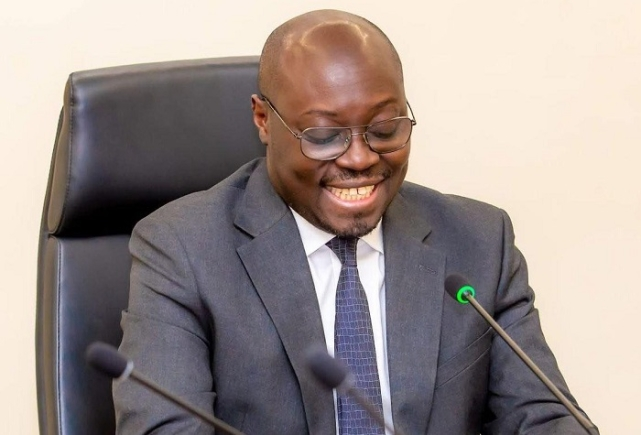
Public Accounts Committee chair Abena Osei-Asare, an opposition MP, praised acting Rent Commissioner Frederick Opoku as an “action man” when he appeared before her committee on 7 October 2026.

Osei-Asare, the New Patriotic Party MP for Atiwa East, welcomed Opoku by remarking on how visible he had become across the rental sector, and credited him with recovering GH¢43,000. Opoku was appearing as the committee continued its scrutiny of public institutions.
The praise stands out because it crosses party lines. Opoku, a Mahama administration appointee, has publicly blamed the previous NPP government over the department’s state. Last month he alleged that US$1.7 million had been earmarked for digitising the Rent Control Department under that government, with US$1.4 million released as a first tranche, yet no digital platforms were delivered and he could find no contract. He has called for the money to be recovered if misuse is established.

His tenure has been marked by an enforcement drive against practices that tenants have long complained about. The department has pressed landlords to respect the legal limit of six months’ rent advance and to issue official rent cards, and has warned property agents against charging tenants a second commission. Under the rules the department enforces, agents’ commission of 5 percent is payable by landlords.

Opoku has been most vocal on student accommodation. He insists that private hostels fall under rent control, which covers all private premises except government property, and the department has ordered hostel owners to suspend fee increases proposed for the 2026/2027 academic year.

He has also complained that the department lacks the means to do its job, saying it operates without proper offices and has received little support for its hostel campaign. In September, he said the department had received only GH¢60,000 to run its 66 offices nationwide during the first quarter of 2026.

GJA gives military 14 days over La Beach assaults

0

The Ghana Journalists Association (GJA) has given the Ghana Armed Forces 14 days to account for alleged assaults on two media practitioners during the La Pleasure Beach demolition.

GJA President Albert Kwabena Dwumfuor set the deadline at the launch of the 30th GJA Media Awards, in remarks reported on 7 October 2026. He demanded a full account of the military’s investigation and of any disciplinary or other action taken against personnel found responsible. He named two cases: blogger Sika Official, who says a soldier struck him with a rod while he covered the exercise, and Bullet TV journalist Philip Abutiate, who was reportedly assaulted during the demolition.

The ultimatum turns a viral incident into a formal test of military accountability towards the press. Dwumfuor said that if the Armed Forces fail to deliver a satisfactory report, the GJA will escalate the matter “through appropriate legal, institutional and public accountability channels”. He called on the Minister of the Interior, the National Security Coordinator and the Chief of Defence Staff to ensure the deadline is met and the outcome made public.

Soldiers from the Ghana Armed Forces’ 48 Engineer Regiment, backed by police, began clearing structures along the La Pleasure Beach shoreline in Accra on 2 October. The Polo Beach Club was among the businesses demolished.

Videos shared online appeared to show a soldier hitting Sika Official with a rod and shouting at him as security personnel pushed journalists and bloggers back from the site. Activist Ralph St. Williams was also reportedly assaulted, and accounts emerged of confrontations involving traders and workers.

The New Media Association of Ghana, of which Sika Official is a member, has condemned the incident and called on the Armed Forces to investigate and act if personnel breached professional standards. It said that where security teams need to clear an area, they should give clear instructions rather than use force. The Ghana Bloggers Association has called for an impartial inquiry and for agreed guidelines on media coverage of security operations. Early reports carried no response from the Armed Forces.

The Social Security and National Insurance Trust, which owns the neighbouring Labadi Beach Hotel, has said it asked the National Security Council Secretariat to intervene at the beachfront. The government has said those affected by the demolition will be compensated.

NRSA chief wants limits on daily cash targets for drivers

0

National Road Safety Authority (NRSA) Director-General Abraham Amaliba has called for regulation of the daily cash targets vehicle owners set for commercial drivers, saying they fuel fatigue and crashes.

He made the call while meeting transport union leaders at the New Tema Station, Lapaz and Circle lorry parks in Accra. The engagements are part of an NRSA drive to reach operators and drivers nationwide ahead of the Christmas and New Year travel season.

The proposal takes road safety policy into new territory: the private money arrangements between car owners and the drivers who work their vehicles. Campaigns against commercial vehicle crashes have usually focused on speeding, drink-driving and disregard for traffic rules. Amaliba compared the intervention he has in mind to the regulation of rents.

He said some owners set targets so high that drivers stay behind the wheel for very long hours to meet them. “When a driver is tired, his concentration and judgment can be affected,” he said, urging stakeholders to look harder at the conditions commercial drivers work under. He also warned drivers that pressure from owners was no excuse for dangerous driving.

The NRSA did not set out how such regulation would work or which body would enforce it.

The authority’s own figures show why commercial transport is in its sights. Provisional data for 2025 recorded 2,949 road deaths from 14,743 crashes, an 18.2 percent rise in fatalities on 2024. Commercial vehicles were involved in 8,303 of those crashes, against 10,087 private vehicles and 6,548 motorcycles. Amaliba has blamed part of last year’s rise on funding problems that halted sustained public education campaigns.

The toll has not eased this year. The NRSA said in September that 1,492 people died on Ghana’s roads between January and June 2026, about 250 a month.

The festive season is typically among the deadliest periods of the year. Provisional NRSA data put road deaths in December 2025 at 276, up 16 percent on the same month in 2024.

BoG says taped or glued cedi notes unfit for circulation

0

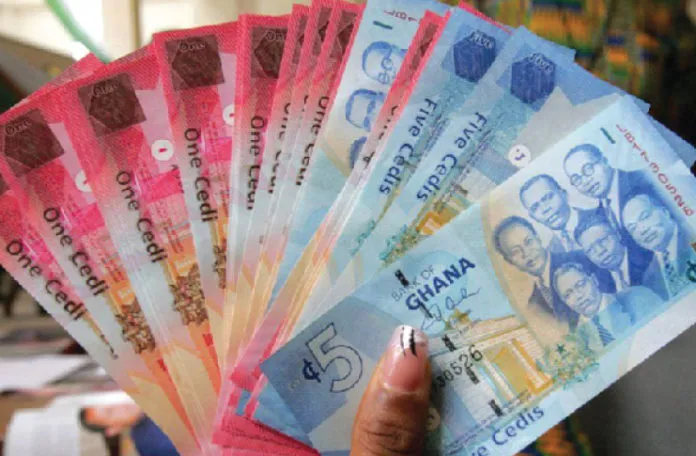
Cedi notes held together with tape, glue or staples are unfit for circulation and may be refused, the Bank of Ghana (BoG) said on 7 October 2026.

The central bank issued the warning in a press release after a video spread on social media showing people repairing torn and soiled banknotes with adhesive tape as a business. Clips of the practice were being shared online by 5 October.

The caution matters for anyone who handles cash. The BoG said improperly repaired notes may be rejected when presented for payment or exchange, leaving whoever holds them out of pocket. Taped and glued notes can also jam and damage ATMs and currency-processing machines.

“The Ghana Cedi banknote is legal tender and an important national symbol,” the bank said.

The BoG said no one should repair, rejoin or alter mutilated notes in order to put them back into circulation, and reminded the public that it alone has the mandate to manage Ghana’s currency. It said the practice undermines the integrity of the currency and disrupts how notes are processed through the cash cycle.

Instead of taping a torn note, the bank told holders to take damaged or mutilated notes to a commercial bank, which will examine them and replace them under BoG procedures.

The central bank also urged the public to handle notes with care and to report anyone improperly repairing, rejoining or mutilating banknotes to the BoG or the police.

To qualify for examination, a damaged note must have more than half of the original note intact.

Kwesi Pratt doubts benefits of Ghana’s planned BRICS membership

0

Veteran journalist Kwesi Pratt Jnr on 7 October 2026 questioned what Ghana would gain from joining BRICS, a day after the government said it would apply for membership.

“I’m not so sure what the benefits of joining BRICS now may be,” the Managing Editor of the Insight newspaper said on Metro TV’s Good Morning Ghana.

His doubts are among the first public challenges to a significant foreign policy shift. Foreign Affairs Minister Samuel Okudzeto Ablakwa told reporters in Accra on 6 October that the Cabinet of President John Dramani Mahama had decided Ghana should formally apply to join the bloc. Ablakwa said membership would add development options and deepen South-South cooperation without replacing Ghana’s traditional partners. He made the announcement during a visit by India’s External Affairs Minister, Dr Subrahmanyam Jaishankar, and said Ghana had sought India’s help with its bid.

Pratt’s concerns

Pratt said Ghana could still struggle to obtain financial support through BRICS if lending had to pass through approval mechanisms involving the International Monetary Fund (IMF) and the World Bank. He also doubted that Ghana could secure the backing of all existing members.

That concern has some basis in how the bloc’s emergency lending works. Under BRICS’ Contingent Reserve Arrangement, a country can draw only 30 percent of its maximum entitlement without an IMF programme; the rest is linked to one. The bloc’s New Development Bank, however, lends to its own members without an IMF requirement, and membership of the bank is separate from membership of BRICS.

Pratt referred to five member states, but the bloc has grown. Its members now include Brazil, Russia, India, China, South Africa, Egypt, Ethiopia, Iran, the United Arab Emirates and Indonesia, with Saudi Arabia’s status still unsettled. Nigeria joined as a partner country in January 2025.

Strained ties with Pretoria

Pratt said Ghana’s relations with South Africa were “not the best” after the dispute over xenophobic attacks, though he did not expect Pretoria to block Ghana’s entry. He also argued that strains within South Africa’s governing alliance could limit its influence.

The rift has been one of Ghana’s sharpest diplomatic disputes this year. Ghana summoned South Africa’s envoy, issued a travel advisory against non-essential travel to the country and asked for the attacks to be debated at the African Union. Ramaphosa sent a special envoy to Accra on 21 July 2026, and a planned state visit by the South African president was postponed by mutual agreement.

Jaishankar said India supported Ghana’s aspiration but that its membership would require collective consideration by BRICS members.

Mahama orders sanctions for officials over building collapses

0

President John Dramani Mahama on 7 October 2026 ordered Local Government Minister Mahama Ayariga to identify and sanction officials whose failure to enforce building rules leads to collapses, in Accra.

Mahama gave the directive while opening the first National Conference on Housing Finance, organised by the National Homeownership Fund at the Mövenpick Ambassador Hotel. He said that when a building falls, the authorities must find out whose duty it was to keep it safe, and “that person must be sanctioned for it”.

The order shifts the focus of Ghana’s response to collapses from the owners and builders of failed structures to the district assembly officials who inspect sites, issue permits and enforce stop-work notices. Those officials have rarely faced public consequences.

Mahama said enforcement had to be strengthened at district level and could not end once a permit had been issued. He described a familiar pattern in which assemblies paint “stop work” in red on a site, construction carries on regardless, and the building later comes down, leaving the public asking who approved it.

The directive follows a run of deadly failures this year. On 29 March, an unfinished building being used as a church in Accra’s New Town collapsed during a service after heavy rain, killing three people. On 7 June, a building at Avenor in North Kaneshie came down during a downpour; Accra Mayor Michael Kpakpo Allotey later put the death toll at three. Interior Minister Muntaka Mubarak urged metropolitan, municipal and district assemblies to tighten enforcement after the Avenor collapse.

Mahama also called for action on overcrowded slums, insecure land tenure, poor sanitation and weak access to utilities, saying new homes must be safe, accessible and connected to jobs and essential services.

The conference is examining how to finance affordable housing, at a time when rising construction costs, scarce long-term finance and high mortgage rates keep homeownership out of reach for many households. It runs until 8 October and is due to end with a communiqué of policy recommendations. The government has already announced a GH¢3 billion revolving fund, to be set up with the Social Security and National Insurance Trust, Republic Bank Ghana and organised labour, to lend to state developers such as the State Housing Company and the Tema Development Corporation.
After the Avenor collapse, Accra authorities marked 16 unsafe buildings for demolition.

Minority says 87 on NSA World Cup visa list unverified

0

The Minority in Parliament said on 7 October 2026 it could verify only 15 of 102 people the National Sports Authority (NSA) presented to Canada’s embassy for World Cup visas.
Vincent Ekow Assafuah, Ranking Member on Parliament’s Youth and Sports Committee, told a press conference in Accra that the caucus had checked the names against NSA records. “The remaining 87, therefore, require explanation,” the Minority’s statement said.

The claims widen a scandal that has already cost the NSA its Director-General and put the Authority’s dealings with foreign diplomatic missions under scrutiny. The Minority says the issue is no longer only about money allegedly collected from travellers, but about how a state agency described people to foreign governments.

According to the Minority, the Canadian Embassy asked the NSA for updated details on each applicant’s employment, role and reason for travel, and the Authority submitted the list of 102 names on 8 June. The caucus said some people were given job titles that do not exist in the NSA’s structure, including procurement officers and a chaplain. It said one person was presented as Board Secretary when the post was being covered by the Authority’s Legal Adviser, and another as a regional coordinator, a role the caucus said that person did not hold.

The Minority made similar claims about a separate submission to the United States Embassy. It said the embassy’s Fraud Prevention Unit had questioned four applicants and asked for proof that they worked for the NSA, and that the job titles given for all four do not exist in the Authority’s structure.

The caucus wants to know who prepared, verified and authorised the lists, why people it could not confirm as staff were presented through the NSA, and who paid for their processing. It has called for an independent investigation using NSA records, diplomatic correspondence and payment records. It said a documented arrangement between the NSA and TRIBE Culture Fest, a FIFA-licensed fan-experience partner, set processing, accommodation and logistics costs at US$3,000 a person for the United States and US$2,000 for Canada.

The NSA has denied authorising any visa facilitation or money-collection scheme linked to the World Cup. In September, it said its relationship with TRIBE did not extend to collecting money for visas, and that its legal team was cooperating with police.

The Criminal Investigations Department (CID) opened an inquiry after a petition filed on 8 September alleged that about US$623,000 had been collected from prospective travellers. Yaw Ampofo Ankrah, the NSA Director-General, was suspended on 1 October pending the CID investigation, and Professor Emmanuel Osei Sarpong is acting in his place. Ankrah has denied wrongdoing.

The Minority is also demanding the dismissal of Sports and Recreation Minister Kofi Adams and the Chief Executive of the Ghana Tourism Authority, whose own World Cup submissions the caucus has separately questioned.

The CID investigation is continuing.