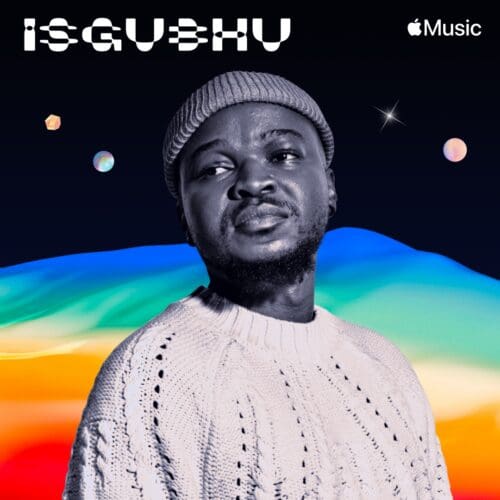
Apple Music has released its latest Isgubhu DJ Mix, featuring an exclusive mix from South African DJ, producer, and Stay True label head Kid Fonque, available exclusively on Apple Music from Friday, 2 October 2026.
Isgubhu continues to serve as Apple Music’s home for African dance music culture, spotlighting the producers, DJs and underground innovators shaping the continent’s club scenes. Each month, Isgubhu highlights the boundary-pushing sounds redefining Afro house, 3-step, gqom and electronic music across Africa.
Scottish-born and South African-raised, Kid Fonque has spent more than two decades immersed in South Africa’s electronic music and club culture. Beginning his career in Johannesburg, he went on to establish himself as a DJ, producer, broadcaster and tastemaker, founding Stay True Sounds in 2016 as a platform for South Africa’s deep house and Afro house talent. His musical approach draws on deep house, Afro house and Afro tech, combining local rhythms with global influences.
Kid Fonque’s exclusive Isgubhu DJ Mix is a snapshot of the South African underground right now, moving between house, Afro, 3-Step and the spaces in between. Featuring a mix of established artists and newer names, it reflects the sounds he champions through Stay True Sounds and in his DJ sets across the country. “There’s lots of different flavours from South Africa’s underground scene,” he tells Apple Music about the mix. “It touches on House, Afro and 3-Step. It’s a mix about discovery, where the scene is right now and where it’s heading next. The future of electronic music in South Africa is incredibly bright.”
Speaking about the artists and tracks selected for the mix, Kid Fonque says: “The music I chose for this mix is very much in line with what I’m excited about sonically in South Africa right now. It moves from the raw, untapped talent of artists like Spotz, through to the colourful and forward-thinking sounds of Chronical Deep, as well as PAGEZ, Dr Feel and Beekay Monalayzzar. Ultimately, the mix is about discovery and sharing the music and producers that are moving me right now.”
Kid Fonque describes the mood of the mix as “bright and colourful, with some darker moments along the way,” with warmth and soul sitting alongside deeper and more electronic passages. For him, however, the overriding feeling is all about discovery: “That has always been a huge part of DJing – finding something that excites me and then being able to introduce that record or artist to somebody else.”
Speaking about the evolution of African dance and electronic music, Kid Fonque says South Africa’s music scene “constantly reinvents itself,” with new genres and sounds emerging year after year. “What excites me most is that producers here aren’t afraid to experiment. They take influences from house, Afro, jazz, soul and electronic music, but then interpret them in a way that feels completely South African. There’s also so much young, untapped talent coming through, so I genuinely feel like we’re still only scratching the surface of where African electronic music can go.”
Listeners can stream the Isgubhu DJ Mix by Kid Fonque exclusively on Apple Music, alongside the Isgubhu playlist, which continues to spotlight the best in African dance and electronic music.
Listen to the Isgubhu playlist now on Apple Music.
Isgubhu September 2026 (DJ Mix) mixed by Rosey Gold Tracklisting
Spotz — When She Left
Buddynice — Nothing Special
umuntfuNje — Rush Hour
Kudbeu & Kana — My Love / E Samba (Kid Fonque Edit)
China Charmeleon & Brandon Dlhudhlu — Birds Sings (Ed-Ward Remix)
Herbert & Momoko Gill — Babystar (Kid Fonque Refix)
Thabo Tonick — Listen To The Kids
Charles Webster & Atmos Blaq — Free
PAGEZ, Dr Feel & Beekay Monalayzzar — Was You ft Kali Mija
On the cover this month is FKA MASH, whose debut album EXITECHNO presents a new kind of expression for the DJ and producer. Released on his record label, September Bloom, the project ties disco, techno and deep house together over the backdrop of Soweto, with FKA MASH bringing influences from outside electronic music, from classical to jazz as he continues to push the boundaries of his sound.
Isgubhu also houses a collection of alumni playlists, editorial playlists, exclusive DJ mixes, and additional content from the best dance and electronic acts on the continent.
Check out Isgubhu only on Apple Music: http://apple.co/Isgubhu
Ghanaian-German-Cameroonian singer-songwriter Malaïka has released “Place I Go To,” a new single featuring Ghanaian-Burkinabé singer-songwriter Ria Boss, marking a years-in-the-making collaboration and continuing Malaïka’s reflective, self-exploratory songwriting.
“Place I Go To” is built from soul and jazz, the music Malaïka loves most and the influence that shapes her melodies and compositions. The song began with no instrumentation at all, just her voice, growing out of her habit of writing melodies in silence and singing a cappella.
What started as a single line grew over time: first as an interlude on Malaïka’s debut EP, 27, then into a guitar and piano arrangement performed live; then a full-band version debuted at her headline show in Accra, before finally evolving into the rich, textured production heard today.
Producer Enid Blekk and creative director/A&R Kafui Offori developed the song’s arrangement, with Tronomie handling vocal production and recording for both Malaïka and Ria Boss. Malaïka describes the result as “really rich, really soulful,” the kind of sound that “instantly puts you at ease.”
Speaking about the song, Malaïka says, “The song is about finding a home or resting place, somewhere you feel safe. For me that’s the ocean, for others it’s the people they love or a higher power, but most importantly, you can find it within yourself. I hope anyone who hears this song is reminded that they can find a resting place within themselves, too.”
Malaika has admired Ria Boss since seeing her perform live in 2019, and the two later became friends through the Black Girls Glow residency. When the song was ready for a second voice, Ria Boss was the only choice. Describing the collaboration, Malaika calls it simply: “Made in heaven.”
Earlier this year, Malaïka previewed the song for a blindfolded audience, an experiment that revealed how powerfully the track lands when listeners close their eyes. She hopes fans will do the same on first listen.
“Place I Go To” ft. Ria Boss is available now on all streaming platforms.
The Managing Director of Tema Oil Refinery (TOR), Mr. Edmond Kombat, has expressed his profound appreciation to the President of the Republic, H.E. John Dramani Mahama, the Minister for Energy and Green Transition, Hon. Dr. John Abdulai Jinapor, and the entire leadership and staff of the Ministry for their continued support and confidence in the Board, Management and staff of Tema Oil Refinery.
Mr. Kombat was recognised as the “Energy Sector Recovery Programme (ESRP) Champion of the Year, 2026” at the 2026 Annual Retreat of the Ministry of Energy and Green Transition, held at the Volta Serene Hotel in Ho, in the Volta Region of Ghana.
The Annual Retreat provided an opportunity for the Ministry to review its performance and achievements for 2026 and strategise and set priorities for 2027, bringing together key leadership and stakeholders within the energy sector.
The recognition of Mr. Kombat was in acknowledgement of his leadership and contribution to the recovery of Ghana’s downstream petroleum sector and the restoration of TOR’s refining operations.
The citation highlighted the successful completion of critical Turnaround Maintenance (TAM) works on the Crude Distillation Unit (CDU), the resumption of crude oil refining after several years of operational inactivity, and the progress made in repositioning TOR towards its core mandate of domestic crude refining and local value addition.
It further recognised TOR’s successful processing of locally produced Jubilee Medium Sweet Crude, including the significant milestone of processing one million barrels by August 2026.
Gratitude to the President and Energy Ministry
In expressing his appreciation, Mr. Kombat said the recognition was a reflection of the collective efforts of the Government, the Ministry, the TOR Board, Management, staff and other stakeholders who have contributed to the refinery’s recovery.
He expressed particular gratitude to H.E. President John Dramani Mahama for the policy direction and support being provided by Government towards the revival of strategic national assets and the strengthening of Ghana’s energy security.
Mr. Kombat also thanked Hon. Dr. John Abdulai Jinapor, Minister for Energy and Green Transition, and the entire Ministry for their continued guidance, engagement, encouragement and support for the Board, Management and staff of TOR.
“I am deeply humbled and grateful for this recognition. I receive it not simply as a personal honour, but as recognition of the collective effort of the Government, the Ministry, the TOR Board, Management and staff, and all our partners who have contributed to the progress we are making at Tema Oil Refinery.”
He added:
“I wish to express my sincere appreciation to His Excellency the President, the Honourable Minister and the entire Ministry of Energy and Green Transition for their continued confidence and support for Tema Oil Refinery. Their commitment has provided the encouragement and direction needed for us to pursue the recovery of this important national asset.”
Recognition as a Motivation to Do More
Mr. Kombat said the recognition, coming at the Ministry’s Annual Retreat as the sector reviewed its performance for 2026 and charted the course for 2027, was particularly significant.
He noted that the award should serve not as a reason for complacency, but as a motivation for the Board, Management and staff of TOR to do more and deliver even greater results in the coming year.
“This recognition is a great motivation for us to do more. As the Ministry reviews what we have achieved in 2026 and looks ahead to 2027, we at TOR are equally encouraged to raise the bar, consolidate the gains we have made and pursue even greater achievements.”
He stressed that the refinery’s focus would remain on operational excellence, safety, reliability, efficiency, accountability and financial sustainability, while continuously improving its capacity to contribute to Ghana’s energy security.
Recognition of the TOR Team
Mr. Kombat also acknowledged the Chairman and Members of the TOR Board, Management and the entire staff of the Refinery, particularly the technical teams, engineers, operators, artisans and support staff whose dedication and resilience have contributed to the refinery’s ongoing recovery.
“This recognition belongs to the entire TOR family. Our people have worked with dedication, resilience and a strong sense of national duty. I commend the Board, Management and staff for their commitment, and I encourage everyone to see this award as a call to work even harder.”
He said the achievements recorded so far demonstrate what can be accomplished when Government commitment, strong institutional leadership, technical expertise and dedicated staff come together around a common national objective.
Looking Ahead to 2027
As the Ministry looks ahead to 2027, Mr. Kombat reaffirmed TOR’s commitment to working closely with the Government, the Ministry, the Board and all stakeholders to consolidate the gains made and position the refinery as a safe, reliable, efficient and sustainable strategic asset for Ghana.
“We are grateful for the recognition, but we recognise that there is still much more work to be done. The award strengthens our resolve to deliver more, improve continuously and ensure that Tema Oil Refinery fulfils its strategic role in Ghana’s energy sector.”
Mr. Kombat once again expressed his profound gratitude to H.E. President John Dramani Mahama, Hon. Dr. John Abdulai Jinapor, the Ministry of Energy and Green Transition, the TOR Board, Management, staff and all partners and stakeholders for their continued confidence, support and commitment to the recovery and transformation of Tema Oil Refinery.
After years of building a catalogue filled with some of Ghana’s most recognisable records, Lasmid is finally giving his fans what they have been asking for; his own concert.
The Ghanaian singer and songwriter has officially announced Lasmid Live In Concert, themed The Legacy Begins, marking a defining new chapter in a journey that started in Takoradi and has grown into one of contemporary Ghanaian music’s most consistent runs.
Lasmid first captured national attention after winning MTN Hitmaker Season 8 in 2019, but it was the release of Friday Night in 2022 that introduced him to a much wider audience and became one of the defining records of his breakthrough.
Rather than allowing that moment to define his career, Lasmid continued to build.
Records including Puul, Running, Olivia, Bad Boy, Atele, Biggest Nathaniel and Liquor Store have steadily expanded his catalogue, while his distinctive voice, melodies and songwriting have made him an increasingly sought-after collaborator.
That run has seen him work across Ghana and the wider African music scene, appearing on records with the likes of King Promise, KiDi, Tml Vibez, Kweku Smoke, Wendy Shay and JZyNO, whose Butta My Bread featuring Lasmid became a major continental success.
Through each era, Lasmid’s audience has grown with him.
And as the catalogue grew, so did one request.
Across social media, performances and fan interactions, audiences have repeatedly called for a headline Lasmid concert; a chance to experience not only the records currently dominating their playlists, but the songs and collaborations that have soundtracked different stages of his journey.
Lasmid has been listening.
The announcement film for Lasmid Live In Concert reflects on that journey, revisiting moments from his MTN Hitmaker days through his breakthrough, subsequent releases, collaborations and evolution into the artist he is today. At the centre of it all are the listeners who have supported the music, sung the records back to him and, increasingly, asked for a night of their own.
Now, he is answering them.
Rather than simply another performance, Lasmid Live In Concert is being positioned as an intimate experience between Lasmid and the audience that has grown alongside him, bringing together the hits, fan favourites, collaborations, memories and surprises in one room.
The concert’s theme, The Legacy Begins, speaks directly to the significance of the moment.
For Lasmid, the milestones achieved so far are not being presented as the finished story. They are the foundation for what comes next.
From a young artist in Takoradi with hopes that people would hear his music, to an artist whose songs now reach audiences across Ghana and beyond, the concert represents both a celebration of how far he has come and the beginning of the next phase of his career.
And fittingly, the moment belongs just as much to the people who asked for it. They asked. Lasmid listened. Now, The Legacy Begins.
Lasmid Live In Concert
The Legacy Begins
Date: 5th December, 2026
Venue: The Palms Convention Centre (La Palm Royal Beach Hotel)
MTN Ghana has launched its digital entertainment platform, MTN One TV, as part of efforts to transform Ghana’s creative industry, expand the global reach of local productions, and create sustainable revenue opportunities for filmmakers, broadcasters, and digital content creators.
The initiative is aimed at addressing longstanding challenges confronting Ghana’s creative sector, particularly limited distribution channels, inadequate financing, piracy and the difficulty many content producers face in generating meaningful income from their work.
The platform brings together Ghanaian films, television productions, live television channels and international entertainment, offering audiences flexible viewing options while providing content owners with opportunities to distribute and monetise their productions.
The launch formed part of an inaugural industry conference held under the theme, “Empowering Ghana’s Creative Industry Through Collaboration and Digital Innovation,” which attracted government officials, filmmakers, producers, actors, broadcasters, media executives, technology professionals and other key stakeholders.
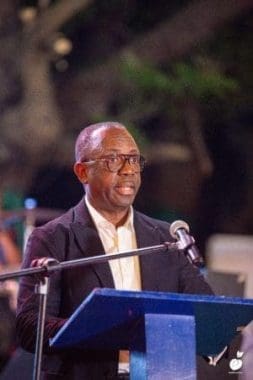
Chief Digital Officer Of MTN Ghana Mr Ibrahim Misto
MTN Targets Ghana’s Untapped Creative Potential
The Chief Digital Officer of MTN Ghana, Mr Ibrahim Misto speaking at the launch explained that the introduction of One TV represented a significant step towards building a commercially sustainable digital entertainment ecosystem capable of connecting Ghanaian creativity to larger markets.
He said Ghana possessed enormous creative potential, with talented filmmakers, actors, producers, writers, musicians and digital content creators producing compelling stories that reflected the country’s identity, history and cultural heritage.
However, he observed that the absence of adequate distribution opportunities and strategic partnerships continued to limit the commercial success of many productions.
According to him, producing quality content was no longer sufficient in an increasingly competitive digital environment, as creators also required access to audiences, technology and reliable revenue opportunities. “This is where MTN One TV comes in,” he stated.
Mr Misto explained that the platform was designed to bridge the gap between content creation and consumption by connecting producers, broadcasters, advertisers, technology partners and audiences within a single digital entertainment ecosystem.
He said partnerships with content owners would help improve the visibility of Ghanaian productions, broaden their distribution and create opportunities for emerging talent to gain recognition.
He emphasised that the economic impact of the initiative could extend across the creative value chain, supporting writers, directors, actors, editors, technicians and production crews whose livelihoods depended on the industry’s growth.
The Chief Digital Officer stressed that MTN’s ambition went beyond attracting viewers to creating an environment in which Ghanaian creators could earn sustainable income, expand their businesses and compete effectively in the global entertainment market.
He further highlighted the importance of protecting Ghana’s cultural identity through digital storytelling. “Our stories carry our history, languages, traditions and values,” he said.
Mr Misto maintained that providing Ghanaian productions with stronger digital visibility would not only promote local talent but also preserve indigenous languages, traditions and cultural values for future generations.
He noted that the initiative coincided with MTN Ghana’s 30th anniversary celebrations under the theme, “30 Years of Progress, Powered by You.”
Reflecting on the company’s journey, he said MTN had evolved from a telecommunications operator primarily offering voice and data services into a digital platform business supporting innovation, entrepreneurship and broader economic development.
He described One TV as another milestone in that transformation, demonstrating the company’s determination to leverage its technological capabilities to create opportunities beyond traditional telecommunications.
Mr Misto called for stronger collaboration among filmmakers, content creators, broadcasters, telecommunications operators, investors, regulators and technology providers to build a competitive and sustainable entertainment industry. “We want to hear from you. We want to understand your challenges,” he assured industry stakeholders.
He said the company’s objective was to develop commercially meaningful partnerships that would deliver value to creators while improving entertainment choices for consumers.
“Together, let’s use technology to give Ghanaian stories greater reach, create new opportunities for our creative talent, and build an industry that is competitive, sustainable, and proudly Ghanaian,” he urged.
Senior Manager For Digital Services And Verticals at MTN Ghana Dr Bless Sefenu
One TV Must Deliver Real Earnings for Creators — Dr Bless Sefenu
The Senior Manager for Digital Services and Verticals at MTN Ghana, Dr Bless Sefenu, reinforced the company’s commitment to building an inclusive entertainment platform that would respond directly to the needs of Ghanaian content producers.
He said Africa’s rich storytelling heritage presented enormous opportunities for digital innovation, commercial expansion and international recognition.
Tracing the evolution of storytelling from traditional fireside gatherings, folklore, music, dance and talking drums to radio, television and modern streaming services, he observed that technological advancement had transformed the delivery of stories without diminishing their cultural significance.
Dr Sefenu stressed that Africa had never lacked compelling stories or talented storytellers, but the challenge remained how to distribute African content effectively and generate greater economic value from it.
He said the digital revolution had created an opportunity for African creators to take ownership of their narratives, reach wider audiences and build sustainable businesses around their creative works.
According to him, MTN One TV was intended to strengthen the connection between quality content and audiences while providing creators with greater visibility, wider distribution and additional earning opportunities.
He cautioned, however, that attracting large audiences would be meaningless if the people producing the content continued to struggle financially.
A thriving creative industry, he explained, required more than viewership figures; it demanded sustainable revenue, consistent investment in quality productions and deliberate support for talent development. “That is why we want to build MTN One TV with you, and not simply for you,” he declared.
Dr Sefenu said MTN had deliberately positioned its inaugural One TV industry conference as a platform for open dialogue to ensure that filmmakers, producers and other stakeholders played an active role in shaping the initiative.
He encouraged participants to raise difficult questions, identify industry challenges and propose practical solutions capable of strengthening the platform and the wider creative ecosystem.
He also urged stakeholders to take advantage of the networking opportunities to establish partnerships that could translate into long-term commercial relationships.
Deputy Minister For Communication Digital Technology And Innovations Hon Mohammed Adams Sukparu
Government Challenges MTN to Finance Ghanaian Films
The Deputy Minister for Communication, Digital Technology and Innovations, Hon. Mohammed Adams Sukparu, challenged MTN Ghana to demonstrate its commitment to the creative industry by investing in the production of original Ghanaian films and television programmes.
Speaking on behalf of the sector minister, Hon. Samuel Nartey George, he said the launch of One TV was a welcome development but insisted that digital distribution must translate into measurable economic benefits for Ghanaian creators.
He noted that although the internet had revolutionised the entertainment industry and opened global markets to local productions, many content owners continued to face serious financial and structural challenges.
He identified piracy, inadequate financing, the collapse of traditional CD and VCD distribution markets and dependence on international digital platforms as major obstacles to sustainable growth.
According to him, the increasing consumption of digital entertainment should create corresponding financial opportunities for the people responsible for producing the content.
He therefore urged MTN to move beyond licensing existing productions and explore direct investment in new Ghanaian films, television programmes and other creative projects.
Such investments, he explained, would stimulate local production, generate employment, support emerging talent and strengthen the country’s creative economy.
The Deputy Minister disclosed that the government had established a GH¢20 million Film Development Fund as seed funding to support the growth of Ghana’s film industry.
He stressed that public funding alone could not meet the industry’s investment needs and called for stronger private-sector participation.
He maintained that companies generating commercial value from creative content had a responsibility to contribute meaningfully to the development of the ecosystem producing it.
He further called for deliberate efforts to promote Ghanaian languages and indigenous productions to prevent local storytelling from being overshadowed by foreign entertainment.
Judge One TV by Creators’ Earnings, Not Viewership — Deputy Minister
The Deputy Minister stressed that the ultimate measure of One TV’s success should be its economic contribution to Ghana’s creative industry rather than merely the number of people watching content on the platform.
He said industry stakeholders must assess the revenue earned by creators, jobs generated, investments attracted and the proportion of economic value retained within Ghana.
According to him, Ghana’s creative industry could become a major driver of employment and economic transformation if digital platforms were structured to provide fair returns to content owners.
He also called for stronger measures to combat piracy and the unauthorised distribution of creative works, warning that weak intellectual property protection continued to undermine the commercial viability of local productions.
Hon. Sukparu also reaffirmed the government’s commitment to strengthening the policy and regulatory environment, expanding digital infrastructure, improving affordable connectivity and supporting skills development.
He cited the One Million Coders Programme as part of the government’s efforts to prepare Ghanaians for opportunities in the expanding digital economy.
Touching on artificial intelligence, he acknowledged its growing influence on film production, editing, animation, audience analysis and content distribution. However, he cautioned that technological advancement must not come at the expense of artists’ rights.
He stressed the need to protect the voices, images, identities and intellectual property of creators against unauthorised exploitation through artificial intelligence.
He said the Ministry of Communication, Digital Technology and Innovations would collaborate with the Ministry of Tourism, Culture and Creative Arts to promote responsible and ethical AI adoption within the industry.
Deputy Minister For Tourism Culture And Creative Arts Hon Yussif Issaka Jajah
Ghana’s Creative Talent Must Translate Into Economic Wealth — Deputy Tourism Minister
The Deputy Minister for Tourism, Culture and Creative Arts, Hon. Yussif Issaka Jajah, said the introduction of MTN One TV offered a major opportunity to reposition Ghana’s creative industry as a commercially viable sector capable of generating employment, attracting investment and contributing to national development.
Delivering an address on behalf of the sector minister, Hon. Abla Dzifa Gomashie, he said Ghana’s storytelling tradition had produced remarkable creative works over the years, but the economic benefits had not always adequately reached the individuals responsible for their production.
He cited celebrated Ghanaian productions, including Osofo Dadzie, Obra, Inspector Bediako and Love Brewed in the African Pot, as examples of the country’s rich cultural and entertainment heritage.
He observed that despite their contribution to national identity and cultural preservation, many creative professionals continued to face difficulties in converting their talent into sustainable livelihoods.
Hon. Jajah stressed that Ghana must move beyond celebrating its creative achievements and establish practical systems that allow artists, filmmakers and producers to benefit financially from their intellectual property.
He explained that the government’s revised cultural policy sought to position culture as an economically productive sector, with digital innovation and strategic collaboration playing central roles.
He commended MTN Ghana for its contributions to the creative economy through initiatives such as caller tunes and cultural festivals, describing One TV as another opportunity to deepen private-sector investment in Ghanaian entertainment.
According to him, a strong digital distribution platform could help connect local productions to new markets while strengthening the international competitiveness of Ghanaian storytelling.
The Deputy Minister identified intellectual property protection, professional training, quality content production and access to markets as critical areas requiring sustained attention.
He reaffirmed the government’s commitment to working with industry stakeholders, development partners and technology companies to establish an environment conducive to innovation, investment and creative entrepreneurship.
Hon. Jajah urged filmmakers and other creative professionals to embrace digital technology without compromising the authenticity of Ghanaian stories.
He also challenged participants to develop practical proposals that would address the industry’s structural challenges rather than allowing the conference to end without concrete outcomes.
He expressed optimism that MTN One TV would create new opportunities for emerging talent, expand the reach of Ghanaian productions and contribute to building a stronger and more competitive creative economy.
A New Test for Ghana’s Digital Creative Economy
The launch of MTN One TV represents a significant expansion of MTN Ghana’s digital business ambitions and introduces another potential distribution channel for an industry seeking greater investment, visibility and financial sustainability.
For Ghanaian filmmakers, producers and content owners, the platform presents an opportunity to reach wider audiences and explore new revenue streams in an increasingly digital entertainment market.
Ghanaian actress Nadia Buari has warned that children who grow up in homes affected by domestic violence may be left with the damaging belief that violence is a normal part of family life.
Buari raised the concern in a post on X as she spoke against domestic violence and child abuse in the home.
She said a home should provide children with safety, protection and love, but warned that violence can turn that environment into a place of fear.
According to the actress, domestic violence involving children should not be treated simply as a family disagreement because it constitutes abuse and can have serious consequences for young people.
“When they are hit too, the harm is even deeper. They learn that home is not safe and that the people who should protect them can hurt them,” she said.
Buari identified physical, emotional, verbal, sexual and financial abuse as forms of domestic violence. She noted that children exposed to such situations may struggle with fear, anxiety, guilt and anger, while some may experience sleep difficulties, withdrawal or noticeable behavioural changes.
She urged victims not to stay in abusive situations while hoping that the violence will eventually stop on its own.
“Abuse rarely stops without help. Apologies and promises do not erase violence,” she warned.
The actress also advised against staying in abusive relationships simply because of children, saying that doing so could unintentionally expose children to harmful ideas about relationships and conflict.
She maintained that marriage, cultural expectations and concerns about what people might say should not compel anyone to tolerate abuse.
“Love is not fear,” Buari said.
She encouraged victims and members of the public who notice signs of domestic violence to take action by seeking help, making reports through the appropriate channels and placing the safety of victims and children first.
The newly elected National Youth Organiser of the New Patriotic Party (NPP), Abanga Fuseini Yakubu, has pledged to mobilise four million youth votes for the party in the 2028 general elections.
He said although more than 10 million young people are registered on the voters’ register, he would work to mobilise at least four million of them to support the NPP and help return the party to power.
Speaking in an interview with this paper, Mr Abanga, who is often described as the “Youth Commander”, appealed to all party members to support his efforts to achieve the target.
He also promised to secure five ministerial slots for the party’s youth wings if the NPP wins the 2028 elections and returns to power in 2029.
Mr Abanga attributed the NPP’s defeat in the 2024 general elections to voter apathy, internal wrangling and complacency, and called for an end to such challenges ahead of the 2028 elections.
He further pledged to make the party more attractive to Ghanaian youth through innovative programmes and practical support for the youth wing.
“I am working hard to set up a printing press for the party, buy motorbikes for the youth wings, and purchase pick-ups for the youth on a cluster basis,” he disclosed.
He underscored the need for members of the party to bury their differences and unite to secure victory for the NPP in the 2028 general elections.
The NPP National Youth Organiser pledged to bring innovation, creativity, hard work, dedication and sacrifice to the leadership of the party’s youth wing.
Mr Abanga was elected at the NPP’s National Delegates Conference held at the Baba Yara Sports Stadium in Kumasi on Saturday, October 3, 2026.
He secured 1,550 votes to defeat five other contenders. Clement Opoku Gyamfi polled 631 votes, Michael Osei Boateng 78, Chris Lloyd Nii Kwei Asamoah 46, Vera Oye Bram-Larbi 44 and Alfred Kumi Ababio 25.
KGL Group Executive Chairman Alex Apau Dadey has called for stronger collaboration between government, the private sector and the media to create an environment that supports the growth of Ghanaian businesses into large, sustainable and globally competitive companies.
Mr. Dadey said Ghana must move beyond creating small and fragmented enterprises and deliberately develop pathways that allow small businesses to grow into medium-sized companies, large corporations and eventually African and global champions.
He made the call at the launch of the 30th Ghana Journalists Association (GJA) Media Awards, where KGL Group served as headline sponsor for the third consecutive year.
According to him, while small and medium-sized enterprises remain critical to employment, innovation and livelihoods, the country’s long-term economic transformation would require businesses capable of surviving their founders and succeeding across generations.
“We must now become equally good at building large, well-governed, professionally managed and trans-generational Ghanaian businesses,” he said.
Mr. Dadey argued that the strength of an economy should not be measured only by the number of businesses created but also by the ability of those businesses to scale, create intellectual property, employ people, pay taxes and compete internationally.
He identified corporate governance, succession planning, competent and independent boards, professional management, patient capital and disciplined reinvestment as essential elements for building businesses that can endure beyond their founders.
Media urged to deepen economic reporting
The KGL Group chairman also called for a deeper relationship between Corporate Ghana and the media, stressing that such collaboration must not compromise journalistic independence.
He said journalists should continue to scrutinise businesses, investigate wrongdoing and question corporate power, but should also highlight legitimate Ghanaian enterprises that invest, innovate, create jobs, pay taxes and expand beyond Ghana.
“The media does not simply report an economy. The media helps shape the culture within which that economy develops,” he said.
Mr. Dadey urged journalists to contribute to a national conversation focused not only on who owns a company, but also on the value businesses create for Ghana.
He said questions about employment, local capacity development, tax contributions, innovation, international competitiveness and succession should increasingly form part of business reporting.
Call for evidence-based policymaking
Mr. Dadey further urged policymakers to make research and evidence the foundation of public policy.
He cautioned that policies introduced to address particular problems could sometimes create unintended consequences for businesses, investment and employment if they were not subjected to rigorous impact analysis.
“Good intentions are not enough. Policy must be supported by data. It must be informed by evidence,” he said.
He also called for broader consultation with businesses and other stakeholders before major policy and regulatory changes are implemented.
According to him, businesses can adapt to difficult policies, but uncertainty, inconsistent regulations and unpredictable policy environments can undermine long-term investment.
“Policy consistency, regulatory predictability and institutional stability are therefore not favours to Corporate Ghana. They are part of the infrastructure of economic development,” he said.
New compact needed
Mr. Dadey proposed what he described as a new compact involving government, Corporate Ghana and the media.
He said government must create an enabling environment, businesses must invest, innovate and strengthen their governance structures, while the media must continue to provide independent scrutiny and help the public understand enterprise, investment and economic transformation.
He also urged Ghanaian entrepreneurs to view their greatest legacy not merely as wealth accumulated, but as the institutions they leave behind for future generations.
“If every generation has to rebuild yesterday’s businesses from the ground up, nations cannot achieve industrial scale,” he said.
GJA Media Awards
Mr. Dadey congratulated GJA President Albert Kwabena Dwumfour, the association’s national executive, past executives and generations of Ghanaian journalists for sustaining the awards for three decades.
He urged journalists to pursue reporting that investigates ethically, interrogates policy, follows data and holds both government and businesses accountable.
At the same time, he encouraged the media to identify solutions, celebrate innovation and help Ghanaians envision the country’s economic potential.
He said the partnership between KGL Group and the GJA went beyond sponsorship and represented the company’s commitment to supporting journalism and national development.
Mr. Dadey expressed hope that by the time the GJA celebrates its 60th Media Awards, Ghana would have companies that have grown from small enterprises into African multinationals, survived their founders and expanded their operations and ownership across generations.
“Ghana’s next phase of development will require us to move from fragmentation to scale; from short-term thinking to generational thinking; from instinctive policymaking to evidence-based policymaking; and from simply creating businesses to deliberately building Ghanaian business champions,” he said.
The Ghana Chamber of Mines has reviewed the Reuters report of 30 September 2026 headlined “Ghana bill would give state special share rights in mining firms, draft shows.”
The report raises matters that merit public scrutiny. The Chamber wishes to provide additional legal and policy context on two points: the State’s special-share power and the proposed duration of mining leases.
The special-share power already exists under Act 703
Reuters reports that the proposed Bill would allow the Minister responsible for mines to require a mining company to issue the Republic a special share for no consideration, with consent rights over specified transactions.
The headline and opening paragraphs do not make sufficiently clear that the underlying statutory power is already part of Ghanaian law. Section 60 of the Minerals and Mining Act, 2006 (Act 703) authorises the Minister, by written notice, to require a mining company to issue such a share to the Republic for no consideration. The power has therefore been part of Ghana’s mining legislation since 2006.
Under Act 703, the special share is a non-voting preference share. Unless the Minister and the company agree otherwise, it does not confer rights to dividends, profits or company assets upon liquidation. It does, however, carry consent rights in relation to specified major corporate transactions.
Clause 57 of the published Bill largely carries forward this framework while materially increasing the sanctions for non-compliance. This comparison explains the provision’s legislative history; it should not be read as the Chamber’s endorsement of the power or of any particular exercise of it.
The Chamber therefore asks Reuters to clarify that the underlying special-share power is not being newly introduced in 2026, although the Bill would re-enact it with revised sanctions.
The published Bill and the Government’s later statement differ on lease duration
Reuters accurately reports the wording of clause 39(2)(a) in the May 2026 version of the Bill published by Parliament. That clause provides for an initial mining lease term of 15 years or the forecast life of the mine, whichever is shorter.
That published text should be distinguished from the Government’s later public statement of its intended position. At the Government Accountability Series on 15 July 2026, the Minister for Lands and Natural Resources stated that “Mining lease period is now fixed at 20 years maximum…”
The Minister made that statement after the Bill had been laid before Parliament. It indicates the Government’s subsequently stated policy intention, though it does not by itself amend the Bill. Unless and until Parliament changes the text duuring its consideration.
The material point for readers is the unresolved difference between the text published by Parliament and the Government’s later public statement. The Chamber asks Reuters to reflect both positions and to make clear that the 20-year figure is the stated policy intention, not the current wording of the published Bill.
Accurate reporting supports informed public debate
The Chamber respects the role of Reuters and the wider media in scrutinising legislation and informing the public and the international investment community. The Bill contains substantive proposals that require careful examination. The Chamber continues to engage the Government, Parliament and regulators on their implications for responsible mining, investment, competitiveness and Ghana’s long-term national interest.
That debate is best served when reporting distinguishes existing law from proposed changes and the text of a Bill from later ministerial statements about the Government’s policy intentions. Because international reporting informs investors, lenders, mining companies, analysts and policymakers, precision on these distinctions matters.
The Chamber respectfully asks Reuters to update its report to state that the special-share power already exists under section 60 of Act 703 and to acknowledge the Government’s stated intention on the 15th of July 2026 to provide for a maximum term of 20 years.
We encourage media organisations covering Ghana’s mining sector to continue engaging the relevant institutions and to present material legal and policy distinctions clearly.
The Ghana Chamber of Mines remains committed to constructive engagement on the Minerals and Mining Bill, 2026. We support reforms that strengthen governance, deepen Ghanaian participation and increase national value while preserving the predictability and competitiveness required for responsible, long-term mining investment.
Benjamin Otoo, Acting President of the Civil and Local Government Staff Association of Ghana (CLOGSAG), has told members to disregard disputed appointments now before the High Court.
In a statement dated 6 October 2026, Otoo described new appointments circulating within the association as “purported” and said their validity is being challenged in court. He said the High Court has fixed a date to decide the matter.
He directed regional executives, district executives and members not to recognise the appointments or act on any notices, directives or administrative decisions that flow from them until the court rules. He also urged members to stay calm and respect the judicial process.
“Let the court determine the matter,” the statement said.
The statement did not name the people appointed or the offices involved. It also did not say who made the appointments, who the parties to the case are, or when the court will sit. NewsGhana could not independently confirm details of the suit.
CLOGSAG represents staff in Ghana’s civil service and local government service. It is one of the country’s most active public sector unions. In February 2025 it called a nationwide strike over the appointment of an acting Births and Deaths Registrar, and suspended it after the government withdrew the appointment.
The association has also faced internal tension this year. Its Oti regional elections in Dambai on 30 July 2026 drew complaints after the election committee disqualified a candidate for regional chairman.
Zambia has just brought in a record maize harvest of five million tonnes, but forecasters expect El Niño to bring below-normal rains across Southern Africa from October 2026 to March 2027. One youth-led group is betting that smallholders can ride out such swings by rebuilding their soil instead of buying more fertiliser.
The Young Emerging Farmers Initiative (YEFI) is a finalist in the Resilience category of the 2026 Heroes of Tomorrow: UN SDG Action Awards. The awards drew more than 7,000 applicants, and the winners will be announced online on 29 October. The group’s NO-AGROCHEM project trains farmers to grow crops without synthetic fertilisers or pesticides.
The stakes are high for rural households. The Restoration for Community Justice, a Zambian advocacy group, warned on 1 September that more than two million smallholder farmers are at risk from the coming dry season. It said the 2023/24 drought wiped out earlier gains almost as quickly as they had been made.
Farming with what is in the yard
In written responses to NewsGhana, YEFI said Zambian smallholders face late rains, long dry spells, sudden floods and soils worn down by years of synthetic fertiliser use and maize monocropping. Chemical inputs, it added, are now beyond the reach of most rural households, and extension services that teach sustainable methods are scarce.
The project replaces bought inputs with materials farmers already have. Farmers learn composting, mulching, crop rotation and intercropping, and make pest sprays from plants. YEFI said these methods raise soil organic matter and help fields hold water, which matters most when the rains fail.
It conceded that the gains are not instant. “Productivity improves gradually as soils regain structure and fertility,” the group said.
The trainers are young people from the same villages as the farmers. YEFI said this model builds trust because the advice comes from neighbours rather than outside officials. The young trainers go door to door, run field demonstrations and share results on social media, presenting farming as a modern business at a time when many young Africans are leaving agriculture.
Results so far
YEFI says it has trained more than 1,000 farmers and that over 60 per cent have adopted agroecological practices. It reports that household incomes have risen by 25 per cent. It credits three factors for the rise: lower input costs, healthier soils that yield more, and buyers who pay a premium for sustainably grown produce.
Those buyers are tied to the project through memoranda of understanding, which commit them to purchase set crops at agreed quality standards. YEFI handles aggregation, quality control and transport between farmers and buyers.
The figures are YEFI’s own, and no independent evaluation has been published. Asked for evidence that the approach can expand without raising costs or lowering yields, the group cited its internal monitoring report and farmer testimonies, including a video of a farmer saying homemade manure and pesticides had improved her field at no cost. It did not release the report.
The project’s funder has set a higher bar. The Julius Baer Foundation, which backs NO-AGROCHEM with a CHF 300,000 grant running from 2025 to 2027, expects participating farmers to raise their incomes by 30 to 50 per cent by 2027.
What still stands in the way
YEFI said several gaps remain. Moving farmers fully to agroecology requires money for biofertiliser production, better seed systems and water harvesting. The solar-powered boreholes it describes as the key to year-round production are still only planned.
The group also wants changes beyond the farm. It said governments should train extension officers in agroecology and buy a wider range of crops from farmers, so that maize no longer dominates fields. Development partners, it added, should fund agroecology networks, and banks should design loans for young farmers who grow sustainably.
Within five years, YEFI aims to reach at least 3,000 farmers in its current districts and expand to 10 more across Zambia. It wants 90 per cent of participants farming fully agroecologically, a digital platform linking farmers with buyers, lenders and experts, and an organic market that can run without project support.
Lands Minister Emmanuel Armah-Kofi Buah and Communications Minister Sam Nartey George are expected to be called to the Ghana Bar on Friday, 9 October 2026, GhanaWeb reported.
Broadcast journalist Umaru Sanda Amadu is also expected to be among the new lawyers, the outlet said. Videos shared on X showed some of the three at a dinner held ahead of the ceremony.
Being called to the Bar enrols graduates of the Ghana School of Law’s professional course as barristers and solicitors of the Supreme Court, which allows them to practise law in Ghana.
Buah is the Member of Parliament for Ellembelle and Minister for Lands and Natural Resources. George, the MP for Ningo-Prampram, is Minister for Communication, Digital Technology and Innovations.
GhanaWeb said more than 1,400 people are expected to be called to the Bar this year. If that holds, the year’s intake will be far larger than 2025’s. Last year’s main ceremony, held at the Accra International Conference Centre on 10 October, admitted 824 lawyers: 453 women and 371 men. A smaller call later that year added 137 more, bringing the 2025 total to 961, according to the Ghana School of Law.
The profession has grown quickly. The General Legal Council says the number of lawyers in Ghana rose from just over 2,000 in 2010 to more than 6,500 in 2024. The Ghana School of Law puts total enrolment at the Bar since 1963 at 12,226.
That growth has fed a long-running argument over legal education. Admitting the 2025 cohort, Acting Chief Justice Paul Baffoe-Bonnie warned that reform should improve the quality of legal training, not simply raise the number of lawyers it produces.
Several journalists joined the profession last year as well. They included EIB Network broadcaster Serwaa Amihere, Daily Graphic court correspondent Emmanuel Ebo Hawkson, and Media General’s legal affairs reporters Joseph Ackah-Blay and Sixtus Don-Ullo.
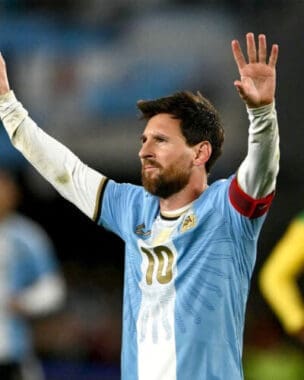
Lionel Messi scored in his final Argentina match on 6 October 2026, a 3-0 friendly win over Benin at Buenos Aires’ Monumental Stadium, before an emotional farewell to supporters.
The 39-year-old scored Argentina’s third goal, after Nicolás Otamendi and Nicolás Paz had put the hosts ahead. He finishes with a record 126 goals in 208 appearances across 21 years. Otamendi, the 38-year-old vice-captain, was also playing his last game for the national team.
Messi took the microphone in front of a crowd of about 85,000 once the match ended. He said he was struggling to find words through the emotion and began with his family. “The first thing I think about is my father,” he said.
His father and long-time agent, Jorge Messi, died in Rosario on 8 August at the age of 68. Messi had said the loss strengthened a decision he first put in writing on 21 July, two days after Argentina lost the World Cup final 1-0 to Spain after extra time in New Jersey. He announced his international retirement on 31 August.
The Argentine Football Association (AFA) then invited him back for one last match at home, so that he would not end his career in tears after a defeat on foreign soil. AFA president Claudio Tapia said Messi had earned a proper send-off, and members of the 2022 World Cup-winning squad came with their families to share the night.
In his speech, Messi called playing for Argentina the best thing that had happened to him in his life. He thanked teammates and supporters who stood by the side through its lean years and its winning ones, and he asked younger Argentines to keep defending the national team.
The farewell closes a career that turned from frustration to triumph. Messi lost the 2014 World Cup final and successive Copa América finals in 2015 and 2016, briefly quitting the national team after the last of those defeats. He went on to win the Copa América in 2021 and 2024, the Finalissima in 2022 and the World Cup in Qatar the same year. He also won Olympic gold at Beijing in 2008. He went into the Benin match with a record 68 assists for his country.
Messi was visibly moved during the national anthem before kick-off, with his three sons, Thiago, Mateo and Ciro, at the stadium.
The match was the first ever meeting between Argentina and Benin, whom FIFA ranks 93rd in the world.
Defender Cristian Romero is expected to take over the captain’s armband, which Messi first wore at the 2010 World Cup in South Africa. The AFA has not said who will inherit his number 10 shirt.
Ghana’s Minerals Commission has ordered GoldCoast GRC Ghana Limited to stop all work under its offshore gold reconnaissance licences, after fishing groups warned the project could harm coastal livelihoods.
The order follows a petition dated 3 October 2026 to President John Dramani Mahama. It was signed on behalf of 46 fishers’ associations, fishing communities and civil society organisations, and called for an immediate halt and an independent review.
The commission said Lands and Natural Resources Minister Emmanuel Armah-Kofi Buah had instructed that the licences be suspended so that the government could hold wider consultations. It said the objections it received centred on possible environmental and ecological damage and on whether affected communities had been properly consulted.
The suspension is “not a cancellation, revocation or termination of the licences,” the commission said. The licences stay in force, but all operational activity stops until consultations are complete and stakeholders are aligned. The company must cooperate with the commission, other state institutions and affected groups in the meantime. The commission gave no timeline for the process.
A dispute over scale
The commission’s account and the company’s own disclosures describe very different areas. The regulator said the licences, granted on 9 February 2026, cover waters near Atwiwa in the Ahanta West Municipality of the Western Region.
GoldCoast Resource Corp, the Toronto-based parent company, has described something far larger. In January 2026 it announced 10 contiguous licences covering about 10,000 square kilometres of Ghana’s western continental shelf, with an initial term of 12 months and an option to renew. The petitioning groups said the company’s published map runs about 300 kilometres along the coast, from Half Assini in the Western Region to Winneba in the Central Region, and reaches about 33 kilometres offshore.
That stretch matters for fishing. The groups said parts of the area appear to fall inside the Inshore Exclusion Zone, the waters within 12 nautical miles of the coast that the Fisheries and Aquaculture Act, 2025 (Act 1146) reserves for small-scale fishers. They said the exact overlap cannot be confirmed until the government publishes the official coordinates and licence documents, and they asked it to do so.
Canoe fishing carries much of Ghana’s catch. Citing the Fisheries Commission’s 2025 report, the groups said artisanal fishers landed 282,658 tonnes that year, almost 64 per cent of the national total.
What the licences allow
Under the Minerals and Mining Act, 2006 (Act 703), the minister grants reconnaissance licences on the commission’s recommendation. The groups pointed to section 32(3) of the Act, which they said bars reconnaissance licence holders from drilling or excavating. They also raised concerns about reported plans for seismic surveys, seabed coring, sediment sampling and possible shallow-water dredging at a later stage.
GoldCoast has published plans to recover placer gold, the loose grains washed onto the seabed from coastal rivers, by dredging. It says its four-phase programme has already included airborne magnetic surveys. The company listed on the Canadian Securities Exchange in August 2026.
Signatories to the petition include the Canoe and Fishing Gear Owners Association of Ghana, the Integrated Social Development Centre, the Natural Resource Governance Institute and Resource Justice Network Ghana. They also want the licences mapped against the Greater Cape Three Points Marine Protected Area, as well as key spawning and nursery grounds.
The commission said its licence conditions require the company to obtain every other statutory approval before any exploration begins.
deVere Group chief executive Nigel Green warned on 8 October 2026 that Anthropic’s planned stock market listing would expose ordinary savers to circular artificial intelligence (AI) financing deals.
Anthropic’s bankers have told potential investors the offering could raise more than US$100 billion and value the company at up to US$2 trillion, according to The New York Times. That would be more than double the US$965 billion valuation the developer of the Claude models reached in its May funding round. It would also beat SpaceX’s June listing, which raised US$85.7 billion, the largest initial public offering on record.
Green said a listing of that size would feed into global index trackers, pension schemes and funds owned by millions of people who never chose to back a loss-making AI company.
How the loop works
Green described an industry in which chipmaker Nvidia invests in AI developers, the developers spend the money on Nvidia chips and computing power, and Nvidia books the spending as revenue. “Every turn of the wheel looks like growth,” he said.
Anthropic sits near the centre of that web. Its prospectus shows it expects to spend up to US$84.5 billion renting computing power from SpaceX through 2029, according to Seeking Alpha. Its infrastructure agreements with all suppliers reportedly exceed US$518 billion. Nvidia holds SpaceX shares worth about US$21 billion, and SpaceX chief executive Elon Musk has said the company will build its computing infrastructure exclusively on Nvidia hardware.
SpaceX is also borrowing. It has launched its first public bond sale, seeking US$20 billion to US$25 billion, with the proceeds going mainly to repay a bridge loan.
Green compared the pattern to the telecoms boom around 2000, when equipment makers lent to their own customers so they could keep placing orders. Sales and valuations soared until the buyers ran out of money, and investors lost heavily even though the technology itself endured.
What the prospectus shows
Reuters, reporting on the prospectus, said Anthropic posted revenue of US$4.6 billion in 2025 and a net loss of US$42 billion. About US$34 billion of that loss came from write-downs on liabilities, largely linked to earlier funding rounds. Anthropic highlights instead an operating loss of US$8.1 billion. The risk factors also disclose that two customers account for a quarter of revenue.
The company has grown sharply since then. Its annualised revenue run rate reached US$65 billion by the end of July 2026, up from US$47 billion in mid-May. Insiders expect US$100 billion to US$120 billion by the end of the year.
Central bank concern
Green’s warning echoes the Bank of England. In the record of its 25 September meeting, the Bank’s Financial Policy Committee said rising indebtedness, limited transparency and some circular financing arrangements in AI could make risks harder to assess and amplify losses if expectations disappoint. The committee cited JPMorgan estimates that debt could finance around US$4.1 trillion of AI-related capital spending between 2026 and 2030.
deVere Group describes itself as one of the world’s largest independent financial advisory organisations, with more than 80,000 clients. Anthropic declined to comment on its listing plans when AFP asked in August.
The company has told investors it does not expect to stay profitable in the quarters after the second quarter of 2026, citing planned infrastructure spending.
In a policy brief released in October 2026, the Ghana Center for Democratic Development (CDD-Ghana) rejected the government’s plan to let the President pick ministers freely, inside or outside Parliament.
The brief comes as the Constitution Review Implementation Committee, inaugurated on 28 August 2026, works through the government’s position paper and the Constitution Review Committee (CRC) report. The two documents now set out three competing answers to one of the review’s most consequential questions: whether sitting MPs should be allowed to serve as ministers.
Article 78(1) of the 1992 Constitution requires the President to appoint most ministers from among MPs. According to CDD-Ghana, the government wants to drop that requirement but leave the President free to draw ministers from Parliament, from outside it, or both. The think tank argued that such a change “changes the text, not the problem or outcome it is meant to address.”
Evidence from Uganda and Malawi
CDD-Ghana based its case on two countries that already give presidents that freedom. In Uganda, it said, about 69 per cent of current ministers come from the majority side in Parliament. In Malawi, 20 of 24 cabinet members, or 83 per cent, were MPs as of October 2025.
Presidents keep choosing MPs, the brief argued, because doing so rewards loyal legislators, secures a reliable voting bloc and extends patronage to MPs with strong local followings. It cited a 2025 Afrobarometer survey which found that seven in 10 Ugandans oppose MPs serving as ministers at the same time.
The brief also disputed the government’s description of Ghana’s system as a uniquely Ghanaian middle ground between presidential and parliamentary government. Zambia requires every minister to be an MP, and Namibia draws its whole cabinet from the National Assembly. Kenya ran a similar model until its 2010 Constitution barred Cabinet Secretaries from sitting as MPs. Ghana’s own 1960 Constitution required all ministers to come from Parliament.
CDD-Ghana also rejected comparisons with Westminster-style systems, where every minister sits in Parliament. In those systems, it said, the government falls if it loses a confidence vote. Ghana’s President serves a fixed term and cannot be removed that way, so the check that justifies the overlap in parliamentary systems does not exist here.
Cost to Parliament
The think tank said the current arrangement weakens Parliament in two ways. Minister-MPs often miss plenary sittings and committee meetings, which falls hardest on the majority side and can threaten quorum. Backbenchers on the governing side, meanwhile, have a reason to court the executive rather than scrutinise it, because many hope to be appointed ministers themselves.
It added that the rule also limits the President. Party pressure can make certain MPs near-automatic picks regardless of their suitability, and hard to remove once they are in office.
A split with the review committee
CDD-Ghana backs the CRC’s goal of fully separating the executive from Parliament but breaks with the committee on how to do it. The CRC recommended an outright ban on appointing sitting MPs as ministers, with no option to resign the seat first, because it feared a wave of resignations and costly by-elections.
CDD-Ghana called that ban needlessly extreme. It proposed instead that any MP appointed as a minister must give up their seat, as the 1979 Constitution of the Third Republic required. Under Section 147(4) of Nigeria’s Constitution, a legislator who takes a ministerial oath is deemed to have resigned. The brief said this has not triggered a rush of resignations from Nigeria’s National Assembly.
The disagreement is notable because the CRC was chaired by Professor H. Kwasi Prempeh, CDD-Ghana’s Executive Director.
The brief is the fifth in a CDD-Ghana series on individual constitutional reform proposals.
Portugal captain Cristiano Ronaldo on 6 October accused coach Jorge Jesus of twice breaking his word, and said he would accept any suspension for quitting the squad.
The statement is his first full account since he left the national team camp in Copenhagen on 30 September. The Portuguese Football Federation must now decide whether to discipline him. The open question is whether the 41-year-old, Portugal’s record scorer with 146 goals in 234 matches, will play for his country again.
Ronaldo said he and Jesus had agreed a plan to manage his workload. Under that plan, he went into the October window expecting to sit out the Nations League games in Norway and Denmark. On the day of the Norway match on 27 September, he said, a member of Jesus’s staff found him at lunch and told him the coach wanted to talk. According to Ronaldo, Jesus then asked whether he could manage about 30 minutes, and he said yes.
He warmed up from half-time but never came on. Portugal won 2-1 in Oslo, with AC Milan striker Gonçalo Ramos scoring the winner.
Ronaldo said a second meeting followed two days later, with Al Nassr sporting director Simão Coutinho present. By his account, Jesus agreed to tell reporters that Ronaldo had never demanded minutes and that sending him to warm up without using him had been a mistake. Ronaldo said he approved a short written text setting this out, which was passed to Jesus at the coach’s request. French journalist Romain Molina, whose reporting was picked up by Portuguese media, described the document as a list of talking points for the coach’s press conference.
At that press conference in Copenhagen, Jesus played down any rift. He said Ronaldo would not start against Denmark, and he made no public apology. According to the Associated Press, Jesus acknowledged telling Ronaldo he would probably play in Norway but said the circumstances of the match changed his mind. Ronaldo left the camp within hours.
“I decided to leave the camp without waiting for any further breach of word,” Ronaldo said in the statement.
He also apologised for failing to acknowledge supporters after the Norway game and for leaving his teammates before the Denmark fixture. He said his position as captain made those actions more serious. Ronaldo revealed that he had drafted a farewell letter after the 2026 World Cup, but federation president Pedro Proença persuaded him to continue. He said he would be available again after any suspension, provided he was fit and scoring for his club. He also said he still wants to bow out in one or more farewell matches.
Jesus, 72, coached Ronaldo for about a year at Al Nassr before Portugal appointed him in July 2026 to replace Roberto Martínez. He has denied making the agreement Ronaldo describes and has said he owes no one an apology. He has, however, said Ronaldo remains eligible for selection.
Portugal have not missed their captain on the pitch. They beat Denmark 4-2 the day after Ronaldo left and then defeated Norway in Porto. They have taken 12 points from four Group A4 games and already qualified for the next round. Portugal next face Denmark on 14 November.
Ghana’s opposition Minority on 7 October 2026 drew the Ghana Tourism Authority (GTA) into the World Cup visa row, alleging 48 of its 50 listed media applicants were unverified.
Until now, the controversy had centred on the National Sports Authority (NSA), whose Director-General, Yaw Ampofo Ankrah, was suspended on 1 October. The new claims put a second state agency under scrutiny. They also raise a broader question: whether official letters of introduction, which carry weight with foreign embassies, were used to move people who had no link to the institutions vouching for them.
Vincent Ekow Assafuah, Ranking Member on Parliament’s Youth and Sports Committee and Member of Parliament for Old Tafo, set out the allegations at a press conference in Parliament. None has been proven.
The GTA allegations
Assafuah alleged that only two of the 50 names the GTA submitted to the US Embassy as media personnel belonged to identifiable working journalists. He also alleged that people outside the GTA were offered or processed for visas under the Authority’s arrangements, at fees reportedly ranging from US$7,000 to US$14,000 a person. That is roughly GH¢82,000 to GH¢164,000 at the Bank of Ghana interbank rate on 5 October 2026.
The Minority further claimed that the GTA’s chief executive had been allocated 400 US visa slots and 600 Canadian ones. Assafuah did not publish documents to support the figures. He called on the Authority to disclose how many visas were issued, how many applications were refused and how the slots were used.
The GTA had not publicly responded to the allegations by Thursday.
Before the tournament, the GTA held talks with the Economic and Organised Crime Office on clamping down on operators using the World Cup to obtain visas and travel packages fraudulently.
Job titles questioned at the NSA
On the NSA, the Minority alleged that only 15 of 102 names submitted to the Canadian Embassy as NSA staff or affiliates were genuine employees. It said some of the remaining 87 were given titles that do not exist in the Authority’s structure, including World Cup Coordinator, Operations Coordinator, Business Administrator and Research and Technology Officer.
Assafuah said the US Embassy’s Fraud Prevention Unit had raised concerns over four applicants and asked for proof of their employment with the NSA.
“So who were the other 87?” he asked, demanding to know which officials prepared and approved the applicants’ portfolios and who paid for their processing.
Where the investigation stands
The NSA allegations surfaced in September, after a petition to the Criminal Investigations Department (CID) of the Ghana Police Service claimed about US$623,000 (about GH¢7.3 million) had been collected from prospective travellers. The Bureau of National Investigations has also questioned Ampofo Ankrah and other NSA officials.
President John Dramani Mahama suspended Ampofo Ankrah pending the outcome of the CID investigation. The presidential letter described the suspension as an administrative measure, not a finding of wrongdoing. Professor Emmanuel Osei Sarpong, an associate professor of physical education and sports at the University of Education, Winneba, is acting Director-General.
Ampofo Ankrah denied the allegations when he appeared before the CID. After his suspension, he told JoySports he was disappointed that he had not been given a hearing.
The NSA has said it never authorised any visa facilitation or money collection and that its legal team is cooperating with police. In a statement on 15 September, it described Tribe Fest, the private company named in the petition, as a FIFA-licensed partner that ran fan events in collaboration with the NSA and the GTA. That statement was the first public link between the GTA and the company.
The scrutiny comes after Ghana topped Canada’s list of World Cup visitor visa applications and refusals, according to the Toronto Star. In September, Sports Minister Kofi Adams told Parliament’s sports committee that all 431 government-sponsored travellers had returned home. The Minority disputes that figure.
The Minority wants the investigation widened to every official and institution involved. Assafuah said any criminal conduct the probe establishes should end in prosecution.
Kojo Fosu Boadu, known as Kojo Bamba, the newly elected New Patriotic Party (NPP) first vice chairman, says no rift kept him from the leadership’s first meeting on October 6.
In a video shared on social media and sighted by GhanaWeb on October 7, he said he knew about the meeting and asked the leadership for permission to miss it. “So there is no bad blood between the leadership and me,” he said. He cited other engagements but did not say what they were. I could not independently verify his account, and the party leadership was not reached for comment on it.
The party’s own explanation was thinner. General Secretary Justin Kodua Frimpong told supporters that Bamba had been expected but had travelled, and the party gave no further details of the trip. Bamba also missed the new leadership’s visit to flagbearer Mahamudu Bawumia the same day.
The questions came fast because the result was tight and the party wants to look united. Bamba topped the vice chairmanship vote at the Kumasi delegates conference on October 3 with 3,116 votes. Henry Nana Boakye, known as Nana B, took second place with 3,061, a gap of 55 votes. Nana Akomea followed with 2,987. Bawumia has since called for one united party ahead of the 2028 election, according to MyJoyOnline.
Bamba also dismissed talk of a quarrel with Boakye. He said the two have worked together for about 10 years and have never had an argument. They went separate ways during the campaign, he said, but he called Boakye and Akomea after the conference.
Delegates chose three candidates on one ballot, and the top three were ranked first, second and third by their totals. The conference approved an amendment making the three posts separate contests in future, according to earlier reporting.
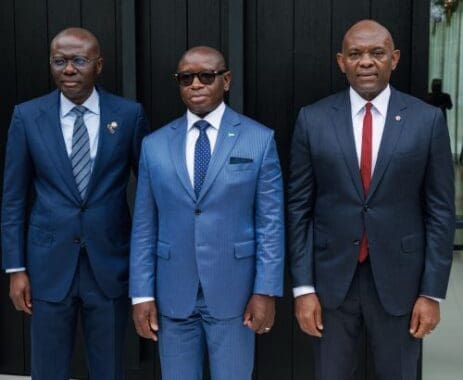
Sierra Leone’s President Julius Maada Bio and investor Tony Elumelu told West African business leaders in Lagos on Wednesday to line up investors and projects before a November summit.
The push matters now because the inaugural West Africa Integration and Investment Summit (WAIIS) is less than six weeks away. The gathering is meant to produce financed deals, and the people in the room are expected to deliver them. Bio gave the new WAIIS Private Sector Advisory Board a specific job. Members should approach prospective investors directly, match them with viable projects and flag the financing gaps and policy decisions that stand in the way.
The advisory board has 13 members and met in person for the first time in Lagos. It includes Aliko Dangote of the Dangote Group, Abdul Samad Rabiu of the BUA Group, Afreximbank’s president George Elombi, Africa Finance Corporation chief executive Samaila Zubairu and Jean-Claude Kassi Brou, governor of the Central Bank of West African States. Elumelu chairs Heirs Holdings. The organisers have not said how many members attended.
Bio pitched the summit as a way to build one market of more than 400 million people. “But potential is not prosperity,” he told the board. Priority sectors are energy trade and industrialisation, strategic minerals, agribusiness and digital transformation.
Elumelu said he would draw in African and international money alongside the Africa Finance Corporation, Afreximbank, United Bank for Africa and Ecobank. He also set a condition for governments. They must give investors policy certainty, efficient regulation and security before capital commits for the long term, he said. Lagos State Governor Babajide Sanwo-Olu made a similar case for open borders and an enabling environment for trade.
Sierra Leone has led preparations since 2024, and regional heads of state endorsed the summit, according to project advisers quoted by Tribune Online. Reports put the project pipeline at about 170 opportunities. Bio is the immediate past chair of the Economic Community of West African States Authority of Heads of State and Government.
The summit runs on November 17 and 18 at the Julius Maada Bio International Conference Centre in Lungi, Sierra Leone.
The Chief of Simiw, Nana Kwamina Nguando IV, and the Simiw Youth Development Association have honoured the Chief Executive Officer of the National Petroleum Authority (NPA), Mr. Godwin Edudzi Tamakloe, for his contributions to the development of the community.
The recognition was conferred during a durbar held to climax this year’s Enyanko Festival at Simiw in the Central Region.
Presenting the award, Nana Nguando IV explained that the honour was in appreciation of the NPA CEO’s support towards developmental projects in the community since his installation as chief.
Simiw Honors Ceo Of Npa Through His Subordinate
According to the chief, although Mr. Tamakloe is a close friend, it is uncommon to find friendships that translate into tangible development for communities.
He noted that within two years of his coronation, Simiw had witnessed significant improvements, largely due to the support received from the NPA CEO.
Nana Nguando IV cited the construction of a new palace and a health centre as some of the major projects supported by Mr. Tamakloe.
He explained that before the establishment of the health facility, residents often had to travel long distances to access quality healthcare services in Ankaful, Cape Coast, and Elmina.
According to the chief, the health centre has significantly improved access to healthcare and enhanced the well-being of residents.
He further noted that the construction of the palace has not only beautified the town but has also strengthened community cohesion.
“The palace has become a focal point for discussions on the development of the community and has helped promote unity among the people,” he said.
As part of the ceremony, the traditional authorities and the Youth Development Association presented citations and other tokens of appreciation to Mr. Tamakloe and some officials of the National Petroleum Authority.
Receiving the honour on behalf of the NPA CEO, the Executive Assistant to the Chief Executive Officer, Mr. Aquinas Hanson Jnr, expressed gratitude to the chief and the youth association for the recognition.
He said the NPA was humbled by the honour and appreciated the community’s acknowledgment of its contributions.
Mr. Hanson reaffirmed the Authority’s commitment to supporting community development initiatives across the country.
“We are encouraged by this recognition and remain committed to supporting communities that require assistance to improve the lives of their people,” he said.
He assured the people of Simiw that the Authority would continue to support worthy development initiatives aimed at improving socio-economic conditions in communities.
Nestlé has signed a deal making Milo, Nescau and Nesquik official partners of the National Basketball Association (NBA) from January 1, 2027, with Ghana among the markets.
Nestlé announced the agreement on October 7. It covers 20 markets at launch, and the Philippines joins in October 2027 to make 21. Ghana and Nigeria are the only African countries on the list. Nestlé calls it the largest international brand collaboration it has made, part of a plan to back fewer, larger global marketing platforms. The announcement gave no value for the deal and no end date beyond describing it as multiyear.
For Ghanaian families, the visible change will be on shop shelves and in youth sport. The agreement includes packs carrying NBA branding, plus chances for shoppers to win game tickets, merchandise and other prizes. It also reaches into NBA youth programmes: Jr. NBA/Jr. WNBA, NBA Basketball School, the Jr. NBA/Jr. WNBA Coaches Academies, Her Time To Play and NBA 3X. Selected NBA events, including NBA Global Games and NBA House, are part of the package. The announcement did not say which of these will run in Ghana.
Myron Otoo, category manager for beverages and dairy at Nestlé Ghana, said the deal builds on Milo’s grassroots record, including the Milo Under 13 Champions League. He described the partnership as “opening up a new world of possibilities for the Ghanaian child”.
Julie Morris, the NBA’s senior vice president of commercial development and media, said the league wants to use Nestlé’s reach and local presence to connect with fans and grow the game. Liberato Milo, who heads Nestlé’s confectionery and snacking business, said the company wants to use basketball to reach consumers at scale.
The link is not entirely new elsewhere. Nescau, Nestlé’s chocolate drink brand in Brazil, ran NBA themed promotions as early as 2018, including a prize trip to a game and collectible cups. Brazilian outlet Máquina do Esporte reported that the brand and the league did not treat those earlier actions as a sponsorship. The new agreement makes the relationship formal.
The Chief of Simiw and Adontehene of the Edina Traditional Council, Nana Kwamina Nguando IV, has appealed to the government to urgently revive the abandoned Komenda Sugar Factory and Elmina Fish Processing Factory before the 2028 general elections.
Nana Nguando, who also serves as Chairman of the Development Committee of the Komenda-Edina-Eguafo-Abrem (KEEA) Municipality, made the appeal during a durbar held to climax this year’s Enyanko Festival at Simiw in the Central Region.
Addressing the gathering, the traditional leader expressed concern over the continued abandonment of the two factories, which were established nearly a decade ago to stimulate industrial development and create employment opportunities for residents of the municipality.
According to him, while the facilities continue to deteriorate, thousands of young people in the area remain unemployed.
The Komenda Sugar Factory
Nana Nguando described the situation at the Komenda Sugar Factory as particularly worrying, noting that the facility, situated in the home district of former President Professor John Evans Atta Mills and Vice-President Professor Jane Naana Opoku-Agyemang, remains idle despite its enormous economic potential.
He said the factory has the capacity to create more than 7,000 direct and indirect jobs and contribute significantly to the local and national economy.
The chief explained that a fully operational sugar factory would reduce Ghana’s dependence on imported sugar and help conserve foreign exchange currently spent on sugar imports.
The Komenda Sugar Factory
“With the factory functioning at full capacity, Ghana would be able to reduce its reliance on imported sugar and create employment opportunities for thousands of people,” he stated.
Nana Nguando also expressed concern about reports that some of the factory’s equipment had begun to deteriorate due to prolonged inactivity.
He therefore called on the government to take immediate steps to restore operations at the facility to prevent the significant investment made in the project from going to waste.
The traditional ruler disclosed that the Komenda community had reserved an additional 2,000 hectares of land to support future expansion of the factory when it was commissioned.
However, he lamented that there appears to be little indication that the factory will resume operations anytime soon.
He urged the government to provide a clear roadmap and timeline for reopening the facility.
According to him, failure to address the issue could result in the factory continuing to be used as a political tool by successive governments.
The Elmina Fish Processing Factory
Nana Nguando further stated that if efforts to persuade the government to reactivate the factory prove unsuccessful, the traditional authorities would explore the possibility of attracting private investors to take over and operate the facility.
“We cannot allow taxpayers’ money invested in the factory to go to waste,” he stressed.
The chief also expressed concern over the continued inactivity of the Elmina Fish Processing Factory, describing it as another major investment that has failed to deliver the expected benefits to the people of the municipality.
He noted that the operationalisation of the factory could create employment opportunities for many young people, particularly those within the fisheries value chain.
Given the rising unemployment levels in the municipality, Nana Nguando appealed to the government to prioritise the revival of both factories as part of efforts to promote local industrialisation and economic development.
He said bringing the facilities back into operation would not only create jobs but also stimulate economic activity, improve household incomes, and support national development objectives.
Friends of Bawumia 2008 has donated food items and other essential supplies to the Accra Rehabilitation Centre on behalf of former Vice President Dr. Mahamudu Bawumia as he celebrates his 63rd birthday.
The donation, aimed at supporting the needs and welfare of persons at the centre, included 10 bags of rice, tubers of yam, bottled water, toilet rolls, baskets of tomatoes, garden eggs, crates of eggs and detergents, among other essential items.
Speaking at the donation, the Chief Operating Officer of Friends of Bawumia 2008, Barbara Makara-Maccugen, said the gesture formed part of activities to commemorate Dr. Mahamudu Bawumia’s 63rd birthday by extending support to persons who needed it the most.
She said the group considered it important to mark the occasion by reaching out to the Accra Rehabilitation Centre and supporting the institution with items that would contribute to the daily needs of its beneficiaries.
Barbara Makara-Maccugen called on the general public to support persons with disabilities and other vulnerable persons in society, stressing that their welfare should be a collective responsibility.
She urged individuals, organisations and institutions to contribute in diverse ways to improve the living conditions and well-being of persons at rehabilitation centres.
She further called for stronger enforcement of disability laws to ensure that public facilities are accessible and friendly to persons with disabilities.
According to her, although policies and laws exist to protect persons with disabilities, more needs to be done to ensure their effective implementation.
“The disability laws have been overlooked. Let’s strengthen the policies and enforce them to make access to facilities friendly for persons with disabilities,” she said.
Barbara Makara-Maccugen stressed that supporting persons with disabilities should go beyond occasional donations, urging the public to consistently demonstrate care and provide the necessary assistance to enable them to live with dignity.
Ghanaians moved GH¢492.9 billion through mobile money in June 2026, yet a 2024 census found only 37 percent of businesses accept or use digital payments.
The monthly value is about 52.5 percent higher than the GH¢323.2 billion recorded in June 2025, according to the Bank of Ghana (BoG). The gap matters now because consumers are ready to pay digitally while most firms are not set up to receive it.
BoG data shows how far older tools have fallen behind. June saw 954 million mobile money transactions against 406,000 cheque transactions worth GH¢35.7 billion. Money sitting in wallets reached a record GH¢40 billion, up from GH¢28.9 billion a year earlier. Registered accounts rose to 84.6 million, of which 26.4 million were active, and 546,000 of the one million registered agents were active. Reports on BoG’s latest monthly release put July at GH¢509.4 billion and August at GH¢518.8 billion.
The business side looks different. The 2024 Integrated Business Establishment Survey, run by the Ghana Statistical Service with the ReFinD research initiative at the Institute of Statistical, Social and Economic Research, found 37.09 percent of firms accept or use a digital payment method. Adoption stood at 38.4 percent in services, 34.9 percent in industry and 22.4 percent in agriculture. Use is concentrated in Greater Accra and regional capitals.
The census counted personal mobile money accounts as digital payments, and researchers noted that most firms using digital tools rely on those personal accounts, which cost more and work less well for trade. The institute’s director, Peter Quartey, said about 95 percent of surveyed individuals had used digital payments as consumers, against roughly 37 percent of businesses. The report urged better fraud prevention, stronger digital literacy among owners and staff, and clearer proof of the benefits.
Mastercard, which says it opened its first Accra office in 2025, argues that acceptance tools with built in fraud protection can close the gap. It points to a collaboration with DPO Group that lets businesses take mobile money and wallet payments from local and foreign customers on one platform. Those claims come from the company and could not be independently verified.
An Accra Circuit Court has remanded Bilyaminu Ibrahim, a media worker, and Mohammed Musah, a journalist, into police custody over an alleged GH¢800,000 fraud scheme involving a Ghanaian resident in the United States.
The prosecution alleges that Ibrahim posed as a spiritualist and, together with Katakaraou Jabiru, obtained money from Tourwana Katakarauo after claiming that she and her mother were facing spiritual attacks.
According to Chief Inspector Ramata Asumah, who is leading the prosecution, Jabiru allegedly learned in 2021 that Tourwana was experiencing difficulties in the United States and allegedly devised a plan with Ibrahim to obtain money from her.
Jabiru allegedly told Tourwana’s younger sister, Fawuziya Issaka, that he knew a spiritualist who could help the family.
Ibrahim allegedly assumed the role of the spiritualist.
The prosecution said Tourwana subsequently sent GH¢800,000 in instalments, allegedly for sacrifices and other spiritual activities intended to prevent attacks against her and her mother.
The alleged fraud reportedly continued with claims that Tourwana’s late father had an outstanding debt to an unknown person who intended to haunt her spiritually.
Further payments were allegedly requested for Quran recitals and other spiritual activities.
In 2023, after Tourwana’s mother reportedly suffered a stroke, Jabiru allegedly told Ibrahim that another person was attempting to cause a similar attack.
The prosecution said additional money was allegedly collected to provide spiritual protection and redirect the supposed attack to its “sender.”
The family reportedly attempted to settle the matter through family elders, but the issue was eventually reported to the police.
During investigations, Ibrahim allegedly admitted that he had posed as a spiritualist. Police reportedly recovered GH¢49,000 from him.
The prosecution also accused Musah of helping Jabiru avoid arrest.
Jabiru allegedly fled to Togo after learning of Ibrahim’s arrest but returned to Dodowa in September 2026 and stayed with Ibrahim and Musah.
When police visited Jabiru’s residence on October 1, Musah allegedly told officers that Jabiru had gone out. He later allegedly sent Jabiru a message stating, “Don’t come to the House.”
The prosecution said Musah admitted sending the message because he did not want Jabiru to be arrested.
Jabiru remains at large.
Ibrahim and Musah are scheduled to return to court on October 20, 2026, before Mr Joseph Kunsong.
Musah has denied the charge of harbouring a criminal.
Farmers at Kwesi Twi Krom (KTK), near Agona Asafo in the Agona East District of the Central Region, have appealed to the government and relevant authorities to intervene in what they describe as the destruction of their livelihoods following the bulldozing of more than 250 acres of farmland.
According to the affected farmers, an investor whose identity remains unknown allegedly cleared the land with heavy machinery after claiming to have acquired it for pineapple cultivation.
Briefing the media on their predicament, a former Assembly Member for the Fawomanye Electoral Area, Mr. Albert Quainoo, who spoke on behalf of the farmers, said the affected farmlands contained cocoa, yam, oil palm, cassava, plantain, vegetables, and several other food and cash crops.
He alleged that the farms were levelled with an excavator without prior consultation or engagement with the farmers who had cultivated the land for many years.
Mr. Quainoo further claimed that the incident had contributed to the death of one of the affected farmers, who reportedly died from shock after learning of the destruction.
According to him, about three years ago, two individuals identified as Yaw Nkum and Kwesi Agyei, members of the royal Yogo Clan of Agona Asafo, attempted to evict the farmers on the grounds that the land had been sold.
However, he said that when the matter was brought before the wider clan, members denied any knowledge of the purported sale and halted the eviction process.
A section of the more than 250 acres of farmland at Kwesi Twi Krom in the Agona East District that farmers say was cleared by an investor, destroying food and cash crops.
Mr. Quainoo stated that the farmers were therefore shocked when they woke up last week to discover that their farms had been cleared.
“When we came here, we saw that our farms had been completely destroyed without any notice or consultation. This is our only source of livelihood,” he said.
A view of the devastated farmland at Kwesi Twi Krom after crops, including cocoa, cassava, plantain, and oil palm, were allegedly destroyed
When journalists visited the community to assess the extent of the destruction, several farmers expressed disbelief and frustration over the development and appealed to the government and other relevant authorities to intervene urgently.
The farmers indicated that more than 150 people had their farms destroyed and warned that the situation could have serious social and economic consequences for families in the community if immediate action was not taken.
They explained that many households depended entirely on the affected farms for their income and daily sustenance.
Some of the farmers said they were now relying on support from relatives living elsewhere as they struggle to cope with the loss of their livelihoods.
The affected farmers are therefore calling on the government, traditional authorities, security agencies, and other stakeholders to investigate the circumstances surrounding the alleged destruction of the farmland and ensure that justice is served.
MTN Ghana and MobileMoney Fintech LTD (MMFL) have intensified their nationwide customer engagement drive, storming the Ashaiman Timber Market and Kuffour Station to appreciate customers, address service concerns and deepen engagement with traders and business owners.
The outreach, held as part of MTN’s 30th anniversary and Customer Service Week celebrations, brought senior executives and staff directly to customers to gather firsthand feedback, provide support and educate the public on digital financial services, self-service options and fraud prevention.
Teams of MTN Ghana and MobileMoney Fintech LTD officials were deployed across Ashaiman, moving from shop to shop to engage traders, business owners and other customers on their experiences with the companies’ services.
The engagement provided customers with a direct platform to raise concerns, share feedback and seek clarification on various services, while the teams presented gifts to selected customers in recognition of their loyalty and continued patronage over the years.
Outreach Goes Beyond Anniversary Celebration — MoMo CEO
Speaking during the engagement, the Chief Executive Officer of MobileMoney Fintech LTD, Mr Shaibu Haruna, said the outreach reflected the company’s commitment to staying close to its customers and understanding their evolving needs.
He explained that officials had been divided into groups to enable them to reach more customers across the Ashaiman Timber Market, Kuffour Station and other parts of the township.
According to him, the exercise went beyond an anniversary celebration, serving as an important avenue for obtaining firsthand information about customers’ experiences and identifying areas where services could be improved.
Mr Haruna noted that while sales and customer-facing teams interacted with the public regularly, direct engagements involving senior executives provided deeper insight into some of the practical challenges customers encountered when using the companies’ services.
He said feedback gathered through such engagements was critical to developing products and services capable of delivering meaningful value to individuals, traders and businesses.
Mr Haruna described micro and small enterprises as a critical pillar of Ghana’s economy, stressing that digital financial services must respond effectively to the everyday needs of traders and entrepreneurs.
He identified payments, savings, investments and insurance as key areas where technology and digital financial solutions could help small businesses operate more efficiently and strengthen their financial resilience.
According to him, MobileMoney Fintech LTD would continue to develop innovative solutions aimed at making financial services more accessible, convenient and relevant to customers.
He cited the introduction of a self-service PIN reset feature on the company’s mobile application as one of the innovations designed to improve convenience for customers.
The feature, he explained, allows customers to reset their PINs without having to travel to a physical service centre, reducing inconvenience and giving users greater control over their accounts.
He stressed that customer satisfaction remained central to the company’s mission, pledging to continue engaging users and introducing targeted innovations that respond to their needs while delivering secure, accessible and convenient telecommunications and financial services.
MTN Dedicates Month to Customers
The Chief Customer Relations Officer of MTN Ghana, Mrs Jemima Kotei Walsh, said the company had dedicated the entire month to appreciating customers and listening directly to their concerns.
She said taking the engagement to markets and business centres was deliberate, as it enabled MTN executives to meet customers in their own environments and gain a better understanding of their expectations and experiences.
According to her, the response from traders and other customers in Ashaiman had been encouraging, with many taking advantage of the exercise to raise questions, seek clarification and provide feedback on MTN’s services.
Mrs Kotei Walsh said customer feedback remained an important component of MTN’s operations because it helped the company identify service gaps and determine areas requiring improvement.
She stressed that MTN’s relationship with its customers went beyond the provision of telecommunications services, adding that sustained engagement was essential to building trust and delivering services that responded to customers’ changing needs.
Fight Against MoMo and Cyber Fraud
Mrs Kotei Walsh stated that the company would continue to intensify public education to help customers recognise fraudulent schemes and take appropriate measures to protect their accounts, personal data and funds.
She urged subscribers to remain vigilant and strictly avoid sharing sensitive information, particularly their Mobile Money PINs, with third parties.
Additionally, outreach teams guided users relying on USSD channels through available self-service options, empowering them to execute key transactions and manage their accounts independently without visiting physical service centres.
According to her, the initiative forms part of MTN’s broader efforts to equip customers with the knowledge and tools needed to access and use digital financial and telecommunications services safely, securely and conveniently.
Nationwide Customer Engagement
Mrs Kotei Walsh disclosed that similar market engagements were being undertaken concurrently in Kumasi and Takoradi as part of MTN’s 30th anniversary and Customer Service Week activities.
She said additional engagements were planned in other regions to ensure that more customers across the country had the opportunity to interact directly with the company.
The Ashaiman outreach forms part of MTN Ghana’s activities marking three decades of operations and its broader customer appreciation campaign.
The company said feedback gathered from the market engagements would help shape efforts to improve products, customer experience and overall service delivery.
The exercise also provided an opportunity for MTN Ghana and MobileMoney Fintech LTD to reinforce their commitment to digital inclusion by ensuring that customers, particularly traders and small business operators, were equipped to benefit from emerging digital financial solutions.
The Ghana FA Cup final will be played over two legs for the first time, the Ghana Football Association announced Tuesday, ending the single match decider.
The first leg is set for June 5 to 7, 2027, and the second for June 12 to 13. Finalists will now need two matches, about a week apart, to settle the trophy. The association called the move “a significant departure from the traditional single-match final.”
The format changes an earlier plan. A calendar the association published for the 2026/27 MTN FA Cup had the final on the weekend of June 5 to 6, 2027, with no mention of a second leg. This season’s competition opens with the preliminary round from October 23 to 26 and runs through June.
Last season’s final was a single match. Dreams FC met Nations FC at the University of Ghana Stadium on May 31, 2026, with the winner taking a place in the Confederation Cup.
The announcement did not say how the two legs will be hosted, or how a tie level on aggregate will be decided.
The Ghana Olympic Committee and Ghana Football Association met Tuesday to plan Los Angeles 2028 qualification, with the Black Queens due in action this week.
Committee President Richard Akpokavie said Ghana wants to be represented in Olympic football, which last included the country at Athens in 2004. He described the meeting as a search for “possible collaboration for our mutual benefits.” The committee will back both the men’s under 23 team and the senior women’s team through their qualifying campaigns, he said.
Football association General Secretary Prosper Harrison Addo said close cooperation with the committee, which oversees Ghana’s Olympic entries, would count in the push to qualify.
The women’s side has the nearer deadline. The Confederation of African Football gave the Black Queens a bye through the opening round. Their second round tie, against the winner of Mauritius and Djibouti, is scheduled for October 5 to 13. Three more knockout rounds follow. Thirty five teams entered the campaign, and Africa has two places in Los Angeles. When the draw was made in April, Ghana ranked third on the continent and 59th in the world.
The men have a longer road. The Black Meteors qualify through the Africa Cup of Nations for under 23 teams, with qualifiers scheduled to start in September 2026. Ghana missed both Tokyo 2020 and Paris 2024. The football association formed a management committee for the team in November 2025, and Desmond Ofei is head coach.
Reports of Tuesday’s meeting did not say what form the committee’s support would take.