

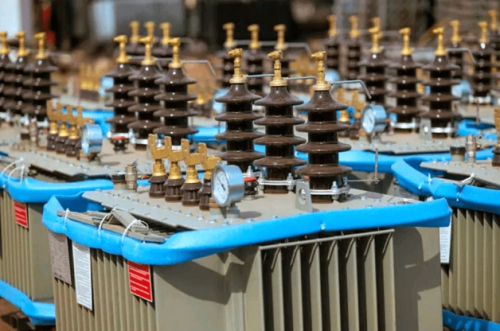
Energy Minister Dr John Abdulai Jinapor has put 3,000 new transformers at the top of his 2027 priorities, the latest in a series of rising targets that began at 1,500 in March. The bigger risk to Ghana’s power supply this year, though, has come from further up the system.
Jinapor set out the goals after a review of the 2026 performance of agencies under the Ministry of Energy and Green Transition, directing them to improve efficiency and accountability and deliver measurable results. His priorities include more transformers, a more reliable supply and keeping domestic oil refining going.
For households and businesses, the measure is simple: fewer outages, steadier voltage and lower costs. On that test, 2026 has been mixed.
A moving target
The transformer programme has grown with each announcement. At the launch of the Electricity Company of Ghana’s (ECG) corporate strategy in March, Jinapor said about 1,500 new units would be in place by the end of that month. By late April the plan had become 2,500, with about 200 installed that month and another 140 on the way. He has also described a rollout of about 2,000 distribution transformers. The 2027 figure is 3,000.
The reason is not in dispute. In April, Jinapor said demand had almost doubled in recent years and that many transformers were obsolete and overloaded after years of underinvestment, causing overloads, low voltage and erratic supply. Some units being replaced in Accra had been in service for 22 years. ECG has been fitting larger units, moving from 20 kVA to 30 kVA and above, and upgrading primary substations at Adenta, La, Teshie-Nungua, Nmai Dzorn, Baatsona and Lashibi.
What has been harder to track is delivery. The ministry promised a nationwide replacement timetable in May. Progress figures have come in fragments, and there is no public count of how many of the promised units are now in service or where.
The faults upstream
New transformers address local problems: the street that browns out every evening, the shop whose fridge fails on low voltage. They do not prevent the kind of failure that hit the whole country twice this year.
On 29 July, a disturbance on the national transmission system tripped several power plants at once and cut supply to Accra, Kumasi and much of the north. On 20 August, a fault on the Akosombo-Volta transmission line knocked out the Akosombo units and some thermal plants. Both outages began on the network run by the Ghana Grid Company (GRIDCo), not on ECG’s distribution lines. The Institute for Energy Security has demanded publication of the technical report into the July blackout, which had not been released by the time of the second.
A credible 2027 plan therefore needs a transmission line item and a public account of what went wrong in July and August, alongside the transformer count.
The money question
Reliability also depends on whether the sector can pay its way. ECG’s losses through technical faults, theft and weak collection leave it short of cash to pay generators and fuel suppliers, and the Treasury fills the gap. Jinapor has acknowledged that Ghana’s programme with the International Monetary Fund requires quarterly tariff adjustments to reflect the cost of power, and has told ECG it may disconnect government agencies that do not pay their bills.
His call for accountability will be judged on whether those losses fall, not on how many units are installed.
Refining: restarted, not yet proven
The Tema Oil Refinery (TOR) resumed crude processing on 19 December 2025 after more than six years of inactivity and a three-month overhaul of its crude distillation unit. President John Dramani Mahama commissioned the refurbished unit on 1 August 2026, as the refinery received Ghana’s own Jubilee crude for local processing. TOR also took in a million-barrel cargo of Nigerian Bonga crude through its tolling partner.
The refinery runs at about 28,000 barrels per stream day and aims to reach its nameplate 45,000 once a new furnace is integrated. The test for 2027 is whether it can secure crude and working capital steadily enough to avoid the stop-start record that kept it idle from 2018.

