

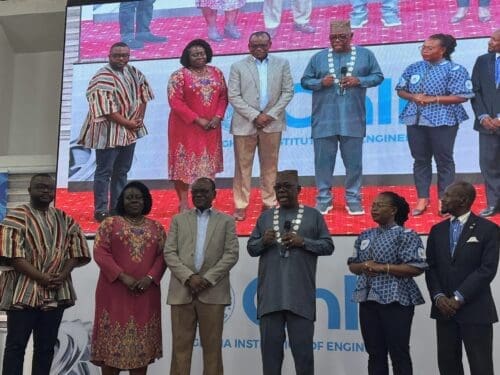
The Ghana Institution of Engineering (GhIE) has relaunched its Engineering Excellence Awards as a standalone national scheme, saying the prizes had been too low-key since their 2014 start.
The 2026 awards were launched at the Engineering Centre in Roman Ridge, Accra, under the theme “Celebrating Engineering Excellence for a Resilient and Prosperous Ghana.” GhIE President Ludwig Annang Hesse said the awards had previously been presented at the institution’s annual Engineering Week banquet and had not gained the national attention or value expected of them.
To change that, members amended the institution’s constitution at its annual general meeting in March. The amendment created a Research, Innovation and Excellence Standing Committee, which has designed the new scheme. Hesse said excellence meant delivering value and following due process even when cutting corners seemed easier.
The awards will recognise innovation, research, technological progress and sustainable engineering. Hesse said they would also give more recognition to young engineers and women in the profession, as well as to technologists, technicians, craftsmen, educators and researchers.
The government used the launch to set out its own expectations of the profession. In an address read on his behalf by Isaac Bedu, Registrar of the Engineering Council of Ghana, Minister for Works, Housing and Water Resources Ahmed Ibrahim described failing drains in Accra, a housing deficit he put at more than 1.8 million units, and gaps in safe water supply as engineering problems. He said the government would keep enforcing the Engineering Council Act so that only licensed professionals carry out engineering work. It would also promote local engineering capacity on public projects, including the Greater Accra Resilient and Integrated Development project, affordable housing and water schemes.
The minister urged the institution to protect the awards’ standing. “Let these awards be credible, transparent, and merit-based,” the address said.
Entries will be judged on waste reduction, safety, sustainability, resilience, responsible use of digital technology and artificial intelligence, affordability, local relevance and contribution to national development.

