

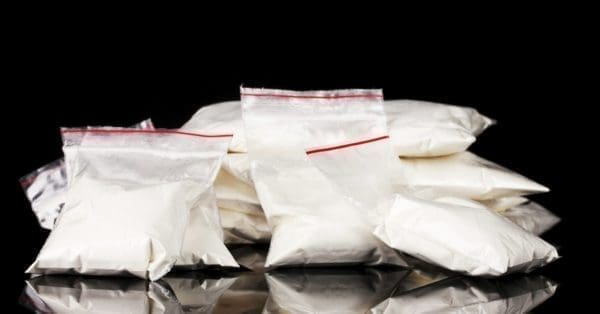
Ghana should treat cocaine busts as a national emergency and look beyond seized shipments to rising drug use at home, law lecturer Lenin Nicholas Anane Agyei said.
His call, made on Joy News, adds to pressure on the government after French customs found nearly 3.9 tonnes of cocaine in a container from Ghana. The debate has moved from how the drugs got out to what the traffic is costing Ghana: its young people, its exporters and its standing abroad.
The shipment was found at the port of Dunkirk on 10 September 2026, hidden in a container declared as plastic waste. French authorities valued it at about €225 million (about US$261 million), and part of it was reportedly bound for Antwerp in Belgium. President John Dramani Mahama later chaired a meeting of security chiefs, where he was told that 10 people, among them four officers of the Customs Division of the Ghana Revenue Authority, were being held. Four suspects appeared before the High Court in Accra on 16 September and were remanded for four weeks. French and Dutch investigators have reportedly linked the shipment to the network of Dutch fugitive Jos Leijdekkers, who remains at large.
An ‘easy place’ for cartels
Anane Agyei, who teaches at the Ghana School of Law, said the number of consignments detected in a short period suggested cartels were starting to see Ghana as an easy transit route. He said that perception could hurt honest traders, because exporters of genuine goods would face tougher inspections abroad when drugs are increasingly hidden in food and other ordinary-looking cargo.
He also doubted suggestions that the drugs may have been spotted in Ghana and allowed to move on so investigators could trace more of the network. He noted that government comments after the Dunkirk seizure did not indicate that Ghanaian authorities knew the drugs were in the country. He recalled being stopped at an airport over a small blade on his key holder, and said he could not accept that a consignment of that size would pass through a port unnoticed.
Anane Agyei backed calls for an inquiry into the busts and into what roles people inside Ghana’s systems may have played. He said such calls should not be dismissed as partisan, pointing to similar concerns raised by the Catholic Bishops’ Conference and the Christian Council.
Couriers held, financiers free
Kwasi Kwarteng, a lawyer and member of the New Patriotic Party (NPP) communications team, made a related argument on TV3’s KeyPoint. He said Ghana too often arrests the people who physically move drugs while those who finance and organise the shipments stay out of reach. “We always go for the low-hanging fruit,” he said.
When host Alfred Ocansey pointed out that Customs officers were already under investigation, Kwarteng said he wanted inquiries to go beyond officials at the operational level. He cited past cases where he said the public had heard little about progress, including a seizure of about GH¢146.9 million worth of Tramadol in March 2026.
In another linked case, Australian Border Force officers at Sydney’s Port Botany found about 320 kilogrammes of methamphetamine hidden in charcoal from Ghana in April 2026. The Narcotics Control Commission (NACOC) said in June that it had arrested the suspected lead shipper in Accra.
The problem at home
Both men argued that the focus on shipments bound for Europe and Australia hides a domestic crisis. Anane Agyei said Ghana was already dealing with growing drug addiction among young people, and warned that cocaine could make an existing problem worse if it became easier to buy locally. Kwarteng pointed to the abuse of Tramadol, which he said could give users false courage to commit other crimes.
The government says its enforcement record is stronger than critics suggest. NACOC has reported 217 arrests, 165 prosecutions and the seizure of more than 8.5 tonnes of narcotics and 45.4 million tramadol tablets from intelligence-led operations. The commission said the latest arrests showed Ghana would not become a safe haven or transit point for international trafficking groups.
In Parliament, the Minority is pressing for its own probe. Weija-Gbawe MP Jerry Ahmed Shaib said the Minority wants institutional accountability, and questioned whether an investigation led by the executive could be trusted.
The four accused in the High Court case are due back in court on 13 October 2026.

