

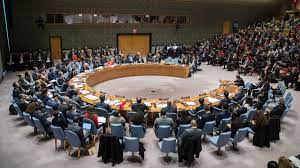
Libya backed two permanent, veto-wielding United Nations Security Council seats for Africa as it opened African ministerial talks on Council reform in Tripoli on 11 October 2026.
The 14th ministerial meeting of the African Union Committee of Ten (C-10) brings together the 10 countries charged with pressing the continent’s case at the UN. It comes six months after Africa tabled its own reform model at UN negotiations, which have so far failed to move to a single negotiating text.
Opening the meeting, El-Taher El-Baour, Libya’s acting minister of foreign affairs and international cooperation, said Africa wants two permanent seats with all the powers of permanent membership, including the veto, plus two more non-permanent seats, according to a statement from his ministry. He said the demand rests on justice and sovereign equality, and that international institutions should reflect the world as it is today.
Africa, home to 54 UN member states, holds three non-permanent seats on the 15-member Council and none of the five permanent ones, which belong to China, France, Russia, the United Kingdom and the United States. The continent’s position was set out in 2005 in the Ezulwini Consensus and the Sirte Declaration, and the C-10 was created that year to advance it.
The push has gathered pace in 2026. African Union leaders adopted a formal African model for reform in February, and Sierra Leone presented it to UN member states on behalf of the C-10 in April. At the African Union summit in Addis Ababa in February, UN Secretary-General António Guterres called Africa’s exclusion from permanent membership indefensible. “This is 2026, not 1946,” he said.
Progress at the UN has been slow. When the General Assembly rolled the talks over to its current session on 28 July 2026, Japan, speaking for itself, Brazil, Germany and India, welcomed the African model but said the process had again fallen short. Those countries, which also seek permanent seats, called for a single consolidated reform model and the start of text-based negotiations.
The C-10 is made up of Algeria, Equatorial Guinea, Kenya, Libya, Namibia, the Republic of the Congo, Senegal, Sierra Leone, Uganda and Zambia, and is coordinated by Sierra Leone. Its previous ministerial meeting was held in Lusaka, Zambia, in June 2025.

