

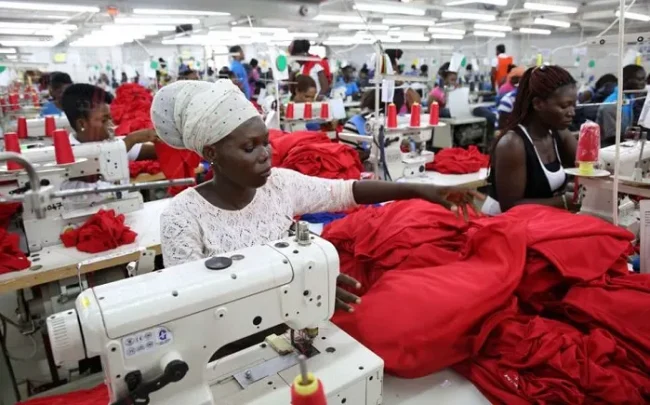
The engine driving Ghana’s economic future doesn’t run on crude oil or gold. It operates in thousands of small shops, digital startups, and family-run manufacturing units scattered across the country’s urban centers and rural communities.
Dr. Andrews Ayiku, who coordinates the MBA Impact Entrepreneurship and Innovation Programme at the University of Professional Studies, Accra (UPSA), argues that Small and Medium Enterprises (SMEs) remain central to achieving inclusive growth and lasting economic resilience. Yet the sector’s potential continues to be hamstrung by policy gaps, limited financing, and uneven access to digital tools.
The numbers paint a striking picture. SMEs make up approximately 90 percent of businesses in Ghana and contribute between 40 and 60 percent of the country’s Gross Domestic Product (GDP), while forming around 80 percent of total employment. Despite this massive footprint, many of these businesses struggle to move beyond survival mode.
“Most SMEs operate below their potential because they lack the right support systems, access to capital, and capacity to compete regionally,” Dr. Ayiku observed. The challenge isn’t just about creating more businesses, it’s about building enterprises that can withstand economic shocks and grow into competitive regional players.
While government and financial institutions have rolled out various support programs, Dr. Ayiku points out that these initiatives often miss the entrepreneurs who need them most. Many operate in the informal sector, where traditional support mechanisms simply don’t reach.
The UPSA lecturer, who coaches hundreds of SME founders each year, sees a recurring pattern. Entrepreneurs bring strong business ideas to the table but frequently lack the managerial and financial skills to transform those concepts into sustainable ventures.
“Entrepreneurship training should not end at the start-up stage,” he stressed. What’s needed instead is continuous coaching across critical areas like bookkeeping, marketing, and digital operations, the unglamorous but essential skills that separate thriving businesses from struggling ones.
Through initiatives like the INSPIRE Project launched with E4Impact Ghana and Africa Entrepreneurship School, UPSA is helping address this gap by providing mentorship, coaching, and practical tools beyond initial funding. Dr. Ayiku argues that tertiary institutions must strengthen industry partnerships to develop training modules grounded in real business challenges rather than purely theoretical frameworks.
Access to credit remains perhaps the most frustrating obstacle. Most Ghanaian SMEs find themselves caught in what Dr. Ayiku calls a “financing trap,” limited collateral and interest rates that can exceed 30 percent annually make affordable loans virtually impossible to secure.
Banks often view small businesses as high-risk propositions, but Dr. Ayiku believes this perception could shift with better data systems and tailored financing products. He points to alternative instruments gaining traction elsewhere: venture funding, revenue-based lending, and digital microfinance solutions that don’t rely on traditional collateral requirements.
Fintech innovations, particularly mobile money platforms and digital bookkeeping tools, could significantly reduce transaction costs for small firms while enabling better credit profiling for lenders. It’s a scenario that remains underexploited in Ghana’s financial landscape.
Digitalization represents what Dr. Ayiku describes as the most powerful transformation tool available to SMEs. But there’s a catch, Ghana’s digital drive must be inclusive.
“Digital tools are no longer optional. SMEs that fail to go digital risk being left behind,” he warned. However, pushing digitalization without addressing skills gaps, infrastructure limitations, and affordability concerns will simply create new forms of exclusion.
Government support for digital literacy programs becomes crucial here, as does expanding reliable broadband coverage beyond major cities. Rural enterprises, in particular, shouldn’t be shut out of the digital economy due to infrastructure neglect.
Dr. Ayiku’s broader critique centers on policy fragmentation. Currently, taxation policies, trade regulations, and skills development programs operate in separate silos across different ministries and agencies. This leads to inefficiency and duplicated efforts.
What SMEs need, he argues, is a unified development framework that creates clear pathways for growth, from micro to small, and from small to medium enterprises. Such a framework would help track progress and direct resources where they’re most needed rather than scattering support across uncoordinated initiatives.
Supporting SMEs transcends pure economic strategy, according to Dr. Ayiku. It’s fundamentally about social inclusion and shared prosperity.
“When SMEs thrive, communities prosper. They create jobs for the youth, empower women, and drive innovation in every corner of the country,” he noted. Ghana’s future competitiveness, he believes, depends on how seriously stakeholders take the SME agenda today.
His call to action extends across the ecosystem, from government policymakers and academic institutions to private sector players and development partners. Building the next generation of sustainable Ghanaian businesses capable of competing globally requires collaborative effort rather than isolated interventions.
The question isn’t whether SMEs matter to Ghana’s economic future. That much is settled. What remains uncertain is whether the country will muster the coordinated policy response needed to unlock their full potential.

