

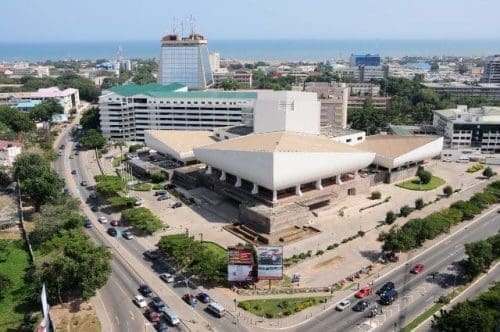
Koldo Casla, the United Nations (UN) expert on the right to adequate housing, begins a 12-day Ghana visit on Monday, 28 September 2026, weeks after the launch of new urban policies.
Casla, the UN Special Rapporteur on the right to adequate housing, will be in the country until 9 October. He is due to visit the Greater Accra metropolitan area, Tamale and surrounding communities, and Cape Coast. He will meet national and local officials, housing professionals, civil society groups, tenants, residents of informal settlements and people who are homeless.
The findings will go on the international record. Casla will present a report to the UN Human Rights Council in March 2027, giving the world an independent account of how Ghana houses its poorest residents. The pressure is building. Works, Housing and Water Resources Minister Kenneth Gilbert Adjei said in January that the deficit exceeds 1.8 million units. More than half of Ghanaians now live in urban areas, and that share is projected to rise above 72 percent by 2050.
New policies under review
The visit comes shortly after the government launched its National Urban Policy and Implementation Plan on 28 July, together with a slum upgrading policy. Casla’s review will show how those plans look from the ground in their first months.
His assessment covers how Ghanaian law protects the right to housing and whether those protections reach residents. It also covers public housing, the cost of private rentals and home purchases, habitability standards, and access to water, sanitation and roads. He will look at how far residents have a say in decisions about where and how they live, and how climate change affects housing.
Affordability at the centre
Price is the sharpest point of dispute. In January, Adjei said Ghana needed coordinated action on both housing supply and affordability, alongside better urban planning. Critics say existing schemes miss the people they are meant to serve.
In March, lawyer Austin Kwabena Brako-Powers argued on GTV that many government “affordable” units are out of reach for ordinary public workers. He said some are priced between US$250,000 and US$1 million.
Independent estimates point to the same gap. The Centre for Affordable Housing Finance in Africa cites World Bank figures putting Ghana’s annual housing need at between 70,000 and 133,000 units. It says about a third of urban residents live in slums and that the market oversupplies luxury homes while low-income housing stays scarce.
Land, building materials and long-term finance all drive up costs. The Bank of Ghana has cut its policy rate from 28 percent in early 2025 to 14 percent, but mortgages remain beyond most low- and middle-income households.
The expert and the timetable
Casla took up the post on 1 May 2026. He is a Senior Lecturer in International Human Rights Law at Essex Law School and succeeded Balakrishnan Rajagopal of India. Special rapporteurs are independent experts and are not UN staff.
He will present preliminary findings at a press conference at the UN Resident Coordinator’s Office in North Ridge, Accra, at 11.30am on 9 October.

