

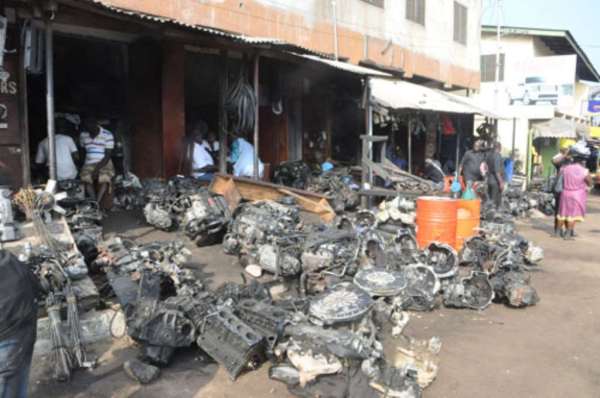
The Abossey Okai Spare Parts Dealers Association launched enforcement action today to remove foreign traders from Ghana’s largest auto parts market, citing longstanding violations of national investment laws.
The association announced it would begin enforcing Ghana’s trade laws against foreigners operating in local markets from Monday, September 8, 2025. Communications Director Takyi Addo confirmed the exercise targets compliance with Section 27(1) of the Ghana Investment Promotion Centre Act, 2013, which prohibits non-citizens from engaging in retail trade, hawking, or market stall operations.
The move represents the culmination of years of frustration among Ghanaian traders who claim foreign competitors have undermined their businesses while operating illegally. The association argues that successive governments have failed to enforce existing laws, creating unfair competition in the retail sector.
“Successive governments have failed to enforce this Act, resulting in a persistent drain on the businesses of Ghanaian traders,” the association stated. “The time has come to uphold the law and protect local enterprise from unlawful competition.”
However, the enforcement action has created confusion within Ghana’s trading community. The Ghana Union of Traders Association (GUTA) categorically denied reports suggesting it would lead the closure of foreign-owned retail shops at Abossey Okai. This distinction highlights tensions between different trader organizations over tactics and leadership in addressing foreign trader issues.
The Abossey Okai association emphasized it supports foreign investment but insists such ventures must comply with Ghanaian law. The group has called on state institutions and stakeholders to support the enforcement exercise to protect indigenous entrepreneurship.
The action occurs against the backdrop of Ghana’s broader economic challenges, with the cedi recently weakening past 11 Ghana cedis to the US dollar, putting additional pressure on local businesses competing with foreign-operated enterprises that may have different cost structures.
Foreign traders affected by the enforcement could face shop closures and potential deportation if found to be operating illegally. The association has not specified how many businesses might be targeted or the timeline for compliance.
The enforcement represents a test case for Ghana’s commitment to protecting sectors designated for citizens under the GIPC Act. Similar laws exist across West Africa, though implementation has been inconsistent across the region.
Industry observers suggest the action could set precedent for trader associations nationwide, potentially affecting foreign-operated businesses in markets beyond Abossey Okai. The outcome may influence government policy on foreign participation in Ghana’s retail sector.

