

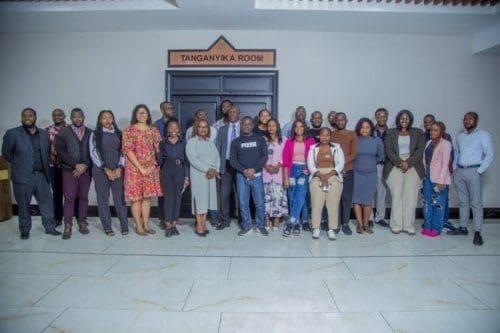
Civil society groups and media professionals from across Eastern and Southern Africa have completed intensive training in Lusaka designed to transform how they use public opinion data for advocacy and news reporting.
The five-day program, organized by Afrobarometer, brought together participants who learned to access and analyze survey data that captures citizen perspectives on governance, economic conditions and social issues across the continent. Twenty-one civil society representatives attended alongside journalists from countries including Ethiopia, Tanzania and Zambia.
For organizations working to influence policy, the training offered new ways to present citizen concerns to government officials. Dominique Dryding, who manages Afrobarometer’s capacity building initiatives, emphasized how the data reflects real experiences of African citizens rather than abstract statistics.
“Civil society organisations can drive meaningful policy dialogues at both national and subnational levels,” Dryding explained, noting that participants learned to amplify citizen voices through evidence-based advocacy campaigns.
Solomon Ngoma, who leads the Action Institute for Policy Analysis Centre in Zambia, called the experience transformative for his organization’s work. The skills gained will directly inform policy analysis, allowing his team to create more effective recommendations backed by solid data.
The journalist participants focused on translating complex survey findings into stories that connect with ordinary readers and viewers. They practiced using Afrobarometer’s online analysis tools to create custom visualizations and learned how nearly three decades of polling data could enrich their reporting.
Firaul Hailu, a reporter for Ethiopia’s Asham TV, said the training completely changed his perspective on the resource. The depth of historical data spanning multiple countries offers unique reference material for news analysis that goes beyond immediate events.
Salome Baptister Kilasi from Tanzania Broadcasting Corporation highlighted the practical value of creating her own data visualizations. She expects the new skills will boost her news segments while adding credibility that audiences value in an era of information overload.
The training comes as media organizations across Africa seek ways to hold leaders accountable through evidence-based reporting. Afrobarometer’s database includes more than 430,000 interviews across 43 countries, representing views from over 75% of Africa’s population.
Major international organizations rely on this data, including credit rating agencies and institutions that produce global governance indices. The information feeds into country risk analyses and helps shape understanding of African public opinion on critical issues.
All datasets remain publicly available through Afrobarometer’s website, where users can conduct free analysis using the organization’s online tools.

