

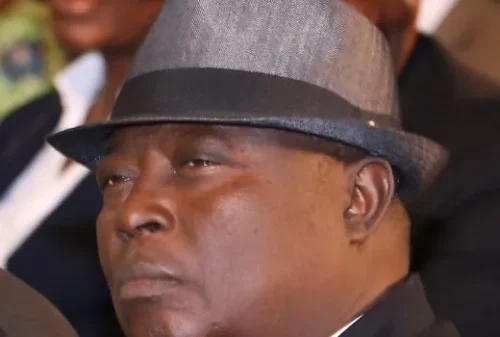
Former Special Prosecutor Martin Amidu on Sunday accused President John Mahama’s government of hiding the domestic side of a bribery case that ended in a US conviction days earlier.
In a signed statement, Amidu, Ghana’s first Special Prosecutor, said it was “insulting to the intelligence of the electorate” for the Attorney-General’s office to only now disclose cooperation with US authorities on the case, more than a decade after the underlying conduct occurred.
A federal jury in Brooklyn convicted Asante Kwaku Berko, a dual US-Ghanaian citizen and former Goldman Sachs banker, on August 6 of conspiring to violate the Foreign Corrupt Practices Act and conspiring to commit money laundering. Prosecutors said Berko funnelled more than $1 million in bribes to Ghanaian officials between 2014 and 2017 to help a Turkish company, Aksa Enerji, win a power plant contract. He faces up to 30 years in prison and is scheduled for sentencing on November 10.
Two days after the verdict, Deputy Attorney-General Justice Srem-Sai said the Attorney-General was working with US counterparts to pursue Ghanaians implicated in the scheme. Ghana’s Office of the Special Prosecutor (OSP) separately confirmed it had supplied evidence to the FBI through a mutual legal assistance arrangement.
Amidu said that response came too late. He wrote that he personally ordered a preliminary investigation into the case in April 2020, as Special Prosecutor, after the US Securities and Exchange Commission filed a civil complaint accusing Berko of the bribery scheme. According to Amidu, the OSP kept the file open under his successors but the case later dropped off the office’s published list of active investigations, with no public prosecution of any Ghanaian official ever brought.
The 2020 SEC complaint, which Amidu cited in his statement, described up to $4.5 million routed through a Ghanaian intermediary company to unnamed officials referred to only as “Government Official 1” and “Government Official 2,” along with a person the complaint identified as a close relative of a senior Ghanaian official at the time. Neither the complaint nor Amidu’s statement named these individuals.
Amidu also pointed to what he called uneven use of prosecutorial power under the current government, contrasting an ongoing case against an opposition regional official with the recent acquittal of a former state agency head whose appeal had sat unheard for nearly two years. He offered those cases as evidence of political selectivity rather than consistent anti-corruption enforcement.
Neither the Attorney-General’s office nor the presidency had issued a public response to Amidu’s specific claims by the time of publication.

