

Government operations against illegal mining follow strict legal protocols and aren’t targeting specific political figures, according to a senior Forestry Commission official who has witnessed firsthand the dangerous spiritual networks protecting galamsey kingpins.
Elikem Kotoko, Deputy Chief Executive of the Forestry Commission, rejected claims that renewed enforcement efforts deliberately single out Ashanti Regional New Patriotic Party (NPP) Chairman Bernard Antwi-Boasiako, widely known as Chairman Wontumi. The politician faces prosecution over alleged involvement through his Akonta Mining firm, with Attorney-General Dr. Dominic Ayine directing him to report for charges on October 6, 2025.
Speaking on Prime Insight on Joy Prime, Kotoko explained that investigations focus on real environmental threats rather than political personalities, though he acknowledged Wontumi’s public profile naturally draws attention. The operations reveal a far more complex challenge than simply shutting down illegal mining sites.
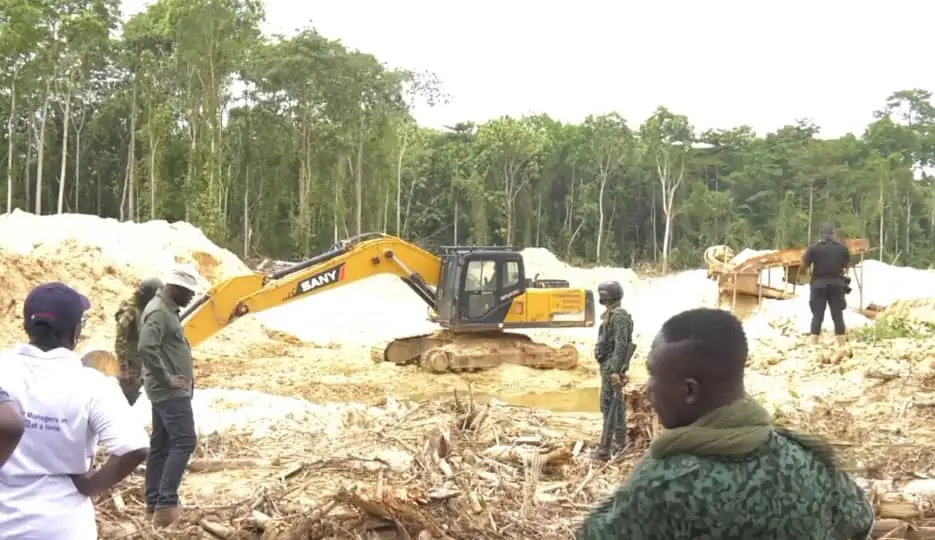
“I was part of the team that moved to Samreboi on that day, and if you see what happened there—I’m a father, I’m a parent. When I see these things happen, I worry not even because of the people but because of myself and my family,” he said, describing conditions at one operation site.
His comments come as Ghana intensifies efforts against illegal mining. The government has successfully reclaimed all nine red-zone forest reserves previously degraded by galamsey activities, repossessing over 5,500 hectares of forest land equivalent to 7,500 football fields, according to recent reports from the Lands Minister.
Kotoko’s revelations about the operations, however, suggest the fight extends beyond physical reclamation. Illegal mining networks employ sophisticated spiritual tactics to ensure loyalty among workers, making investigations particularly challenging. Gold mining communities harbor deep-rooted beliefs about the metal’s mystical properties, which kingpins exploit to bind workers through fear and obligation.
“There’s a whole lot of myth surrounding gold. It’s a spirit, it grows, this and that. So when these kingpins employ these small boys into the whole enterprise, they make them take all manner of vows and blood covenants,” Kotoko explained. These practices create barriers that standard law enforcement struggles to penetrate.
Workers bound by such oaths refuse to cooperate even under severe pressure. “Catch him, try to cut even his throat, he won’t want to disclose,” he added, illustrating the intensity of these spiritual commitments. This reality forces authorities to adopt more patient, methodical approaches rather than aggressive raids that might temporarily disrupt operations without dismantling networks.
Current anti-galamsey efforts prioritize careful surveillance over dramatic interventions, the Forestry Commission official disclosed. Teams track suspected operators systematically, building comprehensive evidence before taking action. This approach aims to address entire networks rather than individual sites that simply relocate after raids.
“One of the things we’re doing now is monitoring some of them, so that we can finally trace who and where they actually engage in this enterprise. If we don’t do these things, we’ll only be deceiving ourselves,” Kotoko stated. The strategy acknowledges that hasty enforcement often proves counterproductive, driving operations deeper underground without addressing root causes.
Even presidential decisions on illegal mining must follow established procedures to withstand future legal scrutiny, he emphasized. Constitutional executive powers don’t exempt leaders from accountability for how they exercise authority.
“You can take a decision as President to press this button, but when you leave office, you’ll be queried as to whether you took that action properly. Yes, the Constitution gives executive powers, but there are still standard protocols to go through before doing so,” Kotoko explained. This reality shapes how aggressively authorities can move against suspected operators.
Bypassing proper procedures creates legal vulnerabilities regardless of good intentions. “If you don’t go through those protocols, you’ll be found culpable with the law, even though you think you’ve executed a mandate given by the Constitution,” he added. Whether acting on or against advice from the national security council, executives must document sound reasoning for their decisions.
The Forestry Commission maintains its operations target systemic problems rather than personalities, though high-profile cases inevitably attract public attention. Dr. Ayine revealed that the case against Wontumi had been delayed because investigation dockets from 2022 were concealed under the previous administration.
The government revoked Akonta Mining’s license in April 2025 after discovering the company was engaging in galamsey operations inside the Aboi and Tano Nimiri Forest Reserves in the Western North Region, despite being licensed to operate outside those reserves.
Kotoko’s revelations about spiritual networks and legal constraints help explain why Ghana’s anti-galamsey campaigns have struggled despite multiple government commitments. The combination of deeply entrenched cultural practices, sophisticated evasion tactics, and rigid legal requirements creates obstacles that simple enforcement can’t overcome.
Previous administrations’ approaches failed partly because they didn’t account for these realities, according to recent assessments from forestry officials. Effective solutions require understanding both the environmental devastation and the complex human systems sustaining illegal operations.
The government now balances urgent environmental protection needs against legal sustainability, hoping methodical approaches will succeed where aggressive campaigns faltered. Whether this strategy proves more effective remains to be seen, but officials argue it represents lessons learned from past failures that prioritized dramatic action over sustainable results.

