

The Member of Parliament for Jomoro in the Western Region, Dorcas Affo-Toffey, has engaged the Paramount Chief of the Western Nzema Traditional Area, Awulae Kwasi Amachie, together with prospective investors exploring plans to establish a coconut processing factory in the Jomoro Municipality.
The engagement forms part of efforts to attract strategic investments that can harness the economic potential of the area’s coconut industry while creating sustainable opportunities for residents.
During the meeting, the Jomoro MP, who is also the Deputy Transport Minister, highlighted the significant potential of coconut production in the area and the need to move beyond the export of raw agricultural produce by promoting local processing and value addition.
She noted that the proposed factory could provide a major boost to the local economy by creating jobs for young people, expanding markets for coconut farmers and improving livelihoods across communities in Jomoro.
The proposed investment is also expected to empower local farmers by providing a ready market for their produce, while supporting the development of a more integrated coconut value chain within the municipality.
Engagement with the traditional leadership was considered important in exploring how the investment could align with the development priorities and aspirations of the people of the Western Nzema Traditional Area.
The prospective investors are currently exploring the feasibility of establishing the processing facility, which could potentially transform locally produced coconuts into higher-value products for both domestic and international markets.
For Jomoro, which has considerable agricultural potential, the establishment of a coconut processing factory could represent an important step towards industrialisation, economic diversification and local value creation.
The MP reaffirmed her commitment to supporting initiatives capable of attracting responsible investment to Jomoro and creating sustainable economic opportunities for constituents.
She stressed the importance of collaboration among traditional authorities, investors, farmers, government institutions and other stakeholders to ensure that major investments deliver meaningful and lasting benefits to local communities.
The proposed project, if successfully realised, could also contribute to strengthening the local agricultural sector, reducing post-harvest losses and positioning Jomoro as an important hub for coconut processing and related industries.
The engagement with Awulae Kwasi Amachie and the prospective investors therefore marks an important step in exploring the potential of the project and building the necessary partnerships for its successful implementation.
The initiative reflects the broader vision of leveraging Jomoro’s natural and agricultural resources to create jobs, promote local enterprise and unlock new economic opportunities for the people of the municipality.
Dorcas Affo-Toffey engages Nzema chief over coconut factory plan

GICC B2B Programme Promotes Trade, Technology Transfer And Industrial Growth

The Ghana-India Chamber of Commerce (GICC) says its ongoing Ghana-India Business-to-Business (B2B) Programme is designed not only to facilitate trade between the two countries but also to promote technology and knowledge transfer as Ghana pursues its industrialisation agenda.
According to the Director of Protocol of the Ghana-India Chamber of Commerce, Mr. Victor Yao Nyakey, the two-day buyer-seller engagement provides a platform for Ghanaian businesses to interact directly with Indian manufacturers and suppliers while exploring opportunities for long-term commercial partnerships.
Speaking in an interview on the sidelines of the second day of the programme on Tuesday, October 6, Mr. Nyakey explained that the initiative was deliberately structured to connect Ghanaian businesses with their Indian counterparts.
“The programme is called the Ghana-India B2B Programme. B2B simply means business-to-business. It is designed to bring Ghanaian businesses together to meet with their Indian counterparts,” he said.
He noted that the Ghanaian participants comprise buyers and importers seeking opportunities in the Indian market, while the Indian delegation consists of manufacturers and suppliers looking to introduce Made-in-India products to Ghana and the broader African market.
Mr. Nyakey described the event as a buyer-seller forum that enables businesses from both countries to identify products, suppliers, and potential commercial partners.
Mr. Nyakey explained that the programme was organised by the Ghana-India Chamber of Commerce in collaboration with the Federation of Indian Export Organisations (FIEO).
He noted that FIEO, established under India’s Ministry of Commerce, plays a key role in supporting exporters and ensuring compliance with international trade requirements.
According to him, this partnership is particularly important for Ghanaian businesses seeking reliable suppliers and quality products from India.
“On the part of Ghana, we are making sure that Ghanaians get access to the right suppliers and the right products that they can source from India,” he said.
He added that the collaboration is intended to build confidence among Ghanaian businesses while facilitating access to credible Indian manufacturers and suppliers.
Beyond trade and investment, Mr. Nyakey identified technology and knowledge transfer as one of the programme’s most significant objectives.
He said Ghana’s drive to enhance local production and develop competitive industries requires collaboration with countries such as India, which have established strong manufacturing and industrial capabilities.
“The programme is also intended to serve as a platform for Ghana and India to strengthen their partnership in economic development, particularly in the areas of technology transfer, knowledge transfer and other sectors from which both countries can benefit,” he said.
He emphasised that Ghana’s industrialisation agenda aims to increase domestic production and reduce dependence on imports.
“As you know, the Government of Ghana is currently supporting economic development through industrialisation,” he stated.
Mr. Nyakey noted that as more Ghanaian companies enter the manufacturing sector, there is a growing need to learn from experienced industrial economies.
“We can manufacture things on our own and move from consumption to production. However, to achieve this, we must learn from advanced economies such as India and understand how they manufacture and produce these goods,” he said.
He added that the expertise and experience gained through such engagements could be adapted to support local industrial development.
Mr. Nyakey disclosed that the opening day of the programme brought together senior representatives from both countries, including India’s High Commissioner to Ghana, H.E. Surinder Bhagat.
According to him, the High Commissioner encouraged businesses from Ghana and India to deepen economic cooperation and pursue partnerships that create mutual prosperity.
The event also featured the Chief Executive Officer of the Ghana Investment Promotion Centre (GIPC), Mr. Simon Madjie, who highlighted Ghana’s investment opportunities and encouraged Indian businesses to increase their investments in Ghana and across Africa.
Mr. Nyakey said the presentation underscored opportunities arising from Ghana’s economic transformation and industrial development agenda, as well as the significant role Indian investors could play in that process.
Mr. Nyakey also highlighted remarks delivered by the President of the Ghana-India Chamber of Commerce, Dr. Kwabena E. Ekremet, who challenged participating businesses to take greater responsibility for developing and strengthening their enterprises.
According to him, Dr. Ekremet urged entrepreneurs not to remain passive but to build resilient and competitive businesses capable of attracting support from financial institutions and public-sector agencies.
He stressed that businesses must strengthen their operations and enhance their viability in order to qualify for financing and other forms of institutional support.
The programme further featured Mr. Manish Sharma, Joint Director of the Federation of Indian Export Organisations, who spoke about opportunities to deepen Ghana-India relations through greater participation of Indian businesses in Ghana’s economy.
Mr. Sharma encouraged Ghanaian companies to engage actively with Indian firms participating in the programme, understand their offerings and requirements, and explore potential partnership opportunities.
Mr. Nyakey described the two-day programme as successful and expressed optimism that it would lead to stronger business relationships and future engagements between companies from Ghana and India.
He stressed that the conclusion of the current programme should not mark the end of the relationship-building process but should instead serve as a foundation for expanded trade, investment and industrial cooperation.
According to him, the Ghana-India B2B Programme offers businesses from both countries an opportunity to move beyond traditional trading relationships and establish partnerships that support industrialisation, technology transfer, knowledge exchange and sustainable economic growth.
As Ghana seeks to strengthen domestic production and build globally competitive industries, the Ghana-India Chamber of Commerce believes closer cooperation with Indian manufacturers and businesses can provide local enterprises with access to the technology, expertise, products and knowledge required to drive that transformation.
Rival GH Brings Smooth, Sexy Energy To The Dancefloor With “Go Low”

Following the high-energy momentum of energy, the new track GO LOW by RLL Entertainment artiste, Rival GH arrives with a different kind of fire.
Built for the dancefloor, the song leans into a smoother, sexier and more groove-driven sound, creating the kind of rhythm that grabs your body before your mind has time to catch up.
According to the artiste, Go Low which features Aeko was created with one clear purpose and that is to make people move. “Go Low is pure energy. I made it for the dancefloor, for the girls who know how to move, for the party that never ends,” the artiste explains.
The production which was done by Brytbeatz and mixed by Smuchiz allows the groove to breathe, giving the beat a smooth quality that makes it easy to settle into.
GO LOW’s beat is designed to trigger an instinctive reaction. The kind where you hear the rhythm and immediately find yourself moving. You should also know that this is a clear Afrobeats/Amapiano/Afrofusion song for your listening pleasure.
The track also taps into the energy of women who own the dancefloor with confidence. With its smooth and sexy character, Go Low celebrates self-expression, movement and having a good time without overthinking the moment.
It is the soundtrack for the girl who knows the beat, knows the vibe and knows exactly how to move when her favourite song comes on. You should make it top of your playlist. Listen to it here https://ditto.fm/go-low-rival-gh
Apostle Collins Obeng-Agyare Launches Three Powerful Books in Seattle

Apostle Collins Obeng-Agyare, Christian leader, author and leadership coach, has launched three inspirational books in Seattle, Washington, including two new titles, The Mystery of a Name and The Complete Helmet, together with his earlier publication, Born a Leader.
The book launch, held on October 3, 2026, brought together pastors, church leaders, family members, friends and supporters to celebrate the author’s contribution to Christian literature, leadership development and spiritual growth.
The Mystery of a Name explores the spiritual and personal significance of names and identity. The book encourages readers to reject negative labels and embrace the identity, purpose and potential God has placed within them.
The Complete Helmet focuses on salvation and practical evangelism. The book presents salvation in a clear and understandable way and provides believers with a step-by-step approach to sharing the Gospel with others. Apostle Obeng-Agyare seeks to make evangelism simple, practical and accessible so that ordinary believers can confidently explain the message of salvation and lead others toward faith in Jesus Christ.
Rather than presenting evangelism as a responsibility reserved only for pastors or trained ministers, The Complete Helmet encourages every believer to understand the Gospel personally and become equipped to communicate it effectively.
His earlier book, Born a Leader, focuses on leadership, purpose, character and personal development. It encourages readers, particularly emerging leaders and young people, to recognize their potential and develop the qualities needed to positively influence others.
Speaking through his writings, Apostle Obeng-Agyare emphasizes that leadership is not merely about holding a position, but about discovering purpose, building character and making a meaningful impact.
The three books collectively address important areas of Christian and personal development: identity, salvation, evangelism and leadership.
Apostle Collins Obeng-Agyare is involved in Christian ministry, education and leadership development and is the founder of Christian Leadership Net-Work. He also serves in ministry through The Directed Path Chapel.
The Seattle book launch represents another milestone in his work as an author and Christian leader, as he continues to use teaching and writing to inspire people to discover their identity, understand salvation, share their faith and develop their leadership potential.
Community bank manager in court over alleged GH¢1m theft

The branch manager of Oyibi Area Community Bank PLC has pleaded not guilty at the Adentan Circuit Court to stealing GH¢1 million from the bank.
Adjetey Isaac Noi, 28, is charged with stealing. The prosecution says he moved the money through a dormant customer account that he had reactivated.
Presenting the facts, Chief Inspector Maxwell Lanyo said the complaint was brought by the Head of Audit and Inspection at ARB Apex Bank PLC, the umbrella bank for Ghana’s rural and community banks. He said an audit team visited the Oyibi branch on 28 September 2026 after receiving intelligence that fraudulent transactions were taking place there.
According to the prosecution, the auditors found that GH¢1 million had been transferred from the bank’s internal account into a customer account at the same bank. The audit team informed the bank’s head office, which directed that the matter be reported to the police.
The prosecution alleges that Noi reactivated the dormant account without the account holder’s consent and used it to pass the money on to accounts at other banks. It says he could not give a satisfactory explanation for the transfers when questioned by police. These allegations have not been tested at trial.
Defence counsel applied for bail, arguing that Noi was not a flight risk because he has a fixed address in Dodowa in the Greater Accra Region. The court, presided over by Angela Attachie, granted him bail of GH¢1 million with two sureties, who must justify it with landed property.
The case was adjourned to 17 February 2027.
WFP strongly condemns attack on trucks in South Kordofan, killing one driver
The United Nations World Food Programme (WFP) strongly condemns an aerial attack that hit two contracted trucks carrying WFP food commodities in South Kordofan in the early hours of Saturday, 3 October 2026.
One driver was killed in the air strike. We extend our deepest condolences to his family, friends and colleagues.
The contracted trucks were en route from Dilling to Kadugli and clearly marked as humanitarian vehicles. Additional details regarding the circumstances of the incident, including the extent of the damage to the food cargo, are still being collected.
WFP calls for a prompt and impartial investigation into this incident and for those responsible for any violations to be held accountable.
This latest attack comes only one day after a WFP truck struck an explosive device in Dilling, South Kordofan, after delivering lifesaving food assistance.
WFP urges all those involved in the hostilities to respect their obligations under international humanitarian law, protect civilians and civilian infrastructure, and ensure the safe and unimpeded movement of humanitarian personnel and cargo.
These incidents underscore the increasingly challenging security environment in Sudan and the risks that aid workers face when delivering life-saving assistance to communities in need. WFP remains committed to safely delivering life-saving assistance to millions of women, men, and children who depend on humanitarian support across Sudan.
Supreme Court explains rejection of Oppong Nkrumah vacation bid
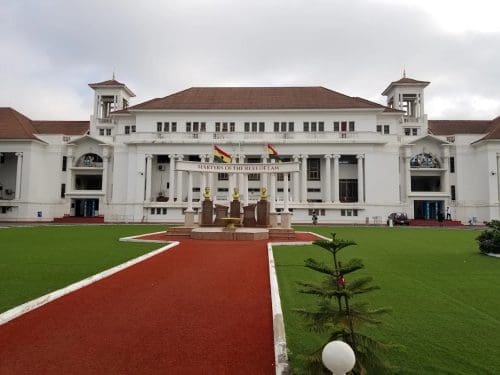
The Supreme Court has set out why it refused to halt criminal trials during the legal vacation, with one justice writing that vacation warrants do not compel judges to proceed.
The court’s full reasons concern an application by Kojo Oppong Nkrumah, the former Information Minister and Member of Parliament for Ofoase-Ayirebi. A panel presided over by Justice Emmanuel Yonny Kulendi, sitting with Justices Richard Adjei-Frimpong and Gbiel Simon Suurbaareh, unanimously dismissed the application on 2 September 2026. The account of the reasoning below is taken from the full judgment as reported by The High Street Journal.
A warrant is not an instruction
In a concurring opinion, Justice Adjei-Frimpong said a warrant from the Chief Justice gives a judge authority to sit during the vacation and nothing more. Once a judge is sitting, he wrote, the conduct of a case is governed by Article 140(4) of the Constitution and the rules of court. Whether to adjourn a trial remains the trial judge’s own discretion, to be exercised as justice requires in each case.
He addressed the view, held by some judges, that their warrants required them to keep hearing cases until the warrants were revoked. Among the judges the Chief Justice authorised to sit as additional High Court judges were Justices Francis Apongabuno Achibonga and Charity Akosua Asem.
Attorney-General can represent the Chief Justice
The court rejected Oppong Nkrumah’s argument that the Attorney-General could not represent the Chief Justice in a case challenging the Chief Justice’s own administrative decisions. It held that the Chief Justice’s position as head of an independent arm of government does not, on its own, rule out such representation.
The court added that this is not an absolute rule. Representation must be refused where there is a conflict of interest or a threat to judicial independence, and each case must be judged on its facts. Here, it found that Oppong Nkrumah had shown neither. When he dismissed the original injunction application, Justice Gabriel Scott Pwamang had relied on the earlier case of Republic v Tsatsu Tsikata on the same point.
Why the review failed
The panel said its review power under Article 134(b) of the Constitution is reserved for exceptional circumstances that risk a miscarriage of justice, and is not a chance to reargue a lost application. It rejected the claim that Justice Pwamang had prejudged the main case. To decide whether there is a strong case of illegality, it said, a judge must look at the substance of the allegations at a preliminary level, without reaching final conclusions.
The court found that Oppong Nkrumah had not shown a real risk of irreparable harm, since declarations could still address any wrong if the main action succeeded. It said the public interest in deciding criminal cases quickly outweighed his arguments.
The case so far
Oppong Nkrumah filed his suit on 14 August 2026. He argues that warrants allowing selected judges to hear particular criminal cases during the vacation, which ran from 1 August to 30 September, amount to selective justice and breach Articles 17, 23, 24, 36(10) and 296 of the Constitution. Justice Pwamang, sitting alone, refused his injunction on 21 August.
Frank Davies represents Oppong Nkrumah. Deputy Attorney-General Dr Justice Srem-Sai appeared for the Attorney-General and the Chief Justice.
The ruling does not decide the main constitutional challenge, which remains pending before the Supreme Court.
UK-Ghana trade passes £1.6bn as summit seeks investment push
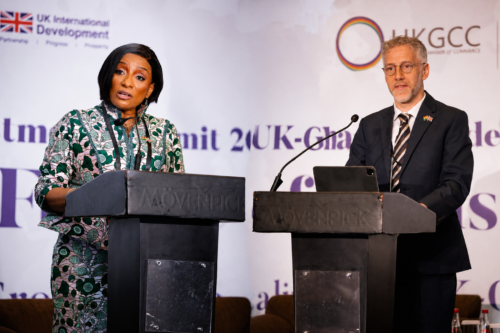
Trade between the United Kingdom and Ghana is worth about £1.6 billion a year, but officials from both countries say the real test of the relationship is the jobs and investment it creates.
Alastair Long, His Majesty’s Trade Commissioner for Africa, made that case at the UK-Ghana Chamber of Commerce’s (UKGCC) Trade and Investment Summit 2026. “What matters is what sits behind those numbers,” he said, pointing to the businesses, investment and livelihoods that trade supports. He said Ghanaian mangoes and bananas were already reaching British shoppers, and that future ties would lean more on technology, services, agriculture and investment.
The headline figure is not new. UK Department for Business and Trade data published in August 2025 already put two-way trade in goods and services at £1.6 billion, a rise of 2.4 per cent. When the two countries signed a new Growth Partnership in June 2026, the UK government said trade had grown 12.5 per cent since 2024, to around £1.6 billion.
Deputy Trade, Agribusiness and Industry Minister Sampson Ahi, speaking for Vice President Professor Jane Naana Opoku-Agyemang, pitched Ghana to investors as stable and predictable. He said the economy grew 6 per cent in 2025, a figure the World Bank’s latest data also show, and 6.4 per cent in the first quarter of 2026.
Ahi said UK foreign direct investment in Ghana had reached £1.8 billion across more than 670 projects, creating over 44,000 jobs. The UK government’s own data use a different measure, the total stock of UK investment in Ghana, and put it at £2.8 billion in 2023.
Ghana’s High Commissioner to the UK and Ireland, Sabah Zita Benson, said the next decade should be judged by businesses created, jobs generated and technology transferred, not trade volumes alone. She pointed to Ghana’s role as host of the African Continental Free Trade Area (AfCFTA) Secretariat as a gateway for UK firms to wider African markets. She also urged more support for small businesses and called on Ghanaians in the UK to invest at home.
UKGCC Executive Director Adjoba Kyiamah said the chamber, now in its 10th year, wants the three-day summit to turn the Growth Partnership into private investment. She said trade should run both ways, with Ghanaian firms using the UK to raise capital and reach global markets.
The Growth Partnership runs from 2026 to 2028. Its flagship project is a £101 million investment in what the two governments describe as the first commercial-scale ship repair and dry-docking facility in the Gulf of Guinea.
AI threatens few African jobs now, but connectivity limits gains

Artificial intelligence (AI) puts only 2.6 per cent of jobs in Sub-Saharan Africa at near-term risk of automation, against 14.2 per cent in high-income economies, the World Bank said on 6 October 2026.
The finding, from the October 2026 Africa Economic Update, reflects the shape of the region’s workforce. Most people work in agriculture, informal services or manual jobs, so AI’s first impact is more likely to come from helping workers do their jobs better than from replacing them. The Bank estimates that 15.2 per cent of jobs could gain from that kind of support.
That gain depends on people being online. In Mali, only 1.2 per cent of workers are both in jobs that AI could affect and able to access it. Across the continent, about 900 million people remain offline.
Uneven take-up
Use of generative AI, the tools that produce text and images, varies widely. In the first quarter of 2026, the share of working-age adults using it ranged from 7.2 per cent in Rwanda to 23.1 per cent in South Africa, and 16 countries were below 10 per cent. Among larger firms, 44 per cent in Kenya and Nigeria used AI, compared with 61 per cent in the United States. The Bank says most African use is still shallow.
Governments lag further behind. Of the public-sector AI systems the Bank identified through procurement records, 90.8 per cent supported internal back-office work and only 1.4 per cent used generative AI. In a 15-country survey, nine countries described both their back-office and citizen-facing use of AI as basic. Only three of the 15 national digital agencies gave civil servants enterprise licences for generative AI tools.
Cheap tools first
The Bank argues that Africa’s best near-term opportunity lies in adapting low-cost, practical tools rather than building frontier models. It cites Kenya’s M-Shule, which improved early literacy, and Darli AI from the Ghanaian agritech firm Farmerline, which reached 110,000 farmers in more than 27 languages within eight months. The Bank adds the caveat that these are reach figures, not independently evaluated measures of impact.
Cost remains a barrier. A basic mobile data package costs about twice the United Nations affordability target of 2 per cent of average monthly income. An entry-level internet-enabled handset costs the poorest fifth of the population about three-quarters of a month’s income.
How widely the gains are shared matters a great deal. Simulations using Ghanaian household data found that broadly shared productivity gains could lift three times as many people out of poverty as gains confined to early adopters.
Rules exist, capacity lags
The region has made progress on paper. Thirty-nine countries have data protection laws and 45 have cybersecurity legislation. Even so, Sub-Saharan Africa averages 41.6 out of 100 on the governance pillar of the Oxford Insights AI readiness index, against a global average of 52.6, with country scores ranging from 2.25 to 78.75. The Bank says the main challenge is now putting existing frameworks into practice, not drafting new ones.
Most countries are too small to carry the high fixed costs of computing power, data centres and specialist talent on their own. The Bank points to the African Union and the African Continental Free Trade Area (AfCFTA) as ways to pool that investment across borders.
Third Ghana AI Summit set for Accra in March 2027
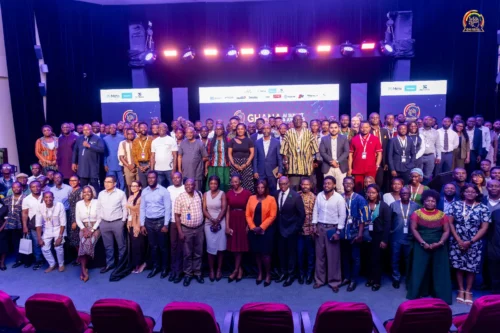
The third Ghana AI Summit and Awards will take place in Accra on 30 and 31 March 2027, with organisers aiming to move the technology beyond experimentation.
The event is organised by Data Nyansa with partners including Deloitte Ghana. It will run under the theme “The Intelligent Future: People. Policy. Profit. Progress.” and falls in the same month as Ghana’s 70th independence anniversary. Dr Kwami Ahiabenu, the summit’s chair, said organisers want to help build Ghana’s future rather than simply discuss artificial intelligence (AI).
The first day will be a practical workshop for executives, professionals, entrepreneurs and policymakers on how to apply AI in their organisations and work. The main conference on 31 March will cover economic growth, entrepreneurship, workforce readiness, ethics and regulation, and the use of AI in the public sector, health, agriculture and environmental sustainability. An African AI Roundtable will bring in participants from across the continent. The programme also includes the Ghana AI Awards 2027, a National AI Challenge and a call for research papers, with selected papers to be published in the conference proceedings.
The summit comes as fresh data highlight both Ghana’s progress and the gaps it faces. The World Bank’s Africa Economic Update, released on 6 October 2026, found that the number of Ghanaian developers registered on the coding platform GitHub has grown nearly eightfold since 2020. Among Africa’s ten largest developer hubs, Ghana ranked second only to Rwanda for the share of its cross-border coding collaboration done with other African countries, at 34 per cent in 2025.
The same report warned that Africa holds just 0.6 per cent of global data centre capacity and that only about 5 per cent of African data centres are ready for AI workloads. World Bank simulations using Ghanaian household data found that if AI’s benefits are widely shared, they could lift three times as many people out of poverty as when the gains go only to those already able to use the technology.
Registration, programme details and the call for papers are available on the summit’s website, ghanaaisummit.com.
