Free PMI Course Targets Business Skills Gap Among African Creators

0

Six in 10 African creators earn under US$100 a month, and the Project Management Institute (PMI) has launched a free online course aimed at the business side.

The course is for founders, side hustle creators, solopreneurs and small teams, and PMI says no formal business or project management background is required. The timing matters for creators who have audiences but little income. The Africa Creator Economy Report 2.0, published by Communiqué and TM Global at the Africa Creators Summit in Lagos in January 2026, values the sector at about US$3 billion today and projects US$17.84 billion by 2030. Only 4.2 percent of the creators it surveyed have received institutional investment.

Brand sponsorships are the biggest earner, cited as the main income source by 28.3 percent of creators in the report. That arrangement carries a cash flow risk. A creator may have to pay an editor or hire equipment before a brand pays, and PMI says its modules on financial readiness and cash flow address that gap.

“These findings show why creators need support with the business behind their content,” said George Asamani, PMI’s regional managing director.

PMI says the course covers eight areas, including financial planning, organising and sequencing work, testing ideas with customers, measuring what sells and planning for growth. Learners get templates, reflection exercises, insights from experienced founders and AI prompts. The course takes about five hours and carries five professional development units, according to PMI’s course page.

PMI’s announcement also cites African Development Bank estimates that 10 to 12 million young Africans enter the labour market each year while only about three million formal jobs are created.

Entrepreneurs can enrol through PMI’s website.
BoG to tighten credit rules as bank lending jumps 35.5%

0

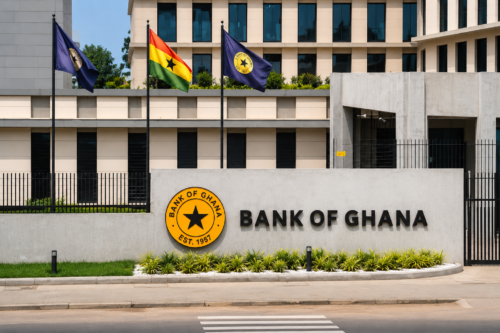
The Bank of Ghana (BoG) will issue a new credit risk directive, Governor Dr Johnson Pandit Asiama said on 6 October 2026, after private-sector lending grew 35.5 per cent.

He made the announcement at the central bank’s post-Monetary Policy Committee meeting with heads of banks at Bank Square in Accra. The directive will cover the whole lending cycle, from how loans are originated and administered to how they are monitored, measured and recovered. It will complement the non-performing loans notice the BoG issued last year.

The move strikes a balance the central bank has been signalling for weeks. It wants banks to lend more, but not to repeat the bad-loan build-up that has long weighed on the sector. At the MPC press conference in late September, Asiama said the current pace of credit growth was not inflationary because lending was expanding from a very low base, and that the BoG would like to see even more credit to the private sector. Speaking to the banks this time, he stressed that rapid growth must rest on sound underwriting and effective risk management.

The lending rebound has been sharp. Private-sector credit grew 35.5 per cent in the year to August 2026, against 13.3 per cent a year earlier. After adjusting for inflation, growth was 29.0 per cent, up from 1.7 per cent. The stock of private-sector credit rose to GH¢123.3 billion from GH¢91.0 billion.

Cheaper money is a major driver. The banking sector’s average lending rate fell to 15.9 per cent in August from 24.2 per cent a year earlier. Asiama attributed the rebound to that decline, an easing in banks’ credit stance and a recovery in borrowers’ demand.

The banks enter this phase in stronger shape than a few years ago. Industry assets rose 20.5 per cent to GH¢500.2 billion in August, and the capital adequacy ratio improved to 19.1 per cent from 18.3 per cent. But Asiama said that although the sector’s non-performing loan ratio has fallen significantly, it remains high relative to regulatory thresholds, and he told banks to comply fully with the NPL guidelines.

The BoG is also preparing a liquidity coverage ratio directive, which will require banks to hold enough high-quality liquid assets to withstand severe liquidity stress over 30 days. It is discussing the results of its macroprudential stress tests with each bank and has urged lenders to fix the weaknesses identified.

Beyond credit and liquidity, the central bank said it will require banks’ fraud officers to have direct access to their chief executives, merge its foreign exchange operational notices into a single framework, and tighten expectations on cybersecurity, safeguarding customer funds and third-party risks as digital finance grows. It is also developing guidance on the responsible use of artificial intelligence in financial services.

“Resilience, prudence and innovation must remain at the centre of our collective agenda,” Asiama told the bank chiefs.

The MPC held its policy rate at 14 per cent in September. The BoG has not said when the new credit and liquidity directives will take effect.

Ghana workplace injury claims hit GH¢34.25m in 2025

0

Finalised workplace injury compensation claims in Ghana totalled GH¢34.25 million in 2025, the Labour Department said, with a further GH¢28.56 million settled in the first half of 2026.

Francis Bibuksi, Assistant Chief Labour Officer at the Labour Department, disclosed the figures at the first Labour Regulators Dialogue, organised by the Ghana Employers’ Association (GEA) in Accra. He said 1,382 workplace accidents were reported in 2025, and 521 by June 2026.

The figures put a price on workplace safety failures that employers often treat as a compliance issue. Payouts settled in the first six months of this year already equal more than four-fifths of last year’s total.

Manufacturing recorded the most reported accidents in 2025, with 618 cases, almost 45 per cent of the total. Community, social and personal services followed with 236, and construction with 96.

The numbers count only accidents reported to the Labour Department, and they have moved sharply over the past decade. In 2017, the department said 2,697 workplace accidents had been reported in 2015 and 1,096 in 2016.

Bibuksi explained that the Workmen’s Compensation Act, 1987 (PNDCL 187) entitles workers to monetary compensation for injuries or occupational diseases suffered in the course of their employment. He said prompt reporting by employers was critical to ensuring that injured workers receive the protection the law provides. Beyond handling accident reports and compensation, he said, the department inspects workplaces and advises employers and workers on conditions of work, hours, wages and occupational safety and health.

GEA Chief Executive Alex Frimpong urged businesses to familiarise themselves with the laws on labour relations, occupational safety and health, working conditions and social security, warning that non-compliance could bring financial, operational and reputational consequences. He called for closer professional links between regulators and employers to share knowledge and improve workplace practice.

Under Section 120 of the Labour Act, 2003 (Act 651), employers must report a workplace accident to the nearest labour office within seven days.

MTN climbs to 133rd in Forbes World’s Best Employers ranking

MTN Group rose 33 places to 133rd in Forbes’ World’s Best Employers 2026 list, keeping its spot as the world’s third-ranked telecommunications employer, the company said on 6 October.

The Johannesburg-based operator has now appeared on the list for six consecutive years and has climbed steadily. It ranked 394th in 2023, 267th in 2024 and 166th in 2025.

The result puts MTN fifth among African companies and first outside financial services, in a list where South African banks dominate the continent’s entries. Nedbank was Africa’s highest-ranked employer at 26th, followed by Standard Bank Group at 54th, Absa Group at 98th and FirstRand at 104th. Nigeria’s Guaranty Trust Bank placed 277th. No Ghanaian company featured among the 900 employers ranked.

Forbes compiled the seventh edition of the list with market research firm Statista, surveying more than 300,000 employees in more than 50 countries at multinationals with over 1,000 staff. Respondents were asked how likely they were to recommend their employer to family or friends and rated companies on benefits, talent development, work environment and training. Recent responses carry more weight, and participants could also rate former employers and companies they know through their industry or personal networks.

MTN said its own data showed rising staff satisfaction. Its 2025 group culture audit, assessed by consultancy Willis Towers Watson, gave a score of +63 for employees recommending MTN as a place to work, up 16 points from 2023. Voluntary staff turnover fell from 5.7 per cent to 4.0 per cent over the same period, and participation in internal surveys has stayed between 95 and 97 per cent. These are the company’s figures and were not part of the Forbes assessment.

“Our ambition for Africa is ultimately powered by people,” said Ralph Mupita, MTN Group President and CEO. The group employs staff from more than 70 nationalities across its connectivity, fintech and digital infrastructure businesses, and is starting to roll out its Ambition 2030 strategy.

The ranking assesses corporate groups as a whole. It should not be read as a separate judgement of individual subsidiaries such as MTN Ghana.

Ghana halts offshore gold search after fisheries objections

0

Ghana has suspended all activities under offshore gold reconnaissance licences held by Gold Coast GRC Ghana Limited, after fisheries regulators and fishing groups warned of risks to marine livelihoods.

The Minerals Commission conveyed the directive from Lands and Natural Resources Minister Emmanuel Armah-Kofi Buah in a letter dated 5 October 2026 and signed by its Chief Executive, Isaac Tandoh. It said key stakeholders had raised concerns and objections about the grant of the mineral rights and the activities proposed under them, including whether affected communities and groups had been properly consulted.

The decision puts on hold what would be a new frontier for Ghana’s gold industry, the seabed, in waters that support one of West Africa’s most important coastal fisheries. Without resolving the objections, the Commission said, the operations could face regulatory challenges and “may not obtain the necessary social licence to operate”.

The scale of the licensed area helps explain the alarm. According to the National Fisheries Association of Ghana (NAFAG), the company holds 10 reconnaissance licences covering about 10,000 square kilometres of the shallow continental shelf, stretching along roughly 300 kilometres of coastline from Half Assini to Winneba and extending about 33 kilometres offshore.

Opposition came from inside government as well as from the industry. On 29 September, Professor Benjamin Betey Campion, Executive Director of the Fisheries Commission, wrote to the Minerals Commission saying the licence documents did not adequately account for the marine environment, fishing activity or the communities that depend on coastal waters. He asked the Commission to suspend or withhold authorisation for offshore fieldwork, and proposed a joint review involving the Environmental Protection Authority, the Ghana Maritime Authority, the Water Resources Commission and the Petroleum Commission.

NAFAG, which represents five major fisheries groups, petitioned the President on 6 October, the day the suspension became public, seeking clarity on the programme’s implications for fish stocks, marine habitats and coastal jobs. It called for the official coordinates of the licence areas to be published so that any overlap with fishing grounds could be established.

The Minerals Commission said the licences, granted on 9 February 2026 after the minister approved its recommendation, had never on their own authorised exploration. It said it had told the company from the outset that it needed all required permits from other state institutions before starting fieldwork.

Gold Coast GRC must cooperate with the Commission, state agencies and affected stakeholders during the suspension. Activities may resume only after the Commission completes consultations and the minister issues written authorisation.

Buffer Stock trial start delayed again to 20 October

0

An Accra High Court on 7 October 2026 again postponed the start of the trial of former Buffer Stock chief Hanan Abdul-Wahab Aludiba and his wife, adjourning to 20 October.

Justice Francis Apangabuno Achibonga granted the adjournment to give the defence time to examine the contents of mobile phones that the state returned to the accused only two days earlier.

The delay pushes back testimony in one of the highest-profile prosecutions of a former official of the previous government. Aludiba, former Chief Executive Officer of the National Food Buffer Stock Company Limited (NAFCO), and his wife, Faiza Seidu Wuni, face 20 charges, including stealing, defrauding by false pretences, wilfully causing financial loss to the state, using public office for profit and money laundering. The prosecution alleges losses of about GH¢62.6 million. Both have pleaded not guilty and are on bail.

At the hearing, the prosecution, led by a Deputy Attorney-General, told the court that the items at the centre of a pending defence application had been released to the accused on Monday, 5 October. It argued that this cleared the only issue that had held up the trial and asked to call its first witness.

The defence, led by former Attorney-General Godfred Yeboah Dame, withdrew its application for the release of the items. However, Augustine Obuor, counsel for Wuni, said the defence had not yet been able to access the phones because they had been received only on Monday and still needed to be charged and examined.

The prosecution asked the court to take its first witness’s evidence-in-chief regardless. Justice Achibonga declined, saying the defence needed adequate time to review the phones’ contents before the trial began.

The phones have been a sticking point for weeks. The judge had earlier said Aludiba might need them to prepare his defence, noting that an accused person has the right to object to evidence the prosecution offers. The defence has told the court that data on Aludiba’s phones was accessed without judicial authorisation in July while he was in state custody.

The case has already had a false start. In May, the Attorney-General withdrew an earlier 24-count charge sheet and filed fresh charges against Aludiba and Wuni alone. In July, the court dismissed a defence bid to strike out 16 of the counts but ordered amendments to two.

The trial is now scheduled to begin at 10:00 a.m. on 20 October 2026.

Cedi was Africa’s worst-performing currency in Q2, World Bank says

0

The cedi lost nearly 10 per cent against the US dollar from the end of February to June 2026, the steepest fall among African currencies tracked by the World Bank.

The finding appears in the Bank’s October 2026 Africa Economic Update, released ahead of its Annual Meetings in Bangkok. It measures how currencies moved after the Middle East conflict escalated, a shock that drove up oil prices and sent investors towards safer assets.

The ranking is an uncomfortable mark for a currency whose relative stability had been central to Ghana’s recovery story. A weaker cedi raises the cost of imported fuel and goods, and increases the burden of servicing foreign-currency debt at a time when the country is still emerging from restructuring.

The shock was broad. Of the 22 countries the Bank monitors outside the CFA franc zone, seven saw maximum depreciations of more than 5 per cent during the quarter, among them Ghana, the Democratic Republic of Congo, the Seychelles and South Africa. The South African rand and the currencies tied to it, the Lesotho loti, the Namibian dollar and Eswatini’s lilangeni, each fell by more than 6 per cent.

The Bank said the conflict disrupted supply chains and raised the prices of farm inputs such as fertiliser, adding imported inflation risks for vulnerable economies. For net energy importers, higher oil prices also lifted import bills and demand for dollars, draining reserves.

Little sign yet in import prices

So far, the depreciation has not fed strongly into Ghana’s consumer prices. Data released by the Ghana Statistical Service on 7 October showed inflation for imported items at just 2.4 per cent in September, against 6.4 per cent for locally produced items. Headline inflation rose to 5.2 per cent, still below the Bank of Ghana’s target band of 6 to 10 per cent. The central bank, which held its policy rate at 14 per cent in September, has said it expects inflation to return to that band over the next few quarters.

The World Bank kept its 2026 growth forecast for Ghana at 4.8 per cent, citing resilient activity, rapid disinflation and progress on debt restructuring. It said the economy grew 6.0 per cent year on year in the second quarter.

The Bank said much of the pressure on African currencies had eased by the end of August, when only 10 remained weaker than at the end of February. The cedi, however, has come under strain again. Interbank data cited in reports on 7 October showed it trading at about GH¢11.62 to the dollar after a weekly fall of nearly 1.4 per cent.

Discarded Kantamanto jeans become Eden in Accra art installation

0

In a pavilion at the Accra Art Centre, a dead tree hangs heavy with plastic fruit. Below it, mannequins worn down by two decades of use stand among old jeans, tyres and rubber gloves, in a Garden of Eden rebuilt from what the fashion industry throws away.

The installation, JEAN-ESIS: Chapter One, is the work of Ghanaian fashion curator Beatrice “Bee” Arthur. It turns denim bought at Kantamanto, Accra’s vast second-hand clothing market, into an argument about who pays for the world’s appetite for cheap clothes.

The piece is part of BEYOND CREATION: Humanity, Nature and Spirituality, a Universal Message, an exhibition organised with the Embassy of Italy that brings together 40 artists, about 90 per cent of them Ghanaian. It opened on 4 October and runs until 4 November 2026.

Its subject sits on Accra’s doorstep. Kantamanto is one of the world’s biggest markets for used clothing from Europe, North America and Asia, sold in bales Ghanaians call obroni wawu, or “dead white man’s clothes”. The Or Foundation, a non-profit that works in the market, estimates that about 15 million garments arrive there each week and that roughly 40 per cent leave as waste, much of it ending up in dumpsites, drains and on beaches.

Arthur’s plastic fruit is a direct reference to those bales. The rest of her material comes from the city’s margins. Branches and dead trees were gathered from a cemetery, used tyres came from vulcanisers in her neighbourhood, and textile offcuts and gloves fill the gaps. The work took four weeks to build.

The mannequins carry the human side of the story. Some are around 20 years old, and in the installation they stand in for garment workers in denim factories across Asia, exposed to the dyes, bleaches and other chemicals used to give jeans their colour and wash.

The most deliberate departure from the Genesis story is the serpent. Hand-stitched and hand-painted, it is not the tempter here. Arthur presents it as a symbol of wisdom, fertility, regeneration and hope, which shifts the question the work asks away from who caused the fall and towards what human choices about consumption do to the natural world.

That framing gives the piece an economic edge. Ghana’s second-hand trade supports thousands of traders and tailors who repair and resell clothes that would otherwise be discarded, but it also leaves the country absorbing waste generated elsewhere. Arthur uses the same discarded jeans as both her medium and her evidence.

The wider exhibition, curated by Nuna Adisenu-Doe and Andrea Walter Ghia, puts Ghanaian artists at the centre of an international exchange on humanity’s relationship with nature and spirituality. Its opening drew artists, heads of cultural institutions and diplomats, including Laura Ranalli, Italy’s Ambassador to Ghana and Togo, and Dr Fio Richardson Commey, Special Aide to the Minister for Tourism, Culture and Creative Arts. Arthur credited Wakefield Wisdom Ackuaku, Acting Executive Director of the National Commission on Culture, and Eric Ohene-Larbi, Greater Accra Regional Director of the Centre for National Culture, for supporting the collaboration with the Italian Embassy.

JEAN-ESIS: Chapter One is on display in Pavilion 2 of the Accra Art Centre until 4 November.

Ghana inflation rises to 5.2% as domestic costs bite

0

Ghana’s annual inflation rose to 5.2 per cent in September 2026 from 5.0 per cent in August, the second monthly increase, as home-grown and service costs kept pressure on households.

Data released by the Ghana Statistical Service (GSS) on 7 October show inflation has now risen from 4.6 per cent in July, after reaching a low of 3.2 per cent in March. The rate remains well below the 9.4 per cent recorded in September 2025. Prices rose 1.1 per cent between August and September, after a 1 per cent fall the month before.

The turn matters because it suggests the steep decline in inflation over the past year has stalled. The pressure is also coming mainly from inside the economy, through services and locally produced goods, rather than from the exchange rate or imported prices that drove past spikes. “Inflation is now a home-grown, services story,” the GSS said in its presentation.

Bills, not food, drive the rate

Food inflation rose to 4.0 per cent from 3.0 per cent, but non-food items still did most of the work. Non-food inflation eased to 6.2 per cent from 6.8 per cent, yet it accounted for 63.3 per cent of the September rate, against 36.7 per cent for food.

Household running costs were the biggest single factor. Inflation for housing, water, electricity, gas and other fuels stood at 10.3 per cent, down from 11.6 per cent in August, and made up about a quarter of overall inflation. Insurance and financial services recorded 9.4 per cent and restaurants and accommodation 9.2 per cent.

Services inflation, at 8.3 per cent, was nearly double the 4.2 per cent rate for goods. Locally produced items recorded 6.4 per cent inflation against 2.4 per cent for imports, and accounted for 85.7 per cent of the headline figure.

Inside the food basket, prices moved sharply in both directions over the year. Fresh tomatoes rose 153.4 per cent, ginger 100.4 per cent and shrimps 62.8 per cent, while lime fell 29.9 per cent and maize 26.4 per cent.

The national rate also hides wide regional gaps. Ashanti recorded the highest inflation at 9.8 per cent, followed by Eastern at 7.8 per cent, while prices in the Western Region were 0.5 per cent lower than a year earlier.

Why shoppers still feel squeezed

Slower inflation does not mean lower prices, only that they are rising less quickly, which helps explain why many consumers say goods remain expensive. Data analyst Alfred Appiah, quoted by The High Street Journal, illustrated the point with a food item that cost GH¢100 in 2021: after years of high inflation, it would have cost about GH¢298 by August 2026. Prices would fall back only with deflation, which economists warn can hit spending, investment and jobs. For most households, real relief depends on incomes catching up.

The Bank of Ghana held its policy rate at 14 per cent in September, its third straight hold, despite inflation sitting below its medium-term target of 8 per cent, plus or minus two percentage points. The central bank said it expected inflation to move back into that 6 to 10 per cent band over the next few quarters.

OPEC ties climate action to poverty fight in new report

The Organization of the Petroleum Exporting Countries (OPEC) says emissions cuts must be pursued alongside poverty eradication, arguing that climate rules should reflect national development needs.

The position is set out in OPEC’s Annual Report on Environment, Climate and Sustainable Development. In its foreword, Secretary General Haitham Al Ghais calls international cooperation essential to tackling climate change but argues that global policy must account for each country’s development priorities and circumstances.

The argument matters because it puts the world’s largest oil producers’ group on the side of developing countries in one of the deepest divides in climate diplomacy: how fast poorer nations should be expected to cut emissions while they still need more energy to grow. It also hands OPEC a development case for continued fossil fuel use.

The report rests heavily on the principle of common but differentiated responsibilities and respective capabilities, which is written into the UN Framework Convention on Climate Change, the Kyoto Protocol and the Paris Agreement. The principle holds that countries contributed unequally to the problem and have unequal means to respond. On that basis, OPEC rejects a uniform approach and says developed economies should give poorer countries finance and technology to close capacity gaps.

OPEC and the non-OPEC producers in its Charter of Cooperation favour what the report calls bottom-up approaches, under which each country sets its own energy pathway according to its economic and social conditions, provided it contributes fairly to global goals.

The group frames the challenge partly in demographic terms. Citing a UN projection that the world’s population could reach 9.7 billion by 2050, the report says efforts to raise living standards could at least double the size of the global economy. That expansion would enlarge humanity’s environmental footprint, it argues, so environmental protection and human development have to advance together.

The report accepts that progress has been made on emissions, waste management and sustainable development, but says it falls short of agreed targets. Mitigation gaps remain large and multidimensional poverty still affects millions of people. It calls for stronger multilateral cooperation and solutions it describes as pragmatic, inclusive and fair.

The energy access gap the report points to is sharpest in Africa, where the International Energy Agency estimates about 600 million people in sub-Saharan Africa live without electricity.

Critics of the oil industry’s stance, including climate campaigners, argue that the development case is used to justify expanding fossil fuel supply. OPEC’s own forecasts show where its expectations lie. Its latest World Oil Outlook projects global oil demand rising to 124 million barrels a day by 2050, with no peak in sight, and puts the oil investment needed between 2026 and 2050 at US$17.7 trillion.