Ghana inflation rises again to 5.2 percent in September

0

The Ghana Statistical Service on Wednesday reported that the country’s annual consumer inflation rate rose to 5.2 percent in September from 5 percent the previous month, marking the fifth uptick in inflation over the past 20 months.

Government Statistician Alhassan Iddrisu said during the monthly data release that higher food prices during the month under review mainly drove the rise in headline inflation.

“Food inflation increased by 1 percentage point to 4 percent in September, while non-food inflation declined by 0.6 percentage points to 6.2 percent in September, from 6.8 percent in August,” Iddrisu said.

In September, goods inflation increased to 4.2 percent from the previous 3.8 percent, while services inflation declined to 8.3 percent from 8.6 percent.

Inflation for locally produced items and imported items also stood at 6.4 percent and 2.4 percent, respectively, up from 6.1 percent and 2.2 percent.

During its sitting in September, the Bank of Ghana kept its benchmark policy rate at 14 percent due to the continued moderation of underlying inflation pressures despite upside risks to the disinflation process.

Finance Minister approves nine months’ rent allowances for security personnel

0

Finance Minister Dr Cassiel Ato Forson has approved nine months of rent allowances for security service personnel, seven months after the government promised monthly payments with salaries.

Julius Kwame Anthony, Press Secretary at the Ministry of the Interior, announced the approval in a Facebook post on 7 October 2026. He said it covers January to September, three quarters of the year’s allowances.

For officers who live outside official barracks and rely on the allowance to pay landlords, the approval ends a nine-month wait. But it also suggests that the payment reform the Interior Ministry announced earlier this year has not worked as intended.

On 2 March 2026, after releasing funds to clear 2025 rent arrears owed to personnel of the Ghana Prisons Service, the Ghana National Fire Service and the Ghana Immigration Service, the ministry said the payment process had been mechanised. From March, it said, rent allowances would be processed and paid together with officers’ monthly salaries.

Anthony said the security agencies and the Interior Ministry had now completed all required validation, clearing the way for the Controller and Accountant-General’s Department to make the payments. His post did not say when the money would reach officers, or why the allowances had not been paid monthly as announced.

Delayed rent allowances have been a recurring grievance in the services, and the Minority in Parliament has previously raised concerns about late payments to prison officers.

The allowances have also caused friction this year over tax. In April, after complaints from personnel, the Interior Ministry said a 20 percent deduction from security personnel’s rent allowances had been made at source by the Ministry of Finance under statutory tax obligations, not by the Interior Ministry.

Minority PAC chair hails Rent Commissioner’s enforcement drive

0

Public Accounts Committee chair Abena Osei-Asare, an opposition MP, praised acting Rent Commissioner Frederick Opoku as an “action man” when he appeared before her committee on 7 October 2026.

Osei-Asare, the New Patriotic Party MP for Atiwa East, welcomed Opoku by remarking on how visible he had become across the rental sector, and credited him with recovering GH¢43,000. Opoku was appearing as the committee continued its scrutiny of public institutions.

The praise stands out because it crosses party lines. Opoku, a Mahama administration appointee, has publicly blamed the previous NPP government over the department’s state. Last month he alleged that US$1.7 million had been earmarked for digitising the Rent Control Department under that government, with US$1.4 million released as a first tranche, yet no digital platforms were delivered and he could find no contract. He has called for the money to be recovered if misuse is established.

His tenure has been marked by an enforcement drive against practices that tenants have long complained about. The department has pressed landlords to respect the legal limit of six months’ rent advance and to issue official rent cards, and has warned property agents against charging tenants a second commission. Under the rules the department enforces, agents’ commission of 5 percent is payable by landlords.

Opoku has been most vocal on student accommodation. He insists that private hostels fall under rent control, which covers all private premises except government property, and the department has ordered hostel owners to suspend fee increases proposed for the 2026/2027 academic year.

He has also complained that the department lacks the means to do its job, saying it operates without proper offices and has received little support for its hostel campaign. In September, he said the department had received only GH¢60,000 to run its 66 offices nationwide during the first quarter of 2026.

GJA gives military 14 days over La Beach assaults

0

The Ghana Journalists Association (GJA) has given the Ghana Armed Forces 14 days to account for alleged assaults on two media practitioners during the La Pleasure Beach demolition.

GJA President Albert Kwabena Dwumfuor set the deadline at the launch of the 30th GJA Media Awards, in remarks reported on 7 October 2026. He demanded a full account of the military’s investigation and of any disciplinary or other action taken against personnel found responsible. He named two cases: blogger Sika Official, who says a soldier struck him with a rod while he covered the exercise, and Bullet TV journalist Philip Abutiate, who was reportedly assaulted during the demolition.

The ultimatum turns a viral incident into a formal test of military accountability towards the press. Dwumfuor said that if the Armed Forces fail to deliver a satisfactory report, the GJA will escalate the matter “through appropriate legal, institutional and public accountability channels”. He called on the Minister of the Interior, the National Security Coordinator and the Chief of Defence Staff to ensure the deadline is met and the outcome made public.

Soldiers from the Ghana Armed Forces’ 48 Engineer Regiment, backed by police, began clearing structures along the La Pleasure Beach shoreline in Accra on 2 October. The Polo Beach Club was among the businesses demolished.

Videos shared online appeared to show a soldier hitting Sika Official with a rod and shouting at him as security personnel pushed journalists and bloggers back from the site. Activist Ralph St. Williams was also reportedly assaulted, and accounts emerged of confrontations involving traders and workers.

The New Media Association of Ghana, of which Sika Official is a member, has condemned the incident and called on the Armed Forces to investigate and act if personnel breached professional standards. It said that where security teams need to clear an area, they should give clear instructions rather than use force. The Ghana Bloggers Association has called for an impartial inquiry and for agreed guidelines on media coverage of security operations. Early reports carried no response from the Armed Forces.

The Social Security and National Insurance Trust, which owns the neighbouring Labadi Beach Hotel, has said it asked the National Security Council Secretariat to intervene at the beachfront. The government has said those affected by the demolition will be compensated.

NRSA chief wants limits on daily cash targets for drivers

0

National Road Safety Authority (NRSA) Director-General Abraham Amaliba has called for regulation of the daily cash targets vehicle owners set for commercial drivers, saying they fuel fatigue and crashes.

He made the call while meeting transport union leaders at the New Tema Station, Lapaz and Circle lorry parks in Accra. The engagements are part of an NRSA drive to reach operators and drivers nationwide ahead of the Christmas and New Year travel season.

The proposal takes road safety policy into new territory: the private money arrangements between car owners and the drivers who work their vehicles. Campaigns against commercial vehicle crashes have usually focused on speeding, drink-driving and disregard for traffic rules. Amaliba compared the intervention he has in mind to the regulation of rents.

He said some owners set targets so high that drivers stay behind the wheel for very long hours to meet them. “When a driver is tired, his concentration and judgment can be affected,” he said, urging stakeholders to look harder at the conditions commercial drivers work under. He also warned drivers that pressure from owners was no excuse for dangerous driving.

The NRSA did not set out how such regulation would work or which body would enforce it.

The authority’s own figures show why commercial transport is in its sights. Provisional data for 2025 recorded 2,949 road deaths from 14,743 crashes, an 18.2 percent rise in fatalities on 2024. Commercial vehicles were involved in 8,303 of those crashes, against 10,087 private vehicles and 6,548 motorcycles. Amaliba has blamed part of last year’s rise on funding problems that halted sustained public education campaigns.

The toll has not eased this year. The NRSA said in September that 1,492 people died on Ghana’s roads between January and June 2026, about 250 a month.

The festive season is typically among the deadliest periods of the year. Provisional NRSA data put road deaths in December 2025 at 276, up 16 percent on the same month in 2024.

BoG says taped or glued cedi notes unfit for circulation

0

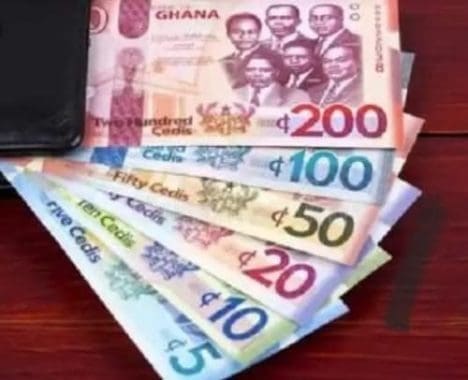
Cedi notes held together with tape, glue or staples are unfit for circulation and may be refused, the Bank of Ghana (BoG) said on 7 October 2026.

The central bank issued the warning in a press release after a video spread on social media showing people repairing torn and soiled banknotes with adhesive tape as a business. Clips of the practice were being shared online by 5 October.

The caution matters for anyone who handles cash. The BoG said improperly repaired notes may be rejected when presented for payment or exchange, leaving whoever holds them out of pocket. Taped and glued notes can also jam and damage ATMs and currency-processing machines.

“The Ghana Cedi banknote is legal tender and an important national symbol,” the bank said.

The BoG said no one should repair, rejoin or alter mutilated notes in order to put them back into circulation, and reminded the public that it alone has the mandate to manage Ghana’s currency. It said the practice undermines the integrity of the currency and disrupts how notes are processed through the cash cycle.

Instead of taping a torn note, the bank told holders to take damaged or mutilated notes to a commercial bank, which will examine them and replace them under BoG procedures.

The central bank also urged the public to handle notes with care and to report anyone improperly repairing, rejoining or mutilating banknotes to the BoG or the police.

To qualify for examination, a damaged note must have more than half of the original note intact.

Kwesi Pratt doubts benefits of Ghana’s planned BRICS membership

0

Veteran journalist Kwesi Pratt Jnr on 7 October 2026 questioned what Ghana would gain from joining BRICS, a day after the government said it would apply for membership.

“I’m not so sure what the benefits of joining BRICS now may be,” the Managing Editor of the Insight newspaper said on Metro TV’s Good Morning Ghana.

His doubts are among the first public challenges to a significant foreign policy shift. Foreign Affairs Minister Samuel Okudzeto Ablakwa told reporters in Accra on 6 October that the Cabinet of President John Dramani Mahama had decided Ghana should formally apply to join the bloc. Ablakwa said membership would add development options and deepen South-South cooperation without replacing Ghana’s traditional partners. He made the announcement during a visit by India’s External Affairs Minister, Dr Subrahmanyam Jaishankar, and said Ghana had sought India’s help with its bid.

Pratt’s concerns

Pratt said Ghana could still struggle to obtain financial support through BRICS if lending had to pass through approval mechanisms involving the International Monetary Fund (IMF) and the World Bank. He also doubted that Ghana could secure the backing of all existing members.

That concern has some basis in how the bloc’s emergency lending works. Under BRICS’ Contingent Reserve Arrangement, a country can draw only 30 percent of its maximum entitlement without an IMF programme; the rest is linked to one. The bloc’s New Development Bank, however, lends to its own members without an IMF requirement, and membership of the bank is separate from membership of BRICS.

Pratt referred to five member states, but the bloc has grown. Its members now include Brazil, Russia, India, China, South Africa, Egypt, Ethiopia, Iran, the United Arab Emirates and Indonesia, with Saudi Arabia’s status still unsettled. Nigeria joined as a partner country in January 2025.

Strained ties with Pretoria

Pratt said Ghana’s relations with South Africa were “not the best” after the dispute over xenophobic attacks, though he did not expect Pretoria to block Ghana’s entry. He also argued that strains within South Africa’s governing alliance could limit its influence.

The rift has been one of Ghana’s sharpest diplomatic disputes this year. Ghana summoned South Africa’s envoy, issued a travel advisory against non-essential travel to the country and asked for the attacks to be debated at the African Union. Ramaphosa sent a special envoy to Accra on 21 July 2026, and a planned state visit by the South African president was postponed by mutual agreement.

Jaishankar said India supported Ghana’s aspiration but that its membership would require collective consideration by BRICS members.

Mahama orders sanctions for officials over building collapses

0

President John Dramani Mahama on 7 October 2026 ordered Local Government Minister Mahama Ayariga to identify and sanction officials whose failure to enforce building rules leads to collapses, in Accra.

Mahama gave the directive while opening the first National Conference on Housing Finance, organised by the National Homeownership Fund at the Mövenpick Ambassador Hotel. He said that when a building falls, the authorities must find out whose duty it was to keep it safe, and “that person must be sanctioned for it”.

The order shifts the focus of Ghana’s response to collapses from the owners and builders of failed structures to the district assembly officials who inspect sites, issue permits and enforce stop-work notices. Those officials have rarely faced public consequences.

Mahama said enforcement had to be strengthened at district level and could not end once a permit had been issued. He described a familiar pattern in which assemblies paint “stop work” in red on a site, construction carries on regardless, and the building later comes down, leaving the public asking who approved it.

The directive follows a run of deadly failures this year. On 29 March, an unfinished building being used as a church in Accra’s New Town collapsed during a service after heavy rain, killing three people. On 7 June, a building at Avenor in North Kaneshie came down during a downpour; Accra Mayor Michael Kpakpo Allotey later put the death toll at three. Interior Minister Muntaka Mubarak urged metropolitan, municipal and district assemblies to tighten enforcement after the Avenor collapse.

Mahama also called for action on overcrowded slums, insecure land tenure, poor sanitation and weak access to utilities, saying new homes must be safe, accessible and connected to jobs and essential services.

The conference is examining how to finance affordable housing, at a time when rising construction costs, scarce long-term finance and high mortgage rates keep homeownership out of reach for many households. It runs until 8 October and is due to end with a communiqué of policy recommendations. The government has already announced a GH¢3 billion revolving fund, to be set up with the Social Security and National Insurance Trust, Republic Bank Ghana and organised labour, to lend to state developers such as the State Housing Company and the Tema Development Corporation.

After the Avenor collapse, Accra authorities marked 16 unsafe buildings for demolition.

Minority says 87 on NSA World Cup visa list unverified

0

The Minority in Parliament said on 7 October 2026 it could verify only 15 of 102 people the National Sports Authority (NSA) presented to Canada’s embassy for World Cup visas.

Vincent Ekow Assafuah, Ranking Member on Parliament’s Youth and Sports Committee, told a press conference in Accra that the caucus had checked the names against NSA records. “The remaining 87, therefore, require explanation,” the Minority’s statement said.

The claims widen a scandal that has already cost the NSA its Director-General and put the Authority’s dealings with foreign diplomatic missions under scrutiny. The Minority says the issue is no longer only about money allegedly collected from travellers, but about how a state agency described people to foreign governments.

According to the Minority, the Canadian Embassy asked the NSA for updated details on each applicant’s employment, role and reason for travel, and the Authority submitted the list of 102 names on 8 June. The caucus said some people were given job titles that do not exist in the NSA’s structure, including procurement officers and a chaplain. It said one person was presented as Board Secretary when the post was being covered by the Authority’s Legal Adviser, and another as a regional coordinator, a role the caucus said that person did not hold.

The Minority made similar claims about a separate submission to the United States Embassy. It said the embassy’s Fraud Prevention Unit had questioned four applicants and asked for proof that they worked for the NSA, and that the job titles given for all four do not exist in the Authority’s structure.

The caucus wants to know who prepared, verified and authorised the lists, why people it could not confirm as staff were presented through the NSA, and who paid for their processing. It has called for an independent investigation using NSA records, diplomatic correspondence and payment records. It said a documented arrangement between the NSA and TRIBE Culture Fest, a FIFA-licensed fan-experience partner, set processing, accommodation and logistics costs at US$3,000 a person for the United States and US$2,000 for Canada.

The NSA has denied authorising any visa facilitation or money-collection scheme linked to the World Cup. In September, it said its relationship with TRIBE did not extend to collecting money for visas, and that its legal team was cooperating with police.

The Criminal Investigations Department (CID) opened an inquiry after a petition filed on 8 September alleged that about US$623,000 had been collected from prospective travellers. Yaw Ampofo Ankrah, the NSA Director-General, was suspended on 1 October pending the CID investigation, and Professor Emmanuel Osei Sarpong is acting in his place. Ankrah has denied wrongdoing.

The Minority is also demanding the dismissal of Sports and Recreation Minister Kofi Adams and the Chief Executive of the Ghana Tourism Authority, whose own World Cup submissions the caucus has separately questioned.

The CID investigation is continuing.

Afenyo-Markin backs National Cathedral after state funding withdrawn

0

Minority Leader Alexander Afenyo-Markin has urged completion of the National Cathedral, a day after the government said it would spend no further public money on the stalled Accra project.

He made the case on 6 October 2026, when the Minority caucus met the leadership of the Christian Council of Ghana at the Council’s invitation to discuss the financial performance of the Ghana Gold Board (GoldBod) and other national issues. Afenyo-Markin argued that the cathedral, begun under former President Nana Akufo-Addo, should be seen as more than a place of worship. He described it as a potential tourist attraction, a boost to Ghana’s image and a rallying point for the whole country, and pointed to a historic mosque in Türkiye that draws large numbers of visitors.

The intervention sets the opposition against a government that has now moved to take the project out of public hands and examine what was spent on it.

Local Government, Chieftaincy and Religious Affairs Minister Mahama Ayariga told a press briefing at the Jubilee House on 5 October that the state would not put a single cedi into further construction. He said the contractor had been directed to hand the site to his ministry and that the Attorney-General was reviewing a forensic audit of spending under the previous administration. President John Dramani Mahama had dissolved the project’s Board of Trustees on 18 September.

Afenyo-Markin accused the government of inconsistency, saying it had given no clear account of what it intends to do with the site, and called for wider consultation among stakeholders. He suggested the government’s renewed engagement opened the way for a transparent, Christian-led private financing model that would not add construction costs for taxpayers. Ayariga has said the government will decide the site’s future only after the Attorney-General’s review.

GoldBod and galamsey

The Minority Leader also accused GoldBod, the state gold trader set up in 2025, of encouraging illegal mining. He said no regulation separates legally mined gold from gold produced through galamsey, leaving the board to buy whatever aggregators bring without adequate controls on those aggregators. “Galamsey has gotten out of hand,” he said.

The charge repeats a long-running Minority attack. When Afenyo-Markin labelled GoldBod a “Galamsey Board” in March 2025, its Chief Executive, Sammy Gyamfi, said the law establishing it contained clauses proposed by NPP MPs, including Afenyo-Markin himself.

Drawing on his time as board chair of Ghana Water Limited, Afenyo-Markin said contamination had made water treatment more expensive and left some treatment plants unable to function. He warned that the Atewa Forest could be lost if illegal mining continued unchecked.

The cathedral’s former trustees have until 31 October 2026 to complete the handover of the site.