

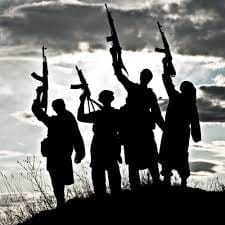
The National Commission for Civic Education (NCCE) is extending its violent extremism awareness work to Ghana’s southern border communities, saying years of northern-focused programmes have left a gap.
Samuel Asare Akuamoah, the NCCE’s Deputy Chairman in charge of Operations, made the case at a national dialogue in Accra on 7 October on sustaining post-election peace and building resilience against emerging security threats in southern border communities. The dialogue opens a series of community engagements in those areas.
Akuamoah said most efforts to prevent violent extremism had concentrated on the north, partly because that was where development partners chose to fund work. The record bears this out. The European Union-funded Preventing and Containing Violent Extremism project, run by the NCCE, covered 75 districts in the Northern, North East, Savannah, Upper East, Upper West, Oti, Bono and Bono East regions. It followed an earlier project aimed specifically at the northern border regions.
NCCE Chairperson Kathleen Addy, in a speech read on her behalf, said security concerns were often associated with the north, but the southern and coastal borders were increasingly becoming hotspots for cross-border crime, including violent extremism, narcotics and disinformation.
Akuamoah said the campaign belonged to the commission’s post-election programme, and warned that the period after a vote carries its own risk. “This is the time when people’s complacency can set in,” he said. He noted that some neighbouring countries had suffered attacks by extremist groups, and that in some of them democratic government had collapsed.
The threat he described has moved steadily towards the coast. Al Qaeda’s Sahel affiliate, Jama’at Nusrat al-Islam wal-Muslimin (JNIM), has expanded from Burkina Faso and Niger into northern Benin and Togo. Togo suffered its first deadly militant attack in May 2022, when eight soldiers were killed. Benin recorded 155 attacks in 2024, up from five in 2021. Ghana has not suffered a confirmed attack.
Dr Mustapha Abdallah, a Senior Researcher at the Kofi Annan International Peacekeeping Training Centre (KAIPTC), told the dialogue that tighter border control would not be enough on its own. He urged the authorities to tackle the economic hardship that makes vulnerable communities along the southern borders open to recruitment.
The NCCE plans to follow the dialogue with sensitisation sessions in southern border communities to help residents recognise and report warning signs.

