

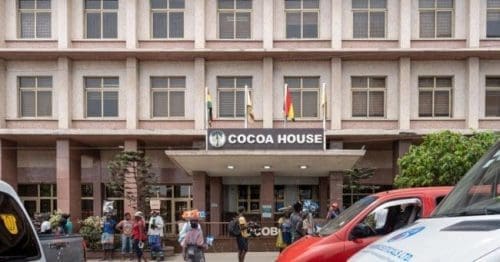
COCOBOD has raised GH¢3.39 billion from its debut local debt sale, 15 percent below target, an early test of whether domestic lenders can replace foreign banks in financing cocoa.
The money matters most at the farm gate. Ghana’s cocoa season opened on September 25, but licensed buying companies warned they would not buy beans with their own cash and then wait months for repayment. The new funds should let COCOBOD start disbursing money to those buyers so purchases can pick up.
The first sale
Cocoa Capital PLC, the special-purpose vehicle the cocoa regulator set up for the programme, issued the commercial paper on October 5 at a yield of 11 percent. The paper matures on June 28, 2027. The sale raised about GH¢604 million less than the GH¢4 billion presented to investors. That figure was indicative, however, and the amount COCOBOD accepted may not reflect everything investors offered.
The vehicle is new. Cocoa Capital was incorporated on August 7, 2026, with paid-up capital of GH¢5 million, and holds Securities and Exchange Commission (SEC) approval to borrow on the domestic market.
A long way still to go
The first sale is only a small part of what COCOBOD needs. The programme aims to raise GH¢14 billion in commercial paper to buy cocoa this season, issued in three tranches: GH¢4 billion, another GH¢4 billion and a final GH¢6 billion. A further GH¢2.3 billion in medium- to long-term bonds will refinance older COCOBOD debt.
By NewsGhana’s calculation, the first sale covers about 24 percent of the commercial paper target, leaving roughly GH¢10.6 billion to raise in the next two rounds.
Not all of the first tranche will reach farmers. About 14 percent of the funds raised will go towards COCOBOD’s legacy debts. Proceeds may also repay a bridge facility linked to that older debt.
How investors get paid
Repayment depends on cocoa sales. Receivables from selected forward sales contracts are assigned to Cocoa Capital and paid into ring-fenced accounts. Even so, the commercial paper is classed as senior unsecured debt, meaning holders do not have a direct claim on specific assets.
That puts weight on the size of the harvest. COCOBOD expects production to fall by at least 16 percent in the 2026/27 season.
The backdrop investors were weighing
The sale opened two weeks after a cross-border investigation put COCOBOD’s past finances under scrutiny. Ghana Business News, working on the China Capital project led by the International Consortium of Investigative Journalists (ICIJ), reported that the London branch of the Industrial and Commercial Bank of China (ICBC) placed COCOBOD on a watchlist on February 9, 2023. The outlet also said that loss figures in some of the Board’s annual reports did not match its audited accounts.
The regulator’s latest reported results look stronger, but they rested on conditions that have faded. The State Interests Governance Authority (SIGA) recorded a GH¢5.11 billion profit, driven largely by exchange-rate gains. In that year COCOBOD sold cocoa at an average of $5,174 a tonne. For the new season, it has announced a realised free-on-board (FOB) price of $2,650 a tonne.
Old bills still unpaid
The Chamber of Cocoa Marketers Ghana says COCOBOD owes licensed buying companies nearly GH¢4 billion. It warned that the arrears make it hard for them to secure fresh credit while they keep servicing loans taken out for earlier purchases. COCOBOD has acknowledged the outstanding payments but said such balances are not unusual at the end of a season and do not signal that it cannot meet its obligations.
To stop the problem spreading to farmers, COCOBOD has barred buying companies from taking cocoa on credit and warned that repeat violators risk losing their licences.
The new price
Farmers are being paid GH¢42,400 a tonne this season, or GH¢2,650 per bag, a rise of GH¢1,008 a tonne. That equals 71.18 percent of the realised FOB value, above the 70 percent minimum guaranteed by the Ghana Cocoa Board Act, 2026 (Act 1182). The same law bars COCOBOD from quasi-fiscal activities.
COCOBOD’s Public Affairs Department acknowledged questions sent by NewsGhana on the watchlist report, the discrepancies in its accounts, the arrears and the financing programme. On September 29 it said the questions had been forwarded to the relevant office for review, but it had not provided answers by October 10.
The second GH¢4 billion tranche of commercial paper is next in the programme.

