

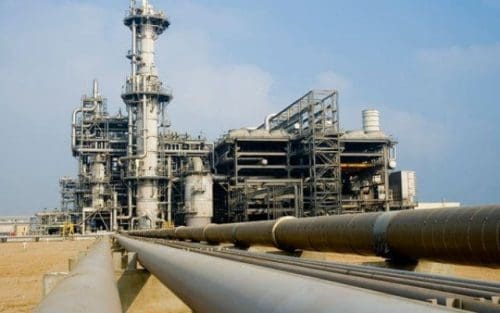
Information gathered by the Economy Times indicates that, Jubilee Field will be flaring gas for the two-week period that the Atuabo Gas Processing Plant will be shut down for routine maintenance.

Although, this is not the first time of gas being flared from the Jubilee Field, but there are fears of the associated accumulating severe dangers to the environment.
Before the Atuabo Gas Processing Plant became operational, Jubilee Field was flaring the associated gas to the oil being produced. This raised serious debates and agitations among experts, state regulatory bodies, civil society groups and the companies involved.
Scientists have cautioned against the negative effects of flaring to the environment and human livelihoods.
In Ghana, it is not lawful to flare gas at a certain limit and without necessary permission from the regulatory body, thus, Environmental Protection Agency and the Ghana Petroleum Commission.
In spite of this, experts have justified that the flaring will be necessary because Ghana does not have a gas storage facility.
According to energy analyst, Mr Kojo Poku, natural gas can only be stored when it is liquefied – Liquefied Natural Gas (LNG) – but Ghana, at the moment does not have any facility for such storage.
“We don’t have the facility to store gas in Ghana because it’s very expensive; you have to build a whole facility to compress the gas to become liquid and store it. We don’t have that. So, … what you realise is that when Atuabo is shut down for maintenance, the gas from the well has to be flared because if you keep it in the wells, there will be a blow-up because there’ll be pressure build-up in the wells and it will blow up the pressure valves which they have, so, they’ll have to flare the gas during the Atuabo maintenance,” he said.
“When Atuabo is working, the gas is sent straight to Atuabo plant, processed and sent straight to our generators. We don’t have any storage facility in Ghana at present for any of these facilities,” Mr Poku added when interviewed.
Further researches by the writer have shown that, as a major aspect of environmental pollution, gas flaring has become a common phenomenon and it can have serious biological and economic impacts. In this sense, many of oil producing countries, along with their policies and activities, try to manage and organize the environmental issues for more extraction of fossil fuels, especially oil and gas for the transportation and energy sector.
Among the numerous disadvantages of gas flaring is that, it increase environmental pollutions, especially greenhouse gases. Although the amount of produced greenhouse gases from the flaring process is less than its amount in the venting process, but usually the combustion is not a complete process in the flaring and the existence of smokes from the flares supports this fact. In addition, the amount and the types of produced gases in this process depend on the burnt gases in the flare and the combustion conditions.
Polluting gases which are dispersed from the flaring process into the environment includes some of greenhouse gases such as CO2, CO, NO and NO2. In addition the noises and the odor results from the combustion and the light comes from the flaring process are some of dangers which can threaten the health of personnel and local residents. The flaring and the venting process are the resource of 4% of dispersed Carbon Dioxide in the atmosphere.
The acidic rain, global warming, air pollution, water pollution and destruction of Ozone Layer, are some of environmental results of venting and flaring processes.
Flaring and venting of natural gas in oil wells is a significant source of greenhouse gas emissions. According to scientific researches, its contribution to greenhouse gases has declined by three-quarters in absolute terms since a peak in the 1970s of approximately 110 million metric tons/year, and now accounts for 0.5% of all anthropogenic carbon dioxide emissions.
A gas flare is an elevated vertical stack found on oil wells, oil rigs, and in refineries, chemical plants and landfills, used for burning off unwanted gas and liquids released by pressure relief valves during unplanned over-pressuring of plant equipment.
The released gases and/or liquids are burned as they exit the flare stacks. The size (~100 m2) and brightness of the resulting flame depends upon how much flammable material was released. On oil production rigs, in refineries and chemical plants, its primary purpose is to act as a safety device to protect vessels or pipes from over-pressuring due to unplanned upsets.
It is estimated that, annually, about 150 billion square meters of gases are lost through flaring, which this amount is equal to 5% of natural gas consumption of the world, 30% of the gas consumption in Europe, one quarter of Unites States gas consumption and the whole consumption of Germany and France.
The Flaring process is the least optimum use of natural gas.
According to Somayeh Pourhassan and Alireza Taravat in their academic research work on the “Effect of gas flaring on environmental variables in developing countries” and published in 2104, it indicated that, gas flaring in industrial facilities is done due to safety tips.
It further stated, “Also the reason why flaring is used in industrial facilities and it is preferable in comparison to venting process is due to less greenhouse gases effects. Because in every gas field, a unique flaring process with its special specifications is needed, it is not easy to measure to which extent this process affects the environment.
The effects of flaring process are different from place to place and from field to field. Because of the lack of global and international standards and adequate information about flaring process, so probably the risks associated to the flaring process is more than what we have considered up to now.”
They again explained that, with regard to this fact that oil and petroleum factories seek to maximize their profits, it is necessary to minimize the amount of lost gases burnt and dispersed by flaring and venting processes.
Therefore the economic objectives of oil companies are consistent with environmental protection policies, and these policies are considered by governments and nations.
In the countries where a large amount of gas are produced during the extraction process of oil, collection and re-use of them has been deemed a necessary operation. Nowadays, developing countries such as Nigeria, Iran, Algeria and Iraq, account for 85% of flaring and venting processes.
In these countries three main reasons are present which prevent from the accurate and suitable exploitation of gas resources, which are as follow: Lack of legal and effective frameworks and instructions; Weak and improper access to local and international energy markets and Financial restriction of projects aimed for reducing the flaring and venting process.
The experiences of developed countries such as Norway, England, Canada and United States in the field of reducing the amount of flaring process, reflects the determinant and important role of government in this issues.
These countries by regulating the effective rules, reconstruction of oil fields, construction of proper infrastructures, active involvement of private sector in planning and implementation of projects and financial incentives, results in proper fields in order to reduce the losses of associated gases.
In all the researches and following practical experiences of countries, it is obvious that there is no unique and consistent pattern in all countries in order to reduce the flaring process. But according geographical, climatic, political and economic specifications of developing countries and by using policies such as proper and innovative strategies, the amount of dispersed associated gas can be reduced.
In order to achieve this goal, it is necessary to use the new technologies and finding primary markets in order to transfer the gas to them and transform the gas to other desirable products. Using these gases in downstream industries for people who live in oil – owner regions, can led to gain wealth, welfare and employment.
Additionally, another fear of the Ghanaian public to the shutdown of the Atuabo Plant for its periodic maintenance is the likely effect the already situation of erratic power supply.
Most Ghanaians and some experts fear the unavoided exercise could negatively affect the current load-shedding programme since most of producers rely on gas.
For the past three years, Ghanaians have been faced with unsustainable power supply which hit hard at industries, manufacturers and domestic consumers of electricity.
However, The Volta River Authority (VRA) has made it known that the planned shutdown will not affect its ability to produce power.
The Ghana Gas Company last week announced the shutdown of the gas processing plant for routine maintenance works on the January 15, 2016 and is expected to last two weeks.
Sources close to the VRA has indicated that the decision by the Ghana Gas Company to cut the daily supply of about 115 million standard Cubic feet of natural gas, will not affect its ability to produce power.
The Aboadize thermal plant primarily depends on the gas from Ghana gas to generate over 600 Mega Watts of power.
Aside, that most of thermal plants which works more efficiently on gas will also be affected which probably may have to resort to using crude oil or halt generation. Among them are, Sunon Asugli which generates over 300 megawatts, TICo1 and 2, TAQA, Tema Thermal which generates over 500 megawatts in all.
However checks with engineers on the ground at the thermal plants reveal there is enough crude oil to last for about the next three months.
Consumers have been assured that the load-shedding will not get worse, despite the two weeks shutdown of the Atubo Gas processing plant.
Source: Adnan Adams Mohammed

