Ghana Chamber of Mines Responds to Reuters Report on Proposed Minerals and Mining Bill 2026

0

The Ghana Chamber of Mines has reviewed the Reuters report of 30 September 2026 headlined “Ghana bill would give state special share rights in mining firms, draft shows.”

The report raises matters that merit public scrutiny. The Chamber wishes to provide additional legal and policy context on two points: the State’s special-share power and the proposed duration of mining leases.

The special-share power already exists under Act 703

Reuters reports that the proposed Bill would allow the Minister responsible for mines to require a mining company to issue the Republic a special share for no consideration, with consent rights over specified transactions.

The headline and opening paragraphs do not make sufficiently clear that the underlying statutory power is already part of Ghanaian law. Section 60 of the Minerals and Mining Act, 2006 (Act 703) authorises the Minister, by written notice, to require a mining company to issue such a share to the Republic for no consideration. The power has therefore been part of Ghana’s mining legislation since 2006.

Under Act 703, the special share is a non-voting preference share. Unless the Minister and the company agree otherwise, it does not confer rights to dividends, profits or company assets upon liquidation. It does, however, carry consent rights in relation to specified major corporate transactions.

Clause 57 of the published Bill largely carries forward this framework while materially increasing the sanctions for non-compliance. This comparison explains the provision’s legislative history; it should not be read as the Chamber’s endorsement of the power or of any particular exercise of it.

The Chamber therefore asks Reuters to clarify that the underlying special-share power is not being newly introduced in 2026, although the Bill would re-enact it with revised sanctions.

The published Bill and the Government’s later statement differ on lease duration

Reuters accurately reports the wording of clause 39(2)(a) in the May 2026 version of the Bill published by Parliament. That clause provides for an initial mining lease term of 15 years or the forecast life of the mine, whichever is shorter.

That published text should be distinguished from the Government’s later public statement of its intended position. At the Government Accountability Series on 15 July 2026, the Minister for Lands and Natural Resources stated that “Mining lease period is now fixed at 20 years maximum…”

The Minister made that statement after the Bill had been laid before Parliament. It indicates the Government’s subsequently stated policy intention, though it does not by itself amend the Bill. Unless and until Parliament changes the text duuring its consideration.

The material point for readers is the unresolved difference between the text published by Parliament and the Government’s later public statement. The Chamber asks Reuters to reflect both positions and to make clear that the 20-year figure is the stated policy intention, not the current wording of the published Bill.

Accurate reporting supports informed public debate

The Chamber respects the role of Reuters and the wider media in scrutinising legislation and informing the public and the international investment community. The Bill contains substantive proposals that require careful examination. The Chamber continues to engage the Government, Parliament and regulators on their implications for responsible mining, investment, competitiveness and Ghana’s long-term national interest.

That debate is best served when reporting distinguishes existing law from proposed changes and the text of a Bill from later ministerial statements about the Government’s policy intentions. Because international reporting informs investors, lenders, mining companies, analysts and policymakers, precision on these distinctions matters.

The Chamber respectfully asks Reuters to update its report to state that the special-share power already exists under section 60 of Act 703 and to acknowledge the Government’s stated intention on the 15th of July 2026 to provide for a maximum term of 20 years.

We encourage media organisations covering Ghana’s mining sector to continue engaging the relevant institutions and to present material legal and policy distinctions clearly.

The Ghana Chamber of Mines remains committed to constructive engagement on the Minerals and Mining Bill, 2026. We support reforms that strengthen governance, deepen Ghanaian participation and increase national value while preserving the predictability and competitiveness required for responsible, long-term mining investment.

END.

Issued by:
The Ghana Chamber of Mines
CLOGSAG acting president disputes new appointments pending court ruling

0

Benjamin Otoo, Acting President of the Civil and Local Government Staff Association of Ghana (CLOGSAG), has told members to disregard disputed appointments now before the High Court.

In a statement dated 6 October 2026, Otoo described new appointments circulating within the association as “purported” and said their validity is being challenged in court. He said the High Court has fixed a date to decide the matter.

He directed regional executives, district executives and members not to recognise the appointments or act on any notices, directives or administrative decisions that flow from them until the court rules. He also urged members to stay calm and respect the judicial process.

“Let the court determine the matter,” the statement said.

The statement did not name the people appointed or the offices involved. It also did not say who made the appointments, who the parties to the case are, or when the court will sit. NewsGhana could not independently confirm details of the suit.

CLOGSAG represents staff in Ghana’s civil service and local government service. It is one of the country’s most active public sector unions. In February 2025 it called a nationwide strike over the appointment of an acting Births and Deaths Registrar, and suspended it after the government withdrew the appointment.

The association has also faced internal tension this year. Its Oti regional elections in Dambai on 30 July 2026 drew complaints after the election committee disqualified a candidate for regional chairman.

Zambian youths bet on soil, not fertiliser, against drought

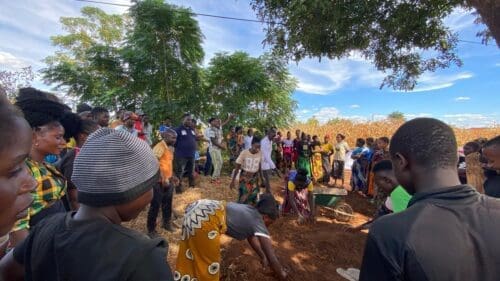
Zambia has just brought in a record maize harvest of five million tonnes, but forecasters expect El Niño to bring below-normal rains across Southern Africa from October 2026 to March 2027. One youth-led group is betting that smallholders can ride out such swings by rebuilding their soil instead of buying more fertiliser.

The Young Emerging Farmers Initiative (YEFI) is a finalist in the Resilience category of the 2026 Heroes of Tomorrow: UN SDG Action Awards. The awards drew more than 7,000 applicants, and the winners will be announced online on 29 October. The group’s NO-AGROCHEM project trains farmers to grow crops without synthetic fertilisers or pesticides.

The stakes are high for rural households. The Restoration for Community Justice, a Zambian advocacy group, warned on 1 September that more than two million smallholder farmers are at risk from the coming dry season. It said the 2023/24 drought wiped out earlier gains almost as quickly as they had been made.

Farming with what is in the yard

In written responses to NewsGhana, YEFI said Zambian smallholders face late rains, long dry spells, sudden floods and soils worn down by years of synthetic fertiliser use and maize monocropping. Chemical inputs, it added, are now beyond the reach of most rural households, and extension services that teach sustainable methods are scarce.

The project replaces bought inputs with materials farmers already have. Farmers learn composting, mulching, crop rotation and intercropping, and make pest sprays from plants. YEFI said these methods raise soil organic matter and help fields hold water, which matters most when the rains fail.

It conceded that the gains are not instant. “Productivity improves gradually as soils regain structure and fertility,” the group said.

The trainers are young people from the same villages as the farmers. YEFI said this model builds trust because the advice comes from neighbours rather than outside officials. The young trainers go door to door, run field demonstrations and share results on social media, presenting farming as a modern business at a time when many young Africans are leaving agriculture.

Results so far

YEFI says it has trained more than 1,000 farmers and that over 60 per cent have adopted agroecological practices. It reports that household incomes have risen by 25 per cent. It credits three factors for the rise: lower input costs, healthier soils that yield more, and buyers who pay a premium for sustainably grown produce.

Those buyers are tied to the project through memoranda of understanding, which commit them to purchase set crops at agreed quality standards. YEFI handles aggregation, quality control and transport between farmers and buyers.

The figures are YEFI’s own, and no independent evaluation has been published. Asked for evidence that the approach can expand without raising costs or lowering yields, the group cited its internal monitoring report and farmer testimonies, including a video of a farmer saying homemade manure and pesticides had improved her field at no cost. It did not release the report.

The project’s funder has set a higher bar. The Julius Baer Foundation, which backs NO-AGROCHEM with a CHF 300,000 grant running from 2025 to 2027, expects participating farmers to raise their incomes by 30 to 50 per cent by 2027.

What still stands in the way

YEFI said several gaps remain. Moving farmers fully to agroecology requires money for biofertiliser production, better seed systems and water harvesting. The solar-powered boreholes it describes as the key to year-round production are still only planned.

The group also wants changes beyond the farm. It said governments should train extension officers in agroecology and buy a wider range of crops from farmers, so that maize no longer dominates fields. Development partners, it added, should fund agroecology networks, and banks should design loans for young farmers who grow sustainably.

Within five years, YEFI aims to reach at least 3,000 farmers in its current districts and expand to 10 more across Zambia. It wants 90 per cent of participants farming fully agroecologically, a digital platform linking farmers with buyers, lenders and experts, and an organic market that can run without project support.

Two ministers among lawyers set for call to the Bar

0

Lands Minister Emmanuel Armah-Kofi Buah and Communications Minister Sam Nartey George are expected to be called to the Ghana Bar on Friday, 9 October 2026, GhanaWeb reported.

Broadcast journalist Umaru Sanda Amadu is also expected to be among the new lawyers, the outlet said. Videos shared on X showed some of the three at a dinner held ahead of the ceremony.

Being called to the Bar enrols graduates of the Ghana School of Law’s professional course as barristers and solicitors of the Supreme Court, which allows them to practise law in Ghana.

Buah is the Member of Parliament for Ellembelle and Minister for Lands and Natural Resources. George, the MP for Ningo-Prampram, is Minister for Communication, Digital Technology and Innovations.

GhanaWeb said more than 1,400 people are expected to be called to the Bar this year. If that holds, the year’s intake will be far larger than 2025’s. Last year’s main ceremony, held at the Accra International Conference Centre on 10 October, admitted 824 lawyers: 453 women and 371 men. A smaller call later that year added 137 more, bringing the 2025 total to 961, according to the Ghana School of Law.

The profession has grown quickly. The General Legal Council says the number of lawyers in Ghana rose from just over 2,000 in 2010 to more than 6,500 in 2024. The Ghana School of Law puts total enrolment at the Bar since 1963 at 12,226.

That growth has fed a long-running argument over legal education. Admitting the 2025 cohort, Acting Chief Justice Paul Baffoe-Bonnie warned that reform should improve the quality of legal training, not simply raise the number of lawyers it produces.

Several journalists joined the profession last year as well. They included EIB Network broadcaster Serwaa Amihere, Daily Graphic court correspondent Emmanuel Ebo Hawkson, and Media General’s legal affairs reporters Joseph Ackah-Blay and Sixtus Don-Ullo.

Messi scores in farewell as Argentina beat Benin 3-0

0

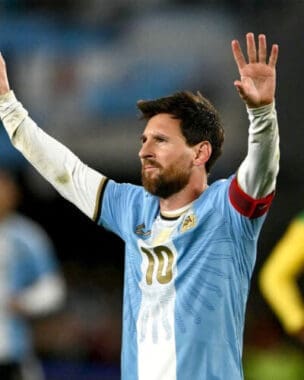
Lionel Messi scored in his final Argentina match on 6 October 2026, a 3-0 friendly win over Benin at Buenos Aires’ Monumental Stadium, before an emotional farewell to supporters.

The 39-year-old scored Argentina’s third goal, after Nicolás Otamendi and Nicolás Paz had put the hosts ahead. He finishes with a record 126 goals in 208 appearances across 21 years. Otamendi, the 38-year-old vice-captain, was also playing his last game for the national team.

Messi took the microphone in front of a crowd of about 85,000 once the match ended. He said he was struggling to find words through the emotion and began with his family. “The first thing I think about is my father,” he said.

His father and long-time agent, Jorge Messi, died in Rosario on 8 August at the age of 68. Messi had said the loss strengthened a decision he first put in writing on 21 July, two days after Argentina lost the World Cup final 1-0 to Spain after extra time in New Jersey. He announced his international retirement on 31 August.

The Argentine Football Association (AFA) then invited him back for one last match at home, so that he would not end his career in tears after a defeat on foreign soil. AFA president Claudio Tapia said Messi had earned a proper send-off, and members of the 2022 World Cup-winning squad came with their families to share the night.

In his speech, Messi called playing for Argentina the best thing that had happened to him in his life. He thanked teammates and supporters who stood by the side through its lean years and its winning ones, and he asked younger Argentines to keep defending the national team.

The farewell closes a career that turned from frustration to triumph. Messi lost the 2014 World Cup final and successive Copa América finals in 2015 and 2016, briefly quitting the national team after the last of those defeats. He went on to win the Copa América in 2021 and 2024, the Finalissima in 2022 and the World Cup in Qatar the same year. He also won Olympic gold at Beijing in 2008. He went into the Benin match with a record 68 assists for his country.

Messi was visibly moved during the national anthem before kick-off, with his three sons, Thiago, Mateo and Ciro, at the stadium.

The match was the first ever meeting between Argentina and Benin, whom FIFA ranks 93rd in the world.

Defender Cristian Romero is expected to take over the captain’s armband, which Messi first wore at the 2010 World Cup in South Africa. The AFA has not said who will inherit his number 10 shirt.

Ghana halts offshore gold reconnaissance after fisheries outcry

0

Ghana’s Minerals Commission has ordered GoldCoast GRC Ghana Limited to stop all work under its offshore gold reconnaissance licences, after fishing groups warned the project could harm coastal livelihoods.

The order follows a petition dated 3 October 2026 to President John Dramani Mahama. It was signed on behalf of 46 fishers’ associations, fishing communities and civil society organisations, and called for an immediate halt and an independent review.

The commission said Lands and Natural Resources Minister Emmanuel Armah-Kofi Buah had instructed that the licences be suspended so that the government could hold wider consultations. It said the objections it received centred on possible environmental and ecological damage and on whether affected communities had been properly consulted.

The suspension is “not a cancellation, revocation or termination of the licences,” the commission said. The licences stay in force, but all operational activity stops until consultations are complete and stakeholders are aligned. The company must cooperate with the commission, other state institutions and affected groups in the meantime. The commission gave no timeline for the process.

A dispute over scale

The commission’s account and the company’s own disclosures describe very different areas. The regulator said the licences, granted on 9 February 2026, cover waters near Atwiwa in the Ahanta West Municipality of the Western Region.

GoldCoast Resource Corp, the Toronto-based parent company, has described something far larger. In January 2026 it announced 10 contiguous licences covering about 10,000 square kilometres of Ghana’s western continental shelf, with an initial term of 12 months and an option to renew. The petitioning groups said the company’s published map runs about 300 kilometres along the coast, from Half Assini in the Western Region to Winneba in the Central Region, and reaches about 33 kilometres offshore.

That stretch matters for fishing. The groups said parts of the area appear to fall inside the Inshore Exclusion Zone, the waters within 12 nautical miles of the coast that the Fisheries and Aquaculture Act, 2025 (Act 1146) reserves for small-scale fishers. They said the exact overlap cannot be confirmed until the government publishes the official coordinates and licence documents, and they asked it to do so.

Canoe fishing carries much of Ghana’s catch. Citing the Fisheries Commission’s 2025 report, the groups said artisanal fishers landed 282,658 tonnes that year, almost 64 per cent of the national total.

What the licences allow

Under the Minerals and Mining Act, 2006 (Act 703), the minister grants reconnaissance licences on the commission’s recommendation. The groups pointed to section 32(3) of the Act, which they said bars reconnaissance licence holders from drilling or excavating. They also raised concerns about reported plans for seismic surveys, seabed coring, sediment sampling and possible shallow-water dredging at a later stage.

GoldCoast has published plans to recover placer gold, the loose grains washed onto the seabed from coastal rivers, by dredging. It says its four-phase programme has already included airborne magnetic surveys. The company listed on the Canadian Securities Exchange in August 2026.

Signatories to the petition include the Canoe and Fishing Gear Owners Association of Ghana, the Integrated Social Development Centre, the Natural Resource Governance Institute and Resource Justice Network Ghana. They also want the licences mapped against the Greater Cape Three Points Marine Protected Area, as well as key spawning and nursery grounds.

The commission said its licence conditions require the company to obtain every other statutory approval before any exploration begins.

deVere chief warns Anthropic IPO rests on circular AI financing

deVere Group chief executive Nigel Green warned on 8 October 2026 that Anthropic’s planned stock market listing would expose ordinary savers to circular artificial intelligence (AI) financing deals.

Anthropic’s bankers have told potential investors the offering could raise more than US$100 billion and value the company at up to US$2 trillion, according to The New York Times. That would be more than double the US$965 billion valuation the developer of the Claude models reached in its May funding round. It would also beat SpaceX’s June listing, which raised US$85.7 billion, the largest initial public offering on record.

Green said a listing of that size would feed into global index trackers, pension schemes and funds owned by millions of people who never chose to back a loss-making AI company.

How the loop works

Green described an industry in which chipmaker Nvidia invests in AI developers, the developers spend the money on Nvidia chips and computing power, and Nvidia books the spending as revenue. “Every turn of the wheel looks like growth,” he said.

Anthropic sits near the centre of that web. Its prospectus shows it expects to spend up to US$84.5 billion renting computing power from SpaceX through 2029, according to Seeking Alpha. Its infrastructure agreements with all suppliers reportedly exceed US$518 billion. Nvidia holds SpaceX shares worth about US$21 billion, and SpaceX chief executive Elon Musk has said the company will build its computing infrastructure exclusively on Nvidia hardware.

SpaceX is also borrowing. It has launched its first public bond sale, seeking US$20 billion to US$25 billion, with the proceeds going mainly to repay a bridge loan.

Green compared the pattern to the telecoms boom around 2000, when equipment makers lent to their own customers so they could keep placing orders. Sales and valuations soared until the buyers ran out of money, and investors lost heavily even though the technology itself endured.

What the prospectus shows

Reuters, reporting on the prospectus, said Anthropic posted revenue of US$4.6 billion in 2025 and a net loss of US$42 billion. About US$34 billion of that loss came from write-downs on liabilities, largely linked to earlier funding rounds. Anthropic highlights instead an operating loss of US$8.1 billion. The risk factors also disclose that two customers account for a quarter of revenue.

The company has grown sharply since then. Its annualised revenue run rate reached US$65 billion by the end of July 2026, up from US$47 billion in mid-May. Insiders expect US$100 billion to US$120 billion by the end of the year.

Central bank concern

Green’s warning echoes the Bank of England. In the record of its 25 September meeting, the Bank’s Financial Policy Committee said rising indebtedness, limited transparency and some circular financing arrangements in AI could make risks harder to assess and amplify losses if expectations disappoint. The committee cited JPMorgan estimates that debt could finance around US$4.1 trillion of AI-related capital spending between 2026 and 2030.

deVere Group describes itself as one of the world’s largest independent financial advisory organisations, with more than 80,000 clients. Anthropic declined to comment on its listing plans when AFP asked in August.

The company has told investors it does not expect to stay profitable in the quarters after the second quarter of 2026, citing planned infrastructure spending.

CDD-Ghana rejects government plan on MPs serving as ministers

0

In a policy brief released in October 2026, the Ghana Center for Democratic Development (CDD-Ghana) rejected the government’s plan to let the President pick ministers freely, inside or outside Parliament.

The brief comes as the Constitution Review Implementation Committee, inaugurated on 28 August 2026, works through the government’s position paper and the Constitution Review Committee (CRC) report. The two documents now set out three competing answers to one of the review’s most consequential questions: whether sitting MPs should be allowed to serve as ministers.

Article 78(1) of the 1992 Constitution requires the President to appoint most ministers from among MPs. According to CDD-Ghana, the government wants to drop that requirement but leave the President free to draw ministers from Parliament, from outside it, or both. The think tank argued that such a change “changes the text, not the problem or outcome it is meant to address.”

Evidence from Uganda and Malawi

CDD-Ghana based its case on two countries that already give presidents that freedom. In Uganda, it said, about 69 per cent of current ministers come from the majority side in Parliament. In Malawi, 20 of 24 cabinet members, or 83 per cent, were MPs as of October 2025.

Presidents keep choosing MPs, the brief argued, because doing so rewards loyal legislators, secures a reliable voting bloc and extends patronage to MPs with strong local followings. It cited a 2025 Afrobarometer survey which found that seven in 10 Ugandans oppose MPs serving as ministers at the same time.

The brief also disputed the government’s description of Ghana’s system as a uniquely Ghanaian middle ground between presidential and parliamentary government. Zambia requires every minister to be an MP, and Namibia draws its whole cabinet from the National Assembly. Kenya ran a similar model until its 2010 Constitution barred Cabinet Secretaries from sitting as MPs. Ghana’s own 1960 Constitution required all ministers to come from Parliament.

CDD-Ghana also rejected comparisons with Westminster-style systems, where every minister sits in Parliament. In those systems, it said, the government falls if it loses a confidence vote. Ghana’s President serves a fixed term and cannot be removed that way, so the check that justifies the overlap in parliamentary systems does not exist here.

Cost to Parliament

The think tank said the current arrangement weakens Parliament in two ways. Minister-MPs often miss plenary sittings and committee meetings, which falls hardest on the majority side and can threaten quorum. Backbenchers on the governing side, meanwhile, have a reason to court the executive rather than scrutinise it, because many hope to be appointed ministers themselves.

It added that the rule also limits the President. Party pressure can make certain MPs near-automatic picks regardless of their suitability, and hard to remove once they are in office.

A split with the review committee

CDD-Ghana backs the CRC’s goal of fully separating the executive from Parliament but breaks with the committee on how to do it. The CRC recommended an outright ban on appointing sitting MPs as ministers, with no option to resign the seat first, because it feared a wave of resignations and costly by-elections.

CDD-Ghana called that ban needlessly extreme. It proposed instead that any MP appointed as a minister must give up their seat, as the 1979 Constitution of the Third Republic required. Under Section 147(4) of Nigeria’s Constitution, a legislator who takes a ministerial oath is deemed to have resigned. The brief said this has not triggered a rush of resignations from Nigeria’s National Assembly.

The disagreement is notable because the CRC was chaired by Professor H. Kwasi Prempeh, CDD-Ghana’s Executive Director.

The brief is the fifth in a CDD-Ghana series on individual constitutional reform proposals.

Ronaldo says Jesus broke his word, accepts possible suspension

0

Portugal captain Cristiano Ronaldo on 6 October accused coach Jorge Jesus of twice breaking his word, and said he would accept any suspension for quitting the squad.

The statement is his first full account since he left the national team camp in Copenhagen on 30 September. The Portuguese Football Federation must now decide whether to discipline him. The open question is whether the 41-year-old, Portugal’s record scorer with 146 goals in 234 matches, will play for his country again.

Ronaldo said he and Jesus had agreed a plan to manage his workload. Under that plan, he went into the October window expecting to sit out the Nations League games in Norway and Denmark. On the day of the Norway match on 27 September, he said, a member of Jesus’s staff found him at lunch and told him the coach wanted to talk. According to Ronaldo, Jesus then asked whether he could manage about 30 minutes, and he said yes.

He warmed up from half-time but never came on. Portugal won 2-1 in Oslo, with AC Milan striker Gonçalo Ramos scoring the winner.

Ronaldo said a second meeting followed two days later, with Al Nassr sporting director Simão Coutinho present. By his account, Jesus agreed to tell reporters that Ronaldo had never demanded minutes and that sending him to warm up without using him had been a mistake. Ronaldo said he approved a short written text setting this out, which was passed to Jesus at the coach’s request. French journalist Romain Molina, whose reporting was picked up by Portuguese media, described the document as a list of talking points for the coach’s press conference.

At that press conference in Copenhagen, Jesus played down any rift. He said Ronaldo would not start against Denmark, and he made no public apology. According to the Associated Press, Jesus acknowledged telling Ronaldo he would probably play in Norway but said the circumstances of the match changed his mind. Ronaldo left the camp within hours.

“I decided to leave the camp without waiting for any further breach of word,” Ronaldo said in the statement.

He also apologised for failing to acknowledge supporters after the Norway game and for leaving his teammates before the Denmark fixture. He said his position as captain made those actions more serious. Ronaldo revealed that he had drafted a farewell letter after the 2026 World Cup, but federation president Pedro Proença persuaded him to continue. He said he would be available again after any suspension, provided he was fit and scoring for his club. He also said he still wants to bow out in one or more farewell matches.

Jesus, 72, coached Ronaldo for about a year at Al Nassr before Portugal appointed him in July 2026 to replace Roberto Martínez. He has denied making the agreement Ronaldo describes and has said he owes no one an apology. He has, however, said Ronaldo remains eligible for selection.

Portugal have not missed their captain on the pitch. They beat Denmark 4-2 the day after Ronaldo left and then defeated Norway in Porto. They have taken 12 points from four Group A4 games and already qualified for the next round. Portugal next face Denmark on 14 November.

Minority pulls Tourism Authority into World Cup visa row

0

Ghana’s opposition Minority on 7 October 2026 drew the Ghana Tourism Authority (GTA) into the World Cup visa row, alleging 48 of its 50 listed media applicants were unverified.

Until now, the controversy had centred on the National Sports Authority (NSA), whose Director-General, Yaw Ampofo Ankrah, was suspended on 1 October. The new claims put a second state agency under scrutiny. They also raise a broader question: whether official letters of introduction, which carry weight with foreign embassies, were used to move people who had no link to the institutions vouching for them.

Vincent Ekow Assafuah, Ranking Member on Parliament’s Youth and Sports Committee and Member of Parliament for Old Tafo, set out the allegations at a press conference in Parliament. None has been proven.

The GTA allegations

Assafuah alleged that only two of the 50 names the GTA submitted to the US Embassy as media personnel belonged to identifiable working journalists. He also alleged that people outside the GTA were offered or processed for visas under the Authority’s arrangements, at fees reportedly ranging from US$7,000 to US$14,000 a person. That is roughly GH¢82,000 to GH¢164,000 at the Bank of Ghana interbank rate on 5 October 2026.

The Minority further claimed that the GTA’s chief executive had been allocated 400 US visa slots and 600 Canadian ones. Assafuah did not publish documents to support the figures. He called on the Authority to disclose how many visas were issued, how many applications were refused and how the slots were used.

The GTA had not publicly responded to the allegations by Thursday.

Before the tournament, the GTA held talks with the Economic and Organised Crime Office on clamping down on operators using the World Cup to obtain visas and travel packages fraudulently.

Job titles questioned at the NSA

On the NSA, the Minority alleged that only 15 of 102 names submitted to the Canadian Embassy as NSA staff or affiliates were genuine employees. It said some of the remaining 87 were given titles that do not exist in the Authority’s structure, including World Cup Coordinator, Operations Coordinator, Business Administrator and Research and Technology Officer.

Assafuah said the US Embassy’s Fraud Prevention Unit had raised concerns over four applicants and asked for proof of their employment with the NSA.

“So who were the other 87?” he asked, demanding to know which officials prepared and approved the applicants’ portfolios and who paid for their processing.

Where the investigation stands

The NSA allegations surfaced in September, after a petition to the Criminal Investigations Department (CID) of the Ghana Police Service claimed about US$623,000 (about GH¢7.3 million) had been collected from prospective travellers. The Bureau of National Investigations has also questioned Ampofo Ankrah and other NSA officials.

President John Dramani Mahama suspended Ampofo Ankrah pending the outcome of the CID investigation. The presidential letter described the suspension as an administrative measure, not a finding of wrongdoing. Professor Emmanuel Osei Sarpong, an associate professor of physical education and sports at the University of Education, Winneba, is acting Director-General.

Ampofo Ankrah denied the allegations when he appeared before the CID. After his suspension, he told JoySports he was disappointed that he had not been given a hearing.

The NSA has said it never authorised any visa facilitation or money collection and that its legal team is cooperating with police. In a statement on 15 September, it described Tribe Fest, the private company named in the petition, as a FIFA-licensed partner that ran fan events in collaboration with the NSA and the GTA. That statement was the first public link between the GTA and the company.

The scrutiny comes after Ghana topped Canada’s list of World Cup visitor visa applications and refusals, according to the Toronto Star. In September, Sports Minister Kofi Adams told Parliament’s sports committee that all 431 government-sponsored travellers had returned home. The Minority disputes that figure.

The Minority wants the investigation widened to every official and institution involved. Assafuah said any criminal conduct the probe establishes should end in prosecution.