

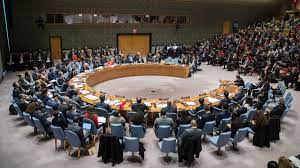
The Economic Community of West African States (ECOWAS) has congratulated Liberia following its election to a non-permanent seat on the United Nations Security Council (UNSC), describing the achievement as testament to international confidence in the West African nation’s journey of resilience. The regional bloc pledged total backing to ensure Liberia’s success during its two-year term representing Africa on the global peace and security body.
Liberia secured 181 votes during the June 3, 2025 election at the United Nations General Assembly in New York, running unopposed for the African Group seat. The country will officially serve on the 15-member Security Council from January 1, 2026, through December 31, 2027, alongside the Democratic Republic of the Congo as Africa’s representatives.
In a statement released from Abuja on February 2, 2026, ECOWAS pledged the total backing of its member states to ensure Liberia’s success on the global stage. The regional body stated that Monrovia is expected to champion West African and broader continental interests, focusing on democracy, peace, and security throughout its tenure.
The ECOWAS Commission highlighted key agenda items that Liberia should prioritize during its Security Council membership. These include advocating for full implementation of United Nations Security Council (UNSC) Resolution 2719 on financing African peace operations, advancing the African Continental Free Trade Area (AfCFTA), and pushing for comprehensive Security Council reform to give Africa greater representation.
This marks a historic return for Liberia, which last served on the Council in 1961, making this its first full elected mandate in 65 years. The country’s successful campaign was led by Foreign Minister Sara Beysolow Nyanti, who secured endorsements from the African Union, ECOWAS, and individual member states through what officials described as proactive diplomacy throughout 2025.
President Joseph Nyuma Boakai watched the live announcement alongside government officials, lawmakers, and cabinet ministers at the Ministry of Foreign Affairs in Monrovia. The moment was celebrated as a defining milestone in Liberia’s diplomatic history, reflecting the country’s transformation from a nation recovering from civil conflict to a contributor to global peace and security.
At the formal flag installation ceremony on January 2, 2026, at UN Headquarters, Ambassador Lewis Brown, Liberia’s Permanent Representative to the United Nations, stated that Liberia’s return reflects global confidence in the country’s journey and the values of dialogue over division, cooperation over conflict, and responsibility over isolation.
The West African nation joins Bahrain, Colombia, Democratic Republic of the Congo, and Latvia as the five newly elected non-permanent members for the 2026 to 2027 term. They replace Algeria, Guyana, Republic of Korea, Sierra Leone, and Slovenia, whose terms ended on December 31, 2025.
Liberia’s campaign emphasized its post-conflict experience as a strategic asset for the Security Council. The country hosted one of the longest United Nations peacekeeping missions, which concluded in 2018, and has since demonstrated sustained democratic governance through four peaceful electoral transitions.
During its campaign, Liberia pledged support for the African Union’s Silencing the Guns initiative aimed at ending all conflicts on the continent by 2030. Officials indicated the country will use its Council tenure to advocate for curbing the illicit flow of small arms and promoting African-led peace initiatives across the continent.
The Security Council seat provides Liberia with a direct platform to amplify African perspectives on global security matters for the next two years. As one of the world’s largest ship registries, Liberia is expected to play a significant role in maritime security debates, addressing piracy and safeguarding international shipping routes.
Ambassador Brown emphasized that while the nameplate will read Liberia, the seat belongs to Africa, though Liberia’s outlook will be global, rooted in the conviction that peaceful coexistence is a shared responsibility.
The election occurred at a critical juncture for international peace and security, with ongoing conflicts in Ukraine, Gaza, Sudan, and the Democratic Republic of the Congo dominating the Security Council’s agenda. Liberia’s contribution to these discussions will be watched closely by regional and international partners.

