

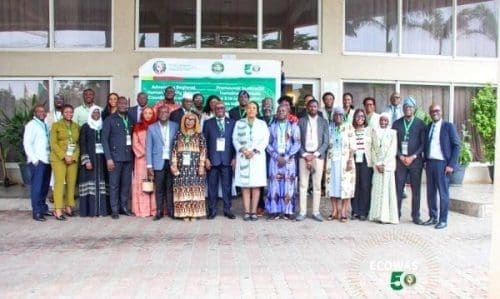
The Economic Community of West African States opened a three-day regional workshop in Abuja on Tuesday to strengthen health surveillance systems and promote human security across West Africa.
The workshop, running from September 3-5, brings together health analysts from National Early Warning Centres across ECOWAS member states to enhance epidemic surveillance capabilities and improve coordination on health response measures. The initiative comes as the region faces ongoing challenges from disease outbreaks that transcend national borders.
Dr. Onyinye Onwuka, Acting Director of the ECOWAS Early Warning Directorate, officially opened the workshop on behalf of Vice-President Damtien L. Tchintchibidja of the ECOWAS Commission. The event represents a collaborative effort between the Early Warning Directorate and the Regional Centre for Surveillance and Disease Control.
“Health is not merely a sectoral issue but a fundamental pillar of human security,” emphasized Dr. Onwuka during the opening ceremony, highlighting the interconnected nature of health and regional stability.
The workshop addresses five core objectives designed to strengthen regional health security infrastructure. Participants will focus on enhancing epidemiological data sharing through national and regional early warning systems, developing practical skills for early detection of public health threats, and facilitating knowledge exchange on surveillance best practices.
Dr. Mamadou Diarrassouba, Executive Director of the ECOWAS Regional Centre for Surveillance and Disease Control, outlined the Centre’s mandate to support member states in strengthening their capacities to prevent, detect, prepare for, and respond to health emergencies. The Centre operates through National Coordination Institutions to reinforce surveillance systems and enhance real-time data sharing capabilities.
The timing of the workshop reflects lessons learned from recent health crises that demonstrated the vulnerability of regional health systems to cross-border disease transmission. ECOWAS officials emphasized that epidemics and public health emergencies require collective action and coordinated responses that no single country can manage alone.
Participants include representatives from WHO and the Africa Centres for Disease Control and Prevention, alongside ECOWAS experts and regional partners. The diverse stakeholder group reflects the comprehensive approach needed to address complex health security challenges facing the West African region.
The workshop employs a dynamic and participatory format featuring expert presentations, group discussions, and brainstorming sessions designed to promote knowledge sharing and collaborative planning. This methodology aims to translate technical expertise into practical solutions adaptable to different national contexts within the ECOWAS framework.
The initiative builds on ECOWAS’s broader mandate to maintain peace and security in the region, extending traditional security concepts to encompass health threats that can destabilize communities and undermine development efforts. The Early Warning Directorate has previously focused on governance and human rights monitoring but increasingly recognizes health security as integral to comprehensive regional stability.
Regional health security challenges have intensified in recent years, with outbreaks of Lassa fever, Ebola, and other infectious diseases highlighting gaps in surveillance and response capabilities. The workshop addresses these vulnerabilities by strengthening the ECOWAS Early Warning and Response Network, which enables collection of real-time data for policy-making and swift responses to emerging threats.
The Regional Centre for Surveillance and Disease Control serves as a specialized agency supporting member states in building resilient health systems capable of managing complex health emergencies. Its collaboration with the Early Warning Directorate represents institutional coordination essential for effective regional health governance.
Workshop outcomes will inform ongoing efforts to improve disease surveillance systems and enhance the interoperability of digital platforms used for health monitoring across member states. The knowledge sharing component aims to identify best practices that can be adapted and scaled across different national health systems within the ECOWAS region.

