

International relations expert Dr Vladimir Antwi-Danso has described President John Dramani Mahama’s call for African representation on the United Nations (UN) Security Council as ineffective, arguing that similar proposals have been repeatedly rejected.
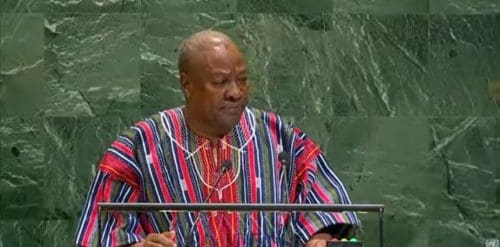
President Mahama addressed the 80th UN General Assembly on September 25, demanding permanent African representation on the Security Council and describing the current global system as “rigged against Africa.”
The Ghanaian leader told delegates that “a continent as large as Africa with its numerous UN Member states would have at least one permanent seat on the Security Council” and argued that veto power should not be restricted to five nations.
Dr Antwi-Danso, appearing on TV3’s New Day program Friday, dismissed the proposal’s prospects, stating it “will not go anywhere” and describing the demand as “moot” despite its legitimacy.
The expert highlighted the fundamental structural challenge facing African reform efforts. He explained that any Security Council expansion requires approval from current permanent members, who possess veto powers that could block African representation.
“This proposal will go back to the Security Council, and they have to say yes, and yet they have the veto powers,” Antwi-Danso observed. “You will want to be a veto member, and veto members will have to accept you. Are you sure they are going to accept you to contradict them?”
Mahama’s speech referenced previous African appeals, noting that “30 years later, we African leaders are still making the same simple request for a permanent seat on the Security Council with the power of a veto.”
The President drew historical context from Africa’s limited founding membership in the UN, noting that only four African states—Egypt, Ethiopia, Liberia, and South Africa—were among the original 51 members in 1945. He attributed this underrepresentation to colonial legacy following the 1884 Berlin Conference.
Dr Antwi-Danso proposed an alternative strategy, advocating for complete UN system overhaul rather than incremental reform. He suggested African countries should push for “a new charter” based on historical precedent that major global upheavals necessitate institutional restructuring.
The expert’s analysis reflects broader skepticism about traditional reform pathways within existing UN frameworks. His position emphasizes structural barriers that have consistently prevented Security Council expansion despite decades of advocacy from developing nations.
Mahama also challenged absolute veto power, stating that “no single nation should be able to exercise an absolute veto to serve its own interest in a dispute” and suggesting General Assembly oversight of Security Council vetoes.
Private legal practitioner Oliver Barker-Vormawor has separately called for African countries to boycott the 81st UN General Assembly, proposing simultaneous African Union meetings as pressure for Security Council reform. His suggestion represents more radical approaches to addressing UN representational imbalances.
The debate occurs amid growing frustration among African leaders about continental underrepresentation in global governance structures despite Africa’s 54 UN member states comprising more than a quarter of total membership.
Dr Antwi-Danso serves as Dean and Director of Academic Affairs at the Ghana Armed Forces Command and Staff College, bringing extensive international relations expertise to his analysis of UN reform prospects.
Current Security Council permanent members—the United States, United Kingdom, France, Russia, and China—have historically resisted expansion proposals that would dilute their influence over international security decisions.
President Mahama’s address also highlighted Ghana’s economic transformation under his leadership, citing reduced inflation and currency appreciation as evidence of African capability in global leadership.
The ongoing debate reflects tensions between African aspirations for greater global influence and institutional realities that favor existing power structures. Reform advocates face the challenge of convincing beneficiaries of current arrangements to accept reduced relative influence.
African diplomatic efforts continue seeking support from non-permanent Security Council members and other developing nations, though success remains uncertain given procedural requirements for institutional change.

