

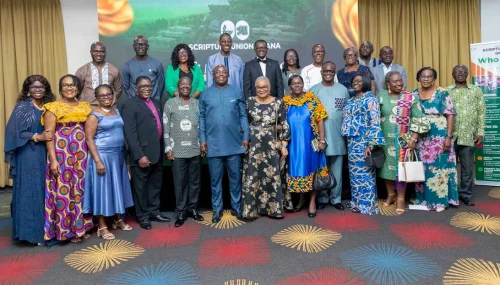
A major Ghanaian conglomerate is putting serious money behind what its leader calls an existential investment: anchoring the next generation before social media and materialism complete their cultural reshape.
Eric Seddy Kutortse, Executive Chairman of First Sky Group, announced backing for a GH¢15 million ($1.2 million) Scripture Union (SU) campsite at Aburi-Pepawani during a fundraising dinner in Accra last week. The project isn’t philanthropy for its own sake—it’s a calculated bet on human capital in a country where youth demographics could either fuel growth or deepen unemployment.
“We are raising leaders, not just money,” Kutortse told guests at the fundraising event. “When we are gone, the Gospel must not fade with us. So let us act now.” It’s the kind of statement that blends business pragmatism with personal conviction, reflecting how corporate social responsibility in Ghana increasingly intersects with questions about what kind of workforce and society businesses will inherit.
The 14.2-acre site will house a 1,000-capacity auditorium, accommodation blocks, chalets, prayer gardens and sports facilities. For Scripture Union, Ghana’s largest para-church organization with roots dating to around 1889-1890, it solves a logistical crisis. Education policies restricting the use of school facilities for camps have left the organization scrambling for venues, while demand from churches and youth groups keeps growing.
General Director Rev. Derek Koomson framed the campsite as essential infrastructure for sustaining programs that have shaped generations of Ghanaian professionals and leaders. Whether those programs will remain relevant to young people growing up with TikTok and instant digital gratification is the challenge religious organizations everywhere are wrestling with.
For First Sky, which operates in construction, real estate, and cocoa processing, the investment aligns with a broader corporate posture. The company has committed to dedicating 30% of post-tax profits to support the poor, needy, and church missions—an unusually high allocation that positions social impact as core strategy rather than peripheral goodwill.
Kutortse’s personal history factors prominently. His own formation at Kpando Secondary School through Scripture Union camps convinced him that structured moral development produces better business leaders and employees. “Ghanaians are generous, but they must never be taken for granted,” he warned project managers, making clear that accountability would determine whether future donations materialize.
Industry observers note the reputational calculus. In competitive markets where Environmental, Social and Governance (ESG) credentials increasingly influence contracts and investor confidence, supporting youth development builds tangible goodwill. “This isn’t just feel-good philanthropy,” said one Accra-based business consultant. “Companies need a disciplined, resilient workforce. These programs help create that foundation.”
The timing matters. Ghana faces a persistent challenge: more than 600,000 young people enter the job market annually, but formal sector opportunities can’t absorb them. Advocates argue that combining moral guidance with leadership training creates a better-grounded pool of entrepreneurs and employees who can navigate setbacks without resorting to shortcuts or fraud.
Rev. Albert Ocran, Senior Pastor of The New Wine Temple and a Scripture Union alumnus, described the campsite as offering “an ideal environment for young people to find direction, resilience and purpose—skills that feed directly into economic productivity.” It’s a claim that’s difficult to quantify but resonates with business leaders who’ve watched talented graduates crumble under pressure or chase quick money through dubious schemes.
Whether faith-based youth development translates into measurable economic outcomes remains debated. But for companies like First Sky operating in an environment where trust, character, and long-term thinking often determine success or failure, the investment represents a hedge against cultural drift that could undermine the business ecosystem itself.
Kutortse described the initiative as “a necessity” rather than a luxury, suggesting he views it as infrastructure investment comparable to roads or telecommunications. If managed transparently and adapted to contemporary youth culture, the campsite could become a template for how Ghanaian businesses deploy resources to address social infrastructure gaps while strengthening the foundations on which commerce depends.
One observer put it this way: “Anchoring youth development through faith-based and leadership programs may not show immediate profit, but it builds the human foundation on which business and society thrive.” For First Sky, that foundation apparently justifies a seven-figure commitment and Kutortse’s willingness to personally champion the project suggests he’s betting his reputation on the outcome.

