

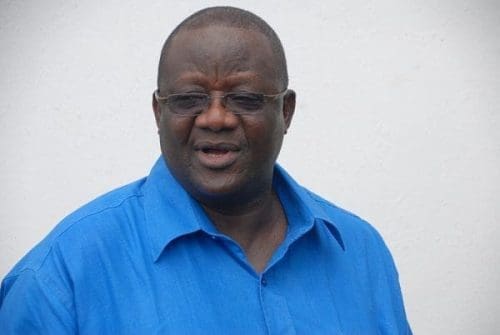
Suspended party leader calls political involvement “thankless job” after court upholds removal
Paul Afoko, former National Chairman of Ghana’s New Patriotic Party, has declared his permanent withdrawal from active party politics, describing his experience as deeply painful and unrewarding.
In a recent interview with Accra-based Starr FM, Afoko revealed that his 2015 suspension from the NPP leadership and the subsequent court ruling that upheld it had fundamentally changed his perspective on political involvement. The veteran politician described the legal judgment as “bizarre” and expressed his determination never to seek another active political position.
The former chairman’s disillusionment stems from a contentious period in NPP history when internal party conflicts led to his indefinite suspension by the party’s Disciplinary Committee. The High Court’s Human Rights Division later dismissed his legal challenge, ruling that the suspension process was “fair, lawful and just.”
“After my suspension had gone through and I went to court, and the court came up with that bizarre judgment, I walked away and said, never again,” Afoko stated during the interview. His comments reflect the depth of his disappointment with both party politics and the judicial process.
The political veteran went further to characterize his entire experience in party leadership as fundamentally unrewarding. “I’m not going to look for any active position in party politics, because it’s a thankless job,” he declared, signaling a definitive end to what had been a significant political career.
Afoko’s relationship with his former party colleagues appears to have evolved significantly since his removal from office. He admitted that for a considerable period, he could not bear to watch NPP members on television due to his strong feelings about their conduct during his suspension.
“These days, when I see them on TV, I don’t change channels. I used to change channels because I couldn’t stand the sight of people I believed were liars,” he revealed, suggesting that while his bitterness may have softened somewhat, the fundamental trust has been broken.
The suspension of Afoko occurred during a particularly turbulent period for the NPP, with internal disputes affecting party unity ahead of crucial electoral cycles. His removal from the chairmanship position was part of broader disciplinary actions taken by party leadership against what they considered disruptive behavior.
Afoko’s case became emblematic of internal party democracy challenges within Ghana’s major political parties, where disciplinary procedures and their fairness have often been subjects of intense debate. His unsuccessful legal challenge highlighted the complex relationship between party internal governance and judicial oversight.
The former chairman’s decision to step away from active politics represents a significant personal and political shift for someone who had invested considerable time and energy in party leadership. His experience serves as a cautionary tale about the personal costs of political involvement, particularly when internal party conflicts escalate to legal proceedings.
Political observers note that Afoko’s withdrawal reflects broader challenges within Ghana’s political landscape, where party loyalty and internal discipline sometimes conflict with individual political ambitions and principles. His characterization of politics as a “thankless job” resonates with similar sentiments expressed by other former political leaders who have experienced internal party conflicts.
The impact of Afoko’s departure from active politics extends beyond his personal circumstances, representing a loss of experienced leadership within the NPP’s ranks. However, his decision appears final, based on his emphatic statements about never seeking another active political position.

