

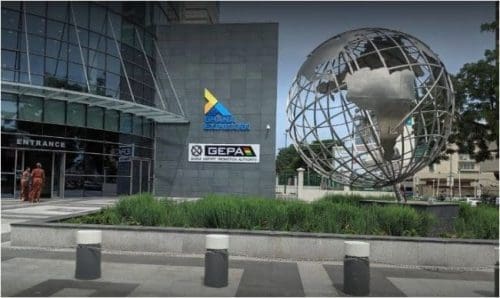
Six days from now, the Ghana Export-Import Bank (GEXIM) will convene the most consequential gathering in its ten-year history, bringing heads of development finance institutions, export credit agencies, trade ministers, commercial banks, and private sector leaders to Accra at a moment when Ghana’s export strategy faces both its greatest opportunity and its most pressing test.
The two-day GEXIM@10 International Conference opens on March 25 at the Kempinski Gold Coast Hotel in Accra under the theme “A Decade of Enabling Export Trade and Industrial Transformation: Resetting GEXIM for the Next Frontier,” with President John Dramani Mahama and the Minister of Trade and Industry expected to attend.
The agenda covers global shifts in export finance, blended finance models, improved access for micro, small and medium-sized enterprises (MSMEs), and priority value chains including garments and apparel, poultry, rice, and oil palm. Sessions will also explore the application of artificial intelligence (AI) and digital tools within export finance. The SME Finance Forum has confirmed its role as a knowledge partner, giving the event a formal international institutional standing beyond a national celebration.
The timing sharpens what is already a strategically significant moment. GEXIM was established under Act 911 in 2016 with a mandate to shift Ghana’s export profile from raw commodities toward value-added industrial products. Over the decade since, the bank has provided financing, guarantees, and technical assistance to businesses across priority sectors, while the broader question of whether Ghana has meaningfully moved up global value chains remains an open and contested one.
The numbers provide important context. Ghana’s trade surplus widened to $3.7 billion in the first two months of 2026, supported heavily by gold and cocoa at prices near historic highs. Yet the composition of that surplus reflects the same structural dependence on unprocessed commodities that GEXIM was created to address. Gold, cocoa beans, and crude oil continue to dominate export revenues, while manufactured and processed goods remain a marginal share of outbound trade.
GEXIM Chief Executive Officer Sylvester Mensah has described 2026 as a critical turning point, noting that the bank’s five-year strategic plan covering 2025 to 2030 enters its full implementation phase this year. He said the conference would serve as both a reflection and a reset, producing practical recommendations rather than ceremonial resolutions.
The conference also comes as the African Continental Free Trade Area (AfCFTA), headquartered in Accra, begins to operationalise its guided trade initiative across a growing number of participating countries. Ghana’s geographic position, port infrastructure, and institutional depth give it a structural advantage in anchoring regional trade flows — an advantage that export finance institutions like GEXIM are positioned to help convert into measurable industrial growth.
Board Chairman Dr. Joseph Nyarkotei Dorh said the next decade would be defined by how boldly GEXIM collaborates, how intelligently it innovates, and how consistently it invests in Ghanaian enterprise. The test of those words begins when the conference closes on March 26.

