

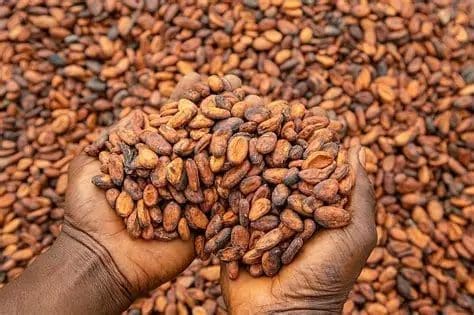
Ghana’s cocoa sector has become the most bitterly contested political battleground of 2026, with accusations flying across party lines, protesters on the streets, farmers unpaid for months, and a 28 percent cut in the producer price that has left nearly one million farming households absorbing losses they say they did not cause.
The crisis crystallised publicly on February 12, 2026, when Finance Minister Dr. Cassiel Ato Forson announced a sweeping reform package that simultaneously confirmed what many farmers already knew: the Ghana Cocoa Board (COCOBOD) was in severe financial distress. The government released GH¢855 million to settle arrears owed to farmers after a prolonged payment crisis that left many producers unpaid for months despite delivering their produce to Licensed Buying Companies (LBCs). The broader reform package included converting GH¢5.8 billion in legacy debt into equity, introducing an automatic price adjustment system tied to international market trends, replacing the 32-year-old syndicated loan financing model with domestic cocoa bonds, and mandating that at least 50 percent of all cocoa beans be processed locally from the 2026/2027 crop season.
The scale of the inherited debt has become the central flashpoint. Finance Committee Chairman and Bolgatanga Central Member of Parliament (MP) Isaac Adongo stated that COCOBOD entered 2025 carrying approximately GH¢17.8 billion in loans, and that when all operational liabilities were added, total exposure exceeded GH¢60 billion. Sagnarigu MP Attah Issah backed that figure, noting that the government had already paid GH¢3.4 billion of that inherited debt burden. Issah went further, hinting at prosecutions to come, warning that “when we start arresting people over the rot created at COCOBOD, no one should claim witch-hunt.”
The New Patriotic Party (NPP) has rejected the framing entirely. Director of Communications Richard Ahiagbah has been relentless in his pushback, arguing that the NDC administration has been in office long enough to own the consequences of its own decisions. “You have been in power for fourteen months, fix it,” he said bluntly. He also alleged that COCOBOD’s decision to hold back 70 percent of the crop in 2025 in anticipation of price rises, only to see the international market drop from approximately USD 8,000 per tonne to around USD 4,000 per tonne, was a catastrophic miscalculation made on this government’s watch. “COCOBOD took a gamble and it backfired,” he said. Ahiagbah also described the NDC’s public response as “arrogant,” accusing party figures of trivialising the suffering of farmers.
Agriculture Minister Eric Opoku countered that NPP-era forward sales of approximately 700,000 tonnes of cocoa went undelivered, generating a 330,000-tonne rollover debt, and that GH¢8.1 billion borrowed through commercial banks via cocoa bills could not be repaid and was folded into the Domestic Debt Exchange Programme (DDEP).
Former Asante-Akim North MP Andy Appiah-Kubi offered a structural critique that cut across the political divide, arguing that COCOBOD should never have been in the position of borrowing to buy cocoa in the first place. He described the proposed debt-to-equity conversion as a measure that does not address root causes and called instead for value creation through deeper processing and better revenue retention.
Ghana Shippers’ Authority Chief Executive Officer Prof. Ransford Gyampo brought a more measured voice to the debate, observing that the crisis was not born in a single year. “Governance is a continuum,” he said, adding that the promise of higher prices made during the election period could not be sustained without a corresponding revenue base. NDC Cadres provided data to support this, noting that when international cocoa prices stood at USD 12,931 per tonne, farmers received the equivalent of GH¢33,120 per tonne. Today, with prices at roughly USD 4,100 per tonne, farmers are receiving approximately GH¢41,392 per tonne, close to the full revenue Ghana earns per tonne exported.
The President of the cocoa farmers association warned that the politicisation of COCOBOD itself is a structural problem, arguing that political interference breeds corruption and limits accountability, and calling for a thorough investigation and prosecution of those responsible for any mismanagement of funds.
On the question of leadership, the NDC has rallied around COCOBOD Chief Executive Officer Dr. Randy Abbey. NDC operative James Agbey stated that Abbey inherited a cumulative debt of GH¢32.9 billion and a negative equity position of approximately GH¢3.9 billion, meaning the institution’s liabilities already exceeded its assets on the day he took office. Critics from outside government, however, have pointed to alleged internal conflict between Abbey and the Managing Director of the Cocoa Marketing Company (CMC), arguing that the resulting breakdown in coordination has stalled critical pricing decisions and disrupted cocoa purchasing operations.
The coming weeks will test whether the reform package can restore farmer confidence or whether the widening political battle over blame will continue to overshadow the structural work that all sides agree the sector urgently needs.

