

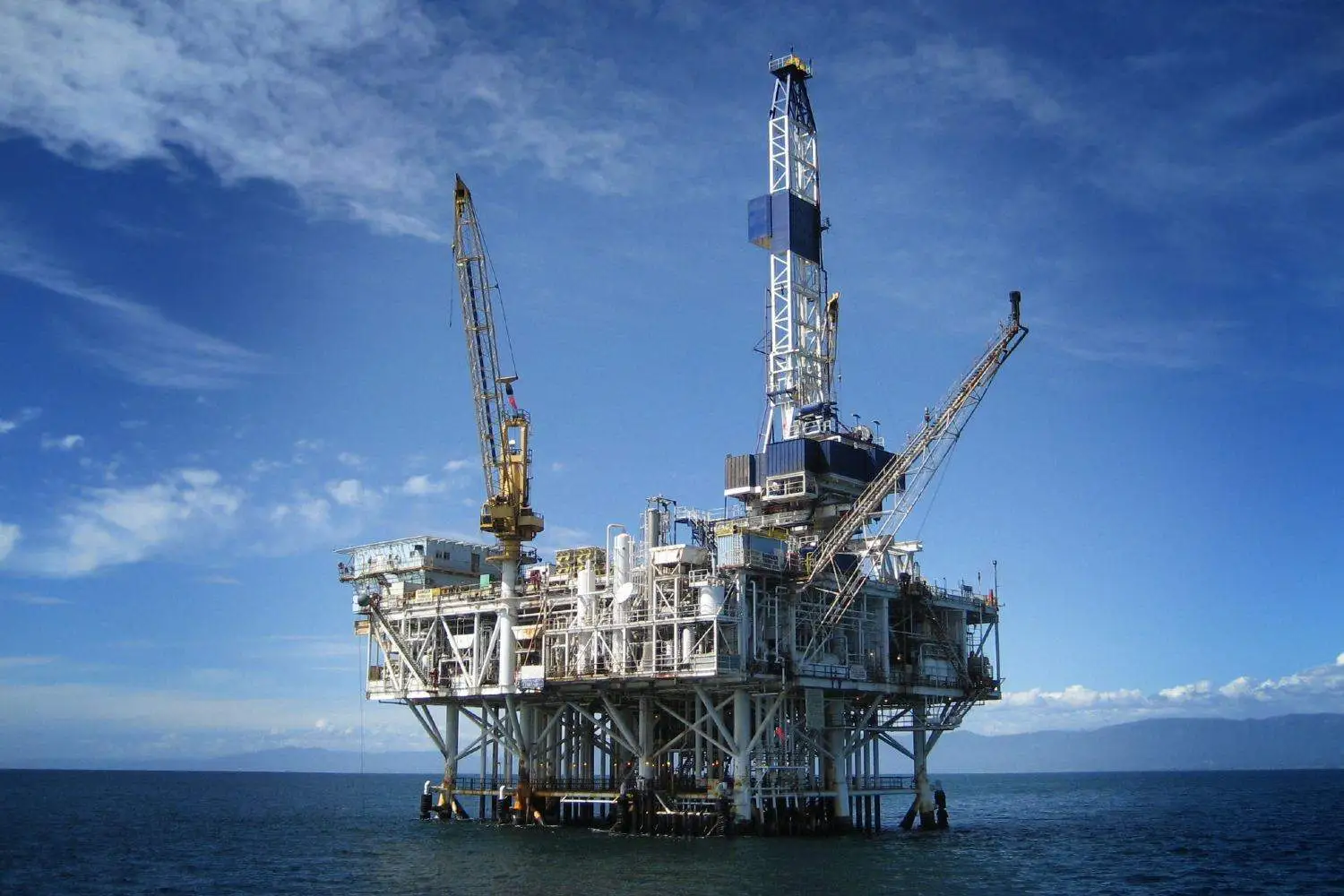
Ghana’s upstream oil sector chief says the country stands at a genuine turning point, with committed investment of $3.5 billion from existing operators and renewed interest from global energy majors offering a realistic path out of a six-year production decline.
David Ampofo, Chief Executive Officer of the Ghana Upstream Petroleum Chamber, made the assessment in an interview in which he outlined both the reasons for the sector’s deterioration and the conditions needed to reverse it.
The scale of the decline is stark. Crude oil output decreased from 71.44 million barrels in 2019 to 37.3 million barrels in 2025, reflecting an average annual decline of about 9 percent. Petroleum receipts fell by 43.27 percent, from $1.36 billion in 2024 to $770.27 million in 2025.
Ampofo attributed the decline to a series of overlapping failures: the protracted legal dispute between Eni and Springfield over the unitisation of their adjacent fields, the incomplete execution of a 2018 licensing round that failed to attract meaningful exploration investment, ExxonMobil’s departure from Ghana, and the prolonged failure to bring the Pecan block, discovered over a decade ago, into production. He also cited the damage caused by extended uncertainty over proposed changes to Ghana’s fiscal regime for the upstream sector.
On the path forward, Ampofo identified three parallel actions. Fields still in production, particularly Jubilee, Tweneboa-Enyenra-Ntomme (TEN), and Sankofa Gye-Nyame (SGN), retain significant recoverable reserves and could respond to aggressive infill drilling within one to three years. Accelerating the development of discoveries such as Pecan and Eni’s Eban-Akoma field represents a medium-term growth lever. Marginal fields, he argued, need a dedicated, lighter regulatory framework to make them economically viable for smaller, specialised operators.
The investment picture is already shifting. Partners in the Jubilee and TEN fields have committed approximately $2 billion to drill new wells and expand subsea infrastructure, while Eni and its Offshore Cape Three Points (OCTP) partners have committed $1.5 billion to expand production and develop the Eban-Akoma field under the Sankofa project. Ampofo also noted renewed interest from ExxonMobil, Shell, CNOOC, Petrobras, and Chevron, describing the urgency of completing Ghana’s pending petroleum legislative reforms so that companies can sign petroleum agreements and begin work.
“Ghana’s upstream sector is not running out of resources. It is running out of time,” Ampofo said, adding that every delay in completing the fiscal reform process represents a window of investor interest that may close.
On gas, Ampofo described the sector as the strongest-performing part of Ghana’s energy system, with the potential to anchor energy security and industrial growth, provided infrastructure bottlenecks in processing and pipeline capacity are addressed and domestic gas is consistently prioritised over exports.
The Public Interest and Accountability Committee (PIAC) has called for urgent measures including attracting new investment into existing fields, improving fiscal and regulatory frameworks, and strengthening data acquisition in unexplored basins.

