LATEST ARTICLES

Canadian with 40 layers of tattoos earns Guinness record

0

Canadian Jeremy “Remy” Schofield has been named the world’s most tattooed living man for layered ink, with about 40 layers covering at least 90 per cent of his body.

Guinness World Records announced the title, most tattooed person living (multiple layers) (male), on 14 September 2026, and Schofield, known online as Ephemeral Remy, features in its 2027 edition. Some parts of his body have been tattooed more than 100 times.

The record exists because the man who held the main title for two decades stepped aside. Lucky Diamond Rich, a New Zealand-born Australian long recognised as the world’s most tattooed man, approached Guinness World Records and suggested Schofield should take his crown. After a video call with both men, Editor-in-Chief Craig Glenday concluded there were two distinct achievements and split the title.

Rich now holds the record for total coverage, with 100 per cent of his skin inked, including his eyelids, gums, the inside of his ears and the skin between his toes. Schofield holds the record for layering. Glenday said Schofield would hold both if he ever covered his face, palms and soles, which he has so far refused to do.

Schofield’s first tattoo was his son’s name on his left inner forearm, and he has been inked since 2005. A former cook who now manages tattoo shops and social media companies, he had more than 100 piercings before tattoos took over, and said he never set out to cover his whole body or chase a record. He has spent well over 1,000 hours in the chair, worked with more than 40 artists and still gets tattooed two or three times a week, with appointments booked three to six months ahead.

Many of his designs, including an eye centrepiece on his torso, are drawings he made as a child. Others include roses, sea creatures, demons, the vampire Nosferatu and a dog in a tuxedo.

He said strangers in person are almost always positive, but that online he receives insults and even death threats.

His advice to first-timers is to resist rushing into full coverage. “Good things take time, this is a marathon not a sprint,” he told Guinness World Records.

The 2027 edition contains more than 3,000 records, with over 80 per cent updated since the previous book.

Ghanaian researcher takes neurodivergent users’ case to app design

0

Most social media research counts clicks and conversions. Kofi Ofori-Mensah, a Ghanaian researcher in the UK, asks autistic and other neurodivergent adults what those platforms feel like to use, and is trying to turn their answers into a product.

Ofori-Mensah studied for an MSc in Digital Marketing at the University of Roehampton in London, where his dissertation examined how neurodivergent adults in the UK experience social media marketing. He now leads NeuroDigital Support, an early-stage UK venture building a digital wellbeing tool called NuroTok. The project arrives during ADHD Awareness Month, observed every October.

His argument is that digital exclusion is not only about who lacks a phone or data. It is also about whether a platform’s design lets people take part on their own terms, a question that grows more pressing as feeds, alerts and targeted advertising shape how people learn, work and socialise.

From care work to research

Ofori-Mensah came to the subject through frontline work supporting autistic and neurodivergent adults in the UK, according to NeuroDigital Support. That work led him to look at how algorithm-curated feeds, notifications and online adverts affect people’s daily lives.

His dissertation used thematic analysis, a qualitative method that draws patterns from participants’ own accounts, so that users rather than platform metrics defined what engagement and harm meant. He has also written a paper, titled Algorithmic Exclusion and Neurodivergent Users: How Platform Design Shapes Belonging and Mental Health Online, which sets out a conceptual framework for how recommendation systems, engagement-driven design and content moderation may clash with neurodivergent users’ needs.

He received a Roehampton Futures Award this year and works as a research assistant at the university, Adom Online reported. He has also written two books on the theme, The Invisible Users and The Invisible Struggle.

His questions sit within a growing field. A scoping review by researchers at Heriot-Watt University of studies on artificial intelligence designed for neurodivergent users found that most did not involve neurodivergent people in their design and paid too little attention to sensory and cognitive differences.

From paper to product

NuroTok is meant to apply the research. The company says it will offer a personal sensory profile and tools to help users recognise what is overloading them, such as autoplay, constant notifications or endless scrolling. It describes the platform as a wellbeing tool, not a treatment for autism or Attention-Deficit/Hyperactivity Disorder (ADHD).

The company is candid that this remains unproven. NuroTok is still in development and has not been released, and no independent testing has been published. The research, NeuroDigital Support says, raises questions to investigate rather than proving the tools work.

Ofori-Mensah wants neurodivergent people involved in the design through research partnerships and user feedback, so that developers stop building around a single presumed standard user.

The Ghana angle

Although the venture is based in the UK, Ofori-Mensah argues that Ghana and other African countries need their own research into neurodiversity and digital life, since culture, language, infrastructure and access to support all shape how people use technology. UK findings cannot simply be assumed to apply.

That research base is thin. The few Ghanaian studies of ADHD come mainly from primary schools and reach widely different results, from 5 per cent of pupils screened in Oforikrom, Kumasi, to 19.1 per cent in a cluster of schools in Accra’s Ayawaso sub-metro.

Ghanaian founder pitches ADHD-aware design for digital platforms

0

As ADHD Awareness Month runs through October, a Ghanaian start-up is arguing that digital inclusion should cover how apps feel to use, not only whether people can get online.

Kofi Ofori-Mensah, founder of NeuroDigital Support, is developing a platform called NuroTok aimed at autistic and other neurodivergent users, including people with Attention-Deficit/Hyperactivity Disorder (ADHD). The company says the tool will let users build a personal sensory profile and use a toolkit to spot what in their digital routine may be overwhelming them, from constant notifications to endless scrolling.

The pitch touches a gap in Ghana’s conversation about disability. Smartphones and social media are now part of daily life, yet there is little local research on how people with ADHD experience them, and scarce national data on the condition itself.

What the numbers show

The Ghanaian studies that do exist come mostly from primary schools and vary widely with method and location. A survey of 1,540 pupils in Oforikrom, Kumasi, found 5 per cent showed ADHD symptoms on a standard rating scale. A study of 400 pupils in Hohoe in the Volta Region put the figure at 12.8 per cent. Research in a cluster of primary schools in Accra’s Ayawaso sub-metro reported 19.1 per cent. The authors of the Hohoe study noted that few studies on ADHD prevalence and its effects on schooling had been done in Ghana.

ADHD is a neurodevelopmental condition affecting attention, activity and impulse control, not a matter of discipline, and people experience it differently. Some find a stream of alerts and competing information hard to manage. Others rely on online tools to learn, communicate and stay organised.

Design from the start

Ofori-Mensah’s case is that developers should plan for a range of minds from the outset, rather than expecting everyone to adapt to one design. According to NeuroDigital Support, his interest draws on a background in social care and academic research on social media marketing and the experiences of neurodivergent users.

The company describes NuroTok as a digital wellbeing concept, not a substitute for professional ADHD assessment, treatment or support. It also says neurodivergent people should help decide which design choices help, which create barriers and where more research is needed.

Still a concept

NuroTok is still in development. It has not been released publicly, and no independent testing or published evidence of its effect on users is available. The company itself says the platform’s value will depend on turning its ideas into practical tools, gathering user feedback, showing real-world benefit and putting privacy safeguards in place.

Privacy will be a live question. A tool that records how users respond to sensory input would collect personal information, and Ghana’s Data Protection Commission has declared 2026 a year of enforcement for organisations that process personal data.

Banky W becomes pastor and teacher after 2023 election loss

0

Nigerian singer Banky W said on 8 October 2026 that he now serves as an associate pastor at a Maryland church, a path he traced to his 2023 election defeat.

The musician, filmmaker and entrepreneur, whose real name is Olubankole Wellington, said in a social media post marking his first year at Union Church that he is also its global ambassador and works as a teacher and leader at Union College. He said he would keep making music and films and running his businesses alongside the new roles.

The post offers a rare personal account from a Nigerian entertainer who tried to move into elected office twice. Banky W contested the Eti-Osa Federal Constituency seat in Lagos for the House of Representatives in 2019 on the Modern Democratic Party ticket, losing to Babajide Obanikoro of the All Progressives Congress (APC). He ran again in February 2023 for the Peoples Democratic Party (PDP), finishing second with 18,666 votes behind Thaddeus Attah of the Labour Party, who polled 24,075. Obanikoro came third with 16,901.

Banky W and Obanikoro challenged the result. An election tribunal ordered a supplementary poll in 32 polling units in September 2023, but the Court of Appeal in Lagos overturned that ruling in November 2023 and affirmed Attah’s victory.

The singer wrote that the 2023 loss left him heartbroken and that he turned to God for direction, unsure whether his future lay in leadership, ministry, entertainment or business. He said he came to see that he did not need to pick one. “It wasn’t either/or. It was all of the above,” he wrote, describing the change as an expansion of his calling rather than a narrowing of it.

He said commuting between Lagos and the Washington, D.C., Maryland and Virginia area was not always easy but had been worth it. He thanked Union Church’s senior pastor, Stephen Chandler, and his wife, Zai Chandler, for their influence on his faith.

Union Church, based in Columbia, Maryland, was founded in 2011 and has grown from about 50 members to thousands of weekly worshippers, according to Chandler’s published author profile. Outreach magazine has named it the fastest-growing church in the United States.

Banky W, who rose to fame in the 2000s and founded the record label Empire Mates Entertainment (EME), said more entertainment projects were on the way.

Dzata Cement targets top spot after five years

0

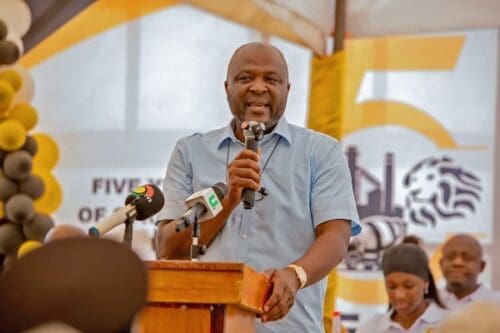
Five years after Ibrahim Mahama watched his trucks load at a rival’s plant and decided he could build one himself, his Dzata Cement is days from filling its 30 millionth bag and says it wants to be Ghana’s biggest cement maker by 2030.

The Tema-based company marked its fifth anniversary on Tuesday 6 October 2026 with plans to lift annual capacity to about three million tonnes, add new cement grades and build an automated packing plant. It describes itself as Ghana’s only wholly Ghanaian-owned cement manufacturer.

The ambition lands in a crowded market. Ghana has 15 major cement producers and installed capacity of more than 10 million tonnes a year, Trade Minister Elizabeth Ofosu-Adjare said this year, and the industry depends heavily on imported clinker, the main ingredient in cement. Reaching three million tonnes would give Dzata a large share of national capacity.

From haulier to manufacturer

Mahama, founder, sole shareholder and Group Chief Executive Officer of DZATA Holdings, built his early business transporting cement and doing mining contract work. He told guests at the anniversary that following his trucks into the Ghacem plant in Takoradi showed him how cement was made, and convinced him the job was within reach.

“I looked at the structure and said, look, I could build one,” he said.

He travelled to Germany to engage equipment makers and assemble financing. Construction and installation ran into serious money and operational problems, he said, and outside help was needed to finish putting in the equipment. He recalled that a senior figure in the industry had told him a Ghanaian could not build such a plant, a remark he said hardened his resolve.

Mahama, a younger brother of President John Dramani Mahama, said he wanted to show that Ghanaians could own large industrial businesses rather than only work for foreign ones. “We can’t always be beggars and we can’t only just be employees to foreign companies. We can build it ourselves,” he said.

Distributors to the rescue

The launch nearly stalled when the company struggled to raise money to clear imported cement at the port. Mahama said distributors pooled resources to get the consignment released. “They all joined hands together, the cement came, we allocated it to them, and then Dzata Cement started,” he said.

He also thanked former Trade Minister Alan Kyerematen, who served under former President Nana Addo Dankwa Akufo-Addo, for backing the project.

Inside the plant

The plant sits on 10 acres near Tema Port and represents an investment of more than $100 million, the company says. It makes Ordinary Portland Cement using equipment from Germany’s Haver & Boecker, with bagging lines averaging 120 bags a minute and output of about 80,000 bags a day. The company puts its annual capacity at about two million tonnes.

A family handover

Mahama said he had stepped back from daily management so younger leaders could learn by taking risks. His daughter, Nafisa Mahama, is Managing Director.

He joked that when he once ordered cement from the company, she refused to release it until he paid, and said he had not visited the plant for about three years since.

“We won’t live forever. So sometimes we should give the children the opportunity to be able to take that risk of managing,” he said.

Nafisa Mahama thanked customers, distributors who stayed loyal through hard times, and staff, whom she called the heart of the company, and promised that employee welfare would stay a priority. She also thanked suppliers, GCB Bank, government agencies and the Chamber of Cement Producers, and said management would invest more in training its people.

The next phase

Plant Director Abderrahim Ouahab set out the near-term plan. Dzata will add cement grades, consider a 25kg bag alongside its 50kg pack, upgrade its laboratory and safety training, and seek ISO 9001, 14001 and 45001 certification for quality, environmental and workplace safety management. It also plans to use artificial intelligence and digital tools in some operations.

The largest capital item is a 300-tonne-an-hour receiver for jumbo cement bags, designed to improve handling, screening and dust collection. The company will also expand storage to 40,000 tonnes and build an automated packing facility of about 6,000 tonnes a day.

Finance Director Godfred Barnes said the company had absorbed supply-chain disruption, freight costs, inflation and currency swings in its first five years. He said the next five would require disciplined investment, stronger distribution, reliable production and tighter cost control to meet the 2030 goal.

Dzata ultimately plans to move into ready-mixed concrete and other cement-related products.

Ghana halts GoldCoast offshore gold work as fishers demand review

0

Ghana’s Minerals Commission has suspended offshore gold reconnaissance by GoldCoast GRC Ghana, but fisheries groups still want its 10 licences published and independently reviewed.

The commission directed the company to stop all activity under its offshore reconnaissance licences with immediate effect, pending wider consultation, in a statement on its Facebook page reported on 8 October 2026. It said civil society groups and others had objected to the grant and raised concerns over environmental and ecological impacts and the adequacy of consultation with affected communities.

The suspension pauses the work but leaves the central dispute open. The commission stressed that its directive is not a cancellation, revocation or termination, and that the licences remain in force. Fishing groups say the licensed area overlaps waters reserved for canoe fishers, who land most of Ghana’s catch.

What the licences cover

GoldCoast Resource Corp, the Canadian-listed parent, announced in January that the commission had granted it 10 contiguous reconnaissance licences covering about 10,000 square kilometres of Ghana’s western continental shelf, with an initial term of 12 months. A coalition of fisheries and marine civil society organisations, citing company disclosures, says the area runs about 300 kilometres along the coast from Half Assini in the Western Region to Winneba in the Central Region and reaches about 33 kilometres offshore.

According to the coalition, the company has already collected about 50,000 line-kilometres of airborne magnetic data across the whole area and is concentrating on a 500 square kilometre priority zone around the mouth of the Ankobra River. Its stated next steps include bathymetric and seismic surveys, then vibro-core drilling and bulk seabed sampling. The company has acknowledged that no mineral resource, reserve or economic viability has been established.

The Minerals Commission said the licences were granted on 9 February 2026 with the authorisation of the Minister for Lands and Natural Resources, Emmanuel Armah-Kofi Buah, and that the company had to obtain all other statutory approvals before starting exploration. GoldCoast has said it intends to carry out reconnaissance in line with Ghanaian law.

Legal and fisheries concerns

The coalition, in a statement released on 5 October, said much of the licensed area appears to fall inside the Inshore Exclusion Zone, which the Fisheries and Aquaculture Act, 2025 (Act 1146) sets at 12 nautical miles, or about 22 kilometres, from the coast.

It asked the government to clarify the legal basis for the planned work. Section 32(3) of the Minerals and Mining Act, 2006 (Act 703), as amended, bars a reconnaissance licence holder from drilling or excavating, the coalition said, while section 99(6) makes it an offence to use a floating platform or similar equipment to mine or dredge for minerals in Ghana’s waters, including the territorial sea, exclusive economic zone and continental shelf.

The stakes for fishing communities are high. Citing the Fisheries Commission’s 2025 performance report, the groups said artisanal fishers landed 282,658 tonnes, or 63.68 per cent of Ghana’s total catch. They also pointed to the recently declared Greater Cape Three Points Marine Protected Area, Ghana’s first, which lies along the same coast.

The coalition wants the government to publish the coordinates, licence instruments, conditions and approved work programmes for all 10 licences, and to commission an independent map overlaying them on the inshore zone, the protected area, fishing grounds and spawning and nursery sites. It said the government should then decide openly whether the licences continue unchanged, are redrawn to exclude sensitive areas or are cancelled where the law and evidence support it.

Separately, 46 fishers’ associations and civil society groups, including the Canoe and Fishing Gear Owners Association of Ghana, ISODEC and the Natural Resource Governance Institute, wrote to President John Dramani Mahama on 3 October seeking a halt and an independent review. The National Fisheries Association of Ghana also called for suspension, citing a provision of Act 1146 that requires anyone planning non-fishing activity likely to affect fisheries to notify the Fisheries Commission first.

The Minerals Commission said the company must cooperate with state institutions and affected stakeholders during the suspension.

MTN finance chief urges deliberate investment in women

0

Ghana’s growth depends on deliberate investment in women’s digital skills, finance and networks, MTN Ghana Chief Finance Officer Antoinette Kwofie told the Executive Women Network’s 10th anniversary conference in Accra.

Kwofie spoke at the network’s EWN@10 Conference and Expo, held at the Palms Convention Centre on 1 and 2 October 2026 under the theme “A Decade of Leadership, A Future Toward Holistic Impact: Self and Family, Career, Legacy”.

She argued that opening doors for women is not enough on its own. Women also need digital tools, financial protection, business support and professional connections to turn opportunities into lasting income, she said, describing their advancement as an economic necessity as well as a social one.

The gap she described shows up in the data. The World Bank’s Global Findex 2025 found that women in sub-Saharan Africa are 12 percentage points less likely than men to have any type of financial account, although they are as likely as men to rely solely on mobile money accounts. Among adults with accounts in low and middle-income economies, women are less likely than men to save, borrow formally or make digital payments.

Kwofie called on women already in senior roles to judge their leadership by the careers they help build. “Mentor that young woman. Champion her growth. Open a door,” she said, urging them also to make introductions and pass on lessons from their own experience.

She pointed to MTN Ghana’s Yello Ladies Network, which she helped set up and chaired at its founding, as an example of corporate support for women’s progress. The network backs the professional growth of women across the company and is part of MTN Ghana’s stated goal of reaching gender balance in its workforce by 2030. Kwofie said the company, now marking 30 years in Ghana, would keep building an environment where women can rise into leadership, and reaffirmed its support for the network.

The Executive Women Network brings together women in senior management and executive roles. Its chairperson, Janet Sunkwa-Mills, said the organisation had grown from six founding members to about 200 across 28 industries. She said it had reached more than 10,000 people over the decade through mentoring, capacity-building and youth programmes such as EWN Ellevate and Sister to Sister.

MTN takes MoMo fraud lessons to Ashaiman Timber Market traders

0

MTN Ghana took fraud-prevention advice shop to shop at the Ashaiman Timber Market during its 30th anniversary, as mobile money drives a sharp rise in reported financial fraud.

Senior executives of the telecoms company and its mobile money arm, MobileMoney FinTech Limited (MMFL), walked through the market answering complaints, fixing network problems on the spot and showing traders how to transact safely. The visit was part of MTN Ghana’s Customer Service Week, held this year under the theme “Your Story Made Ours”.

The fraud message reaches traders at a time when the risk is growing fastest in mobile money. The Bank of Ghana’s 2025 Fraud Report shows reported fraud cases among payment service providers, the category that includes mobile money operators, rose from 15,673 in 2024 to 24,124 in 2025. That pushed total fraud cases across the financial sector up 48 per cent to 24,778, with GH¢101 million at risk, while cases at banks fell.

Chief Customer Experience Officer Jemima Kotei-Walsh said MTN was dedicating the whole month to customers, and that teaching them to protect themselves from mobile money fraudsters and cybercriminals was one aim of the outreach. She said feedback gathered from traders would feed into product and service improvements, and pointed to the company’s Sales Service Walk as another programme to promote self-service platforms.

MMFL Chief Executive Officer Shaibu Haruna said micro-enterprises such as those in the timber market are among the hardest customers to serve, and that digital payments, savings, investment and insurance products could meet their daily needs. “We are what we are because of the millions of customers,” he said.

Haruna urged customers who still rely on USSD codes to switch to the MoMo app, which he said was easier to use and offered more services. Customers can now reset their MoMo PINs in the app, a feature launched the week before the outreach to spare them trips to branches, and the company is moving services such as SIM replacement onto self-service channels too.

Abdul Majeed Rufai, Senior Manager, Commercial at MMFL, took traders through MoMo’s investment and savings products and urged them to make informed choices about their money. Sales Territory Controller Joshua Quainoo also joined the walk, and customers received free SIM cards, souvenirs and gifts.

MTN said it is running similar market engagements in Kumasi and Takoradi as part of the anniversary programme.

NDC’s Nurudeen challenges Minority to prove World Cup visa claims

0

Social Investment Fund chief Abass Nurudeen has challenged the Minority to back its World Cup visa allegations against Sports Minister Kofi Adams with evidence on JoyNews’ Newsfile.

Nurudeen, a communicator for the governing National Democratic Congress, said the Minority had not named a single person on a list of about 90 people, reportedly submitted to the United States Embassy on 19 May, who had previously been refused a visa and then obtained one through the ministry’s influence. “You should be able to provide evidence to substantiate your claim,” he said.

The exchange matters because the Minority wants the minister dismissed and prosecuted, while the only official removed so far, the suspended head of the National Sports Authority (NSA), has not been charged and denies wrongdoing.

The allegations

The controversy centres on claims that about $623,000 was collected from people seeking help with visas and travel to the 2026 FIFA World Cup, held in the United States, Canada and Mexico. The Minority says applicants paid several thousand dollars each. The allegations have not been proven.

President John Dramani Mahama suspended NSA Director-General Yaw Ampofo Ankrah on 1 October. The Bureau of National Investigations is examining the matter, following a petition reportedly lodged with the police Criminal Investigations Department on 8 September. Ampofo Ankrah has denied the allegations, and his lawyer has said he did not collect any visa money. The NSA says it never authorised a visa facilitation service or set up an office to collect money from the public.

At a press conference in Parliament on 7 October, Vincent Ekow Assafuah, the Minority’s ranking member on sports, alleged that some officials helped people who were not ministry or NSA staff apply for visas, and called for the dismissal and prosecution of Adams and the chief executive of the Ghana Tourism Authority. He said the US Embassy’s fraud prevention unit had flagged discrepancies in some applications.

The Sports Ministry has rejected the claims. A spokesperson for the minister, Wonder Sitsofe Mandel, said the Minority’s statement contained no evidence linking Adams or the ministry to illegal visa facilitation or financial misconduct. He said an inter-agency committee set up on presidential directive worked directly with the US Embassy on visa channels, and that Adams passed the NSA’s request to the ministry’s Chief Director for transmission to the embassy’s technical working group for review.

Echo of 2018

Nurudeen said no government is free of corruption and that leadership should be judged by how it responds, pointing to the NSA chief’s suspension and the referral of the case to investigators. He urged restraint while the facts are established, saying reputations were at stake.

He also cited the 2018 Commonwealth Games in Australia, when about 60 Ghanaians presented as journalists were arrested and deported after Australian authorities doubted they were genuine. President Nana Addo Dankwa Akufo-Addo suspended Deputy Sports Minister Pius Enam Hadzide and acting NSA Director-General Robert Sarfo Mensah at the time. Hadzide was reinstated in July 2018 after a police report found nothing adverse against him. Nurudeen argued that the Minority, whose party was then in government, should weigh that case before demanding the minister’s removal.

The two cases are separate, and the outcome of the 2018 inquiry has no bearing on whether wrongdoing occurred in the World Cup visa arrangements. The Bureau of National Investigations has not announced any findings.

Libya backs Africa’s veto demand as C-10 meets in Tripoli

0

Libya backed two permanent, veto-wielding United Nations Security Council seats for Africa as it opened African ministerial talks on Council reform in Tripoli on 11 October 2026.

The 14th ministerial meeting of the African Union Committee of Ten (C-10) brings together the 10 countries charged with pressing the continent’s case at the UN. It comes six months after Africa tabled its own reform model at UN negotiations, which have so far failed to move to a single negotiating text.

Opening the meeting, El-Taher El-Baour, Libya’s acting minister of foreign affairs and international cooperation, said Africa wants two permanent seats with all the powers of permanent membership, including the veto, plus two more non-permanent seats, according to a statement from his ministry. He said the demand rests on justice and sovereign equality, and that international institutions should reflect the world as it is today.

Africa, home to 54 UN member states, holds three non-permanent seats on the 15-member Council and none of the five permanent ones, which belong to China, France, Russia, the United Kingdom and the United States. The continent’s position was set out in 2005 in the Ezulwini Consensus and the Sirte Declaration, and the C-10 was created that year to advance it.

The push has gathered pace in 2026. African Union leaders adopted a formal African model for reform in February, and Sierra Leone presented it to UN member states on behalf of the C-10 in April. At the African Union summit in Addis Ababa in February, UN Secretary-General António Guterres called Africa’s exclusion from permanent membership indefensible. “This is 2026, not 1946,” he said.

Progress at the UN has been slow. When the General Assembly rolled the talks over to its current session on 28 July 2026, Japan, speaking for itself, Brazil, Germany and India, welcomed the African model but said the process had again fallen short. Those countries, which also seek permanent seats, called for a single consolidated reform model and the start of text-based negotiations.

The C-10 is made up of Algeria, Equatorial Guinea, Kenya, Libya, Namibia, the Republic of the Congo, Senegal, Sierra Leone, Uganda and Zambia, and is coordinated by Sierra Leone. Its previous ministerial meeting was held in Lusaka, Zambia, in June 2025.

Arthur and Anaaba win Tampico Accra Inter-City half-marathon

0

Ghana Army’s Ishmael Arthur and Ghana Police Service’s Portia Anaaba won the 21km races at the fourth Tampico Accra Inter-City Marathon in Accra on Saturday 10 October 2026.

More than 2,500 runners took part in the mass races, which started and finished at the Trust Sports Emporium, the home of the Bukom Boxing Arena. The turnout passed the 2,000 the organisers had targeted at the August launch. It was also the first edition timed electronically, a system Ghana Athletics introduced to give accurate results, prevent cheating and help winners qualify to enter international races.

Arthur, a regular winner on the road-racing circuit, led the men’s half-marathon from the front. Atia Quagoe finished second and Ebenezer Martey third, taking home GH¢10,000 and GH¢5,000 respectively with silver and bronze medals.

In the women’s 21km, Anaaba finished ahead of Alide Colet and Christiana Mumuni, who received GH¢8,000 and GH¢5,000. Both 21km winners received special gold medals and sponsors’ souvenirs.

Vivien Nartey won the women’s 5km and GH¢3,000. Winner Tualong was second and Ayishatu Salifu third, earning GH¢2,000 and GH¢1,500. Daniel Abotsi took the men’s 5km ahead of Peter Doste and Isaac Mensah.

Emmanuel Kwaku Gyasi beat Raphael Botsyo Nkegbe, a veteran of the event, in the 21km wheelchair race. Mohammed Fadiga won the men’s 5km wheelchair race, with Richard Essel second and Bismark Adjei third. Samuela Owusu Ansah won the women’s 5km wheelchair race ahead of Safia Frukan and Ernestina Afriyie.

The race drew a strong contingent from Accra’s boxing gyms, including Attoh Quarshie, Wisdom, Bukom, Jamestown, The Gym, Seconds Out and Fit Square. Most ran for fitness, though several said they would chase prizes next year. Professional boxer Holy Dorgbetor of The Gym finished 37th in the 21km race.

Every finisher received a medal, and the oldest and youngest fast finishers were also rewarded. Skaters performed along the route and at the finish.

The event was organised by Medivents Consult with Tampico, made by Acadia Industries Limited, as headline sponsor and Mist Water also supporting. Officials of both sponsors said they were surprised by the turnout and would commit more to future editions. The race began in 2022.

Nigerian workers’ group presses transporters to pass on fuel relief

0

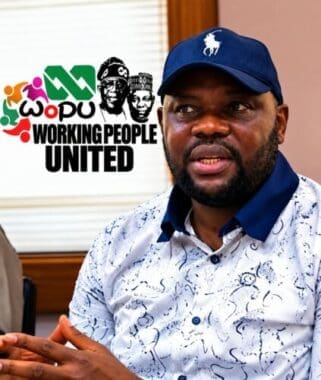
A Nigerian workers’ movement backing President Bola Tinubu’s re-election has urged transport operators to cut fares after the government announced a 30-day petrol discount on 8 October 2026.

Working People United (WoPU) said commercial drivers, haulage firms, logistics companies and food distributors should lower fares and haulage charges in line with any savings on fuel, so that the relief reaches markets and households. “The benefits of this intervention should not end at the filling stations,” the group said in a statement by its National Coordinator-General, Williams Eniredonana Akporeha.

The appeal goes to the central test of the measures. Transport costs feed into the price of food moved across Africa’s most populous country, and the discount will only ease living costs if operators pass it on to passengers and traders.

Finance Minister Taiwo Oyedele said on 8 October that NNPC Limited, the state oil company, would sell petrol at cost for 30 days in the first instance, with priority for public transport operators nationwide. He did not give a price, and said the move was not a subsidy. Petrol has risen to about ₦1,400 (roughly $1) a litre, from ₦830 before the war in the Middle East, according to AFP.

For the longer term, the government said it was negotiating a ceiling of ₦1,350 a litre on the ex-depot or landing cost of petrol, under what Oyedele called “price modulation”. Refiners and importers would carry any shortfall when costs rise above the cap and recover it later, with the ceiling reviewed monthly. The government is also considering forward sales of crude oil to domestic refineries.

WoPU called on regulators to monitor pricing along the supply chain to make sure lower operating costs reach consumers rather than becoming extra profit. It said fuel price moderation alone would not end the cost-of-living crisis, and called for action on farm production costs, food distribution bottlenecks and transport infrastructure.

The group, led by Akporeha, a former president of the National Union of Petroleum and Natural Gas Workers (NUPENG), describes itself as a civic and political movement and has formally endorsed Tinubu’s bid for a second term.

Opposition figures have questioned the measures. The Nigeria Democratic Congress, whose presidential candidate is Peter Obi, called them an attempt to bring back the petrol subsidy through the back door. Former vice-president Atiku Abubakar asked on social media what would happen to prices once the 30 days end.

Nigerians vote in presidential and National Assembly elections on 16 January 2027

Kojo Bamba win signals NPP ballot security fears, analyst says

0

Kojo Bamba’s election as New Patriotic Party (NPP) First Vice Chairman reflects fears over ballot protection, but the economy will decide 2028, a political scientist said on 10 October 2026.

Dr Kwame Asah Asante of the University of Ghana told TV3’s The Key Points that delegates backed Bamba because they worry about the safety of their ballots on election day. He said voters would judge the party mainly on jobs and living costs. “Security is very important, but the economy and unemployment will determine the outcome,” he said.

The result places a grassroots organiser with a contested past among the top officers of the main opposition party as it rebuilds after losing power in the 2024 general election.

Bamba, whose real name is Kwadwo Fosu Boadu, topped a field of 13 aspirants for three vice chairmanship slots at the party’s National Delegates Conference at the Baba Yara Sports Stadium in Kumasi on 3 October. He polled 3,116 votes. Henry Nana Boakye took second place with 3,061 and Nana Akomea third with 2,987. Former minister Mustapha Hamid, who polled 2,956, missed out by 31 votes.

Akomea, now Third Vice Chairman, has partly credited the voting format. Delegates picked three names from one list, with the highest scorer becoming First Vice Chairman, he told Joy News on 5 October. He said several delegates told him they planned to vote for him and another established candidate, and to add Bamba as their third choice.

Bamba campaigned on protecting party members and ballots at polling stations and collation centres, and on strengthening the party’s grassroots structures.

His rise has drawn scrutiny because media reports have long linked him to Delta Force, a pro-NPP vigilante group. In March 2017, members of the group stormed the Ashanti Regional Coordinating Council in Kumasi, forced the newly appointed regional security coordinator, George Adjei, out of his office and damaged property. Thirteen members were arrested and charged with assault and other offences, and supporters later disrupted their court hearing. Parliament passed the Vigilantism and Related Offences Act, 2019 (Act 999), which outlaws such groups, two years later.

Fiifi Boafo, a member of the NPP communications team, defended the new vice chairman on the same programme. He said people who know Bamba only as someone who protects others underrate him, and described him as more intelligent and capable than that image suggests.

Bamba will serve alongside National Chairman John Boadu, who won his race with 2,888 votes, as the party prepares for the 2028 general election.

Kekeli Radio Sports Presenter Bright Misroame Bids Farewell After Eight Years

0

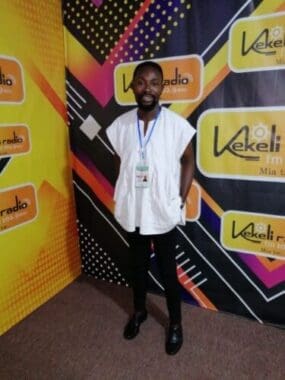
Mr. Bright Misroame, a renowned sports presenter with Kekeli Radio in Ho, has officially bid farewell to the station after eight years of dedicated service.

Mr. Misroame announced his departure on Tuesday, expressing gratitude to the management and staff of the station for the opportunity to build his broadcasting career and serve listeners over the years.

In a farewell message to the Kekeli Radio family, he thanked management for their mentorship, support, and confidence in him, noting that the station had provided a platform for him to learn, grow, and contribute to the development of broadcasting.

He also paid tribute to his colleagues across the presentation, news, production, technical, marketing, and front-desk departments for their friendship, teamwork, and support throughout his journey at the station.

“To my colleagues in Presentation, News, Production, Technical, Marketing and our Front Desk teams, thank you for the teamwork, the corrections on air, the laughter in the studio and the true brotherhood,” he said.

Speaking to the Ghana News Agency (GNA), Mr. Misroame said his departure should not be viewed as an end, but rather the beginning of a new chapter in his professional career.

Although he did not disclose his next destination, he expressed optimism about the future and appreciation for the experiences gained at the station.

“This is not the end, but a new chapter. I leave with gratitude, not grievance. Our bond goes beyond radio. Let’s keep the connection alive,” he stated.

Mr. Misroame said his years at Kekeli Radio had created lasting memories and meaningful relationships that would remain with him long after his departure.

He appealed to colleagues, listeners, friends, and well-wishers to continue remembering him in their prayers as he embarks on a new phase of his career.

“Kekeli will always be home for me. Thank you all for everything,” he added.

His departure marks the end of an eight-year chapter at the Volta Region-based radio station, where he became a familiar voice among sports enthusiasts and listeners.

Pay creators fairly and shield them from AI, Sukparu says

0

Ghanaian creators must earn fairly from streaming and be shielded from artificial intelligence (AI) misuse, Deputy Minister Mohammed Adams Sukparu said at MTN One TV’s launch on 8 October 2026.

Mr Sukparu, Deputy Minister for Communication, Digital Technology and Innovations, told filmmakers, musicians, broadcasters and advertisers in Accra that audience figures alone reveal little about whether the creative economy is working. He set out the tests he wants applied to MTN One TV and similar platforms: how much creators earn, how many jobs are created, how much investment arrives and how much of the value stays in Ghana.

His two concerns meet at the same point. Creators already depend on global platforms whose terms they do not set, and they now face tools able to generate and alter their work, voices and images.

Views versus income

Mr Sukparu said a large audience was encouraging but counted for little if the creator could not earn fairly from it, protect the underlying intellectual property and build a lasting business.

He said the collapse of the CD and VCD trade, once the main route to market for local films and music, had left the industry more exposed to foreign platforms. He urged MTN to go beyond distributing existing content and back new local productions, emerging talent and better ways for creators to make money.

The government would support the sector through digital infrastructure, skills training and a GH¢20 million seed-funded development initiative, he said, according to Graphic Online. He also called for stronger protection against piracy and the unauthorised use of creative work.

AI and creators’ rights

Mr Sukparu said AI could help with production, editing, translation, animation, music creation, audience analysis and distribution, and could help Ghanaian creators work faster and reach overseas markets. He warned against tools that replace or exploit the people behind the work. “Technology must empower the creator, not erase the creator,” he said.

He called for protection of artists’ image, voice, identity and intellectual property, and said his ministry would work with the Ministry of Tourism, Culture and Creative Arts to promote responsible and ethical AI use in the sector.

Those protections are not yet spelt out in law. The main statute covering creative work is the Copyright Act, 2005 (Act 690), passed long before generative AI went mainstream, and legal commentators note it makes no specific provision for the technology. Ghana’s National AI Strategy, launched by President John Dramani Mahama on 24 April 2026, set up a Responsible AI Office to oversee implementation, and Communications Minister Samuel Nartey George said at that launch that his ministry was preparing an Emerging Technologies Bill to give AI a legal framework.

The platform

The Minister of Tourism, Culture and Creative Arts, Abla Dzifa Gomashie, in a speech delivered by her deputy, Yussif Issaka Jajah, said the revised cultural policy aims to make Ghanaian culture commercially viable. She said the government is working on intellectual property, local content quotas and training to lift productions to international standard.

MTN Ghana’s Chief Digital Officer, Ibrahim Misto, said One TV marked the company’s shift from telecoms operator to platform business, and invited producers, broadcasters and advertisers to explore partnerships with the company.

The service combines Ghanaian films and programmes, live television channels and international content. MTN Group, which reported 307.2 million subscribers across 16 African markets at the end of 2025, began a phased rollout of One TV earlier this year. Depending on the market, it offers free, advertising-supported, pay-per-view and subscription viewing, with payment through airtime and Mobile Money for viewers without bank cards.

It is MTN’s second attempt at video streaming. Its earlier service, FrontRow, which focused on South Africa, closed in 2017.

Apple and LG building smart home security line, report says

0

Apple has worked with LG Electronics on a line of LG-branded door locks, cameras and thermostats for its smart home push, Bloomberg reported on 6 October 2026.

The report came days before Apple’s “Welcome home” event in New York on 13 October, where the company is expected to show a new smart home hub, an updated HomePod mini and a new Apple TV set-top box. The LG devices are meant to work with that hardware. The arrangement gives Apple a set of security products without having to build, sell and support them itself. It would also put Apple’s home platform up against Amazon’s Ring and Google’s Nest.

According to Bloomberg, the lineup includes a smart deadbolt lock, a wired video doorbell, a thermostat, a temperature sensor, and indoor, outdoor and floodlight security cameras. LG would sell them under its own brand and handle manufacturing and customer support. Bloomberg said LG has filed for approval with the US Federal Communications Commission, the regulator that certifies wireless devices before sale.

Filings made public on 7 October gave a first look at three of the products: the lock, the thermostat and the temperature sensor. The deadbolt reportedly supports ultra-wideband, a short-range wireless technology that would let a door unlock automatically as the owner approaches with a phone. Bloomberg said many of the devices support Wi-Fi, Bluetooth, Thread and Matter, an industry standard designed to let accessories work across different smart home platforms.

Bloomberg described the wider effort as a formal reboot of HomeKit, Apple’s smart home software. The hub at its centre is expected to have a square display of about six inches, according to earlier Bloomberg reporting.

The deal follows a pattern. Apple has used partners such as Belkin and Logitech to extend its range without carrying the full cost of making every product, and it previously worked with LG on external monitors for Mac computers.

Apple and LG have not commented publicly on the report.

The LG products are not expected to reach shoppers for at least a few more months, Bloomberg said, so they are unlikely to go on sale alongside Apple’s own devices. Apple is separately developing its own home security camera, which is still expected in 2027.

VodafoneThree cost-savings target raised to £1 billion by 2032

Vodafone Group said on 8 October 2026 it expects £1 billion in annual savings from VodafoneThree by March 2032, adding £300 million to a target set before its full takeover.

The upgrade means the UK operator, formed by merging Vodafone UK and Three UK in 2025, is now expected to cut deeper and over a longer period than promised when the deal was struck. It also puts more weight on the British business to support the group’s wider cash ambitions.

The previous goal was £700 million a year by the financial year ending March 2030. Vodafone now expects £800 million by that point, rising to £1 billion two years later. The original figure covered both annual cost and capital expenditure synergies, according to the company’s statement in July. At the exchange rate quoted by Dow Jones on 8 October, £1 billion was worth about $1.32 billion.

Vodafone released the new targets to the London Stock Exchange before an investor briefing hosted by Ahmed Essam, chief executive of European markets, and Max Taylor, chief executive of VodafoneThree.

Beyond savings, the company set a target of mid-to-high single-digit annual growth in adjusted earnings before interest, tax, depreciation and amortisation after leases between the 2025 and 2032 financial years. It also aims to more than triple operating free cash flow at VodafoneThree by 2032, measured against a 2025 baseline.

Group chief executive Margherita Della Valle said the business had performed well since the merger. “After a strong start, we now have even greater confidence in the opportunity ahead,” she said.

The briefing came about 10 weeks after Vodafone bought out its former partner. CK Hutchison said on 30 July it had completed the sale of its 49 per cent stake for £4.3 billion in cash. Vodafone said it paid for the deal from existing cash and expected its pro forma net debt to rise by 0.4 times adjusted earnings as a result.

Vodafone describes VodafoneThree as a driver of its medium-term goal of double-digit organic growth in adjusted free cash flow across the group. The company restated its 10-year, £11 billion plan to build a 5G standalone network in the UK.

VodafoneThree also targets a pre-tax return on capital employed, including goodwill, above its cost of capital by the 2032 financial year and well above it by 2034. Vodafone cautioned in its statement that projected savings depend on future actions and carry risks and uncertainties.

Finland halts Google data centre work over environmental reviews

0

Finland’s licensing regulator ordered Google on 6 October 2026 to stop clearing land at two planned data centre sites in the north until required environmental assessments are finished.

The order lands a month after Google announced a €13 billion (about $15 billion) investment in Finland, its largest single investment in Europe. It turns on a question of sequence: whether a company can fell forest and build site infrastructure before the law’s environmental review has run its course. Finland’s environment minister has said the projects are now likely to be delayed.

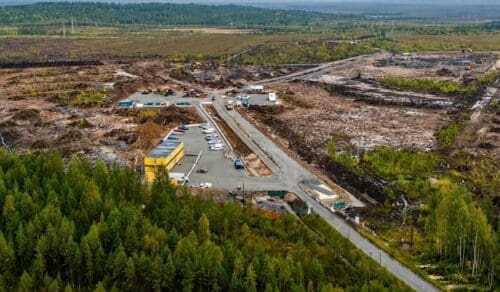
The Finnish Licensing and Supervision Agency (LVV) told Tuike Finland Oy, the Google subsidiary behind the projects, to suspend environmentally significant work in Muhos and Kajaani immediately and by 23 October at the latest. The halt runs until the environmental impact assessments for both sites are complete. Those assessments are under way and expected to finish later this year.

About 330 hectares had already been felled or prepared at Muhos and just under 200 hectares at Kajaani, according to figures reported by CNBC. Taken together, that is more than five square kilometres. Tree clearing began in March, with earthmoving and infrastructure work following later.

Tommi Muilu, head of the LVV’s environmental department, said available reports showed extensive work had already taken place, including removal of trees and topsoil, new site roads and storage areas, changes to ditches and culverts, and stormwater works. He said such measures alter the environment in ways the assessment process is meant to identify and weigh before work begins.

The suspension covers tree and topsoil removal, excavation, quarrying, crushing, moving soil, drainage and building site roads and storage areas. Planning, measurements, soil surveys and other easily reversible work with minor impact may continue.

Google has said it acted under Finland’s Forestry Act. The authorities say environmental impact assessment requirements fall under separate legislation, a point echoed by legal experts who say meeting forestry rules does not satisfy the assessment law.

A Google spokesperson told CNBC the company had “fallen short of our own high standards” and would follow the regulator’s instructions. The company said it had acted in good faith, carried out environmental surveys and plans tree planting across 130 hectares at Muhos.

Environmental campaigners have pressed the issue. Hanna Halmeenpää, chair of the Finnish Association for Nature Conservation, told AFP that areas which should have been preserved were logged at the Muhos site.

The two sites form part of a wider plan spanning Hamina, Kajaani, Muhos and Vaala. Google said the construction phase in 2027 and 2028 would support more than 37,000 jobs and add an average of €3.6 billion a year to Finland’s economy. The package also includes a 22-year power purchase agreement with Fortum tied to extending the life of the Loviisa nuclear plant, which supplies about a tenth of Finland’s electricity.

Tuike Finland must give the LVV a written explanation of how it intends to proceed by 14 October. If it does not comply, the agency said it would consider enforcement proceedings and a possible fine.

Lawyers to guide SMEs on legally compliant online sales

0

Three lawyers will advise small business owners on selling online within the law at a virtual forum on 14 October 2026, as Ghana’s data regulator steps up enforcement.

DORiSA Consult, a Ghanaian consulting and advocacy firm, is hosting the session as the third edition of its monthly Business Advocacy Forum and Counselling Series. It runs on Microsoft Teams from 7pm GMT on Wednesday, and attendance is free. The focus is how small and medium-sized enterprises (SMEs) can turn online visibility into sales without legal exposure.

The timing gives the forum practical weight for online traders. The Data Protection Commission (DPC) began spot checks on Monday 5 October, targeting organisations that have not registered with it or met other requirements under the Data Protection Act, 2012 (Act 843). Its Executive Director, Dr Arnold Kavaarpuo, told the Ghana News Agency that the commission had identified non-compliant entities and would take enforcement action, including prosecution where necessary.

The commission says every organisation that collects or processes personal data in Ghana must register, and that processing such data without registering as a data controller is an offence under the Act. That rule reaches the small sellers who gather customer names, phone numbers and delivery addresses through websites and social media pages.

The DPC has declared 2026 its “Year of Enforcement” and says compliance goes beyond registration to include data protection policies and impact assessments for significant processing. In December 2025 it launched a Privacy Seal carrying a scannable QR code, which lets customers check whether an organisation complies with the law.

Dr Doris Aryee, founder and lead consultant of DORiSA Consult, will host. She said an online presence alone no longer brings in revenue. “Many businesses are visible but not bankable,” she said, adding that customers pay when a business has the legal footing to earn their trust.

Eric Acheampong, a barrister and solicitor who lectures at KAAF University’s Faculty of Law, will open with company types, registration requirements, commercial contracts and consumer protection for online businesses, according to the organisers.

Adisa Walamani Acheampong, a state attorney with the Legal and Prosecution Unit at Ghana Police Service headquarters, will deliver the keynote on the regulatory framework and the legal risks in digital marketing.

Dr Dello-Ziem Kaaka, a lawyer and corporate governance practitioner, will speak on governance practices in SMEs.

The organisers said sessions will cover misleading advertising, drafting online terms and disclaimers, protecting brands, content and customer data, tax disclosure for online businesses, and how legal compliance can help firms attract funding and partners.

Seats are limited, the organisers said. Registration is open at https://teams.microsoft.com/meet/3362005510058917?p=VZYxELmFghj7pQDPT7.

India research deal targets Ghana’s tomato yield gap

0

India’s main agricultural research body will help Ghana introduce higher-yielding tomato varieties under a five-year agreement with the CSIR-Crops Research Institute, targeting a crop Ghana cannot grow enough of.

The memorandum of understanding (MoU) between the Indian Council of Agricultural Research (ICAR) and Ghana’s CSIR-Crops Research Institute (CSIR-CRI) was exchanged in Accra on 7 October 2026. India’s External Affairs Minister, Dr Subrahmanyam Jaishankar, and Ghana’s Foreign Affairs Minister, Samuel Okudzeto Ablakwa, witnessed the signing. Dr Jaishankar was in Ghana on the first leg of a three-nation tour that also took in Côte d’Ivoire and Ethiopia, and met President John Dramani Mahama during the visit.

Why tomatoes come first

The first phase focuses on vegetable research, chiefly tomatoes, and the choice reflects a gap that became a crisis this year. Food and Agriculture Minister Eric Opoku said in March that Ghana needs about 805,000 tonnes of tomatoes a year but produces about 510,000. He said roughly 30 per cent of the local harvest is lost after picking. Ghanaian farmers average about eight tonnes per hectare, against 18 in Burkina Faso, and the Minister blamed poor seed varieties.

Ghana’s dependence on its northern neighbour was exposed in February, when seven Ghanaian tomato traders were killed in a terrorist attack in Titao, Burkina Faso. Burkina Faso then suspended fresh tomato exports on 16 March to supply its own processing plants, before lifting the ban on 2 April after talks.

Under the new agreement, ICAR will help introduce suitable high-yielding tomato lines and scale up proven technologies to raise domestic production. The partnership will also cover processing and value addition for cassava, yam and other tubers, as well as better post-harvest handling.

How it will work

The MoU provides for exchanges of scientists, breeding materials, germplasm and technical data, and for joint research projects and links between research centres in the two countries. A Joint Working Group of ICAR and CSIR-CRI representatives will oversee implementation. Arima Farms Ltd., a Ghanaian company, has been recognised as CSIR-CRI’s commercial partner for specified research and commercialisation work under the agreement.

A second MoU, also exchanged during the visit, links the Zoological Survey of India with the University of Ghana in academic and scientific research.

The agreements build on the Comprehensive Partnership the two countries agreed during Prime Minister Narendra Modi’s visit to Accra in July 2025.

Ghana’s dud cheques fall 29 percent in two years

0

Dishonoured cheques reported to Ghana’s credit bureaus fell to 37,828 in 2025, down 28.9 per cent from 2023, Bank of Ghana data show, ahead of tougher sanctions introduced in June.

The Bank of Ghana’s (BoG) Credit Reporting Activity Annual Report 2025, published last month, shows dud cheques fell from 53,222 in 2023 to 45,136 in 2024, and then to 37,828. Each one is reported to licensed credit reference bureaus, where it can count against the issuer when they next seek a loan or overdraft.

More than fewer cheques

Part of the fall reflects the steady retreat of the paper cheque. The volume of interbank cheques cleared fell 4.8 per cent in 2025, about 265,641 fewer, according to the BoG’s Payment Systems Oversight Annual Report. Businesses are switching to internet banking, mobile money and instant transfers.

But dud cheques fell much faster. They dropped 16.2 per cent in 2025, more than three times the decline in cheque volumes. That suggests issuers have become more careful, not merely that fewer cheques are being written. Cheques that remain in use are also getting larger: the average cleared cheque rose 13.3 per cent to about GH¢79,067 in 2025. A single bounced cheque can now leave a supplier with a bigger hole in its cash flow.

Tougher rules on top

The central bank is not treating the decline as a sign that the problem is solved. In a notice dated 24 June 2026, it said it had observed “with grave concern” the high issuance of dud cheques, and replaced its 2021 and October 2025 rules with a stricter graduated regime.

A first-time offender now pays a penalty of 10 per cent of the cheque’s face value, receives a warning, is placed under surveillance for at least a year and is reported to the credit bureaus and the BoG. A second offence within a year raises the penalty to 15 per cent.

A third offence within a year brings a ban on issuing cheques anywhere in Ghana for at least three years and a one-year ban on new bank credit. The BoG may also publish the offender’s name. Customers who fail to return unused cheque books within 10 working days can be barred from operating any current account and added to a Directory of High-Risk Cheque Issuers.

The new regime took effect after the period covered by the 2025 figures, so its impact will show up in next year’s data. Issuing a dud cheque is also a criminal offence under section 313A of the Criminal Offences Act, 1960 (Act 29), punishable by a fine, up to five years in prison, or both.

For traders and distributors who sell on credit and are paid by post-dated cheque, the trend matters. Repeated defaults have pushed many suppliers to demand cash or instant transfers before releasing goods.

SDGs off track as aid to sub-Saharan Africa falls sharply

0

Barely a third of the world’s measurable development targets are on course for 2030, and the aid meant to help poorer countries catch up is shrinking fastest in the regions furthest behind.

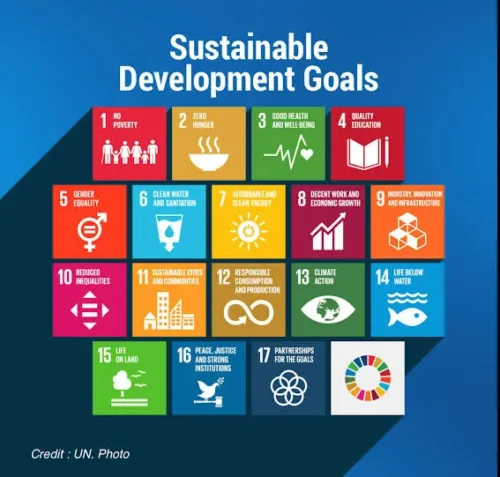
The Organization of the Petroleum Exporting Countries (OPEC) highlights the gap in its Annual Report on Environment, Climate and Sustainable Development 2026. The report draws on the United Nations’ own scorecard. Of the 139 Sustainable Development Goal (SDG) targets with enough data to track trends, only 36 per cent are on track or making moderate progress, according to the UN’s Sustainable Development Goals Report 2026, released on 7 July. Another 49 per cent are moving too slowly, and 15 per cent have slipped below where they stood in 2015.

The report also points to an estimated US$4 trillion annual financing gap for developing countries. That gap is widening as donor money falls away.

The aid cliff

Official development assistance from members of the Development Assistance Committee of the Organisation for Economic Co-operation and Development (OECD) fell 23.1 per cent in real terms in 2025, to US$174.3 billion, according to preliminary OECD data. It was the largest annual drop on record, and it took aid back to roughly where it stood when the goals were adopted in 2015. Five of the largest donors accounted for 96 per cent of the fall.

Africa took a heavy share of the cuts. Bilateral aid to Africa fell 23.9 per cent, and aid to sub-Saharan Africa fell 26.3 per cent. Humanitarian aid dropped 35.8 per cent. The OECD projects a further 5.8 per cent decline in 2026, so the squeeze is not over.

Energy as the bottleneck

OPEC’s report singles out energy as both an engine of development and a choke point. An estimated 655 million people still had no electricity in 2024, and nearly 2 billion relied on polluting fuels for cooking, it says. International public finance for clean energy in developing countries remains below its 2016 peak. The report argues for more investment, decentralised power systems and making clean cooking part of wider energy-access plans.

That framing suits an organisation whose members depend on oil and gas revenue. OPEC has argued at the same time that all energy sources will be needed to meet future demand. Its reading of the energy-access gap is broadly in line with UN figures, but its prescriptions sit within a wider debate over how fast developing countries should move away from fossil fuels.

Gains that are real but uneven

The picture is not all bleak. Since 2015, billions of people have gained safe drinking water and sanitation, and electricity now reaches 92 per cent of the world’s population, according to the UN. Internet access has risen from 40 per cent to 74 per cent. Disaster-related deaths have fallen 65 per cent compared with the previous decade.

Yet the UN expects about 9 per cent of the world’s people to remain in extreme poverty in 2030, against a goal of ending it. None of the gender equality targets are on track. With aid falling and debt burdens rising, the UN Secretary-General has warned that unmet financing commitments risk pushing many targets out of reach.

Ghana-India trade doubles on gold as firms seek factory know-how

0

Trade between Ghana and India more than doubled to about US$6.5 billion in 2025, but gold made up most of it, prompting calls for Indian manufacturing know-how instead.

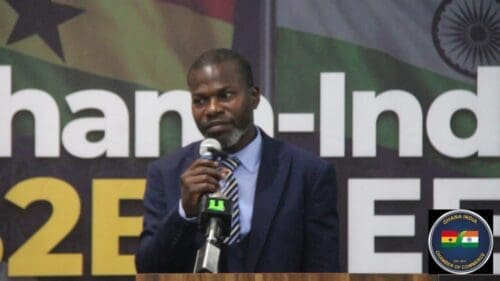
Ghanaian business leaders made the case at a two-day Ghana-India Business-to-Business (B2B) meet in Accra this week. They urged local firms to look beyond buying finished goods from India and to seek partnerships that bring technology, skills and production into Ghana. “We are moving from consumption to production,” said Victor Yao Nyakey, Director of Protocol at the Ghana-India Chamber of Commerce (GICC).

The numbers explain the urgency. Simon Madjie, Chief Executive of the Ghana Investment Promotion Authority (GIPA), told the meeting that two-way trade rose from about US$3 billion in 2024 to about US$6.5 billion in 2025. Ghana’s exports to India jumped from US$1.7 billion to US$5.2 billion, with gold making up about 85 per cent. The rest included petroleum oils, cashew nuts, oil seeds and wood. India, in turn, sends Ghana machinery, vehicles, pharmaceuticals, plastics, iron, steel and chemicals.

The pattern of raw gold out and manufactured goods in is the gap the chamber wants to close. Madjie said the next phase of the relationship should focus on productive capacity, value-added exports and technology transfer.

A buyer-seller meet with bigger ambitions

The GICC organised the event with the Federation of Indian Export Organisations (FIEO), a body set up under India’s Ministry of Commerce, with support from the Indian High Commission. It brought together more than 200 Ghanaian entrepreneurs from Accra, Takoradi, Koforidua and other cities with a 30-member Indian business delegation.

Nyakey described it as a buyer-seller meet in which Ghanaian importers looked for Indian products and Indian manufacturers looked for buyers. He said its real value would lie in whether those deals grew into joint ventures, local production, skills training and the adoption of new technology. FIEO Joint Director Manish Sharma likewise encouraged Ghanaian firms to explore joint ventures with Indian companies.

GICC President Dr Kwabena Ekremet told local businesses to strengthen their operations so they could attract finance from banks and government agencies. Technology alone will not build factories, and partnerships need sound business plans, capital, reliable power and markets large enough to support local production.

The investment picture

Indian High Commissioner Surinder Bhagat urged closer economic cooperation and said bilateral trade was nearing US$8 billion, which he said made diversifying beyond commodities more pressing. GIPA said it had recorded more than 1,000 Indian-linked investment projects in Ghana since 1994, spanning manufacturing, agriculture, services, construction and trading.

When Prime Minister Narendra Modi visited Accra in July 2025, the two countries set a goal of doubling trade to about US$6 billion within five years. Last year’s surge passed that figure early, driven mainly by gold rather than the industrial partnerships both sides say they want.

Most Ghanaian firms miss out as mobile money volumes soar

0

Ghanaians moved GH¢518.8 billion through mobile money in August 2026 alone, yet most of the country’s businesses still do not take digital payments.

That gap between consumers and merchants is now one of the clearest limits on what the mobile money boom can do for jobs and growth. Bank of Ghana data show the value of mobile money transactions rose from GH¢323.2 billion in June 2025 to GH¢492.9 billion in June 2026, then climbed further in July and August. Across 2025, transactions grew by more than half to GH¢4.54 trillion. Wallet balances hit a record GH¢40 billion in June, and the country now has 26.4 million active accounts and 546,000 active agents.

Businesses have not kept pace. The 2024 Integrated Business Establishment Survey (IBES), analysed by the Ghana Statistical Service and the Retail Finance Distribution (ReFinD) research initiative at the Institute of Statistical, Social and Economic Research (ISSER), found that only about 37 per cent of firms accept or use digital payments. The researchers noted that nearly 95 per cent of individuals surveyed had used digital payments as consumers.

Where the gap is widest

Adoption is uneven. Only 22.4 per cent of agricultural businesses use digital payments, against 38.4 per cent in services. Among formal firms, adoption reaches 56.7 per cent, compared with 35.2 per cent in the informal sector, where most Ghanaian enterprises operate. Use is concentrated in Greater Accra and regional capitals, and firms in northern Ghana are less likely to take digital payments.

Many firms that do go digital use the wrong tool. The study found that most rely on personal mobile money accounts rather than merchant accounts. According to the researchers, this is the costliest way to collect business payments. Firms with merchant accounts were associated with stronger revenue growth, more employment and greater formalisation.

ISSER Director Professor Peter Quartey has pointed to limited knowledge, cost and taxation as barriers, along with security worries. The survey also found women-owned businesses less likely to adopt digital payments, often because they lack the capital to invest.

Why it matters for credit

The stakes go beyond convenience. Small businesses often struggle to borrow because they cannot prove their sales. Lenders want evidence of revenue and cash flow that cash-only traders rarely keep. A steady record of digital receipts can help build that history, which matters most for retailers, distributors and wholesalers who need working capital to restock while waiting to be paid.

The link is not automatic. Transaction data helps only when lenders accept it and build it into their credit assessments, and it does not by itself guarantee approval or cheaper loans.

Who is trying to close the gap

Payment companies see a market in the 63 per cent of firms not yet on board. Card networks and fintechs are pitching merchant tools that bundle mobile money, wallet and card acceptance with fraud protection and training. Some link payments to supply-chain finance for small distributors. Mastercard, which opened its first Accra office in 2025, is among those working through local partners on payment acceptance and identity checks.

Whether these products reach the market trader in Tamale or the cocoa farmer in Sefwi depends on what the IBES researchers flagged: affordable fees, protection from fraud, and enough training for owners to trust the system. The report recommends better cybersecurity, incentives for female-led firms, wider digital infrastructure outside the big cities, and stronger financial literacy for business owners and staff.

Karbo asks NPP’s 2024 abstainers for forgiveness ahead of 2028

0

Former Lawra MP Anthony Karbo has asked businesspeople and party members who stayed away from the polls in 2024 to forgive the New Patriotic Party (NPP) and return in 2028.

Speaking on Accra-based Okay FM, Karbo, a member of the party’s Elections Committee, admitted the NPP had ignored warnings from its own base during its eight years in government under former President Nana Addo Dankwa Akufo-Addo. “We did not listen to you, but we are sorry for doing that,” he said. He described businesspeople and loyal members as the party’s backbone and promised that the NPP had learnt its lessons and would not repeat its mistakes.

He also appealed directly to the Ashanti Region, the party’s heartland, asking people there to forgive whatever the party had done to disappoint them. Karbo said the party’s flagbearer, former Vice-President Dr Mahamudu Bawumia, was an intelligent man who listens and would not disregard them. He urged supporters to unite behind Bawumia to win back power in 2028.

The votes that went missing

The appeal targets the gap that cost the NPP power. Bawumia won 4,657,304 votes in the December 2024 presidential election, 41.61 per cent of the total, against 6,328,397 for John Dramani Mahama of the National Democratic Congress (NDC). In 2020, Akufo-Addo had won with 6,730,413 votes. Bawumia has said about 2.1 million NPP supporters did not vote, calling it the main reason for the defeat.

The drop was sharpest in Ashanti. Turnout in the region fell from 83 per cent in 2020 to about 63 per cent in 2024, and the NPP’s presidential vote there fell from 1,795,824 to 1,366,805. The NDC won nine Ashanti constituencies in the presidential race, the first time it had taken more than five.

Karbo was Deputy Minister for Roads and Highways in Akufo-Addo’s first government and a former National Youth Organiser of the party. His appeal comes a week after the NPP elected a new national executive under Chairman John Boadu, which is expected to rebuild the party’s grassroots ahead of the next general election.

UK migrant care workers sing Asa’s ‘Jailer’ in chains

0

Migrant care workers in Britain wore chains and sang Nigerian star Asa’s ‘Jailer’ at a UNISON protest against plans to make some wait 15 years for permanent settlement.

UNISON, the UK’s largest trade union, said more than 400 people took part, many wearing symbolic balls and chains. It said the workers chose the 2007 song, from the debut album of the singer born Bukola Elemide, for its themes of oppression and of refusing to be treated as a prisoner. The protest is part of UNISON’s Fair Visa campaign.

The stakes reach well beyond Nigeria. In the year to mid-2024, Britain granted 71,046 work visas to foreign care workers and home carers. Indian nationals received 15,076, Nigerians 13,418, Zimbabweans 10,702 and Ghanaians 8,826, about one in eight, according to Home Office figures. Thousands of Ghanaian families with relatives in British care homes and hospitals could be affected by the final rules.

What the government proposes

Home Secretary Shabana Mahmood’s “earned settlement” plan would double the standard wait for indefinite leave to remain from five years to 10. Lower-paid workers, including those who came on health and care visas from 2022, would face a 15-year starting point. The government has proposed that the changes apply to everyone in Britain who has not yet been granted settlement. It argues that settlement should be earned, citing forecasts that 1.6 million people could qualify between 2026 and 2030.

UNISON wants the five-year route kept for workers already in Britain, along with a sector-wide sponsorship system for social care. Today, a care worker’s visa is tied to one employer. The union says that makes it risky to leave an exploitative job or speak out, because doing so can threaten a worker’s right to stay. General Secretary Andrea Egan said migrant staff keep the NHS and social care running and should not be blamed for underinvestment in public services.

Signs of a retreat

Opposition inside Labour has grown. Senior Labour figure Angela Rayner said the plans “change the goalposts” for people who arrived expecting to settle after five years. The Trades Union Congress has voted to demand that the proposals be withdrawn. Speaking at the Labour conference in Liverpool on 28 September, Mahmood acknowledged that parts of the reforms had been called unfair. She said the government would settle on a position that balanced fairness to legal migrants with fairness to British citizens.

No final decision has been announced, and the 10-year and 15-year periods remain proposals.

Mahama jokes Ayariga’s Twi is improving thanks to Bono wife

0

President John Dramani Mahama teased Local Government Minister Mahama Ayariga on 10 October, saying his Twi was improving because of his marriage to Sunyani West MP Millicent Amankwah Yeboah.

The exchange came at a public engagement during the President’s regional tour, after Ayariga was challenged to address the crowd in Twi. The Bawku Central MP said his new marriage had pushed him into learning the language. “I married a woman from Bono and I have now started Twi lessons,” he said. He described himself as a class one pupil, while the President, he said, had studied the language long enough to reach master’s level. He asked the audience to bear with his “primary school Twi”.

Speaking after him, Mahama said that if he had to grade the officials who spoke Twi that day, Ayariga had done fairly well and was learning little by little. He then turned to Roads and Highways Minister Kwame Governs Agbodza, telling him that marrying a woman from Bono would be the way to learn Twi too. The crowd laughed.

Ayariga’s marriage became public on 27 August, during his vetting before Parliament’s Appointments Committee. He pointed out that the committee chairman, Bernard Ahiafor, had introduced his father-in-law but not his wife. Ahiafor then introduced the Sunyani West MP as “Hon Mrs Ayariga”.

Amankwah Yeboah, 34, is a first-term National Democratic Congress MP. She won the Sunyani West seat in the Bono Region in December 2024, defeating the sitting New Patriotic Party MP, Ignatius Baffour-Awuah. Ayariga, a long-serving MP, was Majority Leader until a recent reshuffle moved him to the Ministry of Local Government, Chieftaincy and Religious Affairs. The couple are among the few spouses holding public office at the same time in Ghana.

Why some Ghanaian morticians knock before entering the mortuary

0

At Jabez Dominic Funeral Home, staff knock before they walk into the mortuary, even though nobody inside will answer.

Ewurabena Quartey, a manager at the funeral home, says the knock is a mark of respect, the same signal anyone would give before entering a living person’s room. “The fact that they are dead doesn’t mean that respect has to end,” she said in an interview with journalist Roselyn Feli.

Her account offers a look at the private codes some Ghanaian funeral workers follow. It comes at a time when the treatment of the dead has become a public concern, from regulators shutting substandard mortuaries to outrage over corpses mishandled at funerals.

Asking permission

The courtesy does not stop at the door. Quartey said workers often speak to the deceased and ask permission before touching, bathing or embalming the body, knowing there will be no reply. She likens it to caring for a bedridden elderly relative, where a carer would ask before touching them.

She links the habit to “last offices”, the term hospitals have long used for the care nurses give a patient’s body after death. The phrase comes from the Latin officium, meaning service or duty. Nursing guidance describes it as care that shows continued respect for the person as an individual. Many health services now prefer the term “care after death”, which also covers support for the bereaved family.

What the body reveals

Quartey said speaking to the dead also reminds workers that they are handling someone’s body and privacy. Preparing a body means undressing it completely and seeing scars, deformities and parts of the body the person would never have shown others.

So before starting, she said, a worker might quietly acknowledge that they are about to see what they are not supposed to see. The point, she said, is a pledge that whatever is seen stays in the room. She described it as a kind of bond formed with the deceased.

A wider debate on dignity

Not every facility meets that standard. In December 2025, the Mortuary and Funeral Facilities Agency (MoFFA) temporarily closed several mortuaries in the Eastern Region that failed basic environmental and safety standards or were operating without licences. The agency has also condemned videos of young people carrying corpses shoulder-high and parading them at funerals. It describes such conduct as a lack of respect and dignity towards the deceased.

The law offers some protection. Under section 285 of the Criminal Offences Act, 1960 (Act 29), it is a misdemeanour to harm a dead body without lawful authority, to dig one up or dissect it, or to hinder its burial.

For Quartey, the standard starts before any of that, with a knock on a mortuary door.

Gender Minister meets Nana Akua Addo’s husband after hospital discharge

0

Gender Minister Dr Agnes Naa Momo Lartey has met Harold Norman, husband of fashion personality Nana Akua Addo, after his discharge from hospital, as police prepare to arraign him.

The Minister for Gender, Children and Social Protection had first visited the family earlier in the week, when Norman was absent because he was receiving medical care. At the follow-up meeting, she said the immediate priority was the safety and emotional welfare of the family, above all the children. She said the children needed a safe, stable environment, shielded from conflict and from anything that could harm their development.

She said the family would receive psychosocial and social welfare support. Social welfare officers will monitor the children’s wellbeing to keep their safety and best interests at the centre of the response. The ministry said it would keep working with the Ghana Police Service while investigations continue.

The police case

Police say Nana Akua Addo, whose real name is Rosemond Akua Adobea, petitioned the Director-General of the Criminal Investigations Department (CID) on 20 August 2026. She alleged that her husband had subjected her to physical, emotional and economic abuse. The CID said the Domestic Violence and Victim Support Unit (DOVVSU) had handled an earlier case involving the couple in July.

Norman was arrested at his home on 27 August, gave a caution statement and was granted police enquiry bail with two sureties on 29 August. He was due in court on 7 October, but his lawyer told police he had been admitted to hospital. DOVVSU officers visited the hospital to verify the admission, and police said he would be arraigned as soon as he was discharged. Police have not yet confirmed a new court date.

Norman denies assaulting his wife. His lawyers have said the injury shown in images circulating online dates from 2021. They added that the couple’s dispute is the subject of both the DOVVSU investigation and a civil case in court, and that he would not discuss it at length in public for that reason.

The case drew wide attention after videos and images spread on social media from 6 October. Nana Akua Addo has asked the public to take down videos involving her children.

Mushroom picker shot dead in Volta forest; hunter arrested

0

A man picking mushrooms in Volta’s Nyagbo Kume Forest was shot dead on 7 October, allegedly by a hunter who mistook him for game.

The victim, identified only as Mr Zebio, was from Nyagbo Konda in the Afadzato South District. He died at the scene from gunshot wounds, sources told the Ghana News Agency (GNA). Theophilus Doh, the Assembly member for the area, confirmed the death and said a constituent called him about the shooting at about 4.45am.

Police have arrested the hunter, whose name has not been released, and opened an investigation into the circumstances of the shooting. The body has been deposited at a morgue for preservation and autopsy. Police urged hunters to take extreme care and follow hunting safety rules.

Residents said people from nearby communities regularly go into the forest before dawn and during the day to gather wild mushrooms, snails and other forest products, often in the same areas where hunters work. Some called for stronger safety measures in the forest.

The shooting happened during Ghana’s annual closed season, which runs from 1 August to 1 December, when hunting, capturing or killing wild animals is banned to protect breeding wildlife. The only exception is the grasscutter, which may be hunted with a licence from the Forestry Commission’s Wildlife Division. Police have not said what the hunter was hunting or what charge, if any, he will face.

Similar deaths have occurred elsewhere in Ghana. In past cases in the Western, Eastern and Bono regions, hunters told police they fired at noise or movement in the bush, only to find they had shot a person.