

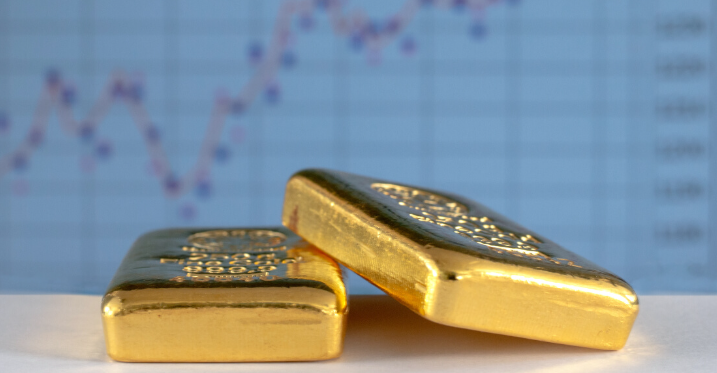
Gold prices pulled back Thursday from historic highs as investors took profits following the precious metal’s extended rally, though the asset remains supported by Federal Reserve easing expectations and escalating global tensions.
The precious metal retreated from record levels above $3,500 per ounce reached earlier this week, as traders secured gains after gold’s remarkable run that has seen prices surge over 40% year-to-date. Despite the pullback, gold traded at $3,542 per ounce on September 3, maintaining strong momentum with a 4.97% gain over the past month.
Market strategists attribute the precious metal’s resilience to multiple supportive factors, with Federal Reserve monetary policy expectations playing a central role. Recent economic data has reinforced the case for imminent rate cuts, as July job openings fell short of expectations and unemployment indicators suggest labor market softening.
Fed Governor Christopher Waller has emerged as a vocal advocate for rate reductions, calling for a quarter-point cut in September and anticipating additional cuts over the next three to six months. His statements reflect growing consensus among Fed officials that policy loosening should begin this month to prevent further labor market deterioration.
The shift in Federal Reserve policy expectations has created favorable conditions for gold, as lower interest rates reduce the opportunity cost of holding non-yielding assets. Analyst price forecasts for gold have seen dramatic upward revisions throughout 2025, with projections rising from $2,756 in January to $3,220 by July, though current levels have already exceeded these targets.
Geopolitical tensions continue providing additional support for gold’s safe-haven appeal. Ongoing conflicts in Ukraine and the Middle East have maintained investor appetite for precious metals as portfolio insurance against global instability and currency devaluation.
Central bank demand remains a critical pillar supporting gold prices, as monetary authorities worldwide continue diversifying reserves away from traditional currencies. This institutional buying provides steady underlying demand that helps establish price floors during market corrections.
Investment banks have responded to gold’s strength with increasingly bullish forecasts, with J.P. Morgan Research now expecting prices to average $3,675 per ounce by the fourth quarter of 2025, rising toward $4,000 per ounce by mid-2026.
The current market environment presents a complex picture for gold investors. While profit-taking has temporarily halted the rally, fundamental drivers remain intact and supportive of higher prices over the medium term.
Key factors supporting continued gold strength include persistent inflation concerns, questions about central bank independence, and structural changes in global monetary systems. These elements suggest that despite short-term volatility, the underlying bull market for precious metals remains intact.
Technical analysis indicates that Thursday’s pullback represents normal profit-taking behavior after an extended rally rather than a fundamental shift in market sentiment. The ability of gold to maintain levels above $3,500 demonstrates the strength of underlying demand despite temporary selling pressure.
Market participants are now focusing on Friday’s nonfarm payrolls data for confirmation of labor market weakness that could accelerate Federal Reserve easing. Weak employment numbers would likely provide fresh momentum for gold prices, while stronger-than-expected data might extend the current consolidation phase.
The precious metals complex continues benefiting from broader monetary policy uncertainty and shifting global economic dynamics. As traditional currencies face pressure from fiscal deficits and monetary accommodation, gold maintains its appeal as a store of value and portfolio diversifier.
For investors, the current environment suggests that despite short-term volatility, gold’s long-term prospects remain favorable. The combination of supportive monetary policy, geopolitical tensions, and structural demand from central banks creates a compelling case for continued precious metals exposure.
The market’s ability to maintain elevated levels despite profit-taking demonstrates the strength of fundamental support for gold prices. As global uncertainties persist and monetary policies evolve, precious metals are likely to remain attractive to both institutional and retail investors seeking portfolio protection.

