

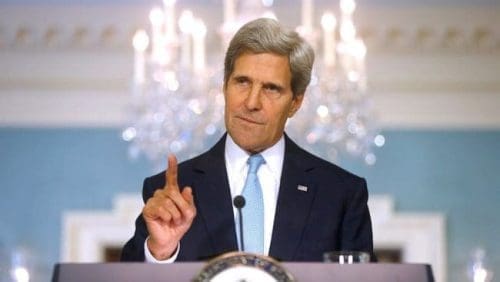
Kerry, part of several foreign ministers in Hiroshima for the G7 meetings, laid wreaths at the memorial cenotaph inside Hiroshima Peace Memorial Park and paused for a moment of silence. Around 140,000 people were killed when the U.S. dropped an atomic bomb on the city in 1945 at the end of World War II.

Ministers also visited the Hiroshima museum and the A-Bomb Dome, also called the Peace Dome, the remains of the building over which the bomb exploded.
“Everyone in the world should see and feel the power” of the Hiroshima memorial, Kerry wrote in the museum guestbook. The memorial is “a stark, harsh, compelling reminder not only of our obligation to end the threat of nuclear weapons, but to rededicate all our effort to avoid war itself.”
A second bomb, dropped farther south on Nagasaki three days later, forced Japan to surrender and essentially ended World War II.
Most Americans believe the use of atomic bombs on Japan was justified to speed the end of the war, according to a 2015 Pew Research Center survey.
U.S. officials said earlier, Kerry would make no apology for the bombing during his visit.
The Japanese government sees Kerry’s visit at a way to build momentum for a possible visit by President Barack Obama during the G-7 summit May 26 and 27 in Ise-Shima, Mie Prefecture.
Source: GNA

