

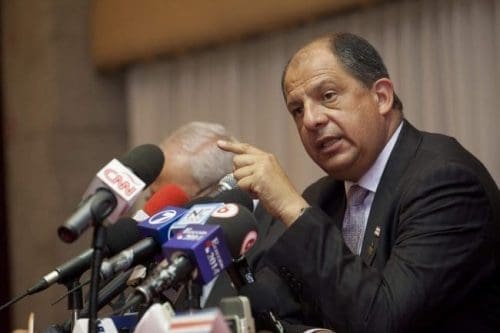

President Luis Guillermo Solís
Casa Presidencial
Zapote, San José, Costa Rica
520-2010
Re: Marriage Equality in Costa Rica
Dear President Solís:
I am William Nicholas Gomes, Human rights defender and Freelance journalist.
I write to send the regards and to thank you for your leadership on human rights issues, and to offer a recommendation about marriage equality for your urgent action.
I am taking the same position that international human rights organizations, Human Rights Watch took on the issues of marriage Equality in Costa Rica .
I would like to highlight one specific issue of urgent concern that Costa Rican civil society organizations addressed to advocacy Director, LGBT Rights Program of human rights watch : the need for relationships between two people of the same gender to be legally recognized, preferably by opening civil marriage to same-sex couples.
As you may be aware, the first country in the world where marriage equality was introduced was the Netherlands in 2001. After the Netherlands many other countries on different continents followed suit. I mention South Africa, New Zealand as well as many European countries including the United Kingdom, France and predominantly Catholic countries such as Spain, Portugal, Luxembourg and Ireland.
In the Americas same-sex couples can get married in Canada, the United States, most states of Mexico, Brazil, Argentina and Uruguay. At the moment of writing this letter the constitutional court of Colombia is reviewing a case concerning marriage equality. The Court is expected to render its decision soon.
Most of my Costa Rican counterparts mentioned that Costa Rica has a conservative society with a strong Catholic influence. Opposition to marriage equality will be religiously driven.
In all the above-mentioned countries the arguments against opening civil marriage to same-sex couples were weighed, but not considered strong enough.
Not only in the Netherlands, but also elsewhere, conservative politicians have stood up in support of same-sex marriage. They realize that gay men and lesbian women are part of society. They are our sons and daughters, our brothers and sisters, our fathers and mothers, our friends, colleagues and neighbors.
For example, before Britain adopted its marriage legislation, Prime Minister David Cameron spoke at the Conservative Party’s conference in Manchester in October 2011: “To anyone who has reservations, I say: Yes, it’s about equality, but it’s also about something else: commitment. Conservatives believe in the ties that bind us; that society is stronger when we make vows to each other and support each other. So I don’t support gay marriage despite being a Conservative. I support gay marriage because I’m a Conservative.”
In Ireland the government was compelled by the Irish Constitution to ask the people in a referendum whether they supported marriage equality. The issue of whether marriage equality would violate the rights of religious opponents was raised during the campaign. On May 22, 2015 the predominantly Roman-Catholic Irish population gave their answer. A clear majority of 62 percent voted in favor.
The US Supreme Court examined the rights of religious believers who oppose marriage for same-sex couples and whether their freedom of religion would be violated by opening up civil marriage. The Court concluded on June 26, 2015 that marriage equality was in line with the US constitution.
In Costa Rica same-sex couples cannot get their relationships legally recognized like different-sex couples can. This causes many legal and social problems for the individuals involved. The rights to marry and to form a family are fundamental rights that States must protect. Limiting marriage to heterosexual couples violates the right to nondiscrimination and equality.
Now that so many Latin American countries have already introduced marriage equality, the eyes of the world will be cast on Costa Rica. Internationally, Costa Rica prides itself as a country that supports human rights. However, the right to equal treatment and the right to be free from discrimination irrespective of a person’s sexual orientation or gender identity are an integral part of those internationally recognized human rights.
The time has come for Costa Rican politicians to deliver on those principles and to vote in favor of marriage equality legislation. Such a law will enable gays and lesbians in Costa Rica to marry the person they love and will strengthen the fundamental rights of everyone in Costa Rica to equality and non-discrimination.
I would like to recommend swift action by your government to address this pressing issue.
Thank you for your time and consideration. I hope to hear from you at your earliest convenience.
Sincerely,
William Nicholas Gomes
Human Rights Defender & Freelance Journalist
Twitter @wnicholasgomes
Email: [email protected]
www.facebook.com/williamnicholasgomes
Cc: Rafael Ángel Ortiz Fábrega, Speaker of the Costa Rican Parliament
Note: The letter has been modified and developed from the original drafted and published letter by Human Rights Watch . It should be noted that although the letter has been modified for this purpose of expressing solidarity and human rights advocacy using alternative media and wider email campaign but the facts and figures remains unchanged. Human Rights Watch should be given credit for the information used on this letter . Please do contact Human Rights Watch for further updates.

