

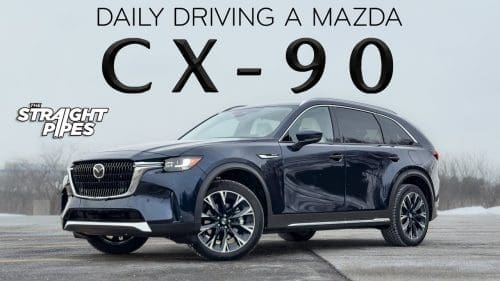
The Mazda CX-90 has emerged as America’s safest family vehicle for 2025, achieving a perfect 100/100 crash test score with zero customer complaints, according to a comprehensive safety analysis released by Dallas-based law firm Ferrer Poirot Feller.
The study evaluated 25 family-oriented vehicles across six critical safety categories including crash protection, child seat compatibility, passenger capacity, customer complaints, and affordability. Each vehicle received scores from 1-100 based on performance across all safety factors.
The research addresses growing concerns about family transportation safety as American parents reportedly spend up to 10 hours weekly driving their children, with more than half of these trips occurring during high-risk traffic periods.
The Mazda CX-90, priced at $38,045, secured the top ranking by combining exceptional crash safety with practical family features. The three-row SUV accommodates up to eight passengers and provides capacity for five child seats while earning a “Good+” child seat installation rating.
Claiming second place, the Audi Q7 matched the CX-90’s perfect crash protection scores and offers space for five child seats. However, the luxury SUV’s $60,500 starting price positions it at the premium end of the family vehicle market, recording only six customer complaints.
The Honda Accord emerged as the highest-ranking sedan and most budget-friendly option in the top ten, starting at $28,295. Despite its compact size compared to SUV alternatives, the Accord achieved perfect crash test scores while accommodating three child seats and generating fewer complaints than average family vehicles.
Mazda secured a second position in the top five with the CX-50, priced at $30,500. This compact SUV delivered maximum crash safety ratings while providing space for two child seats and recording only ten safety complaints among the lowest figures in the study.
The Kia Telluride rounded out the top five with a $36,390 starting price. This three-row SUV combines maximum crash protection ratings with flexible seating for seven to eight passengers and maintains a standard “Good” rating for child seat installation.
Verification from automotive safety sources confirms that Mazda’s CX-90 and related models earned perfect crash test scores across all evaluation points, supporting the study’s findings about the vehicle’s exceptional safety performance.
Toyota placed two vehicles in the top ten with the Camry sedan ($28,700) and Sienna minivan ($39,485). Both vehicles demonstrated strong safety credentials, with the Sienna offering capacity for five child seats and eight total passengers.
The Honda Pilot claimed seventh position at $40,200, providing three-row SUV versatility with seating for seven to eight passengers and capacity for four child seats. The vehicle achieved strong crash test results while serving larger family transportation needs.
Subaru Ascent secured eighth place with a $39,995 starting price, scoring 90 points in crash tests while accommodating up to eight passengers. The three-row SUV generated only four customer complaints, indicating high owner satisfaction levels.
The Hyundai Tucson completed the top ten rankings at approximately $28,000, achieving maximum crash protection scores despite being a two-row vehicle. The SUV provides space for two child seats while maintaining competitive affordability.
Ferrer Poirot Feller, established since 1981, specializes in product liability and injury cases, bringing relevant expertise to automotive safety analysis. The firm’s research methodology examined real-world family usage patterns alongside technical safety specifications.
Joe Poirot from Ferrer Poirot Feller emphasized that overlooked factors significantly impact family vehicle safety beyond built-in features. The analysis highlighted the importance of proper child seat installation, regular maintenance, and long-term usability considerations including storage space and comfort for extended trips.
The study’s findings reflect broader automotive industry trends toward enhanced safety features and family-focused design. Vehicle manufacturers increasingly prioritize comprehensive safety systems alongside practical family transportation needs.
Safety ratings considered in the research encompass crash test performance from recognized testing organizations, real-world complaint data, and practical family usage factors. The methodology provides comprehensive evaluation beyond traditional safety assessments.
The research timing coincides with heightened awareness of family transportation safety as parents navigate increasing traffic congestion and longer commute times. Vehicle selection decisions increasingly balance safety credentials with affordability and practical family requirements.
Industry experts note that perfect crash test scores across multiple vehicle categories demonstrate significant advancement in automotive safety technology. The availability of high-safety vehicles across different price points provides families with diverse options for secure transportation.
The study’s emphasis on child seat compatibility addresses critical safety considerations often overlooked in traditional vehicle evaluations. Proper child restraint installation remains essential for maximizing vehicle safety systems effectiveness.
Vehicle manufacturers represented in the top rankings include established automotive brands with strong safety reputations. The diversity of vehicle types in the top ten demonstrates that family safety excellence spans multiple automotive categories from sedans to three-row SUVs.

