

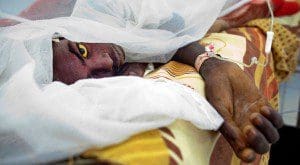
Mr. Speaker, the Ministry of Health (Ghana) has observed with great concern, the increasing number of meningitis cases in some parts of the country.

The Upper East, Upper West and Northern regions, and their neighbouring districts in the Brong-Ahafo and Volta regions lie in the meningitis belt of Africa where meningitis is endemic. The belt spans from Senegal in the West, to Ethiopia in the East. Countries in this belt, including ours, are at risk of periodic outbreaks of meningitis and experience a number of meningitis cases annually with periodic spikes during the harsh (Harmattan) dry and hot weather conditions (October to March, termed as the “meningitis season”).
Mr. Speaker, as a country, Ghana experienced widespread Cerebrospinal meningitis (CSM) epidemics with high morbidity and mortality in 1984/85, 1996/97 and 2000, mainly in the three regions in the north which lie within the “Meningitis belt” of Africa. During the1996/97 outbreak, Ghana recorded more than 17,000 cases including 1,200 deaths and all regions reported confirmed cases.
Aside the typical meningitis regions, there have been focal outbreaks since 2000. In the recent past, there were unexpected focal outbreaks of meningitis in two districts in the Ashanti region: Asante Akim South district in 2008 and Obuasi Municipality in 2010.
Outbreaks due to meningococcal meningitis remain a major public health challenge in the meningitis belt. The recurrent meningitis outbreaks in Ghana particularly in the northern regions, led to the conduct of a mass preventive immunization campaign in the country in 2012 to address the burden of Group A meningococcus. Group Ameningococcus was accounting for an estimated 80–85% of all cases in the meningitis belt in the country, with epidemics occurring at intervals of 7–14 years. Following the successful conduct of the mass preventive campaign in the three northern regions, the proportion of meningococcusserogroup A has declined dramatically and the occurrence of meningitis outbreaks due to other Meningococcusserogroups as well as other bacteria are rather a new concern. Additionally, outbreaks due to Streptococcus pneumoniae have also become more pronounced and a public health threat which demands effective preparedness and response strategies.
The introduction of the Meningitis vaccine (MenAfriVac), climate change with subsequent extension of drought areas, increased mobility of the population and introduction of new strains of organisms into susceptible populations are accounting for the change in epidemiology of the meningitis and the way it is occurring and spreading.
Meningitis Burden in Ghana, 2010-2015
Current Outbreak
At the beginning of this year, the Ministry of Health received reports of districts in the Brong-Ahafo region recording high numbers of meningitis cases. Tain District was the first to record a high incidence of meningitis during the latter part of 2015. The causative agent was subsequently confirmed to be Streptococcus pneumoniae (otherwise known as Strep pneumo or Pneumococcus). Although we have had events in the northern parts of Ghana, this is not the common bacteria (meningococcus) that has been known to cause meningitis outbreaks in the country. Typically, with Strep pneumoniae (Pneumococcal) meningitis, fatality (or death rate) is high but potential for massive spread is low. As at the 3rd of February, 2016 there were 456 suspected cases with 85 deaths.
Mr. Speaker, the districts of the Brong- Ahafo and Northerns region that were initially hit by the outbreak responded in the following manner.
District epidemic management teams met to plan how to provide public education. This is aimed at encouraging affected members and those suspected to have meningitis in the community to report to the nearest health facility for urgent medical attention.Health workers were re-oriented in the management of meningitis.At the national level, I also dispatched a team led by my deputy Minister, and comprising the director-general of the Ghana Health Service and the Director of Public Health to visit the affected districts in BrongAhafo and the Northern Regions to provide funds, antibiotics and technical support to health workers. They were there from 11th -15th January, 2016.
Mr. Speaker, this week, together with the WHO Country representative, I visited the BrongAhafo and Northern Regions to assess the situation, provide more funds and 7500 vials of antibiotics to health workers. I arrived from a tour of three affected regions, namely, B/A, Ashanti and Northern Regions last night. I also directed that MOH mobile health vans (onuador) be re-directed to the affected communities to support our interventions.
My findings are as follows:
A lot of activities are taking place on ground involving key stakeholders including district assemblies and NADMOBetter team work among health staff and stakeholdersHealth workers have high index of suspicion for meningitis
Additionally, the Noguchi Memorial Institute for Medical Research is leading in the efforts to determine the exact serotype of bacteria causing the diseases. They are being supported by the Kumasi Centre for Collaborative Research, CDC of the US, Medical Research Council of Gambia and others.
Regional distribution of cases and deaths, as at 03 Feb 2016
Nm W134, type C, Nm W135; Strep pneumoNm W135, Strep; H. influenza b
As a Ministry responsible for health, we are most concerned because the outbreaks started in areas that are not commonly affected and the causative agent (the Pneumococcus) is observed behaving quite differently than we know it. Though there have been previous reports indicating outbreaks from pneumococcus, these are rare occurrences and require much more in-depth laboratory studies on the type or strain we are dealing with, which have been started and are on-going.
This is not Epidemic Meningococcal Disease or CSM which is caused by Neisseria meningitides (Nai-Syria Menin-gee-tee-dis) which has potential for massive and widespread outbreaks. However other districts have reported cases of meningitides serogroup W135 namely Techiman Municipal, Sene West in BrongAhafo Region and Sawla-Tuna-Kalba in the Northern Region. These focal outbreaks bring to the fore the changing epidemiology of meningitis in the country vis-a-vis challenges gaps in preparedness and response of the health system to outbreaks. Other regions have also reported cases of meningitis, Greater Accra, Eastern and Western. Volta Region has reported four confirmed cases of Nm W135 spread in three districts. Ashanti Region has also reported cases of Strep pneumoniae and few cases of Neisseria (Nai-Syria) type C. These reported cases are actually sporadic and are from 6 districts in the region including EjisuJuabeng, Offinso Municipal, AfigyaKwabre, Asante Akim Central, Adansi North and AhafoAno South. I want to state that, currently there is no outbreak of meningitis in Ashanti Region.
In summary, there is an increasing number of reported cases of meningitis for the year so far. The main causative organism is Streptococcus pneumonia causing Pneumococcal meningitis. However there are also sporadic reports of Neisseria W135 and a few Neisseria type C reported from Ashanti Region.
We are not being complacent but there is evidence that a number of activities in the areas of surveillance, case management, laboratory testing, coordination, advocacy and social mobilization are on-going across the country, and these are beginning to bear fruit.
We have commissioned a thorough investigation into the outbreak and exact causative agent identified to be mostly pneumococcus. This can be treated with antibiotics; and effective antibiotics have been identified. A few districts have detected isolated cases of meningococcus and we are monitoring all of them very closely.We have provided funding support, antibiotics (Ceftriaxone)[Cef-tree-axone], laboratory test kits and logistics to the affected regions and districts.Senior officials from the ministry have visited the regions, districts and communities to investigate, assess preparedness and response actions on the ground and provide moral and technical support.Intensive public awareness has started and is ongoing. We are using varied social mobilization strategies including the radio stations, gong-gong beating, traditional and religious leaders, information centres (Public Address systems) to mobilize the communities for positive response.Surveillance on meningitis has been enhanced and health workers are sensitized on the outbreak.District and Regional Epidemic management committees have been activated and are functional.Team of health workers go to the affected communities to trace and follow up contacts and manage them as appropriate.All regions and districts have been alerted to look for cases for prompt and appropriate managementProvision of additional funding to all 10 regions, but with emphasis on BrongAhafo and the three northern regionsDonation of antibiotics by private sector and distributed to all regions for use and stockpilingProvision of Technical Assistance by WHO to train key staff in serotyping and the provision of additional diagnostic test kitsVisit by myself and the WHO Country Representative and other technical officers to Techiman, Wenchi, Offinso and Bole districts during the week. My visit has assured me that despite the challenges, a number of concrete activities are taken place in the districts involving DCEs, MPs and other key stakeholders and we are about turning the tide.We have streamlined our communication to minimize the confusion in the announcement of statistics with the current situation.
Mr. Speaker, permit me to conclude by repeating that the country has experienced an unfortunate situation of an outbreak of meningitis in certain districts, mainly in the Brong-Ahafo Region, and isolated cases in other districts. This is worrisome because some people have lost their lives and others have suffered. However, we are doing our best to contain the situation. We have even considered vaccination as possible additional response action, but we do not meet the criteria by this current situation and the experts advice that vaccination would not yield much benefit with pneumococcal meningitis.
The harmattanseason this year is harsh and hence we need to sustain the alert, continue to stay vigilant and further enhance our preparedness and response.
Mr. Speaker, we are not in this fight alone and in this regard, we wish to acknowledge the support of agencies like World Health Organization, US CDC and other Development Partners and Agencies, as well as private companies that have supported us, particularly, with laboratory, logistical and technical assistance.
Mr. Speaker, I wish to end by assuring the house that my Ministry will continue to work towards containing the outbreak within the shortest possible time and prevent further spread. However, we will require the support of all, including members of this august house, the media and all others to make this a success. Our direction and focus is towards the elimination of meningitis from our dear country.
I thank you for your attention.
ANNEXES
Summary of Cases by Reporting Region and District
Ashanti
Brong-Ahafo
Eastern
Greater Accra
Northern
Upper East (Total 35); 14 W135 (1 from Northern)
Upper West
Volta
Western

