

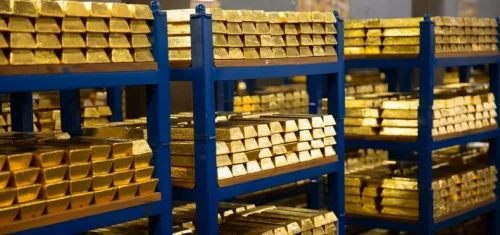
Natural resource governance expert Dr Steve Manteaw has defended the Bank of Ghana’s (BoG) decision to reduce gold holdings by approximately 51 percent, describing the move as economically prudent rather than a policy mistake.
Dr Manteaw, Co Chair of the Ghana Extractive Industries Transparency Initiative (GHEITI), stated that selling gold when prices are high and rebuilding reserves when prices are low represents sound economic management. He emphasized that the decision should be understood as a strategic balancing act, not a loss of national wealth.
The Bank of Ghana confirmed in late January 2026 that it had cut the share of bullion in its international reserves from over 40 percent to approximately 19 percent, reducing physical gold holdings from 38.04 tonnes in October 2025 to 18.6 tonnes by December 2025. The central bank reinvested proceeds into foreign currency assets to improve liquidity and investment returns.
Dr Manteaw explained that it is economically prudent to sell off some of the country’s gold stock when prices are high rather than when they are low. Gold, like oil or cocoa, is a volatile commodity subject to sharp price swings, he noted.
By selling part of the reserves when prices are high, Ghana effectively locks in value and converts it into foreign exchange that can support the economy, a strategy he described as diversification and hedging against commodity price volatilities. The wealth has not disappeared but has only changed form, he stated.
Governor Dr Johnson Pandit Asiama told the 128th Monetary Policy Committee press briefing in Accra on January 26, 2026, that the decision was taken after gold came to account for more than 40 percent of total reserves, a level the Bank considered too concentrated. Under the strategy, the central bank sold part of its gold holdings and reinvested the proceeds into income earning foreign assets.
Despite lower bullion holdings, Ghana’s gross international reserves rose to 13.8 billion United States dollars at the end of December 2025, equivalent to 5.7 months of import cover, up from 9.1 billion dollars a year earlier. Dr Asiama stressed that the move was a portfolio adjustment rather than a retreat from gold.
Dr Manteaw drew a historical comparison with cocoa, arguing that Ghana could have applied the same strategy decades ago if the cocoa silos built under Kwame Nkrumah in Tema had not been abandoned after his overthrow. With proper storage, Ghana could have stockpiled cocoa when prices collapsed and released it onto the market when prices surged, protecting farmers and reducing exposure to price shocks.
The natural resource expert cautioned against alarmist commentary that focuses only on the reduction in physical gold holdings while ignoring the broader balance sheet. Looking only at the gold bars misses the bigger picture, he argued, noting that what matters is the total value of national reserves, whether held in gold or foreign currency.
Global gold prices reached record highs in late January 2026, with spot prices hitting 5,289.38 dollars per ounce on January 28. The surge was driven by geopolitical risks, central bank buying and financial market uncertainty.
The policy analyst maintained that the Bank of Ghana’s move should be judged by strategy rather than emotion. Stockpile when prices are low, sell when prices are high, and use the proceeds to stabilize the economy and rebuild reserves when conditions are favorable, he stated.
Critics including Development Economist Dr Frank Bannor have questioned the sharp decline, arguing that reducing gold holdings at a time of soaring global prices is problematic. Dr Bannor has called for greater transparency regarding reserve management decisions.

