

Africa’s largest climate advocacy network demanded radical reforms to global finance systems Thursday, warning that the continent receives just 2-3 percent of worldwide climate funding despite bearing the heaviest burden of environmental disasters.
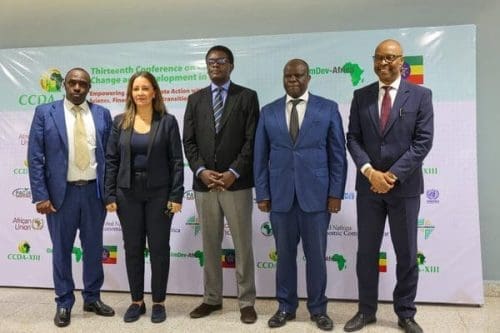
The Pan African Climate Justice Alliance delivered its demands at the official opening of the Thirteenth Conference on Climate Change and Development in Africa, where more than 110 million Africans affected by climate disasters last year became the focal point for urgent financing calls.
The three-day CCDA-XIII conference, running from September 5-7 in Ethiopia’s capital, serves as the technical foundation for the Second Africa Climate Summit scheduled for September 8-10 at the same venue.
PACJA leadership emphasized that last year’s devastating floods, droughts, and unprecedented heat waves across the continent represent daily realities rather than abstract statistics for millions of Africans.
The organization highlighted that this year’s conference theme “Empowering Africa’s Climate Action with Science, Finance, and Just Transition” aligns directly with the upcoming summit’s focus on “Accelerating Global Climate Solutions” for Africa’s development needs.
Despite contributing less than 4 percent of global greenhouse gas emissions, Africa faces a massive financing gap. The continent requires nearly $3 trillion to achieve climate goals by 2030, yet current funding levels remain drastically inadequate.
PACJA challenged the global narrative of Africa as merely a climate victim, showcasing continental innovations that demonstrate leadership potential. Kenya produces 90 percent of its energy from renewable sources through geothermal technology, while Ethiopia has planted billions of trees through its Green Legacy Initiative.
The Congo Basin, serving as the world’s second-largest carbon sink, absorbs 1.5 billion tons of carbon dioxide annually. Community-led solutions include climate-smart agriculture in Malawi and flood-resilient housing developments in Senegal.
However, PACJA questioned how these scattered success stories can transform Africa’s perceived vulnerability into recognized comparative advantages on the global stage.
The organization demanded structural reforms in international finance architecture, calling for full, timely, and accessible funding for adaptation, loss and damage compensation, and energy justice initiatives.
Energy access emerged as a critical focus, with over 600 million Africans still lacking electricity access. PACJA advocates emphasized that just transition policies must prioritize universal energy access alongside green industrialization efforts.
The alliance called for energy access recognition as a formal climate goal within the United Nations Framework Convention on Climate Change ahead of the main summit proceedings.
Through the African Civil Society for Energy Access network, PACJA urged a unified continental voice ahead of COP30 negotiations in Brazil, where developing nations will push for increased climate commitments from industrialized countries.
CCDA-XIII is organized in collaboration with PACJA and other regional institutions, reflecting the organization’s growing influence in shaping continental climate policy directions.
The conference outcomes are expected to directly influence Africa’s negotiating positions at international climate talks, particularly regarding finance mechanisms and technology transfer agreements.
PACJA’s message comes as African leaders prepare to present a united front at global climate negotiations, emphasizing investment-ready solutions rather than aid-dependent approaches to climate action.
The organization stressed that current climate finance models operate more like charity than strategic investment, calling for fundamental shifts in how international funding reaches African climate initiatives.
Delegates representing governments, civil society, private sector, and academic institutions from across Africa are participating in working groups focused on climate science, sustainable energy, and finance mechanisms.
The conference serves multiple purposes: generating technical recommendations for policymakers, building consensus on continental priorities, and demonstrating Africa’s readiness to lead global climate solutions.
As discussions progress through the week, participants will address barriers to accessing international climate funds, explore innovative financing mechanisms, and develop strategies for scaling successful local solutions across the continent.
The timing proves significant with COP30 approaching, where African nations will present unified positions on climate finance, loss and damage compensation, and technology transfer requirements from developed countries.
PACJA’s emphasis on transforming climate vulnerability into competitive advantage reflects broader continental shifts toward positioning Africa as a solution provider rather than primarily a recipient of climate assistance.

