

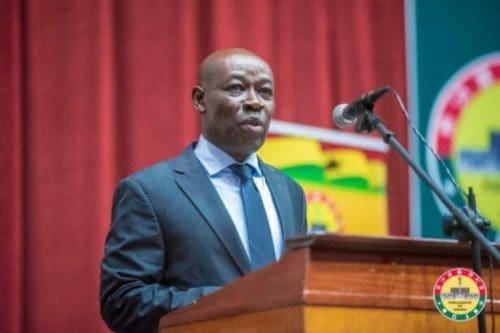
Renowned lawyer Thaddeus Sory has come forward to defend Attorney General Dr. Dominic Ayine’s recent decision to discontinue several high-profile cases, arguing that the move is fully supported by Ghanaian law.
Speaking in a detailed analysis that has stirred debate in legal and political circles, Sory emphasized that the legal doctrine of nolle prosequi—the authority to halt criminal proceedings before a final judgment—is not only well-established in Ghana but is also a standard practice across Commonwealth jurisdictions.
Sory made clear that the Attorney General’s power to withdraw cases does not come with an obligation to publicly justify the decision. According to him, the law is explicit: once an allegation reaches a stage where it can be considered prima facie, it is then subject to further investigation, but the decision to proceed or not rests solely with the AG. “The power to file a nolle prosequi is exclusively vested in the Attorney General. There is no statutory requirement for him to explain why he chooses to discontinue a case,” he explained, challenging critics who have demanded transparency.
The lawyer scrutinized several cases that have recently attracted public attention. In the case of Hon. Ato Forson, Sory noted that the Court of Appeal had already acquitted both Forson and Jakpa before the Attorney General withdrew his appeal, questioning whether there was any merit to continuing the prosecution. Similarly, he pointed out inconsistencies in the prosecution against Collins Dauda, where discrepancies in the alleged misapplied funds raised serious doubts about the foundation of the case. Sory also revisited the case involving Dr. Stephen Opuni, recalling a series of judicial irregularities—such as the striking out of favourable evidence and the controversial transfer of a judge—that further undermined the prosecution’s credibility.
Sory’s analysis extended beyond these individual cases to address a broader issue in legal practice: the subjective nature of establishing a prima facie case. He argued that different officials, even those holding the same office at different times, can reach varying conclusions based on the same set of facts. “Once an allegation makes sense and raises reasonable questions, a prima facie case is established, but that initial finding is always subject to deeper scrutiny,” he noted. In his view, the decision to discontinue the cases was not an act of political favoritism but a legal judgment made after careful consideration of the available evidence.
The debate over these withdrawals has intensified as critics argue that such actions might be politically motivated. However, Sory’s detailed legal perspective suggests that the real issue is not whether the AG should provide an explanation, but whether the prosecutions were justified from the outset. His analysis urges the public to scrutinize the merits of the original cases rather than demand an explanation for their discontinuation—a practice consistent with legal standards in many jurisdictions.
This controversy highlights the ongoing tension between public expectations for accountability and the broad discretion granted to legal authorities. Sory’s defense of the Attorney General’s actions serves as a reminder that legal processes often operate in complex, nuanced environments. While the public debate over transparency in prosecutorial decisions is likely to continue, Sory’s insights underscore that the established legal framework supports the AG’s right to withdraw cases when the evidence fails to justify further proceedings. As Ghana’s justice system navigates these contentious issues, the balance between legal discretion and public accountability remains a critical, evolving challenge.

